冎
See also: 叧
| ||||||||
Translingual
Alternative forms
- The top section of the character turns left (◱) in PRC and Singapore, while it turns right (◲) elsewhere.
Han character
冎 (Kangxi radical 13, 冂+4, 6 strokes, cangjie input 月弓月 (BNB), composition ⿱⿵冂𠃍冂(G) or ⿱𭁟冂(TJ))
References
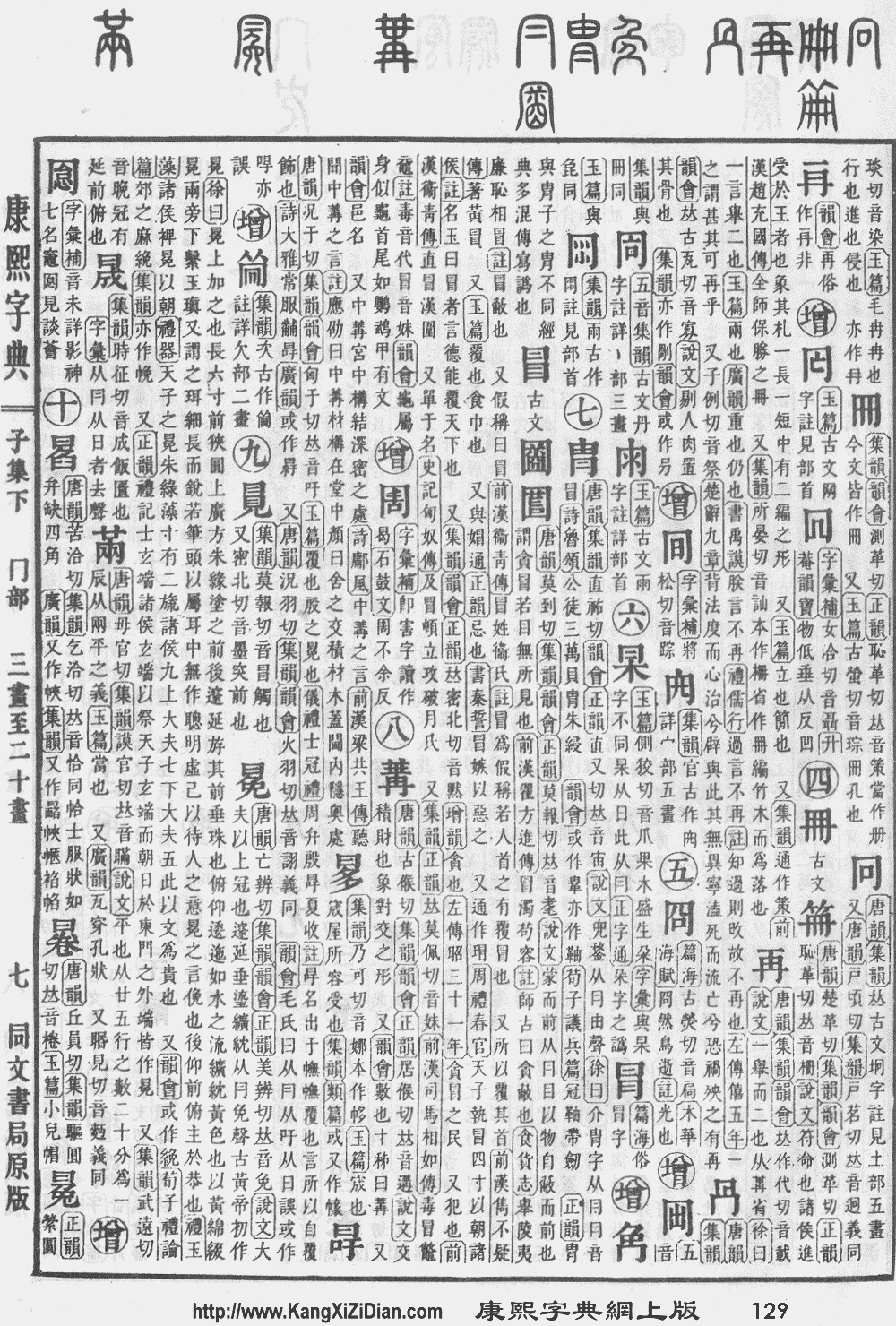
- Kangxi Dictionary: page 129, character 9
- Dai Kanwa Jiten: character 1525
- Dae Jaweon: page 290, character 5
- Hanyu Da Zidian (first edition): volume 1, page 100, character 5
- Unihan data for U+518E
Chinese
Glyph origin
| Historical forms of the character 冎 | ||||
|---|---|---|---|---|
| Shang | Warring States | Shuowen Jiezi (compiled in Han) | ||
| Bronze inscriptions | Oracle bone script | Chu slip and silk script | Qin slip script | Small seal script |
 |
 |
 |
 |
 |
Characters in the same phonetic series (冎) (Zhengzhang, 2003)
| Old Chinese | |
|---|---|
| 碢 | *l'oːl |
| 腡 | *ɡ·roːl, *kʷroːl |
| 過 | *kloːl, *kloːls |
| 渦 | *kloːl, *qloːl |
| 鍋 | *kloːl |
| 楇 | *kloːl, *ɡloːls |
| 瘑 | *kloːl |
| 緺 | *koːl, *kroːl, *kʷroːl |
| 堝 | *kloːl |
| 濄 | *kloːl, *qloːl |
| 鐹 | *kloːlʔ, *kloːls |
| 薖 | *kʰloːl |
| 簻 | *kʰloːl, *kr'oːl |
| 禍 | *ɡloːlʔ |
| 窩 | *qloːl |
| 萵 | *qloːl |
| 檛 | *kr'oːl |
| 膼 | *kr'oːl |
| 蝸 | *kroːl, *kʷroːl |
| 媧 | *kroːl, *kʷroːl |
| 騧 | *kroːl, *kʷroːl |
| 冎 | *kroːlʔ |
| 剮 | *kroːlʔ |
| 諣 | *qʰroːls, *qʰʷroːls |
| 歄 | *kʷroːl |
| 咼 | *kʰʷroːl |
| 喎 | *kʰʷroːl |
Japanese
Korean
Hanja
冎 (eum 과 (gwa))
- tear [peel, strip, split, take] off: pare; rind; shuck; shell; hull; crack; remove; ex) ~ bone a chicken, ~clean[bone] a fish
This article is issued from Wiktionary. The text is licensed under Creative Commons - Attribution - Sharealike. Additional terms may apply for the media files.