再
See also: 爯
| ||||||||
 | ||||||||
Translingual
| Stroke order (Mainland China) | |||
|---|---|---|---|
 | |||
| Stroke order (Sans-serif) | |||
|---|---|---|---|
 | |||
Han character
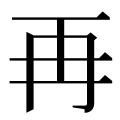
再 (Kangxi radical 13, 冂+4, 6 strokes, cangjie input 一土月 (MGB), four-corner 10447, composition ⿱一冉)
References
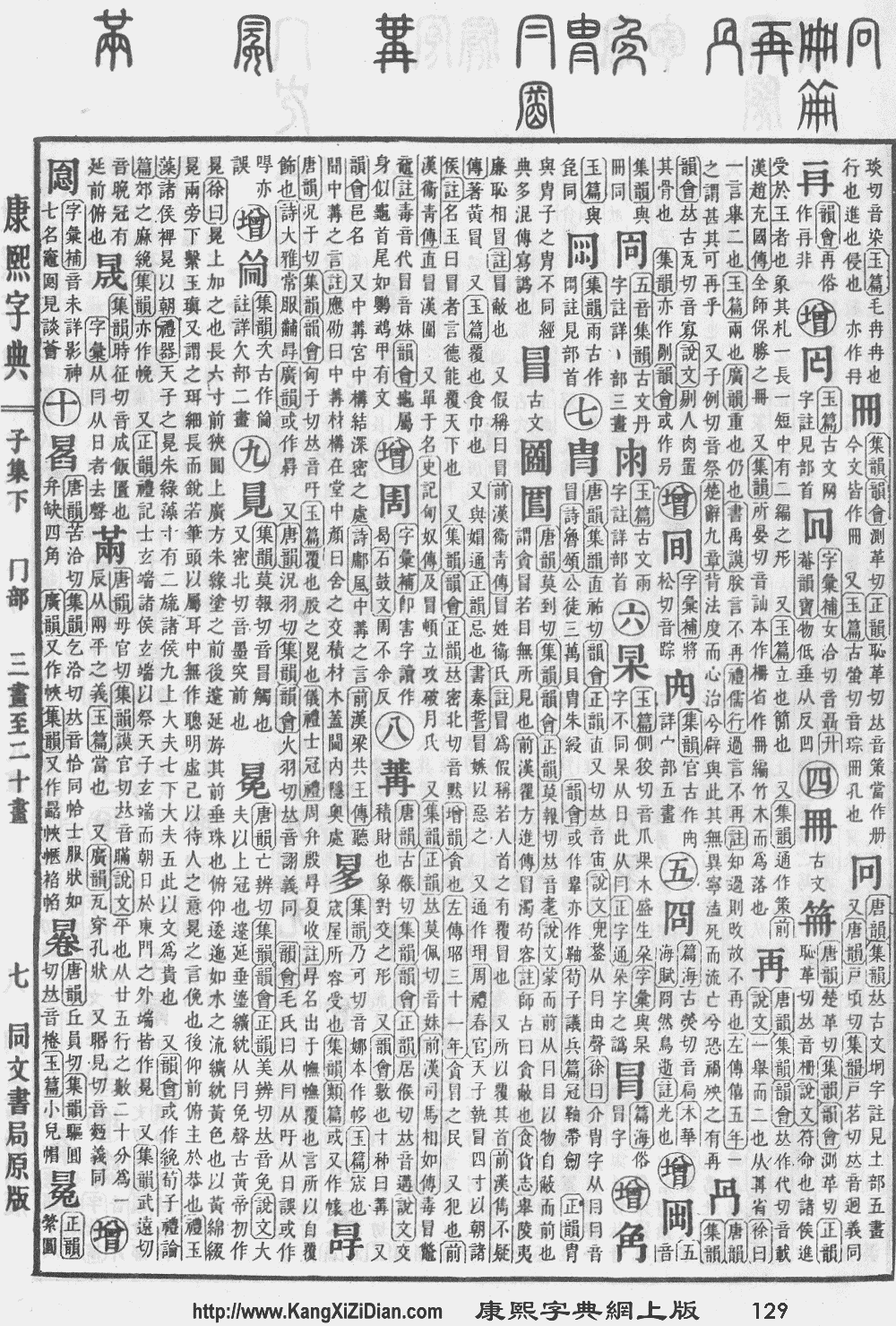
- Kangxi Dictionary: page 129, character 8
- Dai Kanwa Jiten: character 1524
- Dae Jaweon: page 290, character 4
- Hanyu Da Zidian (first edition): volume 1, page 18, character 1
- Unihan data for U+518D
- Unihan data for U+2F815
Chinese
| trad. | 再/𠕅/𠕂 | |
|---|---|---|
| simp. | 再 | |
Glyph origin
| Historical forms of the character 再 | |||
|---|---|---|---|
| Shang | Western Zhou | Shuowen Jiezi (compiled in Han) | Liushutong (compiled in Ming) |
| Oracle bone script | Bronze inscriptions | Small seal script | Transcribed ancient scripts |
 |
 |
 |
 |
Etymology
Cognate with 載 (OC *ʔslɯːʔ, “year”), 茲 (OC *ʔsɯ, “year”), 薦 (OC *ʔseːns, “repeatedly”), 洊 (OC *zlɯːns, “again; repeatedly”), 荐 (OC *zlɯːns, “repeatedly”) (Schuessler, 2007).
Pronunciation
Definitions
再
- again; once again; a second time; re-
- 再玩 ― zài wán ― play again
- 一拖再拖 ― yī tuō zài tuō ― to put off again and again
- 我再說一遍/我再说一遍 ― wǒ zài shuō yī biàn ― I will say once again.
- 燕子去了,有再來的時候;楊柳枯了,有再青的時候;桃花謝了,有再開的時候。 [MSC, trad.]
- From: 1922, Zhu Ziqing, 匆匆 "Hurrily"
- Yànzǐ qù le, yǒu zài lái de shíhòu; yángliǔ kū le, yǒu zài qīng de shíhòu; táohuā xiè le, yǒu zài kāi de shíhòu. [Pinyin]
- Gone are the swallows, still there's a time they'll come again. Wilted are the willows, still there's a time they'll be green again. Withered are the peach blossoms, still there's a time they'll bloom again.
燕子去了,有再来的时候;杨柳枯了,有再青的时候;桃花谢了,有再开的时候。 [MSC, simp.]
- Used to indicate a continuing situation in conditional or suppositional clauses
- more; -er
- Used with 也 (yě) and followed by a negative expression; no matter how...still (not)
- then; only then
- in addition; on top of that
- (literary) twice
- 季文子三思而後行。子聞之,曰:「再,斯可矣。」 [Classical Chinese, trad.]
- From: The Analects of Confucius, c. 475 – 221 BCE, translated based on James Legge's version
- Jìwén Zǐ sānsī ér hòuxíng. Zǐ wén zhī, yuē: “Zài, sī kě yǐ.” [Pinyin]
- Ji Wen thought thrice, and then acted. When the Master was informed of it, he said, "Twice may do."
季文子三思而后行。子闻之,曰:「再,斯可矣。」 [Classical Chinese, simp.]
- (literary) to appear again
- a surname
Usage notes
In Old Chinese, 再 (OC *ʔsɯːs) strictly meant "twice" and not "again". The "second time" sense developed around the Tang dynasty.
再 (zài) is used for something that has not happened, while 又 (yòu) is used for something that already happened.
Synonyms
- (one again):
Dialectal synonyms of 才 (“only after; only then; not ... until”) [map]
| Variety | Location | Words |
|---|---|---|
| Formal (Written Standard Chinese) | 才2, 再, 方, 始, 方才 | |
| Mandarin | Taiwan | 才2 |
| Singapore | 才2 | |
| Cantonese | Guangzhou | 先, 至, 先至 |
| Hong Kong | 先, 至, 先至 | |
| Hakka | Meixian | 正 |
| Southern Min | Xiamen | 才3 |
| Quanzhou | 才3 | |
| Zhangzhou | 才3 | |
| Singapore (Hokkien) | 才3 | |
| Manila (Hokkien) | 才3 | |
| Shantou | 正 | |
| Singapore (Teochew) | 正 | |
| Wu | Shanghai | 再, 才2 |
| Suzhou | 再 | |
| Xiang | Changsha | 才至 |
See also
- (again): 又 (yòu)
Dialectal synonyms of 再 (“again”) [map]
| Variety | Location | Words |
|---|---|---|
| Formal (Written Standard Chinese) | 再 | |
| Mandarin | Beijing | 再 |
| Taiwan | 再 | |
| Jinan | 再 | |
| Xi'an | 再 | |
| Wuhan | 再 | |
| Chengdu | 又, 再 | |
| Yangzhou | 再 | |
| Hefei | 再 | |
| Cantonese | Guangzhou | 再, 添 > |
| Hong Kong | 再, 添 > | |
| Yangjiang | 應 | |
| Gan | Nanchang | 再, 湊 > |
| Hakka | Meixian | 再, 添 > |
| Jin | Taiyuan | 再 |
| Northern Min | Jian'ou | 再, 唵 |
| Eastern Min | Fuzhou | 再, 蓋, 介 |
| Fuqing | 介 | |
| Southern Min | Xiamen | 閣, 閣再 |
| Quanzhou | 閣, 閣再 | |
| Zhangzhou | 閣, 閣再 | |
| Tainan | 閣, 閣再 | |
| Singapore (Hokkien) | 閣, 閣再 | |
| Manila (Hokkien) | 閣, 閣再, 過再, 閣過再 | |
| Chaozhou | 再 | |
| Wu | Shanghai | 又, 再 |
| Suzhou | 再 | |
| Wenzhou | 再, 添 > | |
| Xiang | Changsha | 再 |
| Shuangfeng | 再, 還 | |
| Note | > - used after the object | |
Compounds
- 一再 (yīzài)
- 一再行
- 一合再離/一合再离
- 一呼再喏
- 一歲再赦/一岁再赦
- 一誤再誤/一误再误 (yīwùzàiwù)
- 不再 (bùzài)
- 停妻再娶
- 再三 (zàisān)
- 再下一城 (zàixiàyīchéng)
- 再三再四
- 再不 (zàibù)
- 再不其然
- 再不想
- 再不然 (zàibùrán)
- 再不道
- 再世 (zàishì)
- 再世交
- 再也 (zàiyě)
- 再二
- 再作道理
- 再作馮婦/再作冯妇 (zàizuòféngfù)
- 再來/再来 (zàilái)
- 再來人/再来人
- 再倍
- 再做道理
- 再再
- 再出口
- 再分
- 再刊 (zàikān)
- 再刖
- 再刺
- 再則/再则 (zàizé)
- 再加上
- 再吐
- 再命
- 再四 (zàisì)
- 再婚 (zàihūn)
- 再嫁 (zàijià)
- 再字
- 再宥
- 再宿
- 再實/再实
- 再審/再审 (zàishěn)
- 再就
- 再度 (zàidù)
- 再康
- 再從/再从
- 再從伯/再从伯
- 再從兄/再从兄
- 再從姪/再从侄
- 再從弟/再从弟
- 再從父/再从父
- 再思
- 再拜 (zàibài)
- 再拜稽首
- 再接再厲/再接再厉 (zàijiēzàilì)
- 再接再礪/再接再砺 (zàijiēzàilì)
- 再教育 (zàijiàoyù)
- 再易
- 再晝/再昼
- 再會/再会 (zàihuì)
- 再期
- 再次 (zàicì)
- 再熟
- 再版 (zàibǎn)
- 再犯 (zàifàn)
- 再獻/再献
- 再現/再现 (zàixiàn)
- 再生 (zàishēng)
- 再生丹
- 再生父母 (zàishēngfùmǔ)
- 再生爺/再生爷
- 再生產/再生产 (zàishēngchǎn)
- 再生禮/再生礼
- 再眠
- 再確認/再确认
- 再稔
- 再籍
- 再者 (zàizhě)
- 再聘
- 再興/再兴
- 再舉/再举
- 再薰
- 再處/再处
- 再虞
- 再行 (zàixíng)
- 再衰三涸
- 再衰三竭
- 再見/再见 (zàijiàn)
- 再計/再计
- 再說/再说 (zàishuō)
- 再赦
- 再起 (zàiqǐ)
- 再辱
- 再造 (zàizào)
- 再進口/再进口
- 再適/再适
- 再酳
- 再醮 (zàijiào)
- 再閏/再闰
- 再闡/再阐
- 再顧/再顾
- 再食
- 再駕/再驾
- 再麾
- 壹再
- 復再/复再
- 恩同再造
- 時不再來/时不再来
- 東山再起/东山再起 (dōngshānzàiqǐ)
- 枯木再生
- 枯枝再春
- 汔再汔四
- 盛筵難再/盛筵难再
- 稽首再拜
- 至再至三
- 讓三讓再/让三让再
- 讓再讓三/让再让三
- 閣再/阁再
Japanese
Readings
Compounds
- 一再
- 再会
- 再開
- 再確認
- 再起
- 再帰
- 再教育
- 再建
- 再建
- 再現
- 再考
- 再興
- 再構成
- 再婚
- 再三
- 再生
- 再選
- 再戦
- 再創造
- 再度
- 再度
- 再任
- 再認識
- 再燃
- 再発
- 再版
- 再犯
- 再販
- 再編
- 再放送
- 再輸入
- 再来
- 再利用
- 再臨
- 再来月
- 再来週
- 再来年
- 再々, 再再
- 再下付
- 再上映
- 再交付
- 再保険
- 再入国
- 再入学
- 再入幕
- 再処理
- 再出
- 再出場
- 再出発
- 再分配
- 再加工
- 再勝
- 再勤
- 再十両
- 再協議
- 再受浸
- 再告
- 再吟味
- 再国営化
- 再国有化
- 再変
- 再委託
- 再定義
- 再審
- 再封鎖
- 再尋問
- 再就職支援
- 再工事
- 再征
- 再従兄
- 再従弟
- 再循環
- 再思
- 再抗弁
- 再投票
- 再投稿
- 再投資
- 再拝
- 再挙
- 再提案
- 再敗
- 再映
- 再服役
- 再案
- 再校
- 再検査
- 再検討
- 再構築
- 再武装
- 再注
- 再洗礼
- 再浮上
- 再浸礼
- 再演
- 再生産
- 再発行
- 再発見
- 再発足
- 再禁止
- 再突入
- 再組織
- 再縁
- 再製
- 再訂
- 再設
- 再訪
- 再評価
- 再試合
- 再試行
- 再試験
- 再読
- 再説
- 再調
- 再調整
- 再議
- 再軍備
- 再転
- 再輸出
- 再送
- 再遊
- 再配分
- 再配布
- 再配置
- 再鋳
- 再録
- 再開発
- 再降臨
Korean
Etymology
From Middle Chinese 再 (MC tsojH). Recorded as Middle Korean ᄌᆡ (coy) (Yale: coy) in Sinjeung Yuhap (新增類合 / 신증유합), 1576.
Pronunciation
- (SK Standard/Seoul) IPA(key): [t͡ɕɛ(ː)] ~ [t͡ɕe̞(ː)]
- Phonetic hangul: [재(ː)/제(ː)]
- Though still prescribed in Standard Korean, most speakers in both Koreas no longer distinguish vowel length.
Compounds
Compounds
- 재개 (再開, jaegae)
- 재건 (再建, jaegeon)
- 재고 (再考, jaego)
- 재연 (再演, jaeyeon)
- 재편 (再編, jaepyeon)
- 재차 (再次, jaecha)
- 재발 (再發, jaebal)
- 재현 (再現, jaehyeon)
- 재탕 (再湯, jaetang)
- 재의 (再議, jae'ui)
- 재심 (再審, jaesim)
- 재청 (再請, jaecheong)
- 재혼 (再婚, jaehon)
- 재선 (再選, jaeseon)
- 재활 (再活, jaehwal)
- 재수 (再修, jaesu)
- 재생 (再生, jaesaeng)
- 재판 (再版, jaepan)
- 재론 (再論, jaeron)
- 재회 (再會, jaehoe)
- 재림 (再臨, jaerim)
- 재범 (再犯, jaebeom)
- 재임 (再任, jaeim)
- 재간 (再刊, jaegan)
- 재소 (再訴, jaeso)
- 재귀 (再歸, jaegwi)
- 재래 (再來, jaerae)
- 재기 (再起, jaegi)
- 재활용 (再活用, jaehwaryong)
- 비일비재 (非一非再, biilbijae)
Vietnamese
Han character
再: Hán Việt readings: tái[1][2][3][4][5][6]
再: Nôm readings: tái[1][2][3], táy[3][7], tải
References
- Nguyễn (2014).
- Nguyễn et al. (2009).
- Trần (2004).
- Trần (1999).
- Nguyễn (1974).
- Thiều Chửu (1942).
- Hồ (1976).
This article is issued from Wiktionary. The text is licensed under Creative Commons - Attribution - Sharealike. Additional terms may apply for the media files.