凝
| ||||||||
Translingual
| Stroke order | |||
|---|---|---|---|
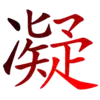 | |||
Han character
凝 (Kangxi radical 15, 冫+14, 16 strokes, cangjie input 戈一心大人 (IMPKO), four-corner 37181, composition ⿰冫疑)
Derived characters
- 𭗰, 𠘤
References
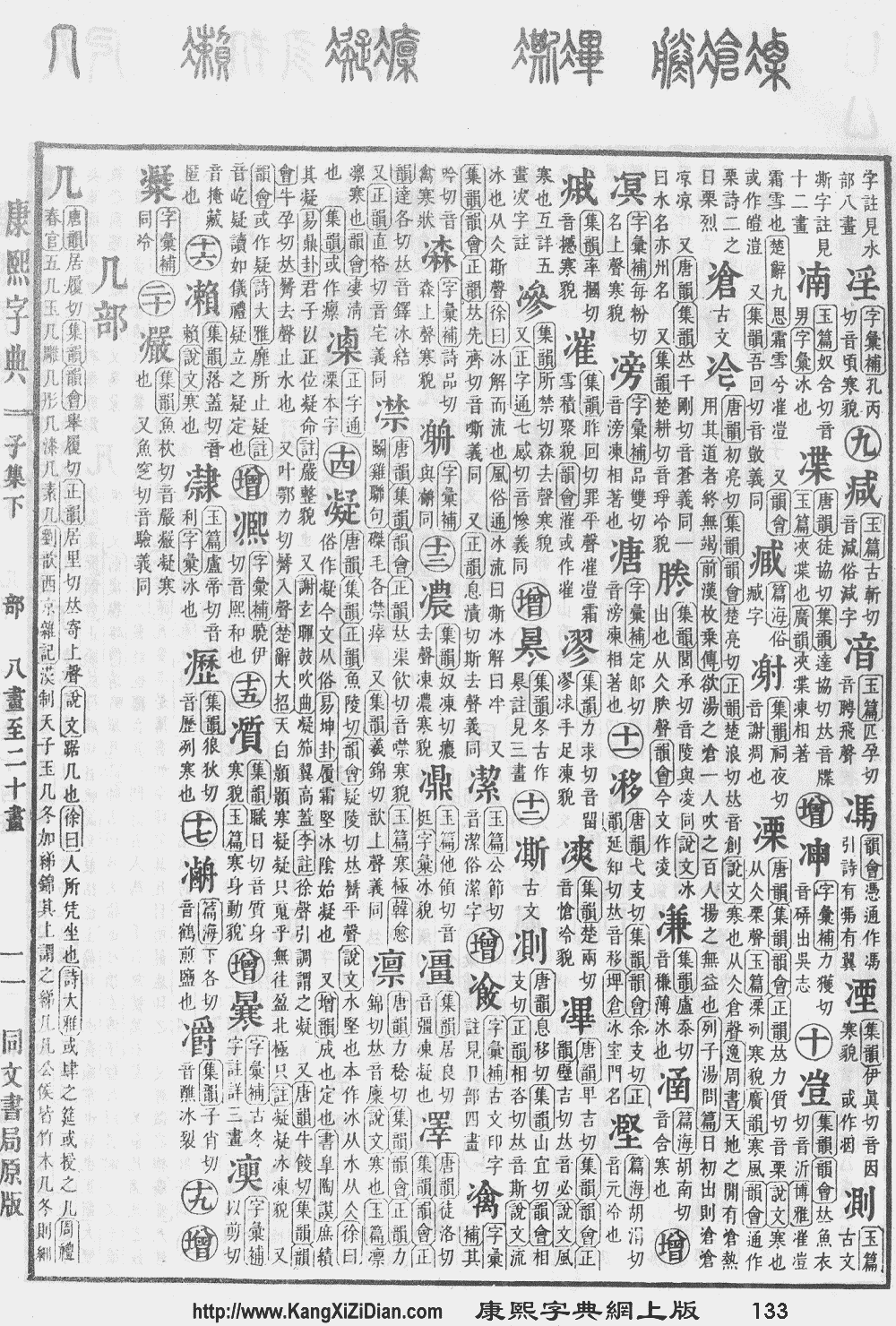
- Kangxi Dictionary: page 133, character 45
- Dai Kanwa Jiten: character 1720
- Dae Jaweon: page 298, character 27
- Hanyu Da Zidian (first edition): volume 1, page 301, character 18
- Unihan data for U+51DD
Chinese
| trad. | 凝 | |
|---|---|---|
| simp. # | 凝 | |
| 2nd round simp. | 泞 | |
| alternative forms | 冰 𣲝 𡷪 𠘥 瓊/琼 Cantonese "to coagulate" | |
Glyph origin
Characters in the same phonetic series (疑) (Zhengzhang, 2003)
Phono-semantic compound (形聲/形声, OC *ŋrɯŋ, *ŋrɯŋs) : semantic 冫 (“ice”) + phonetic 疑 (OC *ŋɯ)
Etymology 1
Possibly related to 冰 (OC *p.rəŋ, “ice”) (Baxter & Sagart, 2014); if so, also related to 凌 (OC *[r]əŋ ~ p.rəŋ, “ice”) and from Proto-Sino-Tibetan *r-p(w)am (“to freeze; snow”) (provisionally reconstructed) (STEDT); other comparanda are 雱 (OC *pʰˁaŋ) "heavy snowfall", and 霙 (OC *ʔraŋ) "sleet, snowflake".
Pronunciation
Definitions
凝
Synonyms
Dialectal synonyms of 冷 (“cold”) [map]
Dialectal synonyms of 冰 (“ice”) [map]
Compounds
- 冷凝 (lěngníng)
- 冷凝劑/冷凝剂
- 冷凝器
- 冷凝管
- 凝乳 (níngrǔ)
- 凝佇
- 凝冱
- 凝凍/凝冻
- 凝凝
- 凝咽 (níngyè)
- 凝固 (nínggù)
- 凝固劑/凝固剂
- 凝固點/凝固点
- 凝妝/凝妆
- 凝寒
- 凝思 (níngsī)
- 凝想
- 凝態/凝态
- 凝慮/凝虑
- 凝望 (níngwàng)
- 凝水石
- 凝滯/凝滞 (níngzhì)
- 凝灰岩 (nínghuīyán)
- 凝然
- 凝目 (níngmù)
- 凝眄
- 凝眸 (níngmóu)
- 凝睇 (níngdì)
- 凝神 (níngshén)
- 凝視/凝视 (níngshì)
- 凝視點/凝视点
- 凝結/凝结 (níngjié)
- 凝結作用/凝结作用
- 凝結反應/凝结反应
- 凝網/凝网
- 凝練/凝练 (níngliàn)
- 凝聚 (níngjù)
- 凝聚力 (níngjùlì)
- 凝聽/凝听 (níngtīng)
- 凝脂 (níngzhī)
- 凝膠體/凝胶体
- 凝華/凝华 (nínghuá)
- 凝血因子 (níngxuè yīnzǐ)
- 凝血現象/凝血现象
- 凝血障礙/凝血障碍
- 凝重 (níngzhòng)
- 凝鍊/凝炼 (níngliàn)
- 凝集 (níngjí)
- 凝雨
- 凝霜 (níngshuāng)
- 凝霰
- 凝香
- 屏息凝氣/屏息凝气
- 屏息凝視/屏息凝视
- 屏氣凝神/屏气凝神
- 抗凝血劑/抗凝血剂
- 混凝
- 混凝劑/混凝剂
- 混凝土
- 端凝
- 絮凝 (xùníng)
- 血液凝固
- 酸凝酪 (suānnínglào)
Pronunciation
Japanese
Korean
Hanja
凝 (eum 응 (eung))
- This term needs a translation to English. Please help out and add a translation, then remove the text
{{rfdef}}.
Vietnamese
This article is issued from Wiktionary. The text is licensed under Creative Commons - Attribution - Sharealike. Additional terms may apply for the media files.