劣
| ||||||||
| ||||||||
Translingual
Alternative forms
Han character
劣 (Kangxi radical 19, 力+4, 6 strokes, cangjie input 火竹大尸 (FHKS), four-corner 90427, composition ⿱少力)
References
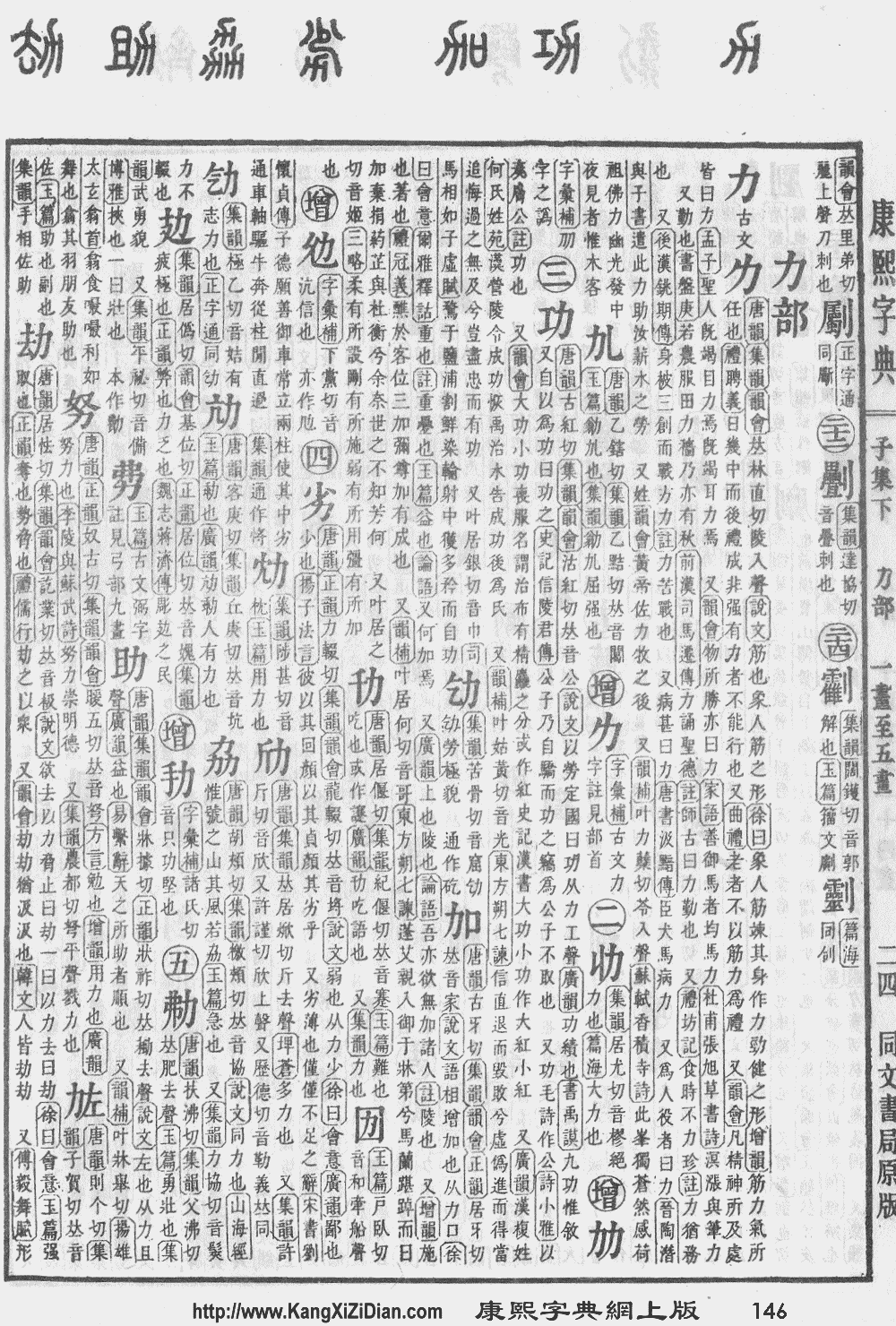
- Kangxi Dictionary: page 146, character 17
- Dai Kanwa Jiten: character 2302
- Dae Jaweon: page 330, character 6
- Hanyu Da Zidian (first edition): volume 1, page 367, character 5
- Unihan data for U+52A3
- Unihan data for U+F99D
Chinese
| simp. and trad. |
劣 | |
|---|---|---|
Glyph origin
| Historical forms of the character 劣 | |
|---|---|
| Shuowen Jiezi (compiled in Han) | Liushutong (compiled in Ming) |
| Small seal script | Transcribed ancient scripts |
 |
 |
Ideogrammic compound (會意/会意) : 少 (“little, less”) + 力 (“strength”). 少 (OC *hmjewʔ, *hmjews) also functions as phonetic.
Pronunciation
Definitions
劣
Synonyms
- (small and weak): 弱小 (ruòxiǎo)
- (bad):
- 不善 (bùshàn)
- 不好
- 不妙 (bùmiào)
- 不怎麼樣/不怎么样 (bùzěnmeyàng)
- 不濟/不济 (bùjì)
- 不腆 (bùtiǎn) (Classical Chinese, self-deprecatory)
- 了丁 (Min Nan)
- 低下 (dīxià)
- 低劣 (dīliè)
- 低路 (Min Nan)
- 垃圾 (lājī) (colloquial)
- 屎 (Cantonese)
- 差 (chà)
- 差勁/差劲 (chàjìn) (colloquial)
- 差氣/差气 (Hokkien)
- 拙劣 (zhuōliè)
- 推扳 (1the-pe) (Shanghainese)
- 梢跤 (Zhangzhou Hokkien)
- 梢跤軟蹄/梢跤软蹄 (Zhangzhou Hokkien)
- 梢蹬 (Zhangzhou Hokkien)
- 欠佳 (qiànjiā)
- 水皮 (seoi2 pei4) (Cantonese)
- 潮 (cháo) (colloquial, of quality or technique)
- 無良/无良 (wúliáng) (formal)
- 破 (pò) (colloquial)
- 跤梢 (Xiamen Hokkien)
- 蹩腳/蹩脚 (biéjiǎo)
- 鄙劣 (bǐliè) (literary)
Compounds
- 下劣 (xiàliè)
- 不劣方頭/不劣方头
- 乖劣
- 了劣
- 低劣 (dīliè)
- 優劣/优劣 (yōuliè)
- 優勝劣敗/优胜劣败
- 劣勢/劣势 (lièshì)
- 劣化 (lièhuà)
- 劣化警報/劣化警报
- 劣匠
- 劣品
- 劣弧
- 劣怯
- 劣性
- 劣憋
- 劣把
- 劣把頭/劣把头
- 劣敗/劣败
- 劣株
- 劣根性 (liègēnxìng)
- 劣比
- 劣相
- 劣種/劣种 (lièzhǒng)
- 劣等 (lièděng)
- 劣筆/劣笔
- 劣等生 (lièděngshēng)
- 劣紳/劣绅 (lièshēn)
- 劣缺
- 劣缺搊搜/劣缺𫼝搜
- 劣藥/劣药
- 劣行 (lièxíng)
- 劣角
- 劣貨/劣货
- 劣質/劣质 (lièzhì)
- 劣跡/劣迹 (lièjì)
- 劣跡昭著/劣迹昭著
- 劣蹶
- 劣酒
- 劣馬/劣马
- 卑劣 (bēiliè)
- 卑劣手段
- 土豪劣紳/土豪劣绅 (tǔháo lièshēn)
- 惡劣/恶劣 (èliè)
- 愚劣
- 憋劣
- 拙劣 (zhuōliè)
- 方頭不劣/方头不劣
- 日趨惡劣/日趋恶劣
- 狠劣
- 窳劣 (yǔliè)
- 粗劣 (cūliè)
- 粗衣劣食
- 羸劣
- 臞劣
- 蕪劣/芜劣
- 薄劣
- 闇劣/暗劣
- 陋劣
- 頑劣/顽劣 (wánliè)
Japanese
Korean
Etymology
From Middle Chinese 劣 (MC ljwet).
| Historical readings |
|---|
|
Pronunciation
- (SK Standard/Seoul) IPA(key): [ɾjʌ̹ɭ] ~ [jʌ̹ɭ]
- Phonetic hangul: [렬/열]
Compounds
Vietnamese
Han character
劣: Hán Nôm readings: liệt, lẹt
- This term needs a translation to English. Please help out and add a translation, then remove the text
{{rfdef}}.
References
This article is issued from Wiktionary. The text is licensed under Creative Commons - Attribution - Sharealike. Additional terms may apply for the media files.