優
See also: 优
| ||||||||
| ||||||||
Translingual
Han character
優 (Kangxi radical 9, 人+15, 17 strokes, cangjie input 人一月水 (OMBE), four-corner 21247, composition ⿰亻憂)
References
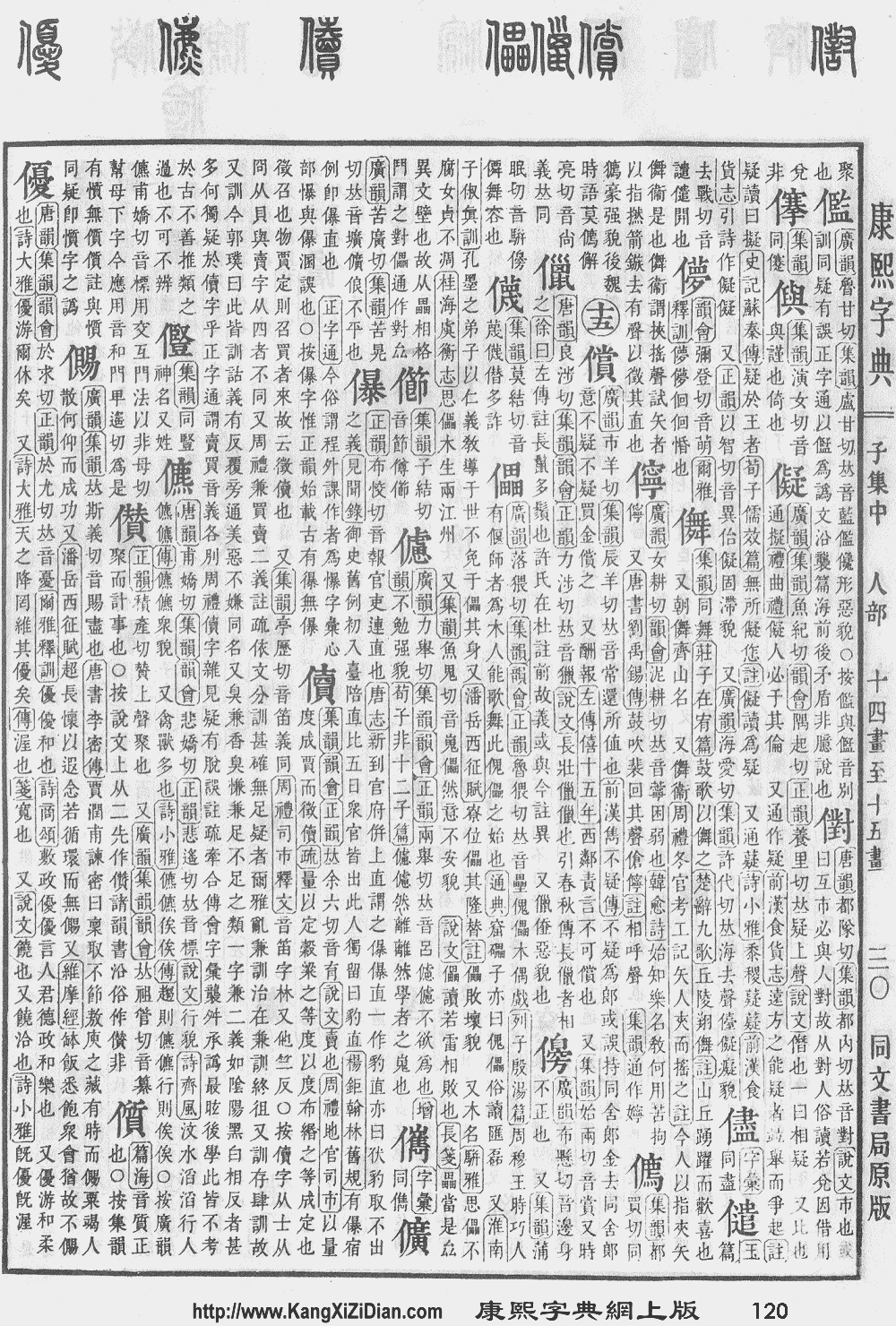
- Kangxi Dictionary: page 120, character 28
- Dai Kanwa Jiten: character 1261
- Dae Jaweon: page 254, character 26
- Hanyu Da Zidian (first edition): volume 1, page 233, character 4
- Unihan data for U+512A
Chinese
| trad. | 優 | |
|---|---|---|
| simp. | 优* | |
Glyph origin
| Historical forms of the character 優 | ||||||
|---|---|---|---|---|---|---|
| ||||||
|
References: Mostly from Richard Sears' Chinese Etymology site (authorisation),
|


Characters in the same phonetic series (憂) (Zhengzhang, 2003)
Phono-semantic compound (形聲/形声, OC *qu) : semantic 亻 + phonetic 憂 (OC *qu).
Pronunciation
Definitions
優
Synonyms
- (generous):
- (to give preferential treatment):
Antonyms
- (antonym(s) of “excellent”): 劣 (liè)
Compounds
- 伊優/伊优
- 伶優/伶优
- 倡優/倡优 (chāngyōu)
- 俳優/俳优 (páiyōu)
- 俳優體/俳优体
- 優伶/优伶 (yōulíng)
- 優假/优假
- 優優/优优
- 優先/优先 (yōuxiān)
- 優先權/优先权 (yōuxiānquán)
- 優劣/优劣 (yōuliè)
- 優勝/优胜 (yōushèng)
- 優勝劣敗/优胜劣败
- 優勢/优势 (yōushì)
- 優勢種/优势种 (yōushìzhǒng)
- 優厚/优厚 (yōuhòu)
- 優哉游哉/优哉游哉 (yōuzāiyóuzāi)
- 優地槽/优地槽
- 優境學/优境学
- 優婆塞/优婆塞 (yōupósè)
- 優婆夷/优婆夷 (yōupóyí)
- 優孟衣冠/优孟衣冠
- 優容/优容
- 優弧/优弧
- 優待/优待 (yōudài)
- 優待券/优待券
- 優待月票/优待月票
- 優恤/优恤
- 優惠/优惠 (yōuhuì)
- 優惠待遇/优惠待遇
- 優惠關稅/优惠关税
- 優撫/优抚 (yōufǔ)
- 優曇華/优昙华
- 優柔/优柔
- 優柔寡斷/优柔寡断 (yōuróuguǎduàn)
- 優格/优格 (yōugé)
- 優樂/优乐
- 優比/优比
- 優洽/优洽
- 優游/优游 (yōuyóu)
- 優渥/优渥 (yōuwò)
- 優游不迫/优游不迫
- 優游自在/优游自在
- 優獎/优奖
- 優生保健/优生保健
- 優生學/优生学 (yōushēngxué)
- 優異/优异 (yōuyì)
- 優禮/优礼 (yōulǐ)
- 優秀/优秀 (yōuxiù)
- 優笑/优笑
- 優等/优等 (yōuděng)
- 優缽羅/优钵罗
- 優美/优美 (yōuměi)
- 優良/优良 (yōuliáng)
- 優處/优处
- 優裕/优裕 (yōuyù)
- 優角/优角
- 優詔/优诏
- 優貢/优贡
- 優質/优质 (yōuzhì)
- 優越/优越 (yōuyuè)
- 優越感/优越感 (yōuyuègǎn)
- 優遊/优游 (yōuyóu)
- 優遇/优遇 (yōuyù)
- 優選法/优选法
- 優酪乳/优酪乳 (yōulàorǔ)
- 優長/优长
- 優閒/优闲 (yōuxián)
- 優雅/优雅 (yōuyǎ)
- 優養化/优养化
- 優點/优点 (yōudiǎn)
- 名優/名优 (míngyōu)
- 名特優新/名特优新
- 品學兼優/品学兼优 (pǐnxuéjiānyōu)
- 女優/女优 (nǚyōu)
- 娼優/娼优
- 學優才贍/学优才赡
- 學優而仕/学优而仕 (xuéyōu'érshì)
- 弄優/弄优
- 從優/从优 (cóngyōu)
- 才勇兼優/才勇兼优
- 才學兼優/才学兼优
- 擇優/择优 (zéyōu)
- 特優/特优
- 男優/男优 (nányōu)
- 空優迷彩/空优迷彩
- 績優/绩优
- 績優股/绩优股 (jìyōugǔ)
- 膽識俱優/胆识俱优
- 衣冠優孟/衣冠优孟
- 資優/资优 (zīyōu)
- 資優生/资优生
- 雜種優勢/杂种优势
- 養尊處優/养尊处优 (yǎngzūnchǔyōu)
- 高貴優雅/高贵优雅
Japanese
Kanji
優
Readings
Compounds
- 優曇華 (udonge)
- 優形 (yasagata)
- 優男 (yasaotoko)
- 優々閑々 (yūyūkankan), 優優閑閑 (yūyūkankan)
- 優位 (yūi)
- 優先 (yūsen)
- 優劣 (yūretsu)
- 優勝 (yūshō)
- 優勢 (yūsei)
- 優女 (yūonna)
- 優姿 (yūshi)
- 優婉 (yūen)
- 優弧 (yūko)
- 優待 (yūtai)
- 優性 (yūsei)
- 優柔不断 (yūjūfudan)
- 優渥 (yūaku)
- 優生 (yūsei)
- 優秀 (yūshū)
- 優等 (yūtō)
- 優美 (yūbi)
- 優者 (yūsha)
- 優良 (yūryō)
- 優艶 (yūen)
- 優諚 (yūjō)
- 優越 (yūetsu)
- 優越感 (yūetsukan)
- 優退 (yūtai)
- 優遇 (yūgū)
- 優長 (yūchō)
- 優雅 (yūga)
- 優駿 (yūshun)
Etymology 1
| Kanji in this term |
|---|
| 優 |
| ゆう Grade: 6 |
| on’yomi |
Etymology 2
| Kanji in this term |
|---|
| 優 |
| まさ(る) Grade: 6 |
| kun’yomi |
Korean
Etymology
From Middle Chinese 優 (MC 'juw).
| Historical readings |
|---|
|
Pronunciation
- (SK Standard/Seoul) IPA(key): [u]
- Phonetic hangul: [우]
Compounds
Vietnamese
Han character
- This term needs a translation to English. Please help out and add a translation, then remove the text
{{rfdef}}.
This article is issued from Wiktionary. The text is licensed under Creative Commons - Attribution - Sharealike. Additional terms may apply for the media files.