差
| ||||||||
Translingual
| Japanese | 差 |
|---|---|
| Simplified | 差 |
| Traditional | 差 |
Alternative forms
Note that the character in simplified Chinese has 9 strokes. Simplified from 差 (𦍌丿 → ⺶)
Han character

差 (Kangxi radical 48, 工+7 in traditional Chinese, 工+6 in simplified Chinese, 10 strokes in traditional Chinese, 9 strokes in simplified Chinese, cangjie input 廿手一 (TQM), four-corner 80211, composition ⿱𦍌⿰丿工(HTJK) or ⿸⺶工(GV))
| Stroke order | |||
|---|---|---|---|
 | |||
References
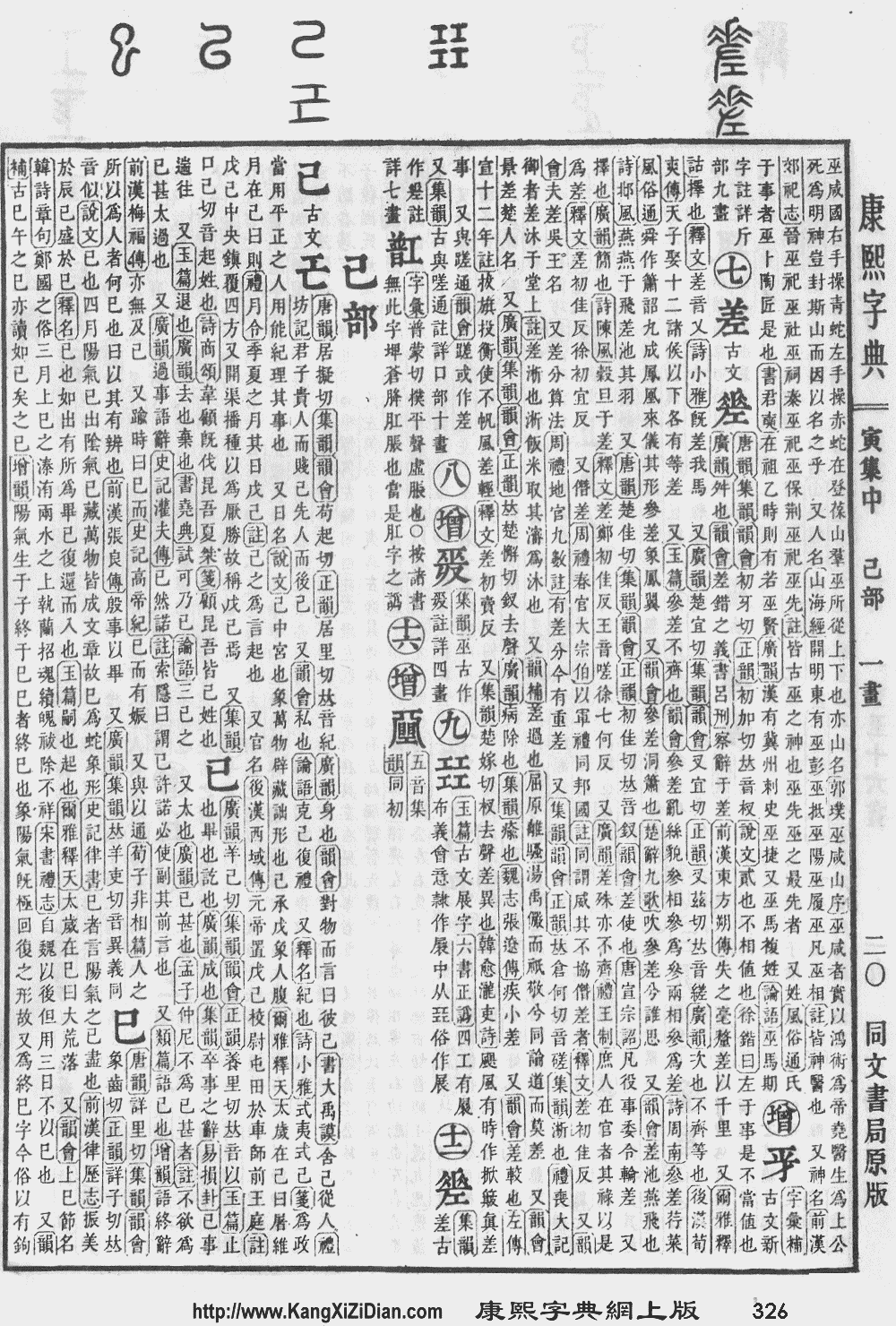
- Kangxi Dictionary: page 326, character 2
- Dai Kanwa Jiten: character 8732
- Dae Jaweon: page 629, character 12
- Hanyu Da Zidian (first edition): volume 1, page 413, character 4
- Unihan data for U+5DEE
Chinese
| trad. | 差 | |
|---|---|---|
| simp. # | 差 | |
| alternative forms | 荖 𢀩 𢀠 𢀞 | |
Glyph origin
| Historical forms of the character 差 | ||
|---|---|---|
| Western Zhou | Shuowen Jiezi (compiled in Han) | Liushutong (compiled in Ming) |
| Bronze inscriptions | Small seal script | Transcribed ancient scripts |
 |
 |
 |
| Old Chinese | |
|---|---|
| 左 | *ʔsaːlʔ, *ʔsaːls |
| 佐 | *ʔsaːls |
| 袏 | *ʔslaːls |
| 蹉 | *sʰlaːl |
| 瑳 | *sʰlaːl, *sʰlaːlʔ |
| 搓 | *sʰlaːl |
| 磋 | *sʰlaːl |
| 溠 | *sʰlaːl, *sraːl, *ʔsraːls |
| 傞 | *sʰlaːl, *slaːl |
| 醝 | *zlaːl |
| 瘥 | *zlaːl, *ʔsljal, *sʰreːls |
| 鹺 | *zlaːl |
| 嵯 | *zlaːl, *sʰral |
| 嵳 | *zlaːl |
| 蒫 | *zlaːl, *ʔsljal, *ʔslɯl |
| 艖 | *zlaːl, *sʰraːl |
| 齹 | *zlaːl, *sʰral, *zral |
| 縒 | *slaːlʔ, *sʰral, *sʰlaːɡ |
| 褨 | *slaːlʔ |
| 嗟 | *ʔsljal |
| 差 | *sʰraːl, *sʰraːls, *sʰreːl, *sʰreːl, *sʰreːls, *sʰral |
| 鎈 | *sʰraːl |
| 槎 | *zraːl, *zraːlʔ |
| 髊 | *zlals |
Ideogrammic compound (會意/会意) : 來 (“wheat”) + 𠂇 (“left hand”) – to hull wheat by rubbing grains inside hands. Original form of 搓 (OC *sʰlaːl, “to rub with hands; to scrub; to twist”).
工 or 口 was later added under 𠂇 to form 左 (OC *ʔsaːlʔ, *ʔsaːls, “left”), which is also this character's phonetic component.
Pronunciation 1
Definitions
差
- to differ from; to be different; dissimilar; incongruous
- wrong; incorrect; erroneous
- inferior; poor; substandard
- difference; discrepancy
- mistake; wrongdoing
- (mathematics) difference
- to be short of; to fall short of
- to owe
- rather; barely; nearly; almost
- 11th tetragram of the Taixuanjing; "divergence" (𝌐)
Synonyms
- (wrong):
- (inferior):
- 不善 (bùshàn)
- 不好
- 不妙 (bùmiào)
- 不怎麼樣/不怎么样 (bùzěnmeyàng)
- 不濟/不济 (bùjì)
- 不腆 (bùtiǎn) (Classical Chinese, self-deprecatory)
- 了丁 (Min Nan)
- 低下 (dīxià)
- 低劣 (dīliè)
- 低路 (Min Nan)
- 劣 (literary, or in compounds)
- 垃圾 (lājī) (colloquial)
- 屎 (Cantonese)
- 差勁/差劲 (chàjìn) (colloquial)
- 差氣/差气 (Hokkien)
- 拙劣 (zhuōliè)
- 推扳 (1the-pe) (Shanghainese)
- 梢跤 (Zhangzhou Hokkien)
- 梢跤軟蹄/梢跤软蹄 (Zhangzhou Hokkien)
- 梢蹬 (Zhangzhou Hokkien)
- 欠佳 (qiànjiā)
- 水皮 (seoi2 pei4) (Cantonese)
- 潮 (cháo) (colloquial, of quality or technique)
- 無良/无良 (wúliáng) (formal)
- 破 (pò) (colloquial)
- 跤梢 (Xiamen Hokkien)
- 蹩腳/蹩脚 (biéjiǎo)
- 鄙劣 (bǐliè) (literary)
Compounds
- 一丈差九尺 (yīzhàngchājiǔchǐ)
- 一字不差
- 一差二誤/一差二误 (yīchā'èrwù)
- 一差二錯/一差二错 (yīchā'èrcuò)
- 一差半錯/一差半错 (yīchābàncuò)
- 一念之差 (yīniànzhīchā)
- 三差五錯/三差五错
- 三差兩錯/三差两错
- 不差
- 不差不錯/不差不错
- 不差什麼/不差什么
- 不差毫釐
- 不差毫髮/不差毫发
- 不差累黍 (bùchālěishǔ)
- 個別差異/个别差异
- 偏差 (piānchā)
- 偏差理論/偏差理论
- 偏差者
- 偏差行為/偏差行为
- 光差
- 光行差
- 兩性差異/两性差异
- 公差
- 出差錯/出差错
- 分毫不差
- 千差萬別/千差万别 (qiānchā-wànbié)
- 千差萬差,來人不差/千差万差,来人不差
- 反差 (fǎnchā)
- 周年視差/周年视差
- 外合裡差/外合里差
- 天差地別/天差地别 (tiānchādìbié)
- 天差地遠/天差地远 (tiānchādìyuǎn)
- 失之毫釐,差之千里
- 失之毫釐,差以千里
- 官差吏差,來人不差/官差吏差,来人不差
- 少差
- 差一點兒/差一点儿
- 差三錯四/差三错四
- 差不上下
- 差不多 (chàbuduō)
- 差不離/差不离 (chàbùlí)
- 差之毫釐,失之千里
- 差之毫釐,繆以千里
- 差事
- 差人
- 差以毫釐,失之千里 (chāyǐháolí, shīzhīqiānlǐ)
- 差以豪釐,謬以千里
- 差價/差价 (chājià)
- 差分 (chāfēn)
- 差別/差别 (chābié)
- 差別待遇/差别待遇
- 差勁/差劲 (chàjìn)
- 差動滑車/差动滑车
- 差半車麥秸/差半车麦秸
- 差可 (chākě)
- 差失 (chāshī)
- 差強人意/差强人意
- 差忒
- 差惡/差恶
- 差數/差数 (chāshù)
- 差次
- 差池
- 差爭/差争
- 差異/差异 (chāyì)
- 差異法/差异法
- 差眼
- 差等 (cīděng)
- 差聲兒/差声儿
- 差若豪釐,繆以千里
- 差號/差号
- 差越
- 差距 (chājù)
- 差迭
- 差速齒輪/差速齿轮
- 差遲/差迟
- 差配兒/差配儿
- 差錯/差错 (chācuò)
- 差額/差额 (chā'é)
- 差額選舉/差额选举 (chā'é xuǎnjǔ)
- 差點兒/差点儿 (chàdiǎnr)
- 差點沒/差点没 (chàdiǎn méi)
- 平均時差/平均时差
- 時差/时差 (shíchā)
- 時間差攻擊/时间差攻击
- 東差西誤/东差西误
- 歲差/岁差 (suìchā)
- 毫釐之差
- 毫髮不差/毫发不差
- 海洋溫差發電/海洋温差发电
- 溫差/温差 (wēnchā)
- 潮差 (cháochā)
- 爭差/争差
- 相差 (xiāngchà)
- 相差無幾/相差无几
- 視差/视差 (shìchā)
- 萬別千差/万别千差
- 秒差距 (miǎochājù)
- 等差 (děngchà)
- 等差級數/等差级数
- 絲毫不差/丝毫不差
- 色差 (sèchā)
- 落差 (luòchā)
- 言差語錯/言差语错
- 話差/话差
- 誤差/误差 (wùchā)
- 語意差別量表/语意差别量表
- 貧富差距/贫富差距 (pínfù chājù)
- 貿易差額/贸易差额
- 貿易逆差/贸易逆差
- 貿易順差/贸易顺差 (màoyì shùnchā)
- 踏差 (ta̍h-chha) (Min Nan)
- 逆差 (nìchā)
- 陰差陽錯/阴差阳错 (yīnchāyángcuò)
- 陰錯陽差/阴错阳差
- 隔三差五 (gésānchàwǔ)
- 雙差/双差
- 順差/顺差 (shùnchā)
Pronunciation 2
Definitions
差
Compounds
- 丁差
- 交差 (jiāochāi)
- 信差 (xìnchāi)
- 公差 (gōngchāi)
- 兼差 (jiānchāi)
- 出公差
- 出大差
- 出差 (chūchāi)
- 出差費/出差费
- 出紅差/出红差
- 到差
- 報差/报差
- 大差
- 夫差 (Fūchāi)
- 官差 (guānchāi)
- 專差/专差
- 小差事兒/小差事儿
- 差事
- 差人
- 差使
- 差佬
- 差委
- 差婆
- 差官
- 差役 (chāiyì)
- 差批
- 差排
- 差撥/差拨
- 差旅費/差旅费 (chāilǚfèi)
- 差法
- 差發/差发
- 差票
- 差置
- 差輪/差轮
- 差遣 (chāiqiǎn)
- 差錢/差钱
- 差除
- 帶俸差操/带俸差操
- 得差
- 打差
- 承差
- 押差
- 搪差使
- 撤差 (chèchāi)
- 放富差貧/放富差贫
- 欽差/钦差 (qīnchāi)
- 欽差大臣/钦差大臣 (qīnchāidàchén)
- 當差/当差 (dāngchāi)
- 當差的/当差的
- 白差使
- 皁差
- 皇帝不差餓兵/皇帝不差饿兵
- 神差鬼使
- 科差
- 緊差緊做/紧差紧做
- 考差
- 聽差/听差
- 苦差事
- 解差
- 調差/调差
- 貓兒頭差事/猫儿头差事
- 賣富差貧/卖富差贫
- 辦差/办差 (bànchāi)
- 郵差/邮差 (yóuchāi)
- 銷差/销差
- 開小差/开小差 (kāi xiǎochāi)
- 開差/开差
- 面子上的差使
- 鬼使神差
- 點差/点差
Pronunciation 3
Definitions
差
Compounds
Pronunciation 4
Compounds
- 扳差頭/扳差头
- 景差
Pronunciation 5
Japanese
Readings
Etymology
| Kanji in this term |
|---|
| 差 |
| さ Grade: 4 |
| on’yomi |
From Middle Chinese 差 (MC tsrhje|tsrhea|tsrheaj|tsrhae|tsrheaH).
References
- Matsumura, Akira, editor (2006), 大辞林 [Daijirin] (in Japanese), Third edition, Tōkyō: Sanseidō, →ISBN
Korean
Etymology 1
From Middle Chinese 差 (MC tsrhea|tsrhae|tsrheaH).
| Historical readings |
|---|
|
Recorded as Middle Korean 차 (cha)訓 (Yale: cha) in Sinjeung Yuhap (新增類合 / 신증유합), 1576.
|
Pronunciation
- (SK Standard/Seoul) IPA(key): [t͡ɕʰa̠]
- Phonetic hangul: [차]
Compounds
- 차이 (差異, chai)
- 차별 (差別, chabyeol)
- 차등 (差等, chadeung)
- 차익 (差益, chaik)
- 차액 (差額, chaaek)
- 차도 (差度, chado)
- 격차 (隔差, gyeokcha)
- 낙차 (落差, nakcha)
- 오차 (誤差, ocha)
- 시차 (時差, sicha)
- 차출 (差出, chachul)
- 차입 (差入, chaip)
- 쾌차 (快差, kwaecha)
- 차분 (差分, chabun)
- 편차 (偏差, pyeoncha)
- 차감 (差減, chagam)
- 차사 (差使, chasa)
- 차비 (差備, chabi)
- 경차 (經差, gyeongcha)
- 개인차 (個人差, gaeincha)
- 세대차 (世代差, sedaecha)
Etymology 2
From Middle Chinese 差 (MC tsrhje, “uneven”).
| Historical readings |
|---|
|
Pronunciation
- (SK Standard/Seoul) IPA(key): [t͡ɕʰi]
- Phonetic hangul: [치]