吁
See also: 籲
| ||||||||
Translingual
Han character
吁 (Kangxi radical 30, 口+3, 6 strokes, cangjie input 口一木 (RMD), four-corner 61040, composition ⿰口于)
Derived characters
- 𬇢, 𦮣, 冔, 𦊯
References
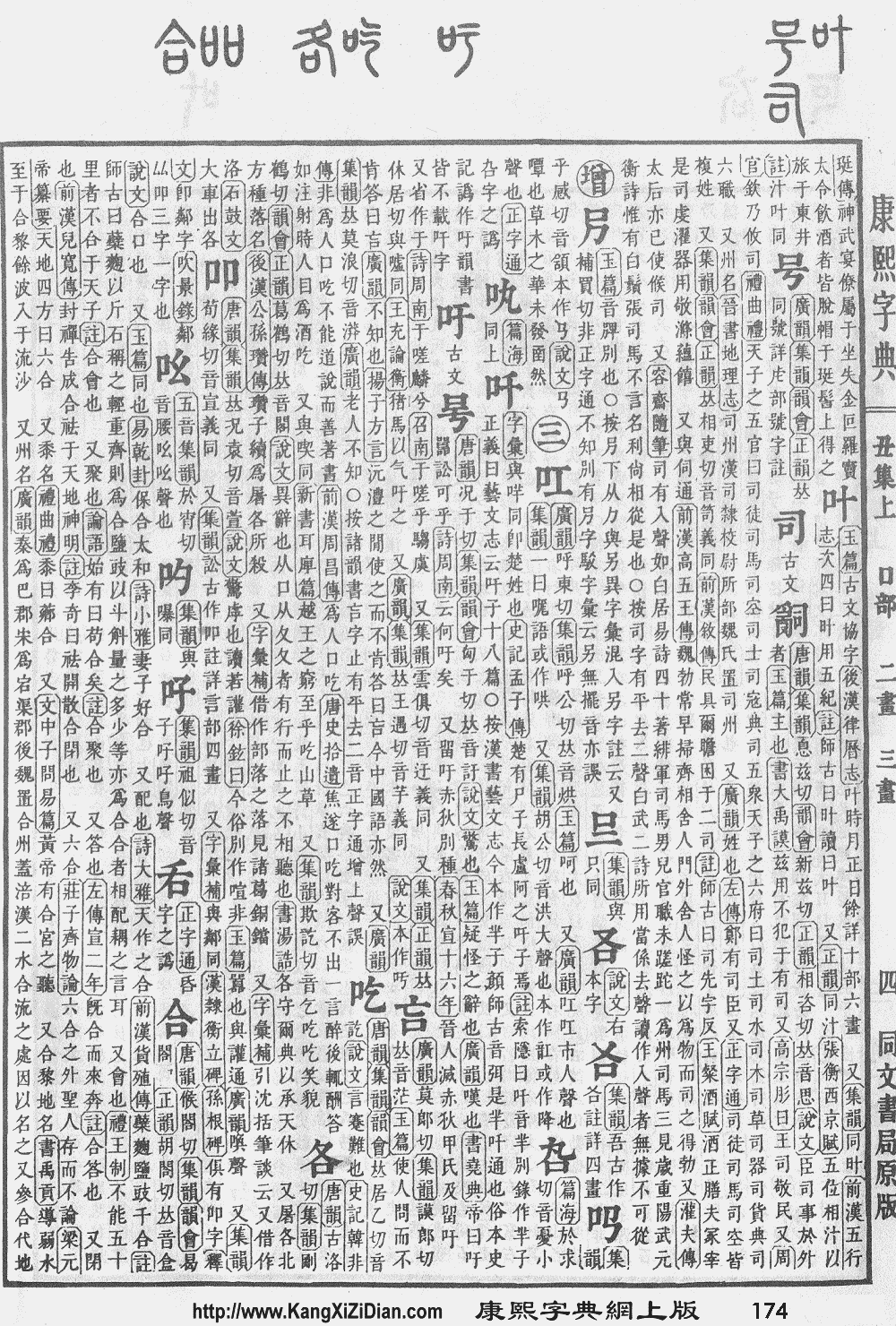
- Kangxi Dictionary: page 174, character 14
- Dai Kanwa Jiten: character 3275
- Dae Jaweon: page 387, character 6
- Hanyu Da Zidian (first edition): volume 1, page 575, character 7
- Unihan data for U+5401
Chinese
Glyph origin
Characters in the same phonetic series (于) (Zhengzhang, 2003)
| Old Chinese | |
|---|---|
| 侉 | *qaːls |
| 夸 | *kʰʷraː |
| 姱 | *kʰʷraː |
| 胯 | *kʰʷraː, *kʰʷraːs, *kʰʷaːs |
| 跨 | *kʰʷraː, *kʰʷraːʔ, *kʰʷraːs, *kʰʷaːs |
| 誇 | *kʰʷraː |
| 垮 | *kʰʷraːʔ |
| 銙 | *kʰʷraːʔ |
| 骻 | *kʰʷraːʔ |
| 咵 | *kʰʷraːʔ |
| 釫 | *ɢʷraː, *qʷaː |
| 摦 | *ɡʷraːs |
| 鮬 | *pɢʷaː, *kʰʷaː |
| 嶀 | *qʰʷl'aː |
| 扝 | *kʰʷaː, *qʷaː |
| 刳 | *kʰʷaː |
| 郀 | *kʰʷaː |
| 挎 | *kʰʷaː |
| 袴 | *kʰʷaːs |
| 絝 | *kʰʷaːs |
| 褲 | *kʰʷaːs |
| 恗 | *qʰaː |
| 洿 | *ɡʷaːʔ, *qʷaː |
| 瓠 | *ɡʷlaː, *ɡʷlaːs |
| 鄠 | *ɢʷlaːʔ |
| 污 | *qʷaː, *qʷaːs |
| 杇 | *qʷaː |
| 圬 | *qʷaː |
| 鴮 | *qʷaː |
| 盓 | *qʷaː |
| 汙 | *qʷaːs, *ɢʷa |
| 樗 | *qʰʷl'a |
| 摴 | *qʰʷl'a |
| 荂 | *pqʰʷa, *qʰʷa |
| 雩 | *qʰʷla, *ɢʷla |
| 吁 | *qʰʷa, *ɢʷas |
| 盱 | *qʰʷa |
| 訏 | *qʰʷa |
| 扜 | *qʰʷa, *qʷa |
| 旴 | *qʰʷa |
| 冔 | *qʰʷaʔ |
| 紆 | *qʷa |
| 陓 | *qʷa |
| 迂 | *qʷa, *qʷaʔ, *ɢʷa |
| 虶 | *qʷa |
| 于 | *ɢʷa |
| 盂 | *ɢʷa |
| 竽 | *ɢʷa |
| 邘 | *ɢʷa |
| 玗 | *ɢʷa |
| 芋 | *ɢʷa, *ɢʷas |
| 杅 | *ɢʷa |
| 釪 | *ɢʷa |
| 骬 | *ɢʷa |
| 謣 | *ɢʷla |
| 宇 | *ɢʷaʔ |
Phono-semantic compound (形聲/形声, OC *qʰʷa, *ɢʷas) : semantic 口 (“mouth”) + phonetic 于 (OC *ɢʷa).
Pronunciation
Compounds
Pronunciation
Etymology 3
| For pronunciation and definitions of 吁 – see 籲 (“to appeal; to plead; to call”). (This character is the simplified form of 籲). |
Notes:
|
Japanese
Kanji
吁
- This term needs a translation to English. Please help out and add a translation, then remove the text
{{rfdef}}.
Korean
Hanja
吁 • (yu) (hangeul 유, revised yu, McCune–Reischauer yu)
- This term needs a translation to English. Please help out and add a translation, then remove the text
{{rfdef}}.
Vietnamese
Han character
吁: Hán Việt readings: hu[1][2][3], hù[3], u[2]
吁: Nôm readings: hu[2][3][4], hủ[1][5], vo[1], vu[1], xu[3]
References
- Nguyễn (2014).
- Nguyễn et al. (2009).
- Trần (2004).
- Taberd & Pigneau de Béhaine (1838).
- Hồ (1976).
This article is issued from Wiktionary. The text is licensed under Creative Commons - Attribution - Sharealike. Additional terms may apply for the media files.