枝
See also: 支
| ||||||||
Translingual
Han character
枝 (Kangxi radical 75, 木+4, 8 strokes, cangjie input 木十水 (DJE), four-corner 44947, composition ⿰木支)
References
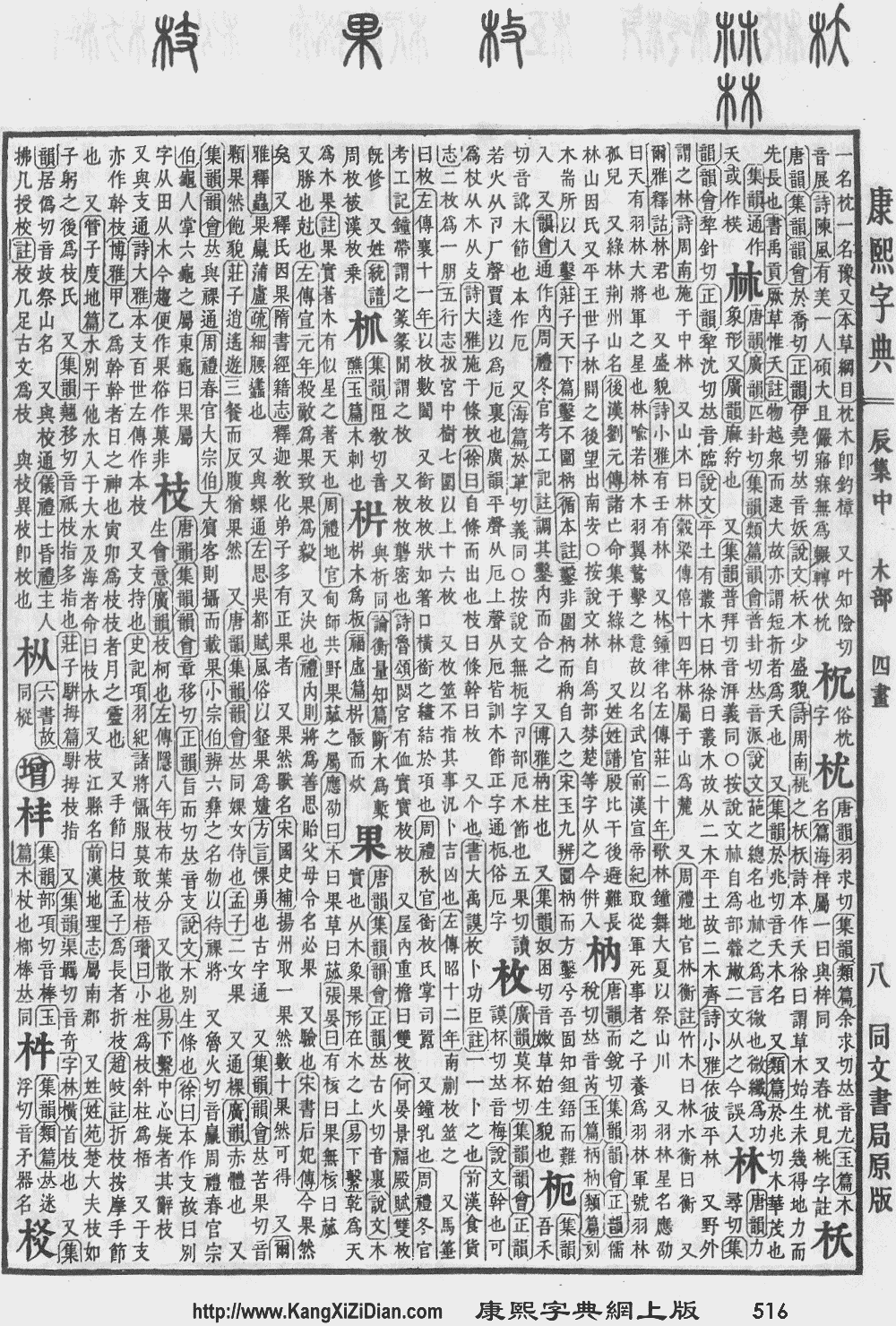
- Kangxi Dictionary: page 516, character 12
- Dai Kanwa Jiten: character 14557
- Dae Jaweon: page 904, character 6
- Hanyu Da Zidian (first edition): volume 2, page 1165, character 7
- Unihan data for U+679D
Chinese
| simp. and trad. |
枝 | |
|---|---|---|
| alternative forms | 支 | |
Glyph origin
| Historical forms of the character 枝 | |
|---|---|
| Shuowen Jiezi (compiled in Han) | Liushutong (compiled in Ming) |
| Small seal script | Transcribed ancient scripts |
 |
 |
Characters in the same phonetic series (支) (Zhengzhang, 2003)
| Old Chinese | |
|---|---|
| 支 | *kje |
| 枝 | *kje |
| 肢 | *kje |
| 汥 | *kje, *ɡe, *ɡres |
| 衼 | *kje |
| 馶 | *kje, *qʰjes, *kes, *ɡe |
| 鳷 | *kje |
| 忮 | *kjes |
| 伎 | *kjes, *ɡe, *ɡreʔ |
| 豉 | *ɡjes |
| 翅 | *qʰjes |
| 翄 | *qʰjes, *ɡe |
| 妓 | *kre, *ɡreʔ |
| 庋 | *kreʔ, *kʷreʔ |
| 跂 | *kʰeʔ, *kʰes, *ɡe |
| 蚑 | *kʰes, *ɡe |
| 吱 | *kʰes |
| 岐 | *ɡe |
| 歧 | *ɡe |
| 鬾 | *ɡre, *ɡres |
| 技 | *ɡreʔ |
| 芰 | *ɡres |
| 攱 | *kʷreʔ, *kʷres |
| 庪 | *kʷreʔ |
| 頍 | *kʰʷeʔ |
| 屐 | *ɡreɡ |
Phono-semantic compound (形聲/形声, OC *kje) and ideogrammic compound (會意/会意) : semantic 木 (“tree”) + phonetic 支 (OC *kje, “branch”).
Pronunciation 1
Definitions
枝
Synonyms
- (branch):
Compounds
- 一枝春
- 一枝棲/一枝栖
- 一枝獨秀/一枝独秀 (yīzhīdúxiù)
- 一枝花
- 不蔓不枝 (bùmànbùzhī)
- 丫枝 (yāzhī)
- 佔高枝兒/占高枝儿
- 修枝
- 側枝/侧枝 (cèzhī)
- 傲霜枝
- 別生枝節/别生枝节
- 剪枝 (jiǎnzhī)
- 南枝北枝
- 反掌折枝
- 同氣連枝/同气连枝
- 壓枝/压枝 (yāzhī)
- 孫枝/孙枝
- 宗枝
- 巴高枝兒/巴高枝儿
- 強幹弱枝/强干弱枝
- 強本弱枝/强本弱枝
- 彊幹弱枝/强干弱枝
- 打金枝
- 折枝
- 拖枝馬遠/拖枝马远
- 接枝 (jiēzhī)
- 插枝 (chāzhī)
- 攀枝花 (pānzhīhuā)
- 攀枝運動/攀枝运动
- 攀高枝
- 故生枝節/故生枝节
- 整枝 (zhěngzhī)
- 旁生枝節/旁生枝节
- 有枝有葉/有枝有叶
- 有枝添葉/有枝添叶
- 有枝節/有枝节
- 本枝
- 本枝百世
- 枝兒/枝儿
- 枝城 (Zhīchéng)
- 枝官
- 枝幹/枝干 (zhīgàn)
- 枝接
- 枝杈 (zhīchā)
- 枝枝節節/枝枝节节 (zhīzhījiéjié)
- 枝柯
- 枝梧 (zhīwú)
- 枝條/枝条 (zhītiáo)
- 枝梢
- 枝椏/枝桠 (zhīyā)
- 枝棲/枝栖
- 枝江 (Zhījiāng, “Zhijiang”)
- 枝節/枝节 (zhījié)
- 枝繁葉茂/枝繁叶茂 (zhīfányèmào)
- 枝葉/枝叶 (zhīyè)
- 枝葉扶疏/枝叶扶疏
- 枝蔓 (zhīmàn)
- 枝解 (zhījiě)
- 枝詞蔓語/枝词蔓语
- 枝辭/枝辞
- 枝針/枝针
- 枝頭/枝头 (zhītóu)
- 柘枝 (zhèzhī)
- 柳枝
- 枯枝再春
- 柔枝嫩葉/柔枝嫩叶
- 根朽枝枯
- 桂枝 (guìzhī)
- 桂林一枝
- 椏枝/桠枝 (yāzhī)
- 楊枝魚/杨枝鱼
- 槍枝/枪枝
- 樹枝/树枝 (shùzhī)
- 橫枝兒/横枝儿
- 橄欖枝/橄榄枝 (gǎnlǎnzhī)
- 橫生枝節/横生枝节 (héngshēng zhījié)
- 櫱枝/蘖枝
- 正枝正葉/正枝正叶
- 比目連枝/比目连枝
- 比翼連枝/比翼连枝
- 添枝加葉/添枝加叶
- 添枝接葉/添枝接叶
- 爬高枝兒/爬高枝儿
- 玉枝卜壽/玉枝卜寿
- 玉葉金枝/玉叶金枝
- 璚枝
- 瓊枝玉樹/琼枝玉树
- 瓊枝玉葉/琼枝玉叶
- 番荔枝 (fānlìzhī)
- 瘋枝/疯枝
- 登枝捐本
- 登高枝
- 百枝蓮/百枝莲
- 竹枝詞/竹枝词
- 節上生枝/节上生枝
- 節外生枝/节外生枝 (jiéwàishēngzhī)
- 粗枝大葉/粗枝大叶 (cūzhīdàyè)
- 細枝末節/细枝末节 (xìzhīmòjié)
- 繁華損枝/繁华损枝
- 翦枝竭流
- 胡枝子
- 花枝 (huāzhī)
- 花枝兒/花枝儿
- 花枝招展 (huāzhīzhāozhǎn)
- 花枝招颭/花枝招飐
- 荔枝 (lìzhī)
- 荔枝奴 (lìzhīnú)
- 莓枝
- 葉枝/叶枝
- 虯枝/虬枝 (qiúzhī)
- 詞無枝葉/词无枝叶
- 跳枝兒/跳枝儿
- 軟枝黃蟬/软枝黄蝉
- 連枝/连枝
- 連枝分葉/连枝分叶
- 連枝帶葉/连枝带叶
- 連枝樹/连枝树
- 連枝比翼/连枝比翼
- 連理枝/连理枝
- 連理枝分/连理枝分
- 配子枝
- 金枝玉葉/金枝玉叶 (jīnzhīyùyè)
- 高枝兒/高枝儿
- 鷦鷯一枝/鹪鹩一枝 (jiāoliáo yīzhī)
Pronunciation 2
Further reading
- “Entry #4211”, in 臺灣閩南語常用詞辭典 [Dictionary of Frequently-Used Taiwan Minnan] (overall work in Mandarin and Hokkien), Ministry of Education, R.O.C., 2023.
Japanese
枝
Readings
Korean
Hanja
枝 • (ji) (hangeul 지, revised ji, McCune–Reischauer chi, Yale ci)
- This term needs a translation to English. Please help out and add a translation, then remove the text
{{rfdef}}.
Kunigami
Etymology
Inherited from Proto-Ryukyuan *yoda, from Proto-Japonic *yonta.
Pronunciation
- IPA(key): /judaː/
References
- “ゆだー【枝】” in JLect - Japonic Languages and Dialects Database Dictionary, 2019.
Miyako
Etymology
Inherited from Proto-Ryukyuan *yoda, from Proto-Japonic *yonta.
Pronunciation
- IPA(key): /juda/
References
- “ゆだ【枝】” in JLect - Japonic Languages and Dialects Database Dictionary, 2019.
Okinawan
Etymology
Inherited from Proto-Ryukyuan *yoda, from Proto-Japonic *yonta.
Pronunciation
- IPA(key): /jida/, /juda/
References
- “いだ・いぃだ・ゐだ・ゆぃだ【枝】” in JLect - Japonic Languages and Dialects Database Dictionary, 2019.
- “ゆだ【枝】” in JLect - Japonic Languages and Dialects Database Dictionary, 2019.
Vietnamese
Yaeyama
Etymology
Inherited from Proto-Ryukyuan *yoda, from Proto-Japonic *yonta.
Pronunciation
- IPA(key): /juda/
References
- “ゆだ【枝】” in JLect - Japonic Languages and Dialects Database Dictionary, 2019.
Yonaguni
Etymology
Inherited from Proto-Ryukyuan *yoda, from Proto-Japonic *yonta.
Pronunciation
- IPA(key): /duda/
References
- “どぅだ【枝】” in JLect - Japonic Languages and Dialects Database Dictionary, 2019.
This article is issued from Wiktionary. The text is licensed under Creative Commons - Attribution - Sharealike. Additional terms may apply for the media files.