渠
| ||||||||
Translingual
Han character
渠 (Kangxi radical 85, 水+9, 12 strokes, cangjie input 水尸木 (ESD), four-corner 31904, composition ⿱洰木)
References
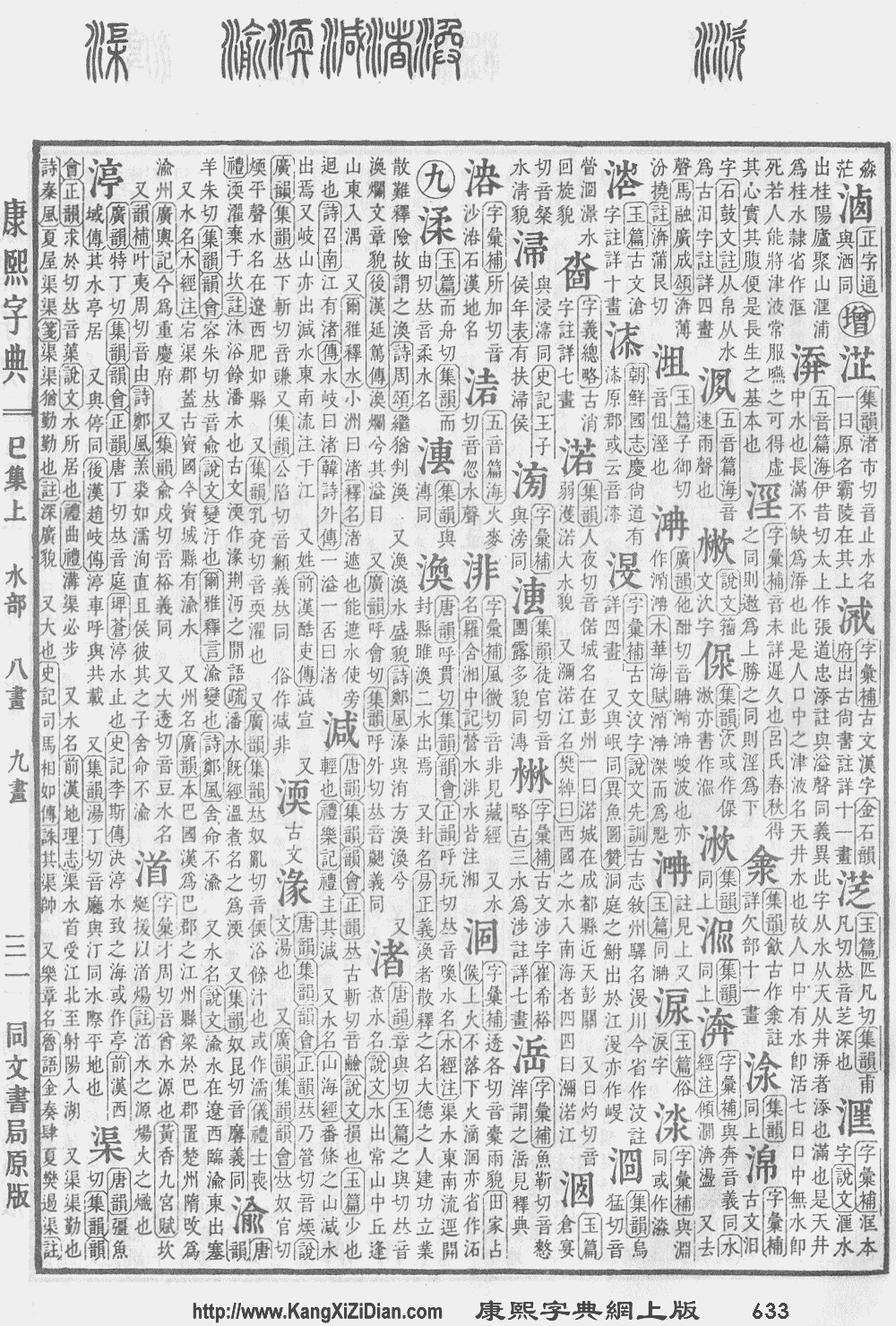
- Kangxi Dictionary: page 633, character 48
- Dai Kanwa Jiten: character 17764
- Dae Jaweon: page 1040, character 7
- Hanyu Da Zidian (first edition): volume 3, page 1645, character 4
- Unihan data for U+6E20
Chinese
Glyph origin
| Historical forms of the character 渠 |
|---|
| Shuowen Jiezi (compiled in Han) |
| Small seal script |
 |
Characters in the same phonetic series (巨) (Zhengzhang, 2003)
Phono-semantic compound (形聲/形声, OC *ɡa) : semantic 水 (“water”) + abbreviated phonetic 榘 (OC *kʷaʔ).
Etymology 1
| trad. | 渠 | |
|---|---|---|
| simp. # | 渠 | |
| 2nd round simp. | 洰 | |
- “ditch; canal; drain”
- From Proto-Sino-Tibetan *r-ka ~ *k(r)a (“path; way; channel; ditch”); probably the same word as 衢 (OC *ɡʷa, “passage”) (Schuessler, 2007). Cognate with Tibetan རྐ (rka, “gutter; channel; furrow”).
Pronunciation
Definitions
渠
Usage notes
Unlike 溝/沟 (gōu), which refers to both artificial and natural watercourses, 渠 (qú) refers only to artificial watercourses.
Compounds
- 共產主義渠/共产主义渠 (Gòngchǎn Zhǔyì Qú)
- 出渠
- 坑渠
- 幹渠/干渠
- 廣通渠/广通渠
- 斗渠
- 橫渠/横渠
- 橫渠學派/横渠学派
- 毛渠
- 水到渠成 (shuǐdàoqúchéng)
- 永濟渠/永济渠
- 河渠
- 流血成渠
- 渠務/渠务
- 渠口 (Qúkǒu)
- 渠帥/渠帅 (qúshuài)
- 渠水 (qúshuǐ)
- 渠江
- 渠渠
- 渠率
- 渠衝/渠冲
- 渠輩/渠辈
- 渠道 (qúdào)
- 渠魁 (qúkuí)
- 溝渠/沟渠 (gōuqú)
- 漕渠 (cáoqú)
- 灌溉渠
- 犀渠
- 白渠
- 石渠 (Shíqú)
- 義渠/义渠
- 血流成渠
- 軒渠/轩渠
- 轉死溝渠/转死沟渠
- 轉渠口/转渠口
- 通渠 (tōngqú)
- 通濟渠/通济渠
- 開渠穿井/开渠穿井
- 雝渠/雍渠 (yōngqú)
- 靈渠/灵渠 (Líng Qú)
- 黃渠/黄渠 (Huángqú)
Etymology 2
| trad. | 渠 | |
|---|---|---|
| simp. # | 渠 | |
| 2nd round simp. | 洰 | |
| alternative forms | 𠍲 佢 dialectal 伊 S. Sixian Hakka; Shanghainese | |
Attested since 4th to 5th century CE, preserved in many central and southern dialects (Schuessler, 2007). See 佢 and 伊.
Pronunciation
Synonyms
Dialectal synonyms of 他 (“he”) [map]
Japanese
Kanji
渠
- This term needs a translation to English. Please help out and add a translation, then remove the text
{{rfdef}}.
Korean
Hanja
渠 (eum 거 (geo))
- This term needs a translation to English. Please help out and add a translation, then remove the text
{{rfdef}}.
Vietnamese
This article is issued from Wiktionary. The text is licensed under Creative Commons - Attribution - Sharealike. Additional terms may apply for the media files.