屆

See also: 届
屆 U+5C46, 屆
CJK UNIFIED IDEOGRAPH-5C46
← 居
[U+5C45]
CJK Unified Ideographs 屇 →
[U+5C47]

Translingual

Japanese 届
Simplified 届
Traditional 屆

Han character

屆 (Kangxi radical 44, 尸+5, 8 strokes, cangjie input 尸山土 (SUG), four-corner 77272, composition ⿸尸凷)

Derived characters

  • 𥇵, 𨵠

Descendants

References

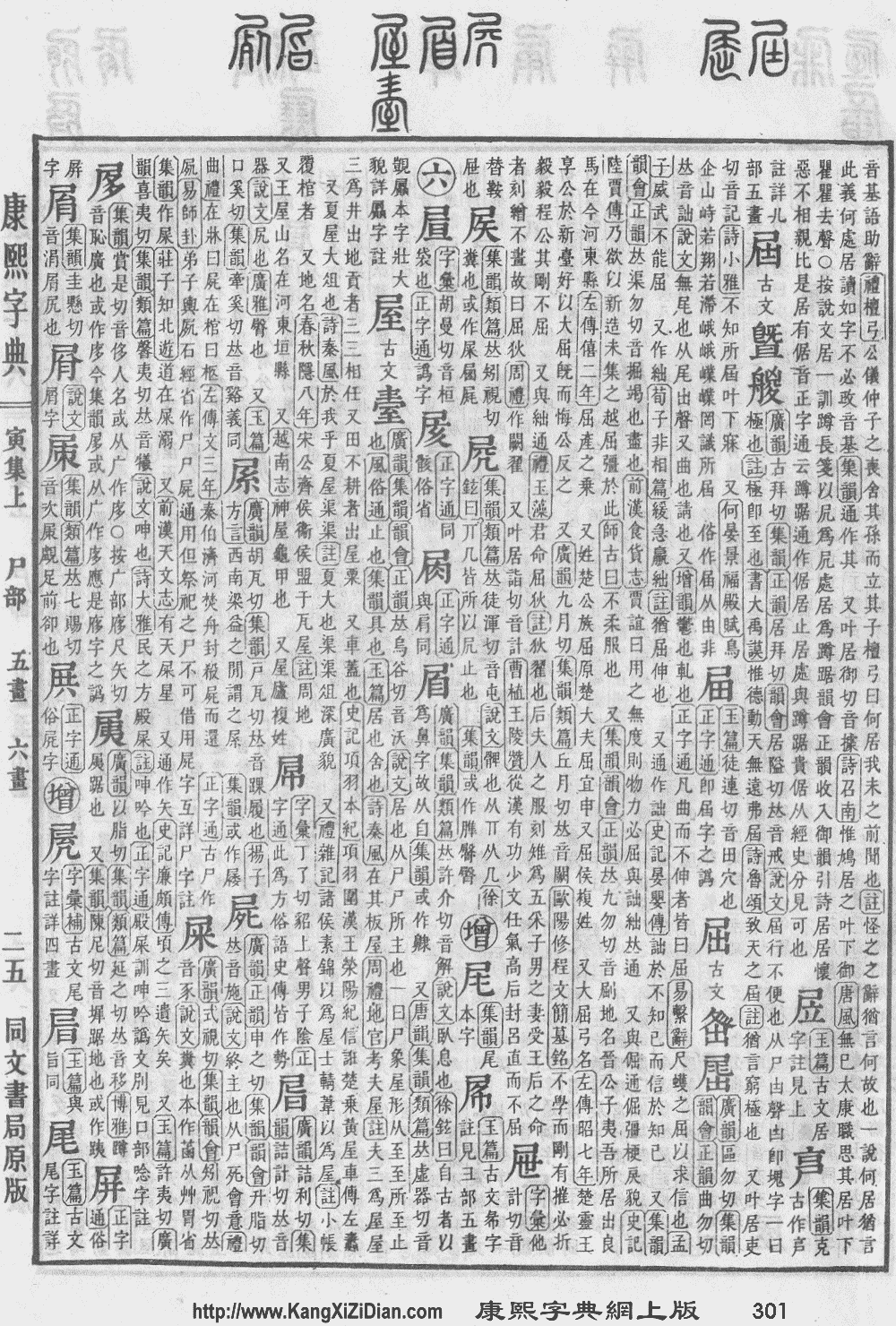
  • Kangxi Dictionary: page 301, character 3
  • Dai Kanwa Jiten: character 7666
  • Dae Jaweon: page 597, character 11
  • Hanyu Da Zidian (first edition): volume 2, page 968, character 1
  • Unihan data for U+5C46

Chinese

trad. 屆/届
simp. 届

Glyph origin

Phono-semantic compound (形聲/形声, OC *krɯːds) : semantic 尸 (“body”) + phonetic 凷 (OC *kʰuːds)

Etymology

The ACG sense is an orthographic borrowing from Japanese 届(とど)かない (todokanai, “to not reach”), negative form of 届(とど)く (todoku, “to reach”).

Pronunciation


Rime
Character 屆
Reading # 1/1
Initial (聲) 見 (28)
Final (韻) 皆 (33)
Tone (調) Departing (H)
Openness (開合) Open
Division (等) II
Fanqie 古拜切
Baxter keajH
Reconstructions
Zhengzhang
Shangfang
/kˠɛiH/
Pan
Wuyun
/kᵚæiH/
Shao
Rongfen
/kɐiH/
Edwin
Pulleyblank
/kəɨjH/
Li
Rong
/kɛiH/
Wang
Li
/kɐiH/
Bernard
Karlgren
/kăiH/
Expected
Mandarin
Reflex
jiè
Expected
Cantonese
Reflex
gaai3
Baxter–Sagart system 1.1 (2014)
Character 屆
Reading # 1/1
Modern
Beijing
(Pinyin)
jiè
Middle
Chinese
‹ kɛjH ›
Old
Chinese
/*kˁr[i][t]-s/
English reach to

Notes for Old Chinese notations in the Baxter–Sagart system:

* Parentheses "()" indicate uncertain presence;
* Square brackets "[]" indicate uncertain identity, e.g. *[t] as coda may in fact be *-t or *-p;
* Angle brackets "<>" indicate infix;
* Hyphen "-" indicates morpheme boundary;

* Period "." indicates syllable boundary.
Zhengzhang system (2003)
Character 屆
Reading # 1/1
No. 7507
Phonetic
component
凷
Rime
group
隊
Rime
subdivision
1
Corresponding
MC rime
誡
Old
Chinese
/*krɯːds/

Definitions

屆

  1. † to arrive; to reach; to come or go to a particular destination; to be at a location or moment
    屆時/届时  ―  jièshí  ―  by the time
    年屆六旬/年届六旬  ―  niánjiè liùxún  ―  to be in one's sixties
  2. Classifier for times, terms, graduation classes, periodically convened events, etc.
    第一屆奧運會/第一届奥运会  ―  dì-yī jiè Àoyùnhuì  ―  Games of the I Olympiad
    換屆選舉/换届选举  ―  huànjiè xuǎnjǔ  ―  elections for the next term
    這屆人民不行。 [MSC, trad.]
    这届人民不行。 [MSC, simp.]
    Zhèjiè rénmín bùxíng. [Pinyin]
    (This government is alright,) it's the common subjects of this term that aren't up to their mandate.
    老三屆/老三届  ―  lǎosānjiè  ―  High school graduation classes of 1966–1968
  3. (ACG slang, of emotions or thoughts) to reach (someone); to get through

Compounds

Japanese

Shinjitai

届

Kyūjitai

屆

Kanji

屆

(uncommon “Hyōgai” kanji, kyūjitai kanji, shinjitai form 届)

  1. This term needs a translation to English. Please help out and add a translation, then remove the text {{rfdef}}.

Readings

Korean

Hanja

屆 • (gye) (hangeul 계, revised gye, McCune–Reischauer kye)

  1. This term needs a translation to English. Please help out and add a translation, then remove the text {{rfdef}}.

Vietnamese

Han character

屆: Hán Việt readings: giới

  1. This term needs a translation to English. Please help out and add a translation, then remove the text {{rfdef}}.
This article is issued from Wiktionary. The text is licensed under Creative Commons - Attribution - Sharealike. Additional terms may apply for the media files.