岬
| ||||||||
Translingual
Han character
岬 (Kangxi radical 46, 山+5, 8 strokes, cangjie input 山田中 (UWL), four-corner 26750, composition ⿰山甲)
References
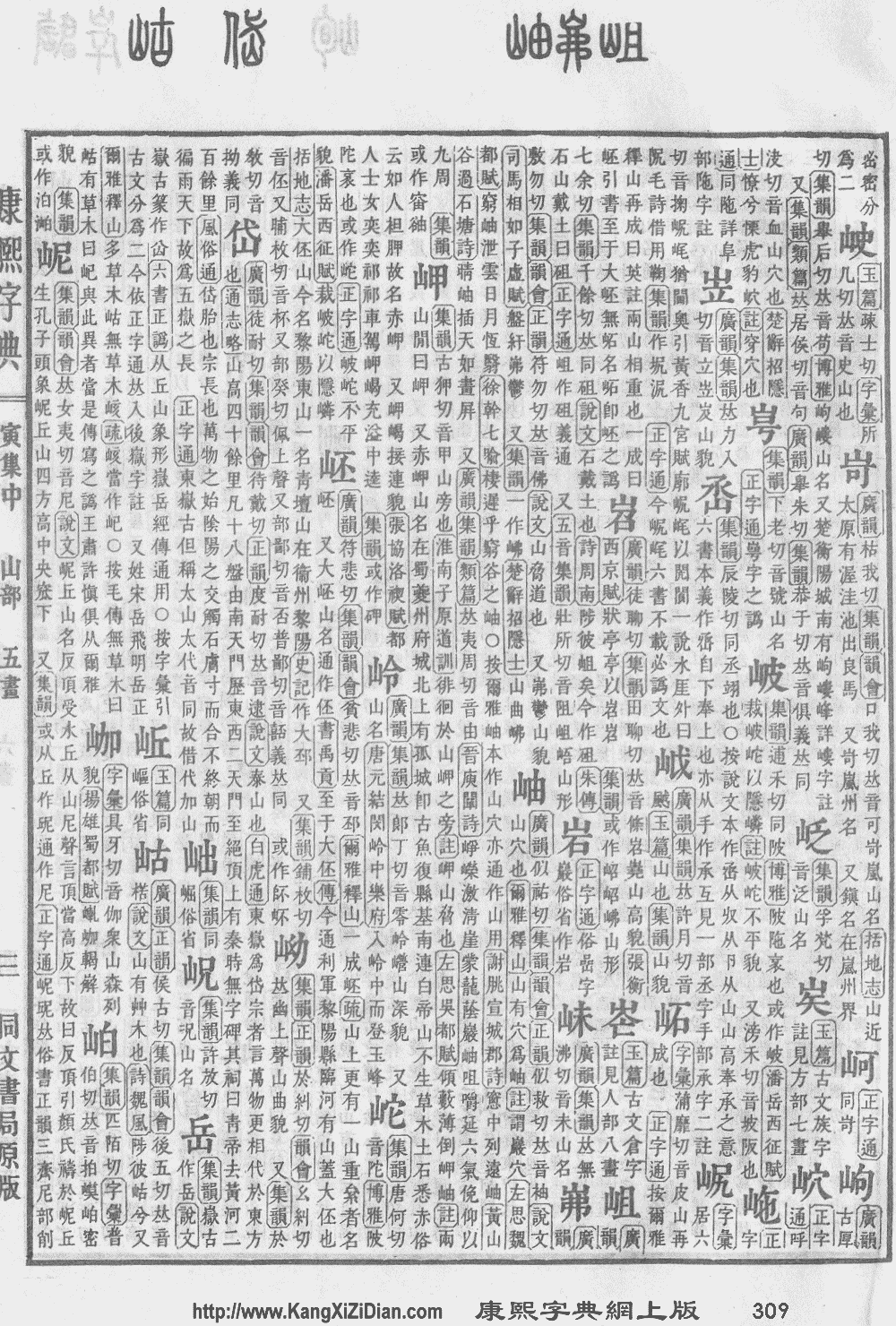
- Kangxi Dictionary: page 309, character 23
- Dai Kanwa Jiten: character 7992
- Dae Jaweon: page 609, character 19
- Hanyu Da Zidian (first edition): volume 1, page 766, character 13
- Unihan data for U+5CAC
Chinese
| trad. | 岬 | |
|---|---|---|
| simp. # | 岬 | |
| alternative forms | 𥑐 | |
Glyph origin
Characters in the same phonetic series (甲) (Zhengzhang, 2003)
Phono-semantic compound (形聲/形声, OC *kraːb) : semantic 山 (“mountain”) + phonetic 甲 (OC *kraːb).
Pronunciation
Compounds
- 岬角
- 海岬 (hǎijiǎ)
Japanese
Readings
Etymology
| Kanji in this term |
|---|
| 岬 |
| みさき Grade: S |
| kun’yomi |
| Alternative spellings |
|---|
| 崎 碕 (rare) |
From Old Japanese. First attested in the Nihon Shoki of 720.[1]
Analyzable as a compound of み (mi, see below) + 先 (saki, “tip, point; promontory”).[1][2][3][4][5][6]
The mi prefix is likely the honorific prefix 御 (mi-), and the term misaki is attested explicitly with the spelling 御碕 (mi-saki) in the Nihon Shoki.[1]
Alternative theories as to the identity of the み (mi) include:
References
- “岬・崎・碕”, in 日本国語大辞典 (Nihon Kokugo Daijiten, “Nihon Kokugo Daijiten”) (in Japanese), concise edition, Tōkyō: Shogakukan, 2000
- “岬”, in デジタル大辞泉 [Digital Daijisen] (in Japanese), Tōkyō: Shogakukan, updated roughly every four months
- Shinmura, Izuru, editor (1998), 広辞苑 [Kōjien] (in Japanese), Fifth edition, Tōkyō: Iwanami Shoten, →ISBN
- 2002, Yasuo Kitahara, 明鏡国語辞典 (Meikyō Kokugo Jiten), First Edition (in Japanese), Tokyo: Taishūkan Shoten, →ISBN
- Matsumura, Akira, editor (2006), 大辞林 [Daijirin] (in Japanese), Third edition, Tōkyō: Sanseidō, →ISBN
- Kindaichi, Kyōsuke et al., editors (1997), 新明解国語辞典 [Shin Meikai Kokugo Jiten] (in Japanese), Fifth edition, Tōkyō: Sanseidō, →ISBN
- NHK Broadcasting Culture Research Institute, editor (1998), NHK日本語発音アクセント辞典 [NHK Japanese Pronunciation Accent Dictionary] (in Japanese), Tōkyō: NHK Publishing, →ISBN
Vietnamese
This article is issued from Wiktionary. The text is licensed under Creative Commons - Attribution - Sharealike. Additional terms may apply for the media files.