旁
| ||||||||
Translingual
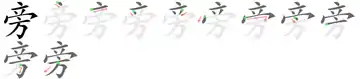
| Stroke order | |||
|---|---|---|---|
 | |||
Alternative forms
Han character
旁 (Kangxi radical 70, 方+6, 10 strokes, cangjie input 卜月卜竹尸 (YBYHS), four-corner 00227, composition ⿱⿳亠丷冖方)
Derived characters
References
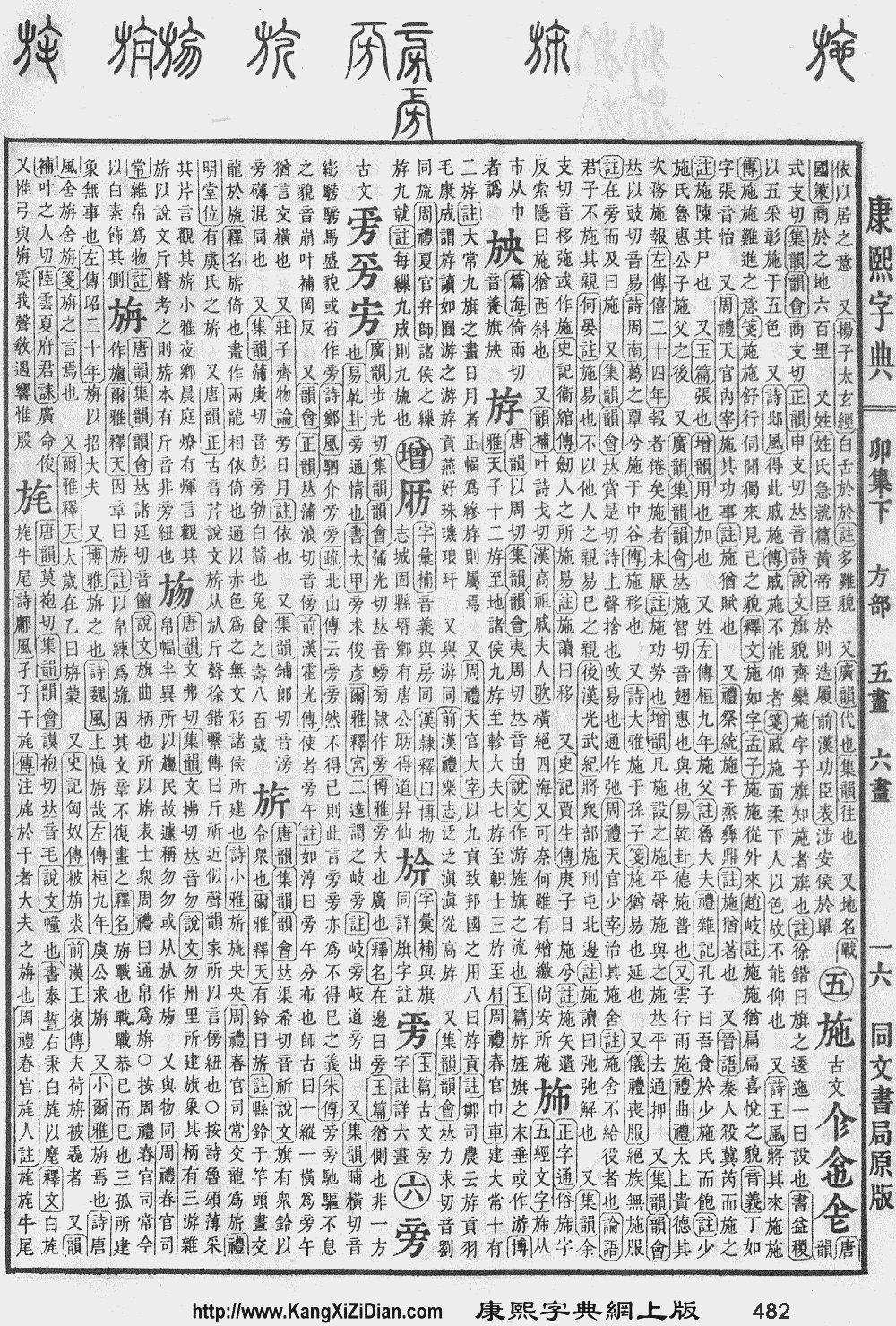
- Kangxi Dictionary: page 482, character 11
- Dai Kanwa Jiten: character 13637
- Dae Jaweon: page 844, character 7
- Hanyu Da Zidian (first edition): volume 3, page 2179, character 2
- Unihan data for U+65C1
Bailang
Etymology
Compare Tibetan བང (bang, “to run”).
Chinese
| simp. and trad. |
旁 | |
|---|---|---|
| 2nd round simp. | 㝑 | |
| alternative forms | 㝑 㫄 𣃟 𣃙 | |
Glyph origin
| Historical forms of the character 旁 | ||||
|---|---|---|---|---|
| Shang | Western Zhou | Spring and Autumn | Warring States | |
| Oracle bone script | Bronze inscriptions | Bronze inscriptions | Chu slip and silk script | Qin slip script |
 |
 |
 |
 |
 |
Characters in the same phonetic series (方) (Zhengzhang, 2003)
| Old Chinese | |
|---|---|
| 縍 | *paːŋ |
| 榜 | *paːŋʔ, *praːŋs, *braːŋ |
| 蒡 | *paːŋʔ, *braːŋ |
| 牓 | *paːŋʔ |
| 螃 | *paːŋʔ, *paːŋs, *baːŋ |
| 搒 | *paːŋs, *braːŋ |
| 舫 | *paːŋs, *paŋs |
| 謗 | *paːŋs |
| 雱 | *pʰaːŋ |
| 磅 | *pʰaːŋ, *pʰraːŋ |
| 霶 | *pʰaːŋ |
| 滂 | *pʰaːŋ |
| 鎊 | *pʰaːŋ |
| 髈 | *pʰaːŋʔ, *baːŋ |
| 彷 | *baːŋ, *pʰaŋʔ |
| 趽 | *baːŋ, *paŋ, *paŋs |
| 房 | *baːŋ, *baŋ |
| 篣 | *baːŋ, *braːŋ |
| 騯 | *baːŋ, *praːŋ, *braːŋ |
| 傍 | *baːŋ, *baːŋs |
| 膀 | *baːŋ |
| 旁 | *baːŋ |
| 徬 | *baːŋs |
| 閍 | *praːŋ |
| 祊 | *praːŋ |
| 嗙 | *praːŋ |
| 方 | *paŋ, *baŋ |
| 汸 | *paŋ |
| 坊 | *paŋ, *baŋ |
| 邡 | *paŋ, *pʰaŋs |
| 枋 | *paŋ |
| 鈁 | *paŋ |
| 蚄 | *paŋ |
| 肪 | *paŋ, *baŋ |
| 鴋 | *paŋ, *baŋ |
| 牥 | *paŋ |
| 昉 | *paŋʔ |
| 瓬 | *paŋʔ |
| 放 | *paŋʔ, *paŋs |
| 倣 | *paŋʔ |
| 芳 | *pʰaŋ |
| 淓 | *pʰaŋ |
| 妨 | *pʰaŋ, *pʰaŋs |
| 紡 | *pʰaŋʔ |
| 仿 | *pʰaŋʔ |
| 髣 | *pʰaŋʔ |
| 鶭 | *pʰaŋʔ |
| 訪 | *pʰaŋs |
| 防 | *baŋ, *baŋs |
| 魴 | *baŋ |
Probably phono-semantic (形聲/形声) following the pronunciation of 方 (OC *paŋ, *baŋ). The upper component has evolved significantly in time, including 冖 (Shang), 凡 (Western Zhou), or forms resembling 辛 (Spring and Autumn bronze of Wu) or 用 (Warring States bronze inscription of Wei and proto-clerical script of Qin). In the Chu Silk Manuscript the form was much simplified. The modern form was a descendant from the clerical script.
Etymology
From Proto-Sino-Tibetan *paŋ ~ *pak (“side”).
Pronunciation 1
Definitions
旁
Pronunciation 2
Pronunciation 3
Definitions
旁
- Only used in 旁勃.
Pronunciation 4
Compounds
- 一旁 (yīpáng)
- 不走旁門/不走旁门
- 作舍道旁
- 偏旁 (piānpáng)
- 兩旁/两旁 (liǎngpáng)
- 兩氏旁人/两氏旁人
- 冷眼旁觀/冷眼旁观 (lěngyǎnpángguān)
- 反文旁 (fǎnwénpáng)
- 反犬旁 (fǎnquǎnpáng)
- 反犬旁兒/反犬旁儿 (fǎnquǎnpángr)
- 單人旁/单人旁 (dānrénpáng)
- 大權旁落/大权旁落 (dàquánpángluò)
- 左道旁門/左道旁门
- 形旁 (xíngpáng)
- 形聲偏旁/形声偏旁 (xíngshēng piānpáng)
- 提手旁 (tíshǒupáng)
- 旁人 (pángrén)
- 旁人短長/旁人短长
- 旁出 (pángchū)
- 旁午
- 旁及
- 旁坐
- 旁壓力/旁压力
- 旁妻
- 旁尊
- 旁岔兒/旁岔儿
- 旁徵博引/旁征博引 (pángzhēngbóyǐn)
- 旁心
- 旁手
- 旁排
- 旁推交通
- 旁支 (pángzhī)
- 旁敲側擊/旁敲侧击 (pángqiāocèjī)
- 旁死魄
- 旁求
- 旁求俊彥/旁求俊彦
- 旁注
- 旁牌
- 旁生
- 旁生枝節/旁生枝节
- 旁白 (pángbái)
- 旁的
- 旁皇 (pánghuáng)
- 旁礴 (pángbó)
- 旁系 (pángxì)
- 旁系血親/旁系血亲
- 旁紐/旁纽
- 旁聽/旁听 (pángtīng)
- 旁聽席/旁听席
- 旁腿
- 旁腿躺身
- 旁若無人/旁若无人 (pángruòwúrén)
- 旁薄 (pángbó)
- 旁行
- 旁行斜上
- 旁行書/旁行书
- 旁觀/旁观 (pángguān)
- 旁觀者/旁观者 (pángguānzhě)
- 旁觀者清/旁观者清
- 旁觀袖手/旁观袖手
- 旁訓/旁训
- 旁證/旁证 (pángzhèng)
- 旁譜/旁谱
- 旁轉/旁转
- 旁通
- 旁遮普 (Pángzhēpǔ)
- 旁邊/旁边 (pángbiān)
- 旁邊人/旁边人
- 旁門/旁门 (pángmén)
- 旁門左道/旁门左道 (pángménzuǒdào)
- 旁騖/旁骛 (pángwù)
- 旁魄
- 木字旁 (mùzìpáng)
- 束手旁觀/束手旁观
- 歧旁
- 段字旁 (duànzìpáng)
- 波旁王朝
- 火字旁 (huǒzìpáng)
- 病字旁 (bìngzìpáng)
- 禾木旁 (hémùpáng)
- 立刀旁 (lìdāopáng)
- 米字旁 (mǐzìpáng)
- 縮手旁觀/缩手旁观
- 羊字旁 (yángzìpáng)
- 耳旁風/耳旁风 (ěrpángfēng)
- 聲旁/声旁 (shēngpáng)
- 蟲字旁兒/虫字旁儿
- 衣字旁 (yīzìpáng)
- 袖手旁觀/袖手旁观 (xiùshǒupángguān)
- 觸類旁通/触类旁通 (chùlèipángtōng)
- 言字旁 (yánzìpáng)
- 言旁
- 諧聲偏旁/谐声偏旁
- 豎心旁/竖心旁 (shùxīnpáng)
- 責無旁貸/责无旁贷 (zéwúpángdài)
- 足字旁 (zúzìpáng)
- 車字旁/车字旁 (chēzìpáng)
- 近旁 (jìnpáng)
- 邊旁/边旁
- 那字旁 (nàzìpáng)
- 金字旁 (jīnzìpáng)
- 阿旁
References
- Dictionary of Chinese Character Variants (教育部異體字字典), A01762
- “旁”, in 漢語多功能字庫 (Multi-function Chinese Character Database), 香港中文大學 (the Chinese University of Hong Kong), 2014–
Japanese
Kanji
旁
- This term needs a translation to English. Please help out and add a translation, then remove the text
{{rfdef}}.
Readings
Etymology 1
| Kanji in this term |
|---|
| 旁 |
| つくり Hyōgaiji |
| kun’yomi |
Korean
Vietnamese
This article is issued from Wiktionary. The text is licensed under Creative Commons - Attribution - Sharealike. Additional terms may apply for the media files.