感
See also: 惑
| ||||||||
Translingual
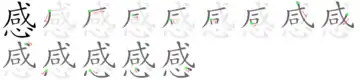
| Stroke order | |||
|---|---|---|---|
 | |||
Han character
感 (Kangxi radical 61, 心+9, 13 strokes, cangjie input 戈口心 (IRP), four-corner 53330, composition ⿱咸心(GJKV) or ⿵咸心(HT))
Derived characters
References
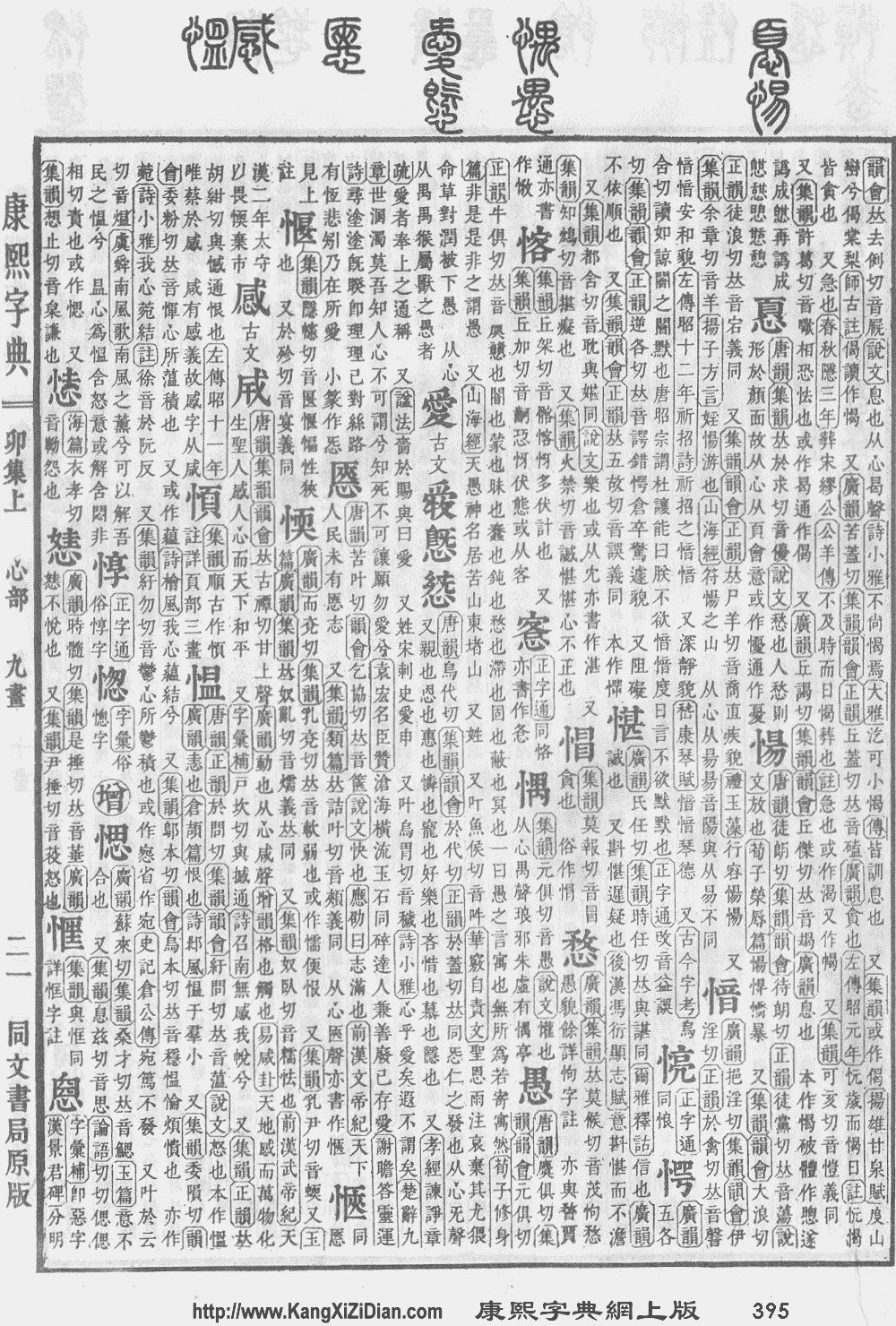
- Kangxi Dictionary: page 395, character 21
- Dai Kanwa Jiten: character 10953
- Dae Jaweon: page 733, character 7
- Hanyu Da Zidian (first edition): volume 4, page 2321, character 2
- Unihan data for U+611F
Chinese
Glyph origin
| Historical forms of the character 感 | |
|---|---|
| Warring States | Shuowen Jiezi (compiled in Han) |
| Bronze inscriptions | Small seal script |
 |
 |
Characters in the same phonetic series (咸) (Zhengzhang, 2003)
| Old Chinese | |
|---|---|
| 感 | *kɯːmʔ |
| 鱤 | *kɯːmʔ |
| 顑 | *kʰɯːmʔ, *ŋɡrɯːms |
| 轗 | *kʰɯːmʔ, *kʰɯːms |
| 撼 | *ɡɯːmʔ |
| 憾 | *ɡɯːms |
| 喊 | *qʰaːmʔ, *qʰrɯːmʔ, *ɡrɯːmʔ |
| 緘 | *krɯːm |
| 瑊 | *krɯːm, *kjum |
| 黬 | *krɯːm, *ŋɡrɯːm |
| 減 | *krɯːmʔ, *ɡrɯːmʔ |
| 羬 | *ŋɡrɯːm, *ɡram |
| 麙 | *ŋɡrɯːm |
| 咸 | *ɡrɯːm |
| 鹹 | *ɡrɯːm |
| 醎 | *ɡrɯːm |
| 諴 | *ɡrɯːm |
| 椷 | *ɡrɯːm |
| 輱 | *ɡrɯːm |
| 鍼 | *ɡam, *ɡram, *kjɯm |
| 箴 | *kjɯm |
| 葴 | *kjɯm |
| 鱵 | *kjum |
Phono-semantic compound (形聲/形声, OC *kɯːmʔ) : phonetic 咸 (OC *ɡrɯːm) + semantic 心 (“heart”).
Etymology 1
| trad. | 感 | |
|---|---|---|
| simp. # | 感 | |
| 2nd round simp. | 𫹯 | |
| alternative forms | 𢦡 | |
Etymology not clear (Schuessler, 2007).
Pronunciation
Definitions
感
Usage notes
A popular stylistic choice in the written form of the character 感 involves putting the 心 component inside of the 咸 component in the area directly below the 口 component.
Etymology 2
| For pronunciation and definitions of 感 – see 撼 (“to shake; to move”). (This character is an obsolete form of 撼). |
Etymology 3
| For pronunciation and definitions of 感 – see 憾 (“regret; remorse”). (This character is an obsolete form of 憾). |
Compounds
- 不勝感喟/不胜感喟
- 二次感染
- 互感應/互感应 (hùgǎnyìng)
- 交叉感染 (jiāochā gǎnrǎn)
- 交感 (jiāogǎn)
- 交感神經/交感神经 (jiāogǎn shénjīng)
- 今昔之感
- 使命感 (shǐmìnggǎn)
- 倍感親切/倍感亲切
- 偶感
- 傷感/伤感 (shānggǎn)
- 傷感情/伤感情
- 傷時感事/伤时感事
- 優越感/优越感 (yōuyuègǎn)
- 共同感覺/共同感觉
- 冥感
- 冷感症
- 動感/动感 (dònggǎn)
- 化感
- 反感 (fǎngǎn)
- 口感 (kǒugǎn)
- 可感
- 同感 (tónggǎn)
- 咸感
- 哀感
- 哀感頑豔/哀感顽艳
- 喜感 (xǐgǎn)
- 善感 (shàngǎn)
- 壓迫感/压迫感
- 外感
- 外感內傷/外感内伤
- 多情善感
- 多情多感
- 多感
- 多愁善感 (duōchóushàngǎn)
- 天人感應/天人感应
- 好感 (hǎogǎn)
- 孝感 (xiàogǎn)
- 孚感
- 安全感 (ānquángǎn)
- 實感/实感 (shígǎn)
- 尿道感染
- 崩感
- 幽感
- 幽默感 (yōumògǎn)
- 律動感/律动感
- 微感
- 心感
- 心電感應/心电感应 (xīndiàn gǎnyìng)
- 快感 (kuàigǎn)
- 忠驅義感/忠驱义感
- 性冷感 (xìnglěnggǎn)
- 怨感
- 性感 (xìnggǎn)
- 悲傷感/悲伤感
- 悽感/凄感
- 情感 (qínggǎn)
- 惡感/恶感 (ègǎn)
- 悲感
- 感事
- 感人 (gǎnrén)
- 感人心曲
- 感人心脾
- 感人肺肝
- 感人肺腑 (gǎnrénfèifǔ)
- 感今思昔
- 感今惟昔
- 感今懷昔/感今怀昔
- 感仰
- 感佩
- 感傳/感传
- 感傷/感伤 (gǎnshāng)
- 感傷主義/感伤主义
- 感光 (gǎnguāng)
- 感光紙/感光纸 (gǎnguāngzhǐ)
- 感冒 (gǎnmào)
- 感分
- 感切
- 感到 (gǎndào)
- 感刻
- 感制
- 感刺
- 感動/感动 (gǎndòng)
- 感動天地/感动天地
- 感動天庭/感动天庭
- 感勵/感励
- 感勸/感劝
- 感化 (gǎnhuà)
- 感化教育
- 感化院 (gǎnhuàyuàn)
- 感印
- 感厲/感厉
- 感受 (gǎnshòu)
- 感召 (gǎnzhào)
- 感同身受 (gǎntóngshēnshòu)
- 感和
- 感咽
- 感哽
- 感唏
- 感喜
- 感喟
- 感嘆/感叹 (gǎntàn)
- 感嘆句/感叹句
- 感嘆號/感叹号 (gǎntànhào)
- 感嘆詞/感叹词 (gǎntàncí)
- 感噎
- 感士
- 感夢/感梦
- 感天動地/感天动地
- 感契
- 感奮/感奋 (gǎnfèn)
- 感孚
- 感官 (gǎnguān)
- 感宕
- 感寓
- 感寤
- 感尉
- 感導/感导
- 感帝
- 感帨
- 感徹/感彻
- 感德 (gǎndé)
- 感心 (gǎnxīn)
- 感忽
- 感忭
- 感忿
- 感念 (gǎnniàn)
- 感思
- 感怒
- 感性 (gǎnxìng)
- 感怍
- 感性知識/感性知识
- 感性認識/感性认识
- 感恨
- 感恚
- 感恩 (gǎn'ēn)
- 感恩圖報/感恩图报
- 感恩多
- 感恩懷德/感恩怀德
- 感恩戴德 (gǎn'ēndàidé)
- 感恩戴義/感恩戴义
- 感恩珠
- 感恩節/感恩节 (Gǎn'ēnjié)
- 感恩荷德
- 感悔
- 感悚
- 感悟 (gǎnwù)
- 感悅/感悦
- 感悰
- 感情 (gǎnqíng)
- 感悼
- 感情作用
- 感情戲/感情戏
- 感情用事
- 感想 (gǎnxiǎng)
- 感慨 (gǎnkǎi)
- 感惻/感恻
- 感感
- 感愕
- 愁感
- 感愁
- 感愛/感爱
- 感慨係之/感慨系之
- 感慨激昂
- 感慨萬千/感慨万千
- 感愴/感怆
- 感愧
- 感愾/感忾
- 感愧並交/感愧并交
- 感愧交集
- 感慕
- 感慰
- 感慟/感恸
- 感憤/感愤
- 感應/感应 (gǎnyìng)
- 感懌/感怿
- 感懷/感怀 (gǎnhuái)
- 感懼/感惧
- 感戀/感恋
- 感或
- 感戢
- 感戴
- 感招
- 感授
- 感損/感损
- 感時/感时
- 感暢/感畅
- 感會/感会
- 感會風雲/感会风云
- 感服
- 感染 (gǎnrǎn)
- 感染力 (gǎnrǎnlì)
- 感染症
- 感格
- 感概
- 感極涕零/感极涕零
- 感欷
- 感歎/感叹 (gǎntàn)
- 感歎句/感叹句
- 感歎號/感叹号 (gǎntànhào)
- 感歎詞/感叹词 (gǎntàncí)
- 感泣
- 感洞
- 感涕
- 感浹/感浃
- 感深肺腑
- 感激 (gǎnjī)
- 感激不盡/感激不尽 (gǎnjībùjìn)
- 感激士
- 感激流涕
- 感激涕泗
- 感激涕零 (gǎnjītìlíng)
- 感物
- 感甄
- 感生
- 感生帝
- 感生電流/感生电流
- 感疢
- 感疾
- 感痛
- 感發/感发
- 感皇恩
- 感盪/感荡
- 感目
- 感知 (gǎnzhī)
- 感私
- 感移
- 感突
- 感竦
- 感篆
- 感紉/感纫 (gǎnrèn)
- 感納/感纳
- 感結/感结
- 感羡
- 感耳
- 感致
- 感興/感兴 (gǎnxìng)
- 感興趣/感兴趣 (gǎn xìngqù)
- 感舊/感旧
- 感荷 (gǎnhè)
- 感蕩/感荡
- 感覺/感觉 (gǎnjué)
- 感覺器官/感觉器官
- 感觸/感触 (gǎnchù)
- 感言 (gǎnyán)
- 感訓/感训
- 感詠/感咏
- 感說/感说
- 感誘/感诱
- 感諷/感讽
- 感謝/感谢 (gǎnxiè)
- 感變/感变
- 感躍/感跃
- 感逆
- 感通
- 感逝
- 感逝山陽/感逝山阳
- 感遇
- 感達/感达
- 感遇詩/感遇诗
- 感銘/感铭
- 感附
- 感電/感电
- 感革
- 感音
- 感頌/感颂
- 感顧/感顾
- 感風/感风
- 感風簿/感风簿
- 感驗/感验
- 感鬱/感郁
- 感麟
- 感麟翁
- 愧感
- 憂感/忧感
- 慚感/惭感
- 應感/应感
- 應物斯感/应物斯感
- 懷感/怀感
- 懷時感物/怀时感物
- 成就感 (chéngjiùgǎn)
- 手感 (shǒugǎn)
- 撫時感事/抚时感事
- 敏感 (mǐngǎn)
- 敏感度
- 敏感話題/敏感话题
- 既視感/既视感 (jìshìgǎn)
- 易感性 (yìgǎnxìng)
- 有感
- 有感地震
- 有感而發/有感而发 (yǒugǎn'érfā)
- 有感電影/有感电影
- 未視感/未视感 (wèishìgǎn)
- 機感/机感
- 欣感
- 歡感/欢感
- 正義感/正义感 (zhèngyìgǎn)
- 永感
- 流感 (liúgǎn)
- 洞感
- 淒感/凄感
- 潛伏感染/潜伏感染
- 潛感/潜感
- 激感
- 無力感/无力感 (wúlìgǎn)
- 無感/无感 (wúgǎn)
- 無感地震/无感地震
- 玄感
- 珍感
- 由衷感激
- 疏離感/疏离感
- 病識感/病识感 (bìngshígǎn)
- 痛感 (tònggǎn)
- 百感 (bǎigǎn)
- 百感交集 (bǎigǎnjiāojí)
- 直感 (zhígǎn)
- 相感
- 真情實感/真情实感
- 睿感
- 知感
- 知感不盡/知感不尽
- 磁感應/磁感应
- 神感
- 私感
- 空間感/空间感
- 立體感/立体感 (lìtǐgǎn)
- 第六感 (dìliùgǎn)
- 第六感覺/第六感觉
- 節奏感/节奏感 (jiézòugǎn)
- 精神感召
- 罪惡感/罪恶感 (zuì'ègǎn)
- 美感 (měigǎn)
- 肉感 (ròugǎn)
- 臨場感/临场感 (línchǎnggǎn)
- 臨感/临感
- 自卑感 (zìbēigǎn)
- 自感 (zìgǎn)
- 自感應/自感应 (zìgǎnyìng)
- 至感
- 荷感
- 觀感/观感 (guāngǎn)
- 觸感/触感 (chùgǎn)
- 託物寓感/托物寓感
- 託物感懷/托物感怀
- 誠感/诚感
- 語感/语感 (yǔgǎn)
- 讀後感/读后感 (dúhòugǎn)
- 豫感 (yùgǎn)
- 責任感/责任感 (zérèngǎn)
- 質感/质感
- 超感覺/超感觉
- 追感
- 通感
- 遙感/遥感 (yáogǎn)
- 遙感探測/遥感探测
- 酸感
- 量感
- 銜感/衔感
- 銘感/铭感
- 銘感五內/铭感五内
- 院內感染/院内感染 (yuànnèi gǎnrǎn)
- 陳遺飯感/陈遗饭感
- 隨感/随感
- 雜感/杂感 (zágǎn)
- 電感/电感 (diàngǎn)
- 電磁感應/电磁感应 (diàncí gǎnyìng)
- 霜露之感
- 霜露感
- 靈感/灵感 (línggǎn)
- 靜電感應/静电感应
- 音感 (yīngǎn)
- 音感作畫/音感作画
- 頂感/顶感
- 順感/顺感
- 項日感夢/项日感梦
- 預感/预感 (yùgǎn)
- 類感/类感
- 風樹之感/风树之感
- 風熱感冒/风热感冒
- 風雲感會/风云感会
- 飯感/饭感
- 骨感 (gǔgǎn)
- 默感
- 齅感
Japanese
Readings
Compounds
References
- Matsumura, Akira, editor (2006), 大辞林 [Daijirin] (in Japanese), Third edition, Tōkyō: Sanseidō, →ISBN
- NHK Broadcasting Culture Research Institute, editor (1998), NHK日本語発音アクセント辞典 [NHK Japanese Pronunciation Accent Dictionary] (in Japanese), Tōkyō: NHK Publishing, →ISBN
Korean
Vietnamese
Han character
- This term needs a translation to English. Please help out and add a translation, then remove the text
{{rfdef}}.
This article is issued from Wiktionary. The text is licensed under Creative Commons - Attribution - Sharealike. Additional terms may apply for the media files.