揮
See also: 挥
| ||||||||
Translingual
Han character
揮 (Kangxi radical 64, 手+9, 12 strokes, cangjie input 手月十十 (QBJJ), four-corner 57056, composition ⿰扌軍)
References
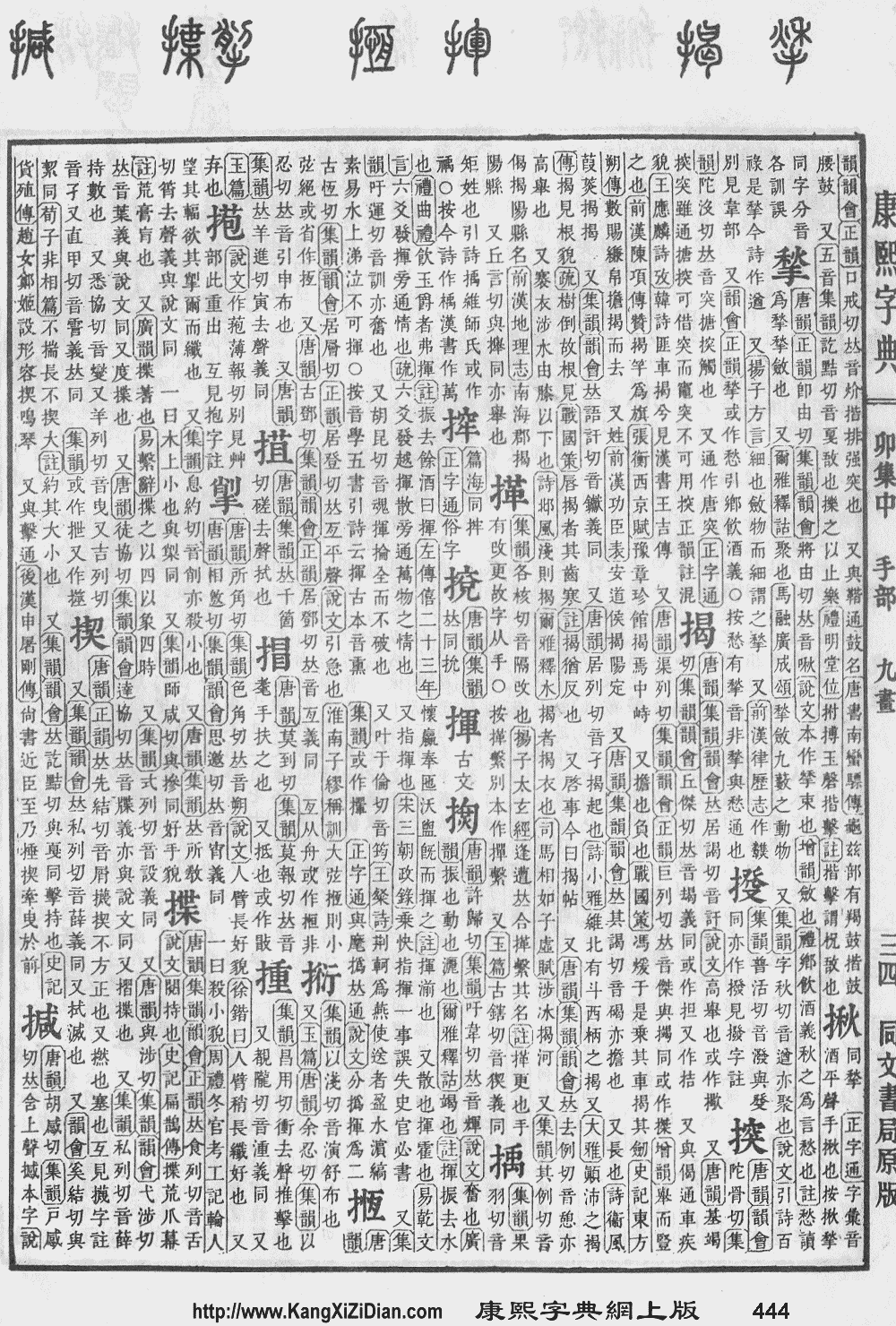
- Kangxi Dictionary: page 444, character 10
- Dai Kanwa Jiten: character 12394
- Dae Jaweon: page 795, character 8
- Hanyu Da Zidian (first edition): volume 3, page 1925, character 4
- Unihan data for U+63EE
Chinese
| trad. | 揮 | |
|---|---|---|
| simp. | 挥 | |
| alternative forms | 𢰄 㩣/𫾉 𢱳 𨍂 | |
Glyph origin
| Historical forms of the character 揮 | |
|---|---|
| Shuowen Jiezi (compiled in Han) | Liushutong (compiled in Ming) |
| Small seal script | Transcribed ancient scripts |
 |
 |
Characters in the same phonetic series (軍) (Zhengzhang, 2003)
| Old Chinese | |
|---|---|
| 揮 | *qʰul |
| 輝 | *qʰul |
| 翬 | *qʰul |
| 暉 | *qʰul |
| 煇 | *qʰul, *ɡuːn, *ɡuːnʔ |
| 楎 | *qʰul, *ɡuːn |
| 瀈 | *qʰul |
| 韗 | *qʰons, *ɢuns |
| 褌 | *kuːn |
| 鶤 | *kuːn, *ɢuns |
| 緷 | *kuːnʔ, *ɡuːnʔ, *ɢuns |
| 睴 | *kuːns, *ɡuːnʔ |
| 璭 | *kuːns |
| 瘒 | *ŋɡuːn |
| 顐 | *ŋɡuːn, *ŋɡuːns, *ɡuːn |
| 諢 | *ŋɡuːns |
| 餫 | *ɡuːn, *ɢuns |
| 渾 | *ɡuːn, *ɡuːnʔ |
| 琿 | *ɡuːn |
| 鼲 | *ɡuːn |
| 堚 | *ɡuːn |
| 鯶 | *ɡuːnʔ |
| 軍 | *kun |
| 皸 | *kun, *kuns |
| 齳 | *ŋɡunʔ |
| 喗 | *ŋɡunʔ |
| 葷 | *qʰun |
| 惲 | *qunʔ |
| 賱 | *qunʔ |
| 運 | *ɢuns |
| 暈 | *ɢuns |
| 鄆 | *ɢuns |
Phono-semantic compound (形聲/形声, OC *qʰul) : semantic 扌 (“hand”) + phonetic 軍 (OC *kun).
Pronunciation
Definitions
揮
Compounds
- 一揮而就/一挥而就 (yīhuī'érjiù)
- 一揮而成/一挥而成
- 交通指揮/交通指挥
- 借題發揮/借题发挥 (jiètífāhuī)
- 手不停揮/手不停挥
- 手揮目送/手挥目送
- 指揮/指挥 (zhǐhuī)
- 指揮刀/指挥刀 (zhǐhuīdāo)
- 指揮官/指挥官 (zhǐhuīguān)
- 指揮導航/指挥导航
- 指揮棒/指挥棒 (zhǐhuībàng)
- 指揮艙/指挥舱
- 指揮若定/指挥若定 (zhǐhuīruòdìng)
- 指揮部/指挥部 (zhǐhuībù)
- 揮之不去/挥之不去 (huīzhībùqù)
- 揮兵/挥兵
- 揮別/挥别
- 揮劍成河/挥剑成河
- 揮動/挥动 (huīdòng)
- 揮師/挥师
- 揮戈/挥戈
- 揮戈反日/挥戈反日
- 揮戈回日/挥戈回日
- 揮手/挥手 (huīshǒu)
- 揮拍/挥拍
- 揮拳/挥拳
- 揮掌/挥掌
- 揮斥/挥斥
- 揮春/挥春
- 揮杆
- 揮毫/挥毫 (huīháo)
- 揮汗/挥汗
- 揮汗如雨/挥汗如雨
- 揮汗成雨/挥汗成雨
- 揮淚/挥泪 (huīlèi)
- 揮灑/挥洒 (huīsǎ)
- 揮灑自如/挥洒自如 (huīsǎzìrú)
- 揮發/挥发 (huīfā)
- 揮發油/挥发油
- 揮筆/挥笔
- 揮翰/挥翰
- 揮翰成風/挥翰成风
- 揮翰臨池/挥翰临池
- 揮舞/挥舞 (huīwǔ)
- 揮袂/挥袂
- 揮觴/挥觞
- 揮軍/挥军 (huījūn)
- 揮軍進擊/挥军进击
- 揮金/挥金
- 揮金如土/挥金如土 (huījīnrútǔ)
- 揮金霍玉/挥金霍玉
- 揮霍/挥霍 (huīhuò)
- 揮霍無度/挥霍无度 (huīhuòwúdù)
- 揮霍談笑/挥霍谈笑
- 揮髮油/挥发油
- 揮麈/挥麈 (huīzhǔ)
- 揮麈清談/挥麈清谈
- 擐甲揮戈/擐甲挥戈
- 發揮/发挥 (fāhuī)
- 目送手揮/目送手挥
- 郢匠揮斤/郢匠挥斤
- 魯陽揮戈/鲁阳挥戈
Alternative forms
Pronunciation
Definitions
References
Japanese
Korean
Hanja
揮 • (hwi) (hangeul 휘, revised hwi, McCune–Reischauer hwi, Yale hwi)
- This term needs a translation to English. Please help out and add a translation, then remove the text
{{rfdef}}.
Vietnamese
This article is issued from Wiktionary. The text is licensed under Creative Commons - Attribution - Sharealike. Additional terms may apply for the media files.