冇
| ||||||||
Translingual
Han character
冇 (Kangxi radical 13, 冂+2, 4 strokes, cangjie input 大月 (KB) or 難大月 (XKB), four-corner 40227, composition ⿸𠂇冂)
References
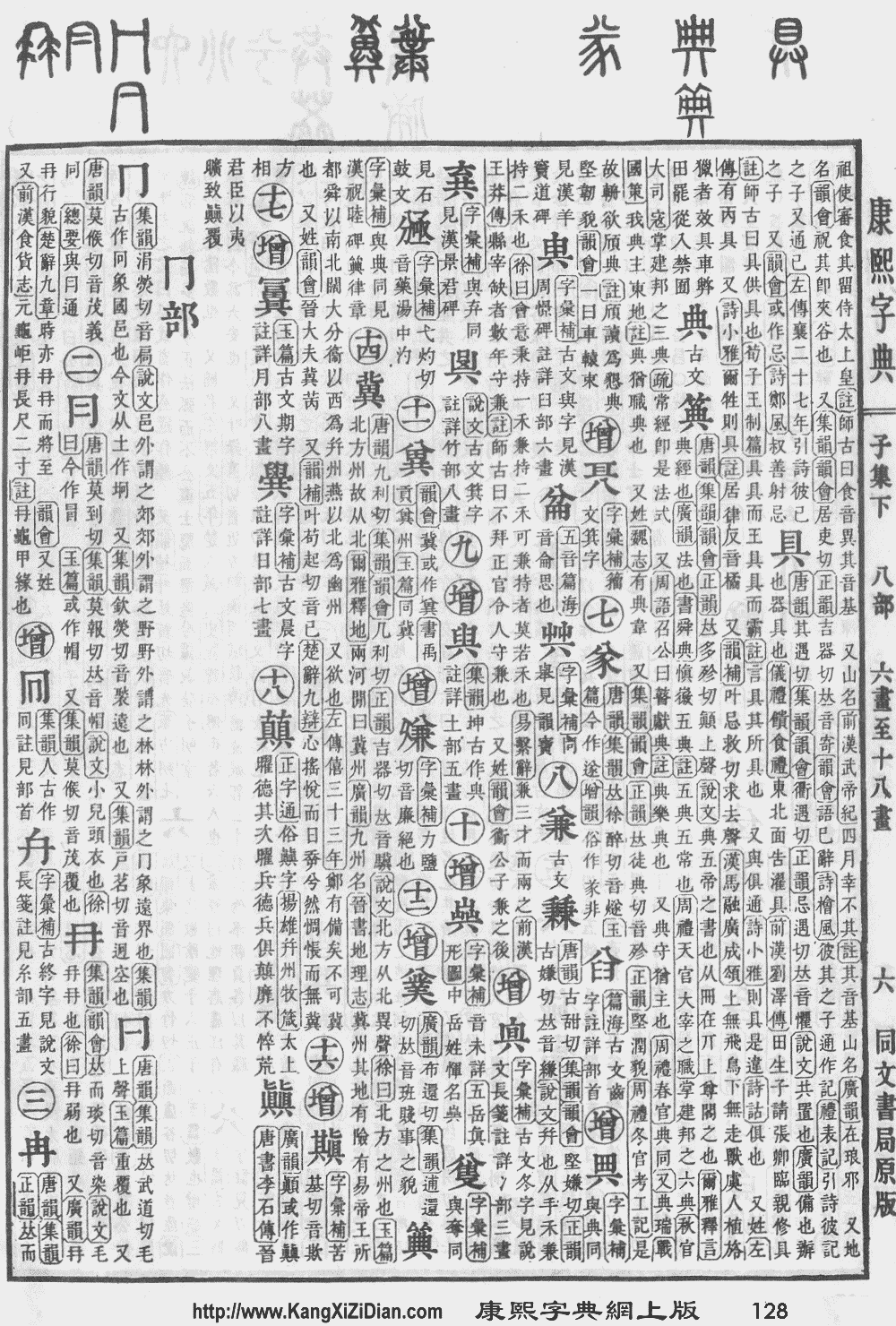
- Kangxi Dictionary: not present, would follow page 128, character 35
- Hanyu Da Zidian (first edition): volume 1, page 96, character 17
- Unihan data for U+5187
Chinese
Glyph origin
From the removal of the two inner strokes from 有 (“to have”).
Attested at least since 1672, in 《星餘筆記》 by 王鉞:
- 寧俗樸鄙所陳牒訴多用土俗書,初見駭愕,習閒亦各有義意,令略記數字:……冇,音茂,謂無有也。 [Classical Chinese, trad.]
- From: 清・王鉞《星餘筆記》
- Níng sú pǔbǐ suǒ chén diésù duō yòng tǔsú shū, chūjiàn hài'è, xíxián yì gè yǒu yìyì, lìng lüèjì shùzì:...... 冇, yīn mào, wèi wúyǒu yě. [Pinyin]
- When filing pleas, peasants in the Ning county (西寧縣, modern 鬱南縣) often use the local popular writing, it is peculiar when first seen, but when accustomed, each has its meaning, for example: [...] 冇, sounds like 茂, means "to not have".
宁俗朴鄙所陈牒诉多用土俗书,初见骇愕,习闲亦各有义意,令略记数字:……冇,音茂,谓无有也。 [Classical Chinese, simp.]
Etymology 1
| trad. | 冇 | |
|---|---|---|
| simp. # | 冇 | |
| alternative forms | 無/无 冒 Xiang | |
From 無 (MC mju, “to not have”). In some varieties, such as Cantonese and Xiang, there seems to be fusion or analogy with 有 (MC hjuwX, “to have”) (Chan, 1998; Schuessler, 2007).
Pronunciation
Definitions
冇
- (dialectal Mandarin, Cantonese, dialectal Gan, Hakka, dialectal Wu, Xiang) to not have; to not exist
- 你冇女朋友?梗係唔信啦!……或者有。你唔知啫。 [Cantonese, trad.]
- From: 陳慧嫻, 紅茶館
- nei5 mou5 neoi5 pang4 jau5? gang2 hai6 m4 seon3 laa1!...... waak6 ze2 jau5. nei5 m4 zi1 ze1. [Jyutping]
- You don't have a girlfriend? Of course I don't believe you! ... Maybe you do have one, but you just don't know it.
你冇女朋友?梗系唔信啦!……或者有。你唔知啫。 [Cantonese, simp.]
- (dialectal Mandarin, Cantonese, Xiang) have not; did not (do something) (indicating non-completion of a verb)
- (dialectal Cantonese, Nanning Pinghua) not (negator)
Usage notes
- Originally from Cantonese, many Mandarin speakers now understand the meaning of this character.
Synonyms
Dialectal synonyms of 沒有 (“to not have (+ noun)”) [map]
Dialectal synonyms of 不 (“not”) [map]
Etymology 2
| trad. | 冇 | |
|---|---|---|
| simp. # | 冇 | |
Compare Saek [script needed] (phoongC2, “hollow; hole (in a tree, bamboo)”), Proto-Bahnaric *pɔːŋ (“hollow; flattened”) (Schuessler, 2007).
This etymology is incomplete. You can help Wiktionary by elaborating on the origins of this term.
Pronunciation
Definitions
冇
- (Min, Hakka) empty; hollow; spongy; not sturdy
- 冇柴 [Hokkien] ― phàⁿ-chhâ [Pe̍h-ōe-jī] ― porous wood
- (Min, Hakka) unreliable; undependable; casual
- (Southern Min) extravagant; generous
- 冇手 [Hokkien] ― phàⁿ-chhiú [Pe̍h-ōe-jī] ― generous
- (Hakka) insufficient; lacking
Pronunciation
Definitions
冇
Synonyms
Dialectal synonyms of 別 (“do not”) [map]
See also
Pronunciation
Definitions
冇
- (Cantonese, uncommon or dated) Used at the end of questions to ask if one has done something yet.
References
- “冇”, in 漢語多功能字庫 (Multi-function Chinese Character Database), 香港中文大學 (the Chinese University of Hong Kong), 2014–
- Dictionary of Chinese Character Variants (教育部異體字字典), B00004
- zi.tools
Vietnamese
Han character
冇: Hán Nôm readings: mậu
- This term needs a translation to English. Please help out and add a translation, then remove the text
{{rfdef}}.
This article is issued from Wiktionary. The text is licensed under Creative Commons - Attribution - Sharealike. Additional terms may apply for the media files.