朒
| ||||||||
Translingual
Han character
朒 (Kangxi radical 74, 月+6, 10 strokes, cangjie input 月人月人 (BOBO), four-corner 74227, composition ⿰月肉)
References
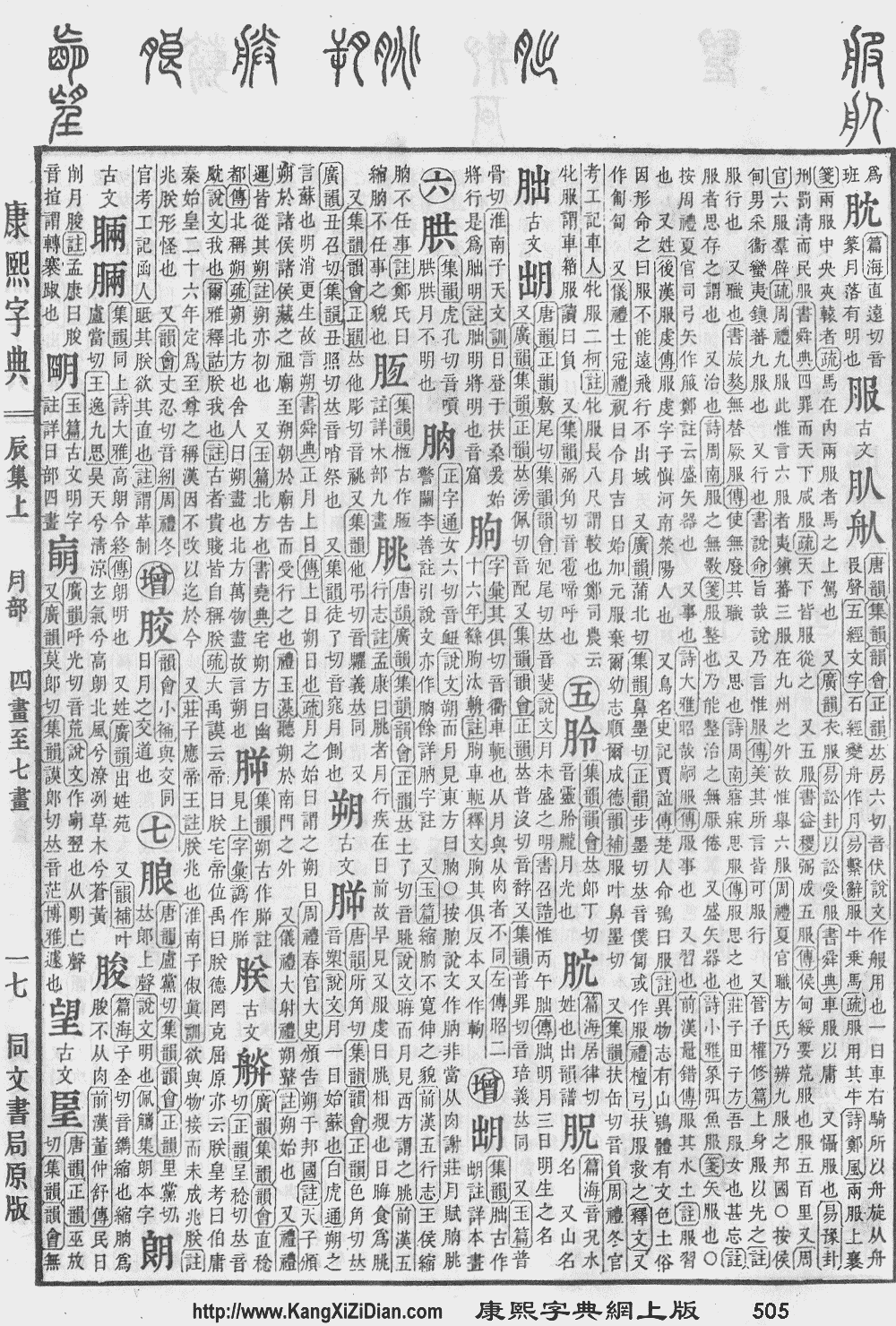
- Kangxi Dictionary: page 505, character 13
- Dai Kanwa Jiten: character 14356
- Dae Jaweon: page 884, character 5
- Hanyu Da Zidian (first edition): volume 3, page 2067, character 19
- Unihan data for U+6712
Chinese
Glyph origin
Phono-semantic compound (形聲/形声) .
Two character forms exist: One is semantic 月 (“moon”) + phonetic 內 (OC *nuːbs). The other one is semantic 月 (“moon”) + phonetic 肉 (OC *njuɡ).
The Middle Chinese pronunciation (Fanqie: 女六切; Baxter notation: nrjuwk) is likely resulting from an assimilation in the word 縮肭 (MC srjuwk nrjuwk) (Zhang, 2022), implying 肭 is the earlier one and 朒 is a later written form reflecting such pronunciation development.
Pronunciation
Compounds
- 朏朒
- 縮朒/缩朒
- 縮縮朒朒/缩缩朒朒
Japanese
Kanji
朒
- This term needs a translation to English. Please help out and add a translation, then remove the text
{{rfdef}}.
Vietnamese
Han character
朒: Hán Nôm readings: nục
- This term needs a translation to English. Please help out and add a translation, then remove the text
{{rfdef}}.
References
This article is issued from Wiktionary. The text is licensed under Creative Commons - Attribution - Sharealike. Additional terms may apply for the media files.