從
| ||||||||
Translingual
| Traditional | 從 |
|---|---|
| Shinjitai | 従 |
| Simplified | 从 |
Han character
從 (Kangxi radical 60, 彳+8, 11 strokes, cangjie input 竹人人人人 (HOOOO), four-corner 28281, composition ⿰彳⿱从龰)
Derived characters
References
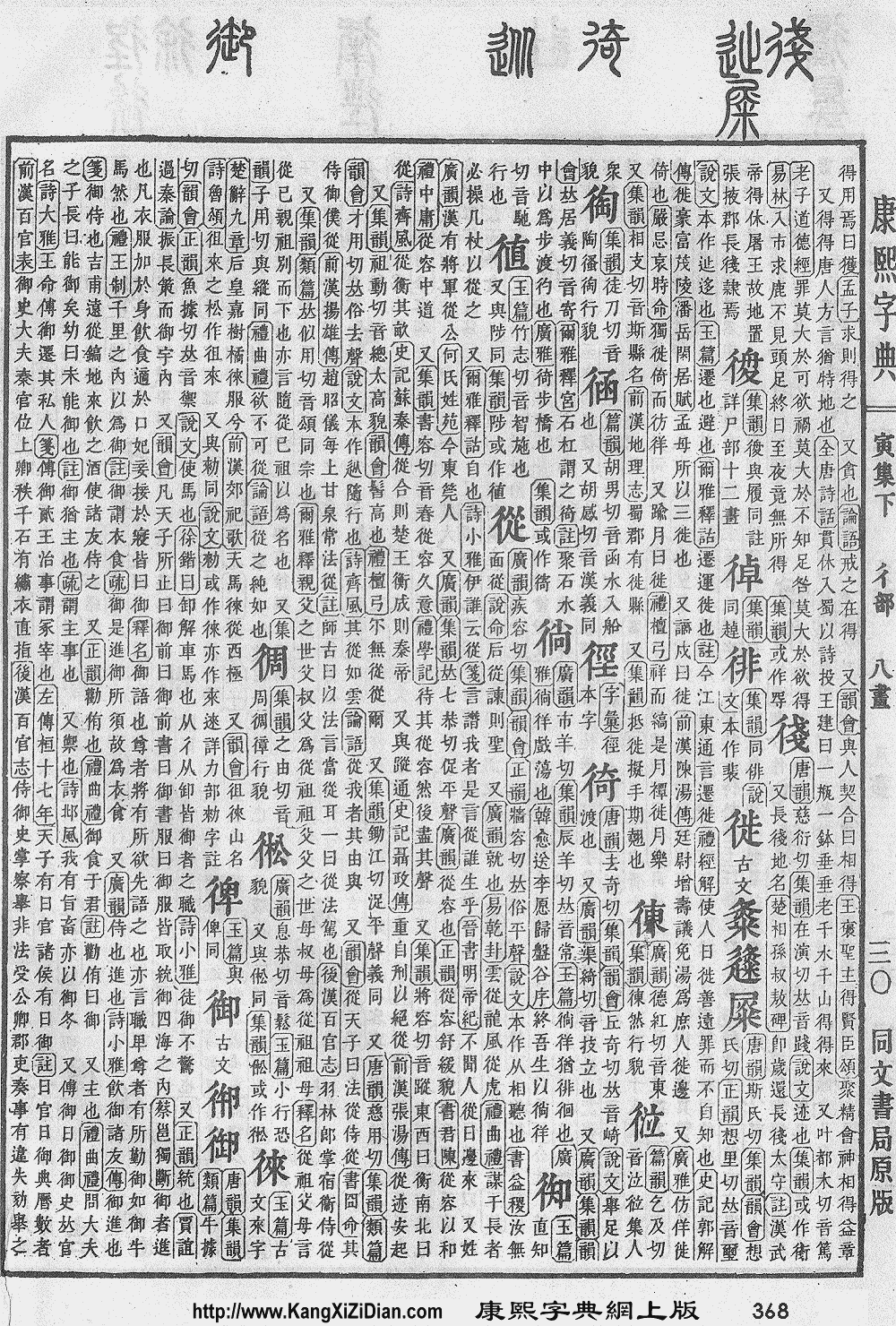
- Kangxi Dictionary: page 368, character 18
- Dai Kanwa Jiten: character 10152
- Dae Jaweon: page 692, character 14
- Hanyu Da Zidian (first edition): volume 2, page 829, character 12
- Unihan data for U+5F9E
Chinese
| trad. | 從 | |
|---|---|---|
| simp. | 从* | |
| alternative forms | 从 𠚪 従 𬽡 | |
Glyph origin
| Historical forms of the character 從 | ||
|---|---|---|
| Western Zhou | Shuowen Jiezi (compiled in Han) | Liushutong (compiled in Ming) |
| Bronze inscriptions | Small seal script | Transcribed ancient scripts |
 |
 |
 |
Characters in the same phonetic series (从) (Zhengzhang, 2003)
Etymology 1
Etymology not certain. Perhaps cognate with Tibetan རྫོང་བ (rdzong ba, “to dispatch; to dismiss”) (Schuessler, 2007). Alternatively, compare Tibetan སྟོངས་པ (stongs pa, “to accompany”), or perhaps 送 (OC *sloːŋs, “to escort; to send”).
Pronunciation 2 is a derivation of pronunciation 1.
Pronunciation 1
Definitions
從
- to follow; to come after
- to comply with; to submit to
- to follow the principle of
- to join; to be engaged in
- from (a place or time); since
- through; via; by
- from; according to
- (followed by negative) never; ever
- 19th tetragram of the Taixuanjing; "following" (𝌘)
- a surname
Compounds
- 一切從簡/一切从简 (yīqiècóngjiǎn)
- 一從/一从
- 三從/三从 (sāncóng)
- 三從四德/三从四德 (sāncóngsìdé)
- 不從/不从 (bùcóng)
- 不敢從命/不敢从命
- 事從/事从
- 何去何從/何去何从 (héqùhécóng)
- 何從/何从
- 依從/依从 (yīcóng)
- 便宜從事/便宜从事 (biànyícóngshì)
- 信從/信从 (xìncóng)
- 允從/允从
- 先從隗始/先从隗始
- 冒昧從事/冒昧从事
- 力不從心/力不从心 (lìbùcóngxīn)
- 力不從願/力不从愿
- 去邪從正/去邪从正
- 名從主人/名从主人 (míngcóngzhǔrén)
- 各從其志/各从其志
- 品從/品从
- 唯利是從/唯利是从
- 唯命是從/唯命是从 (wéimìngshìcóng)
- 善善從長/善善从长
- 喜從天降/喜从天降
- 四德三從/四德三从
- 天下從風/天下从风
- 天從人願/天从人愿
- 夫死從子/夫死从子
- 奉從/奉从
- 奴從/奴从
- 密勿從事/密勿从事
- 寧死不從/宁死不从
- 屈己從人/屈己从人
- 屈從/屈从 (qūcóng)
- 廣德從橋/广德从桥
- 弭從/弭从
- 從一以終/从一以终
- 從一而終/从一而终 (cóngyī'érzhōng)
- 從中作梗/从中作梗
- 從中斡旋/从中斡旋
- 從事/从事 (cóngshì)
- 從井救人/从井救人
- 從人/从人 (cóngrén)
- 從今以後/从今以后 (cóngjīn yǐhòu)
- 從令如流/从令如流
- 從何說起/从何说起
- 從來/从来 (cónglái)
- 從俗/从俗 (cóngsú)
- 從俗就簡/从俗就简
- 從價稅/从价税
- 從優/从优 (cóngyōu)
- 從先/从先
- 從公/从公
- 從初/从初
- 從前/从前 (cóngqián)
- 從古至今/从古至今
- 從吉/从吉
- 從命/从命 (cóngmìng)
- 從商/从商 (cóngshāng)
- 從善如流/从善如流 (cóngshànrúliú)
- 從善若流/从善若流
- 從嚴/从严 (cóngyán)
- 從坐/从坐 (cóngzuò)
- 從天而下/从天而下
- 從天而降/从天而降 (cóngtiān'érjiàng)
- 從始至終/从始至终
- 從嫁/从嫁
- 從實招來/从实招来 (cóngshízhāolái)
- 從寬/从宽 (cóngkuān)
- 從寬發落/从宽发落
- 從小/从小 (cóngxiǎo)
- 從屬/从属 (cóngshǔ)
- 從師/从师 (cóngshī)
- 從影/从影 (cóngyǐng)
- 從心所欲/从心所欲 (cóngxīnsuǒyù)
- 從戎/从戎 (cóngróng)
- 從打/从打
- 從政/从政 (cóngzhèng)
- 從新/从新 (cóngxīn)
- 從未/从未 (cóngwèi)
- 從格/从格
- 從業人員/从业人员 (cóngyè rényuán)
- 從業員/从业员 (cóngyèyuán)
- 從權/从权 (cóngquán)
- 從此/从此 (cóngcǐ)
- 從流/从流
- 從祀/从祀
- 從簡/从简 (cóngjiǎn)
- 從缺/从缺 (cóngquē)
- 從而/从而 (cóng'ér)
- 從良/从良 (cóngliáng)
- 從諫如流/从谏如流
- 從軍/从军 (cóngjūn)
- 從輕發落/从轻发落 (cóngqīngfāluò)
- 從速/从速 (cóngsù)
- 從長計議/从长计议
- 從頭/从头 (cóngtóu)
- 從頭再來/从头再来
- 從頭到尾/从头到尾 (cóngtóudàowěi)
- 從頭到腳/从头到脚
- 從頭至尾/从头至尾
- 從風/从风
- 從風而靡/从风而靡
- 從龍/从龙
- 惟命是從/惟命是从 (wéimìngshìcóng)
- 悲從中來/悲从中来 (bēicóngzhōnglái)
- 惡惡從短/恶恶从短
- 應天從人/应天从人
- 應天從民/应天从民
- 應天從物/应天从物
- 打從/打从 (dǎcóng)
- 投筆從戎/投笔从戎 (tóubǐcóngróng)
- 抵死不從/抵死不从
- 捨己從人/舍己从人
- 擇善而從/择善而从
- 改惡從善/改恶从善 (gǎi'ècóngshàn)
- 改過從善/改过从善
- 改過從新/改过从新
- 文從字順/文从字顺
- 斷難從命/断难从命
- 景從/景从
- 景從雲合/景从云合
- 景從雲集/景从云集
- 曲從/曲从
- 朋從/朋从
- 服從/服从 (fúcóng)
- 木蘭從軍/木兰从军
- 枵腹從公/枵腹从公
- 棄邪從正/弃邪从正
- 河伯從事/河伯从事
- 溯流從源/溯流从源
- 無從/无从 (wúcóng)
- 無從下手/无从下手
- 無所適從/无所适从 (wúsuǒshìcóng)
- 病從口入/病从口入
- 盲從/盲从 (mángcóng)
- 相從/相从
- 省煩從簡/省烦从简
- 相類相從/相类相从
- 禍從口出/祸从口出
- 禍從天降/祸从天降
- 笑罵從汝/笑骂从汝
- 聽從/听从 (tīngcóng)
- 自從/自从 (zìcóng)
- 舍己從人/舍己从人
- 舍正從邪/舍正从邪
- 舍短從長/舍短从长
- 苟容曲從/苟容曲从
- 草偃風從/草偃风从
- 言從計納/言从计纳
- 言從計行/言从计行
- 言聽行從/言听行从
- 言聽計從/言听计从 (yántīngjìcóng)
- 言行計從/言行计从
- 負笈從師/负笈从师
- 資從/资从
- 賓從/宾从
- 跟從/跟从 (gēncóng)
- 軍法從事/军法从事 (jūnfǎ cóngshì)
- 過從/过从 (guòcóng)
- 過從甚密/过从甚密
- 道近易從/道近易从
- 適從/适从 (shìcóng)
- 遵從/遵从 (zūncóng)
- 阿意曲從/阿意曲从
- 降心相從/降心相从
- 隔從/隔从
- 青州從事/青州从事
- 非類相從/非类相从
- 靡然從風/靡然从风
- 面從/面从
- 順從/顺从 (shùncóng)
- 風從/风从
- 風從響應/风从响应
- 風行草從/风行草从
- 馬虎從事/马虎从事
Pronunciation 2
Definitions
從
Compounds
- 不分主從/不分主从
- 主從/主从 (zhǔcóng)
- 主從架構/主从架构
- 侍從/侍从 (shìcóng)
- 傔從/傔从
- 僕從/仆从 (púcóng)
- 儀從/仪从
- 其從如雲/其从如云
- 嬪從/嫔从
- 從伯/从伯
- 從兄/从兄 (cóngxiōng)
- 從兄弟/从兄弟 (cóngxiōngdì)
- 從刑/从刑 (cóngxíng)
- 從吏/从吏
- 從女/从女
- 從子/从子
- 從官/从官
- 從弟/从弟 (cóngdì)
- 從母/从母 (cóngmǔ)
- 從法/从法
- 從父/从父
- 從犯/从犯 (cóngfàn)
- 從罰/从罚
- 從者/从者 (cóngzhě)
- 扈從/扈从 (hùcóng)
- 欲不可從/欲不可从
- 祗從/祗从
- 義從/义从
- 群從/群从
- 脅從/胁从 (xiécóng)
- 衛從/卫从
- 護從/护从 (hùcóng)
- 賢從/贤从
- 輕裝簡從/轻装简从
- 輕車簡從/轻车简从
- 輿從/舆从
- 部從/部从
- 隨從/随从
- 雞尸牛從/鸡尸牛从
- 首從/首从
- 騎從/骑从
- 騶從/驺从
Descendants
- → Korean: 종 (jong, “servant; slave”)
Pronunciation
Pronunciation
Definitions
從
Pronunciation
References
- “從”, in 漢語多功能字庫 (Multi-function Chinese Character Database), 香港中文大學 (the Chinese University of Hong Kong), 2014–
Japanese
| 従 | |
| 從 |
Kanji
從
(“Jinmeiyō” kanji used for names, kyūjitai kanji, shinjitai form 従)
- This term needs a translation to English. Please help out and add a translation, then remove the text
{{rfdef}}.
Korean
Etymology 1
From Middle Chinese 從 (MC dzjowng).
| Historical Readings | ||
|---|---|---|
| Dongguk Jeongun Reading | ||
| Dongguk Jeongun, 1448 | Recorded as Middle Korean 쬬ᇰ (Yale: ccyòng) in Dongguk Jeongun (東國正韻 / 동국정운), 1448. | |
| Middle Korean | ||
| Text | Eumhun | |
| Gloss (hun) | Reading | |
| Hunmong Jahoe, 1527 | 조ᄎᆞᆯ 죵 | Recorded as Middle Korean 죵 (cyong) (Yale: cyong) in Sinjeung Yuhap (新增類合 / 신증유합), 1576. |
| Early Modern Korean | ||
| Text | Final (韻) | Reading |
| Samun Seonghwi, 1751 | 조ᄎᆞᆯ 죵 | Recorded as Early Modern Korean 죵 (Yale: cyong) in Juhae Cheonjamun (註解千字文 / 주해천자문), 1804. |
Pronunciation
- (SK Standard/Seoul) IPA(key): [t͡ɕo̞ŋ]
- Phonetic hangul: [종]
Compounds
Compounds
- 종전 (從前, jongjeon)
- 종사 (從事, jongsa)
- 복종 (服從, bokjong)
- 순종 (順從, sunjong)
- 시종 (侍從, sijong)
- 추종 (追從, chujong)
- 종속 (從屬, jongsok)
- 종자 (從者, jongja)
- 주종 (主從, jujong)
- 맹종 (盲從, maengjong)
- 종군 (從軍, jonggun)
- 상종 (相從, sangjong)
- 종물 (從物, jongmul)
- 곡종 (曲從, gokjong)
- 부종 (不從, bujong)
- 자종 (自從, jajong)
- 후종 (後從, hujong)
- 호종 (護從, hojong)
- 종래 (從來, jongnae)
- 부종 (附從, bujong)
- 종량 (從量, jongnyang)
- 종신 (從臣, jongsin)
- 종관 (從官, jonggwan)
- 종국 (從國, jongguk)
- 종위 (從違, jong'wi)
- 종졸 (從卒, jongjol)
- 합종 (合從, hapjong)
Etymology 2
From Middle Chinese 從 (MC dzjowngH).
| Historical Readings | ||
|---|---|---|
| Dongguk Jeongun Reading | ||
| Dongguk Jeongun, 1448 | Recorded as Middle Korean 쬬ᇰ〮 (Yale: ccyóng) in Dongguk Jeongun (東國正韻 / 동국정운), 1448. | |
| Early Modern Korean | ||
| Text | Final (韻) | Reading |
| Samun Seonghwi, 1751 | 결ᄂᆡ 죵 | Recorded as Early Modern Korean 죵 (Yale: cyong) in Juhae Cheonjamun (註解千字文 / 주해천자문), 1804. |
Pronunciation
- (SK Standard/Seoul) IPA(key): [t͡ɕo̞(ː)ŋ]
- Phonetic hangul: [종(ː)]
- Though still prescribed in Standard Korean, most speakers in both Koreas no longer distinguish vowel length.
Compounds
Compounds
Vietnamese
Han character
從: Hán Nôm readings: tòng, tùng, thủng, tuồng, thong, thung, thùng, tồng, tụng
- This term needs a translation to English. Please help out and add a translation, then remove the text
{{rfdef}}.
References
This article is issued from Wiktionary. The text is licensed under Creative Commons - Attribution - Sharealike. Additional terms may apply for the media files.