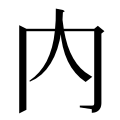
內
| ||||||||
 | ||||||||
Translingual
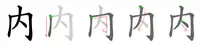
| Stroke order | |||
|---|---|---|---|
 | |||
Han character
內 (Kangxi radical 11, 入+2, 4 strokes, cangjie input 人月 (OB), four-corner 40227, composition ⿻冂入)
References
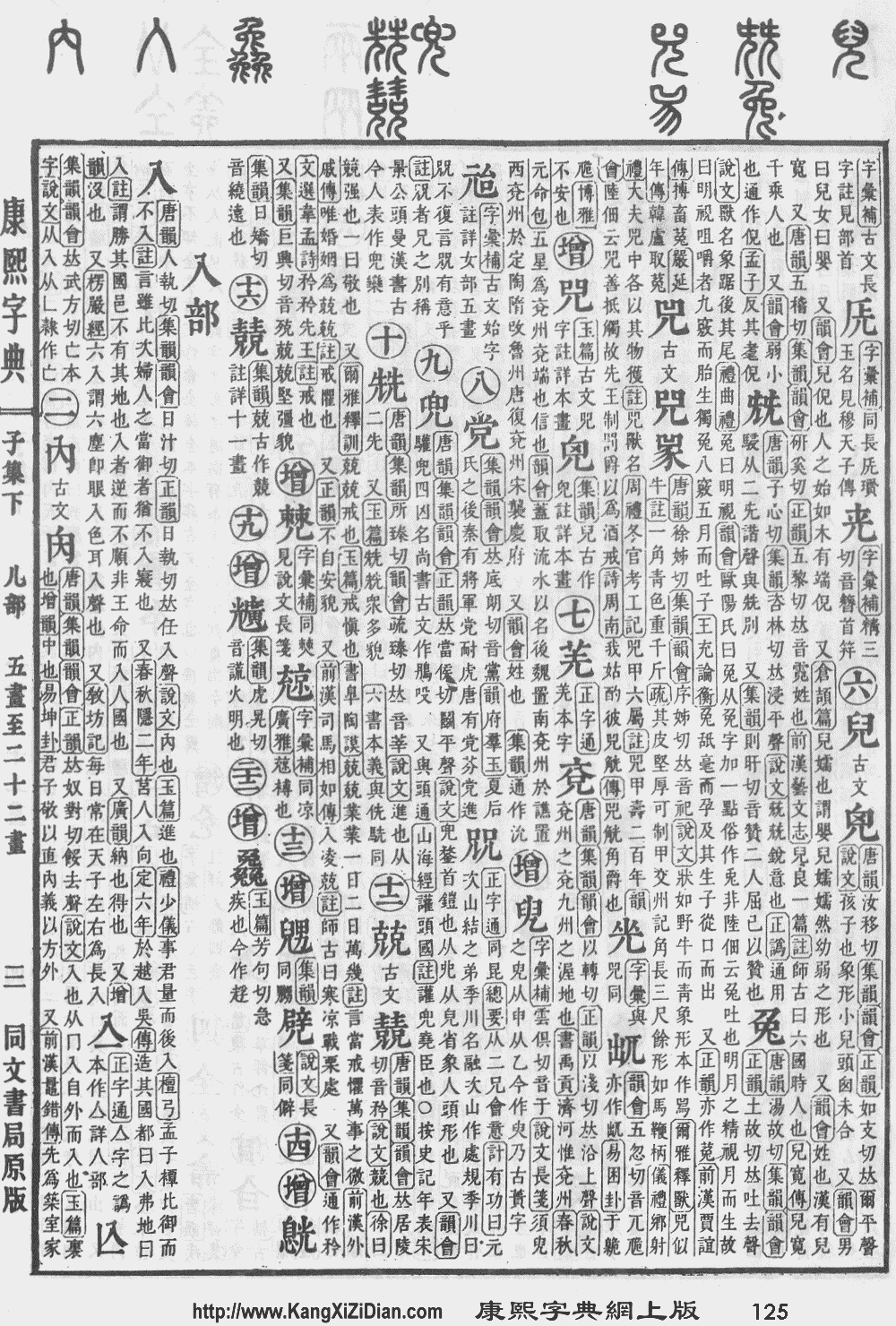
- Kangxi Dictionary: page 125, character 35
- Dae Jaweon: page 267, character 3
- Hanyu Da Zidian (first edition): volume 1, page 97, character 2
- Unihan data for U+5167
- Unihan data for U+2F814
Chinese
| trad. | 內 | |
|---|---|---|
| simp. | 内 | |
Glyph origin
| Historical forms of the character 內 | |||||||||||||||||||||||||||||||||||||||||||||||||||||||||||||||||||||
|---|---|---|---|---|---|---|---|---|---|---|---|---|---|---|---|---|---|---|---|---|---|---|---|---|---|---|---|---|---|---|---|---|---|---|---|---|---|---|---|---|---|---|---|---|---|---|---|---|---|---|---|---|---|---|---|---|---|---|---|---|---|---|---|---|---|---|---|---|---|
| |||||||||||||||||||||||||||||||||||||||||||||||||||||||||||||||||||||
|
References: Mostly from Richard Sears' Chinese Etymology site (authorisation),
|


Ideogrammic compound (會意/会意) : 冂 (“city outskirts”) + 入 (“to enter”) – entering the city through its outskirts - inside, within.
Etymology
Related to 入 (OC *njub, “to enter”); see there for more.
Pronunciation 1
Definitions
內
- inside; interior; internal; inner
- Antonym: 外 (wài)
- 室內/室内 ― shìnèi ― indoors
- 內傷/内伤 ― nèishāng ― internal injury
- 內戰/内战 ― nèizhàn ― civil war
- 未來幾天內/未来几天内 ― wèilái jǐtiān nèi ― within the next few days
- 君子敬而無失,與人恭而有禮,四海之內,皆兄弟也。 [Classical Chinese, trad.]
- From: The Analects of Confucius, c. 475 – 221 BCE, translated based on James Legge's version
- Jūnzǐ jìng ér wú shī, yǔ rén gōng ér yǒulǐ, sìhǎi zhī nèi, jiē xiōngdì yě. [Pinyin]
- Let the superior man never fail reverentially to order his own conduct, and let him be respectful to others and observant of propriety - then all within the four seas will be his brothers.
君子敬而无失,与人恭而有礼,四海之内,皆兄弟也。 [Classical Chinese, simp.]
- (obsolete) room; inner room
- (literary) court; imperial palace
- woman; wife
- 江湖中說你是條好漢,原來是個懼內的庸夫。 [Written Vernacular Chinese, trad.]
- From: Wu Cheng'en, Journey to the West, 16th century CE
- Jiānghú zhōng shuō nǐ shì tiáo hǎohàn, yuánlái shì ge jù nèi de yōngfū. [Pinyin]
- It is said in the rivers and lakes that you are a brave man, but it turns out that you are a husband who fears his wife.
江湖中说你是条好汉,原来是个惧内的庸夫。 [Written Vernacular Chinese, simp.]
- heart; mind; self
- 見賢思齊焉,見不賢而內自省也。 [Classical Chinese, trad.]
- From: The Analects of Confucius, c. 475 – 221 BCE, translated based on James Legge's version
- Jiàn xián sī qí yān, jiàn bù xián ér nèi zìxǐng yě. [Pinyin]
- When we see men of worth, we should think of equaling them; when we see men of a contrary character, we should turn inwards and examine ourselves.
见贤思齐焉,见不贤而内自省也。 [Classical Chinese, simp.]
- (traditional Chinese medicine) internal organs
- (Buddhism) within Buddhism
- 內典/内典 ― nèidiǎn ― Buddhist scripture
- 內學/内学 ― nèixué ― Buddhism
- 65th tetragram of the Taixuanjing (𝍆)
- (Teochew) family
- (Teochew) home
- (Internet slang) Alternative form of 那
- (Philippine Hokkien) Classifier for servings / helpings of food.
Synonyms
Compounds
- 丁內艱/丁内艰
- 中文內碼/中文内码
- 五內/五内 (wǔnèi)
- 五內如焚/五内如焚
- 以內/以内 (yǐnèi)
- 充內行/充内行
- 內三關/内三关 (Nèisānguān)
- 內中/内中 (nèizhōng)
- 內丹/内丹
- 內丹功/内丹功
- 內主/内主
- 內亂/内乱 (nèiluàn)
- 內亂罪/内乱罪
- 內事/内事
- 內亞/内亚 (Nèiyà)
- 內人/内人 (nèirén)
- 內侍/内侍 (nèishì)
- 內使/内使 (nèishǐ)
- 內備/内备
- 內傅/内傅
- 內傷/内伤 (nèishāng)
- 內債/内债 (nèizhài)
- 內傳/内传
- 內兄/内兄 (nèixiōng)
- 內兄弟/内兄弟
- 內八字腳/内八字脚 (nèibāzìjiǎo)
- 內典/内典
- 內出血/内出血 (nèichūxuè)
- 內分泌/内分泌 (nèifēnmì)
- 內分泌腺/内分泌腺
- 內力/内力
- 內功/内功 (nèigōng)
- 內助/内助 (nèizhù)
- 內務/内务 (nèiwù)
- 內動詞/内动词 (nèidòngcí)
- 內勤/内勤 (nèiqín)
- 內卷/内卷 (nèijuǎn)
- 內參/内参
- 內史/内史 (nèishǐ)
- 內向/内向 (nèixiàng)
- 內含/内含 (nèihán)
- 內命/内命
- 內呼吸/内呼吸
- 內囊/内囊
- 內因/内因 (nèiyīn)
- 內地/内地 (nèidì)
- 內在/内在 (nèizài)
- 內地稅/内地税
- 內在美/内在美 (nèizàiměi)
- 內在論/内在论
- 內地雜居/内地杂居
- 內城/内城 (nèichéng)
- 內埔/内埔 (Nèipǔ)
- 內堂/内堂
- 內堂屋/内堂屋
- 內壼/内壸
- 內外/内外 (nèiwài)
- 內外交困/内外交困 (nèiwàijiāokùn)
- 內外交迫/内外交迫
- 內外夾攻/内外夹攻
- 內外姻黨/内外姻党 (nèiwàiyīndǎng)
- 內女/内女
- 內奸 (nèijiān)
- 內妹/内妹
- 內姓/内姓
- 內姊/内姊
- 內姪/内侄 (nèizhí)
- 內姪女/内侄女
- 內娣/内娣
- 內婚制/内婚制
- 內嫂/内嫂
- 內嬖/内嬖
- 內子/内子 (nèizǐ)
- 內孫/内孙 (nèisūn)
- 內學/内学
- 內宅/内宅
- 內定/内定 (nèidìng)
- 內官/内官
- 內室/内室 (nèishì)
- 內容/内容 (nèiróng)
- 內家/内家
- 內家妝/内家妆
- 內家拳法/内家拳法
- 內寒/内寒
- 內寢/内寝
- 內寵/内宠
- 內層/内层
- 內帑/内帑
- 內幕/内幕 (nèimù)
- 內幕消息/内幕消息
- 內府/内府 (nèifǔ)
- 內底/内底 (nèidǐ)
- 內府本/内府本
- 內庫/内库
- 內廷/内廷
- 內弟/内弟 (nèidì)
- 內德/内德
- 內心/内心 (nèixīn)
- 內心戲/内心戏 (nèixīnxì)
- 內心深處/内心深处
- 內急/内急 (nèijí)
- 內患/内患
- 內情/内情 (nèiqíng)
- 內憂/内忧
- 內慧/内慧
- 內憂外患/内忧外患 (nèiyōuwàihuàn)
- 內應/内应 (nèiyìng)
- 內懷/内怀
- 內戚/内戚
- 內戰/内战 (nèizhàn)
- 內才/内才
- 內捲/内卷 (nèijuǎn)
- 內掌櫃的/内掌柜的
- 內撫/内抚
- 內收/内收 (nèishōu)
- 內收肌/内收肌 (nèishōujī)
- 內政/内政 (nèizhèng)
- 內政部/内政部 (nèizhèngbù)
- 內教/内教
- 內斂/内敛 (nèiliǎn)
- 內斜視/内斜视 (nèixiéshì)
- 內景/内景 (nèijǐng)
- 內服/内服 (nèifú)
- 內服藥/内服药
- 內朝/内朝
- 內柔外剛/内柔外刚 (nèiróuwàigāng)
- 內核/内核 (nèihé)
- 內標/内标
- 內毒/内毒
- 內毒素/内毒素 (nèidúsù)
- 內江/内江 (Nèijiāng)
- 內治/内治
- 內河/内河 (nèihé)
- 內流區/内流区
- 內流河/内流河 (nèiliúhé)
- 內海/内海 (nèihǎi)
- 內涵/内涵 (nèihán)
- 內港/内港
- 內湖/内湖 (Nèihú, “Neihu”)
- 內澇/内涝 (nèilào)
- 內焰/内焰
- 內煩/内烦
- 內熱/内热
- 內燃機/内燃机 (nèiránjī)
- 內爭/内争
- 內犯/内犯
- 內用/内用 (nèiyòng)
- 內疚/内疚 (nèijiù)
- 內痔/内痔 (nèizhì)
- 內皮/内皮 (nèipí)
- 內監/内监
- 內相/内相
- 內省/内省
- 內省不疚/内省不疚
- 內眷/内眷 (nèijuàn)
- 內知/内知
- 內碼/内码 (nèimǎ)
- 內視反聽/内视反听
- 內視鏡/内视镜 (nèishìjìng)
- 內秉堅孤/内秉坚孤
- 內科/内科 (nèikē)
- 內線/内线 (nèixiàn)
- 內線交易/内线交易 (nèixiàn jiāoyì)
- 內縴/内纤
- 內美/内美
- 內耳/内耳 (nèi'ěr)
- 內耳炎/内耳炎 (nèi'ěryán)
- 內聖外王/内圣外王
- 內聚力/内聚力
- 內職/内职
- 內胎/内胎 (nèitāi)
- 內腔/内腔 (nèiqiāng, “lumen”)
- 內膜/内膜 (nèimó)
- 內臟/内脏 (nèizàng)
- 內臣/内臣 (nèichén)
- 內臺/内台
- 內興安嶺/内兴安岭
- 內舉/内举
- 內艱/内艰
- 內苑/内苑
- 內荏/内荏
- 內華達/内华达 (Nèihuádá)
- 內蒙古/内蒙古
- 內蘊/内蕴
- 內虛外實/内虚外实
- 內行/内行 (nèiháng)
- 內行人/内行人 (nèihángrén)
- 內行星/内行星
- 內衣/内衣 (nèiyī)
- 內衣褲/内衣裤 (nèiyīkù)
- 內裡/内里 (nèilǐ)
- 內製作/内制作
- 內規/内规
- 內親/内亲 (nèiqīn)
- 內觀/内观
- 內角/内角 (nèijiǎo)
- 內角球/内角球
- 內訓/内训
- 內訌/内讧 (nèihòng)
- 內詳/内详
- 內調/内调
- 內諱/内讳
- 內變/内变
- 內資/内资 (nèizī)
- 內賊/内贼
- 內賓/内宾 (nèibīn)
- 內輔/内辅
- 內轉/内转
- 內造/内造
- 內逼/内逼
- 內道場/内道场
- 內遷/内迁 (nèiqiān)
- 內部/内部 (nèibù)
- 內野/内野 (nèiyě)
- 內銷/内销 (nèixiāo)
- 內錯角/内错角 (nèicuòjiǎo)
- 內長城/内长城
- 內門/内门 (Nèimén)
- 內間/内间
- 內閣/内阁 (nèigé)
- 內閣制/内阁制
- 內閣總理/内阁总理
- 內附/内附 (nèifù)
- 內陸/内陆 (nèilù)
- 內陸國/内陆国 (nèilùguó)
- 內陸海/内陆海
- 內陸湖/内陆湖
- 內障/内障 (nèizhàng)
- 內集/内集
- 內難/内难 (nèinàn)
- 內面/内面 (nèimiàn)
- 內顧/内顾
- 內顧之憂/内顾之忧
- 內鬥/内斗 (nèidòu)
- 內鬨/内哄 (nèihòng)
- 其內/其内
- 分內/分内 (fènnèi)
- 分內事/分内事
- 功濟宇內/功济宇内
- 南內/南内 (Nánnèi)
- 厝內/厝内 (chhù-lāi) (Min Nan)
- 反聽內視/反听内视
- 名聞海內/名闻海内
- 圈內/圈内 (quānnèi)
- 國內/国内 (guónèi)
- 國內新聞/国内新闻
- 國內法/国内法
- 國內要聞/国内要闻
- 在內/在内 (zàinèi)
- 場內/场内 (chǎngnèi)
- 塞內/塞内
- 塞內加爾/塞内加尔
- 境內/境内 (jìngnèi)
- 壽終內寢/寿终内寝
- 外剛內柔/外刚内柔
- 外厲內荏/外厉内荏
- 外圓內方/外圆内方
- 外寬內忌/外宽内忌
- 外寬內深/外宽内深
- 外弛內張/外弛内张
- 外柔內剛/外柔内刚
- 外王內帝/外王内帝 (wàiwángnèidì)
- 大內/大内 (dànèi)
- 好內/好内
- 委內瑞拉/委内瑞拉 (Wěinèiruìlā)
- 宇內/宇内 (yǔnèi)
- 安內/安内
- 安內攘外/安内攘外
- 室內/室内 (shìnèi)
- 室內植物/室内植物
- 室內樂/室内乐 (shìnèiyuè)
- 室內設計/室内设计 (shìnèi shèjì)
- 寰內/寰内
- 局內人/局内人 (júnèirén)
- 屋內/屋内
- 市內/市内 (shìnèi)
- 年內/年内 (niánnèi)
- 幾內亞/几内亚
- 幾內亞灣/几内亚湾
- 廣內/广内
- 影子內閣/影子内阁 (yǐngzi nèigé)
- 心內膜/心内膜 (xīnnèimó)
- 心內膜炎/心内膜炎 (xīnnèimóyán)
- 懼內/惧内 (jùnèi)
- 攘外安內/攘外安内 (rángwài'ānnèi)
- 方內/方内
- 暴內陵外/暴内陵外
- 月內/月内 (ge̍h-lāi)
- 服內生子/服内生子
- 林內鄉/林内乡
- 河內/河内 (Hénèi)
- 海內/海内 (hǎinèi)
- 海內一統/海内一统 (hǎinèi yītǒng)
- 海內無雙/海内无双
- 湖內/湖内 (Húnèi)
- 瀨戶內海/濑户内海 (Làihùnèi Hǎi)
- 界內球/界内球
- 白內障/白内障 (báinèizhàng)
- 直內方外/直内方外
- 看守內閣/看守内阁
- 眉睫之內/眉睫之内
- 眼內無珠/眼内无珠
- 細內/细内
- 綠內障/绿内障 (lǜnèizhàng)
- 聯合內閣/联合内阁
- 聯立內閣/联立内阁
- 臥內/卧内 (wònèi)
- 色厲內荏/色厉内荏 (sèlìnèirěn)
- 衙內/衙内
- 責任內閣/责任内阁
- 賤內/贱内 (jiànnèi)
- 賢內助/贤内助 (xiánnèizhù)
- 走內線/走内线
- 超然內閣/超然内阁
- 返躬內省/返躬内省
- 過渡內閣/过渡内阁
- 銘感五內/铭感五内
- 鋒芒內斂/锋芒内敛
- 關內/关内 (guānnèi)
- 關內侯/关内侯
- 院內感染/院内感染 (yuànnèi gǎnrǎn)
- 雞內金/鸡内金 (jīnèijīn)
- 顱內壓/颅内压 (lúnèiyā)
- 體內受精/体内受精
- 體內美容/体内美容
- 黃帝內經/黄帝内经
- 黨內初選/党内初选
Pronunciation 2
Compounds
- 周內/周内
Japanese
| 内 | |
| 內 |
Usage notes
This character is usually not used in Japanese and lacks JIS support. The variant 内 (U+5185) is used instead.
Korean
Etymology
From Middle Chinese 內 (MC nwojH).
| Historical Readings | ||
|---|---|---|
| Dongguk Jeongun Reading | ||
| Dongguk Jeongun, 1448 | 뇡〮 (Yale: nwóy) | |
| Middle Korean | ||
| Text | Eumhun | |
| Gloss (hun) | Reading | |
| Hunmong Jahoe, 1527 | 안〮 (Yale: án) | ᄂᆡ〯 (Yale: nǒy) |
Pronunciation
- (SK Standard/Seoul) IPA(key): [nɛ(ː)] ~ [ne̞(ː)]
- Phonetic hangul: [내(ː)/네(ː)]
- Though still prescribed in Standard Korean, most speakers in both Koreas no longer distinguish vowel length.
Compounds
- 가내 (家內, ganae)
- 국내 (國內, gungnae)
- 내각 (內閣, naegak)
- 내강 (內腔, naegang)
- 내과 (內科, naegwa)
- 내란 (內亂, naeran)
- 내륙 (內陸, naeryuk)
- 내부 (內部, naebu)
- 내수 (內需, naesu)
- 내시경 (內視鏡, naesigyeong)
- 내외 (內外, nae'oe)
- 내용 (內容, naeyong)
- 내장 (內臟, naejang)
- 내전 (內戰, naejeon)
- 내칙 (內則, naechik)
- 시내 (市內, sinae)
- 실내 (室內, sillae)
- 안내 (案內, annae)
- 이내 (以內, inae)