歪
| ||||||||
Translingual
Han character
歪 (Kangxi radical 77, 止+5, 9 strokes, cangjie input 一火一卜一 (MFMYM), four-corner 10101, composition ⿱不正)
References
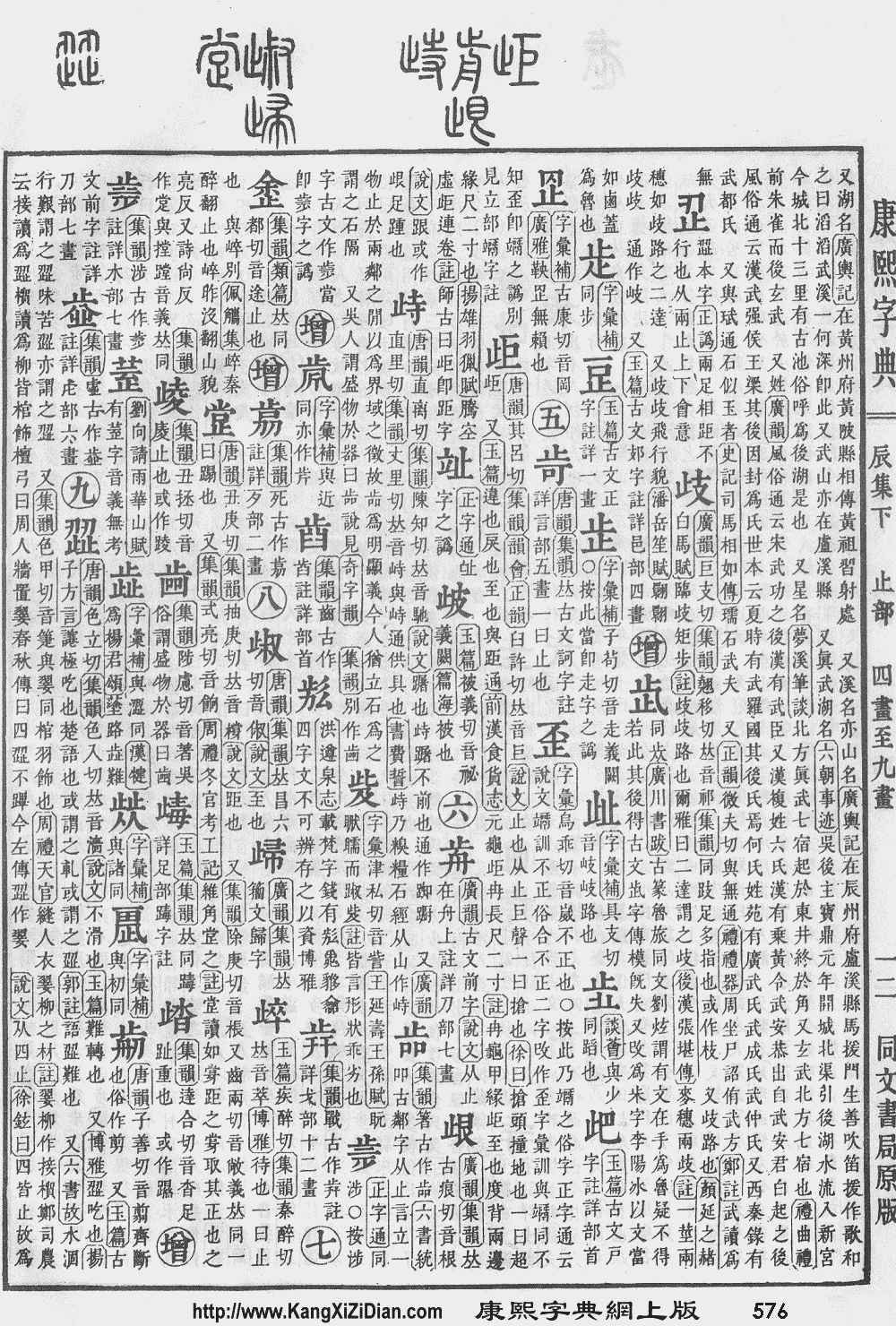
- Kangxi Dictionary: page 576, character 12
- Dai Kanwa Jiten: character 16286
- Dae Jaweon: page 966, character 15
- Hanyu Da Zidian (first edition): volume 2, page 1441, character 13
- Unihan data for U+6B6A
Chinese
Etymology 1
| simp. and trad. |
歪 | |
|---|---|---|
| alternative forms | 竵 | |
(This etymology is missing or incomplete. Please add to it, or discuss it at the Etymology scriptorium.)
Pronunciation
Definitions
歪
- slanted; inclined; askew; awry; crooked; lopsided
- crooked; perverse; improper; evil
- (Central Plains and Lanyin Mandarin, Sichuanese) fierce; malicious; overbearing
- (Hakka) stingy; miserly
Synonyms
- (stingy):
Dialectal synonyms of 吝嗇 (“stingy; miserly”) [map]
Compounds
- 一溜歪斜 (yīliùwāixié)
- 七扭八歪
- 七歪八倒
- 七歪八扭
- 上樑不正下樑歪/上梁不正下梁歪 (shàngliáng bùzhèng xiàliáng wāi)
- 仄歪
- 側歪/侧歪 (cèwāi)
- 口乖心歪
- 喪聲歪氣/丧声歪气
- 多歪多妒
- 掉歪
- 揣歪
- 揣歪捏怪
- 敧歪
- 斜歪
- 斜頭歪腦/斜头歪脑
- 晌午歪
- 東倒西歪/东倒西歪
- 東歪西倒/东歪西倒
- 機歪/机歪 (jīwāi)
- 歪ㄈㄞˋ (wāifài)
- 歪七扭八
- 歪七豎八/歪七竖八 (wāiqīshùbā)
- 歪不楞
- 歪不橫楞/歪不横楞
- 歪主意
- 歪人
- 歪充
- 歪剌
- 歪剌姑
- 歪剌貨/歪剌货
- 歪剌骨
- 歪哥 (wāigē)
- 歪嘴喊人
- 歪好
- 歪廝纏/歪厮缠
- 歪心邪意
- 歪意
- 歪憊/歪惫
- 歪憋
- 歪才
- 歪打正着 (wāidǎzhèngzháo)
- 歪打正著 (wāidǎzhèngzháo)
- 歪撇
- 歪擺佈/歪摆布
- 歪斜 (wāixié)
- 歪曲 (wāiqū)
- 歪歪
- 歪歪倒倒
- 歪歪扭扭 (wāiwāiniǔniǔ)
- 歪歪搭搭
- 歪歪斜斜 (wāiwāixiéxié)
- 歪歪趔趔
- 歪死纏/歪死缠
- 歪派
- 歪物件
- 歪理 (wāilǐ)
- 歪纏/歪缠
- 歪脖子
- 歪膏揤斜 (oai-ko-chhi̍h-chhoa̍h) (Min Nan)
- 歪著
- 歪行貨/歪行货
- 歪詞兒/歪词儿
- 歪話/歪话 (wāihuà)
- 歪詩/歪诗
- 歪談亂講/歪谈乱讲
- 歪談亂道/歪谈乱道
- 歪變/歪变
- 歪貨/歪货
- 歪蹄潑腳/歪蹄泼脚
- 歪辣
- 歪辣骨
- 歪道 (wāidào)
- 歪門邪道/歪门邪道
- 歪風/歪风 (wāifēng)
- 歪風邪氣/歪风邪气
- 病病歪歪 (bìngbing-wāiwāi)
- 發歪/发歪
- 皮賴歪派/皮赖歪派
- 目瞪口歪
- 禿歪剌/秃歪剌
- 耍歪掉猴
- 耍歪掉邪
- 膩歪/腻歪 (nìwai)
- 西歪東倒/西歪东倒
- 該歪/该歪
- 調歪/调歪
- 迆邐歪斜/迆逦歪斜
- 邪門歪道/邪门歪道 (xiéménwāidào)
- 邪魔歪道 (xié mó wāi dào)
- 黑心歪尖
- 鼻塌嘴歪
Etymology 2
| simp. and trad. |
歪 | |
|---|---|---|
(This etymology is missing or incomplete. Please add to it, or discuss it at the Etymology scriptorium.)
Pronunciation
Definitions
歪
- (Shanxi, Sichuanese, dialectal Hakka) inferior; bad; fake
- (Sichuanese) unreliable; deceiving
Compounds
- 歪名
- 歪歪兒貨/歪歪儿货
- 歪號/歪号
Etymology 3
| simp. and trad. |
歪 | |
|---|---|---|
| alternative forms | 乜 | |
Mai (2017) considers 佊 (MC pjeX) to be a possible etymon, noting other (rare) instances in Cantonese where /m/ is a reflex of the historical 幫 (MC pang) initial, and where /ɛ/ is a reflex of the 支 (MC tsye) final.
Pronunciation
Etymology 4
| simp. and trad. |
歪 | |
|---|---|---|
(This etymology is missing or incomplete. Please add to it, or discuss it at the Etymology scriptorium.)
Pronunciation
Japanese
Readings
Etymology
| Kanji in this term |
|---|
| 歪 |
| いびつ Hyōgaiji |
| kun’yomi |
| For pronunciation and definitions of 歪 – see the following entry. | ||
| ||
| (This term, 歪, is an alternative spelling of the above term.) |
Korean
Vietnamese
This article is issued from Wiktionary. The text is licensed under Creative Commons - Attribution - Sharealike. Additional terms may apply for the media files.