筋
See also: 觔
| ||||||||
Translingual
Han character
筋 (Kangxi radical 118, 竹+6, 12 strokes, cangjie input 竹月大尸 (HBKS), four-corner 88227, composition ⿱𥫗肋)
Derived characters
- 𤯸
References
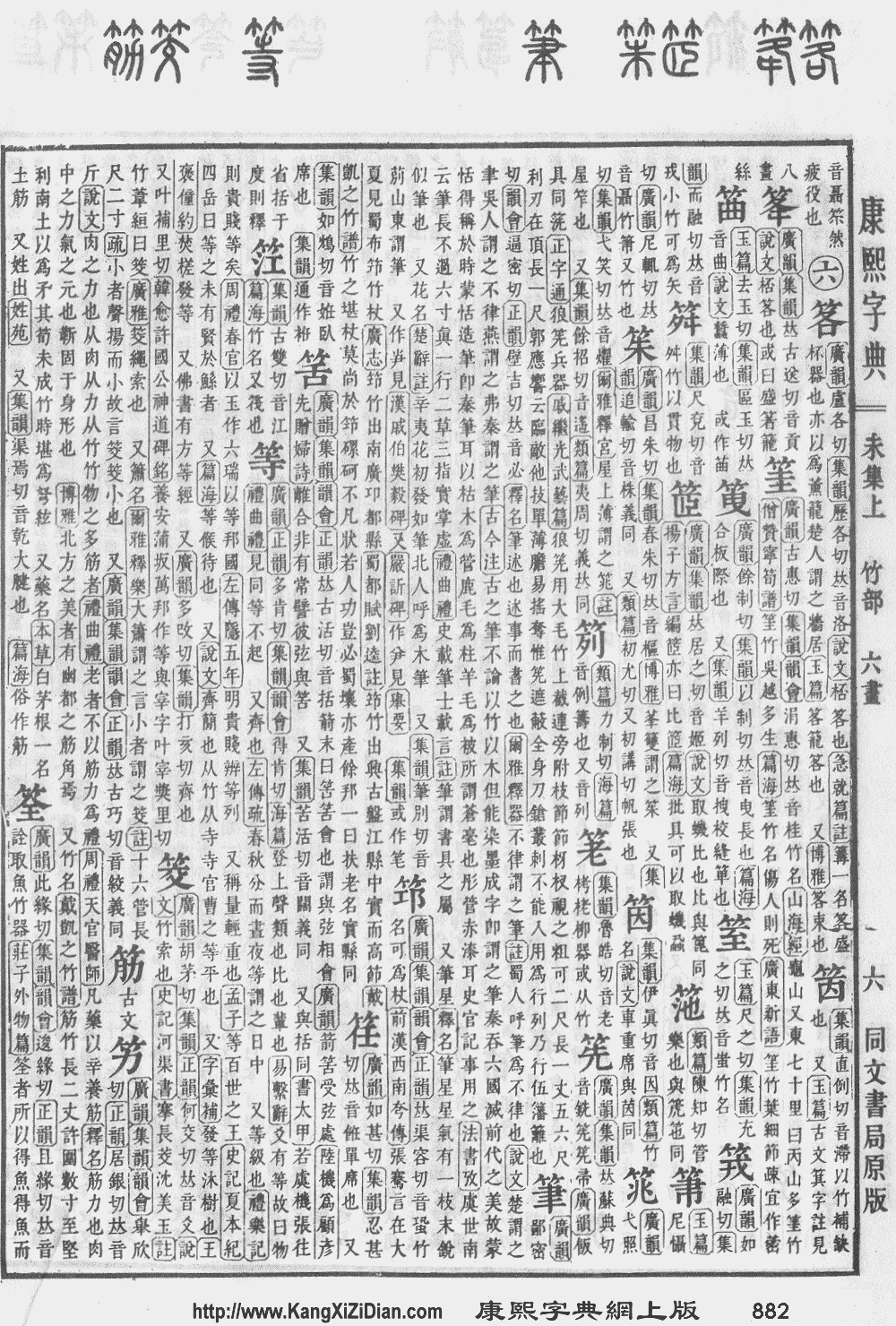
- Kangxi Dictionary: page 882, character 26
- Dai Kanwa Jiten: character 25994
- Dae Jaweon: page 1311, character 7
- Hanyu Da Zidian (first edition): volume 5, page 2968, character 4
- Unihan data for U+7B4B
Chinese
| trad. | 筋 | |
|---|---|---|
| simp. # | 筋 | |
| alternative forms | 觔/斤 | |
Glyph origin
| Historical forms of the character 筋 | |||
|---|---|---|---|
| Warring States | Shuowen Jiezi (compiled in Han) | Liushutong (compiled in Ming) | |
| Chu slip and silk script | Qin slip script | Small seal script | Transcribed ancient scripts |
 |
|
 |
 |
Ideogrammic compound (會意/会意) : 竹 (“bamboo”) + 𠛧 (“peel”) – sinew (bamboo is sinewy when peeled). The component 力 is a corruption of 刀 (刂).
Pronunciation
Definitions
筋
Compounds
- 不著筋節/不著筋节
- 中筋麵粉/中筋面粉 (zhōngjīn miànfěn)
- 低筋麵粉/低筋面粉 (dījīn miànfěn)
- 傷筋動骨/伤筋动骨 (shāngjīndònggǔ)
- 傷腦筋/伤脑筋 (shāng nǎojīn)
- 分筋術/分筋术
- 分筋錯骨/分筋错骨
- 剝皮抽筋/剥皮抽筋
- 力困筋乏
- 力盡筋疲/力尽筋疲
- 力盡筋舒/力尽筋舒
- 力軟筋麻/力软筋麻
- 努目訕筋/努目讪筋
- 努筋拔力
- 動腦筋/动脑筋 (dòng nǎojīn)
- 打筋斗
- 扯皮弄筋
- 扭筋
- 扯筋
- 扭頭暴筋/扭头暴筋
- 抽筋 (chōujīn)
- 拉筋 (lājīn)
- 抽筋剝皮/抽筋剥皮
- 抽筋拔骨
- 換腦筋/换脑筋
- 摔筋斗
- 易筋經/易筋经
- 村筋俗骨
- 橡皮筋 (xiàngpíjīn)
- 死腦筋/死脑筋 (sǐnǎojīn)
- 滾刀筋/滚刀筋
- 牛筋牛降
- 瘦筋巴骨
- 筋不束骨
- 筋斗
- 筋斗雲
- 筋書/筋书
- 筋疲力盡/筋疲力尽 (jīnpílìjìn)
- 筋疲力竭
- 筋疲力軟/筋疲力软
- 筋竿
- 筋節/筋节
- 筋節兒/筋节儿
- 筋絡/筋络
- 筋肉 (jīnròu)
- 筋脈/筋脉
- 筋膜 (jīnmó)
- 筋膜炎 (jīnmóyán)
- 筋觔/筋斤
- 筋電圖/筋电图
- 筋骨 (jīngǔ)
- 筋骨昂然
- 翻筋斗 (fān jīndǒu)
- 翻過筋斗
- 老牛筋
- 老腦筋/老脑筋 (lǎonǎojīn)
- 肋筋
- 腹筋 (fùjīn)
- 腦筋/脑筋 (nǎojīn)
- 舒筋活血
- 豎毛筋/竖毛筋
- 蹄筋 (tíjīn)
- 軟面筋/软面筋
- 轉筋/转筋 (zhuànjīn)
- 銅筋鐵肋/铜筋铁肋
- 銅筋鐵骨/铜筋铁骨
- 鋼筋/钢筋 (gāngjīn)
- 青筋 (qīngjīn)
- 面筋 (miànjīn)
- 顏筋柳骨/颜筋柳骨
- 顏骨柳筋/颜骨柳筋
- 骨軟筋酥/骨软筋酥
- 骨軟筋麻/骨软筋麻
- 高筋麵粉/高筋面粉 (gāojīn miànfěn)
- 麵筋/面筋 (miànjīn)
Japanese
Kanji
筋
Etymology
| Kanji in this term |
|---|
| 筋 |
| すじ Grade: 6 |
| kun’yomi |
From Old Japanese, from Proto-Japonic *suntuy ~ *sunti.
Possibly a compound of す (*su, unknown, possibly the same source as 脛 (sune, “shin”)) + 霊, 血, 乳 (chi, “life essence, spirit, power; blood; milk”). (Can this(+) etymology be sourced?)
Noun
Counter
References
- NHK Broadcasting Culture Research Institute, editor (1998), NHK日本語発音アクセント辞典 [NHK Japanese Pronunciation Accent Dictionary] (in Japanese), Tōkyō: NHK Publishing, →ISBN
Korean
Hanja
筋 • (geun) (hangeul 근, revised geun, McCune–Reischauer kŭn, Yale kun)
- This term needs a translation to English. Please help out and add a translation, then remove the text
{{rfdef}}.
Vietnamese
This article is issued from Wiktionary. The text is licensed under Creative Commons - Attribution - Sharealike. Additional terms may apply for the media files.