簪

簪 U+7C2A, 簪
CJK UNIFIED IDEOGRAPH-7C2A
← 簩
[U+7C29]
CJK Unified Ideographs 簫 →
[U+7C2B]

Translingual

Han character

簪 (Kangxi radical 118, 竹+12, 18 strokes, cangjie input 竹一山日 (HMUA), four-corner 88601, composition ⿱𥫗朁)

Derived characters

  • 𡅎 𢹽 𣠱 𨇸

References

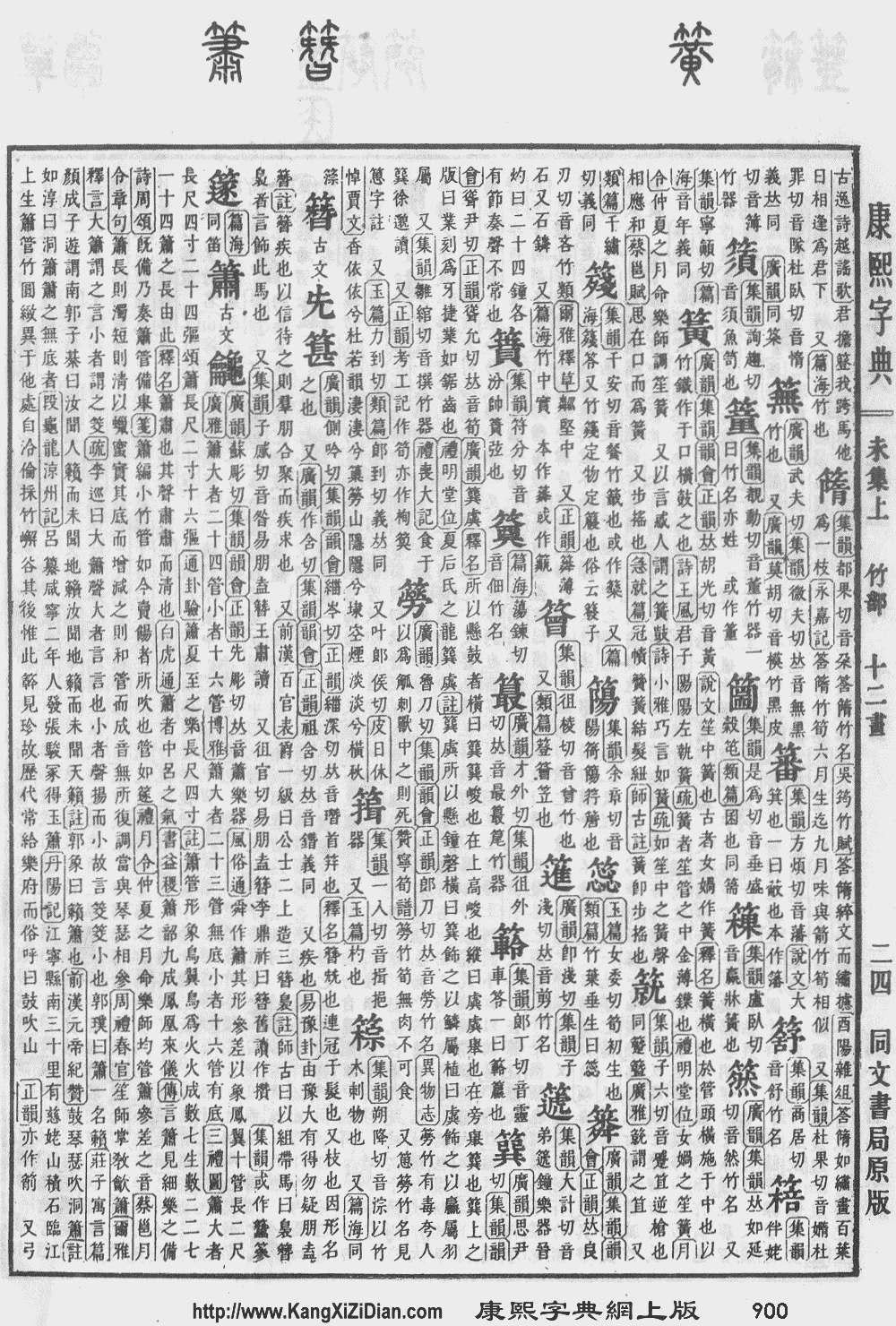
  • Kangxi Dictionary: page 900, character 28
  • Dai Kanwa Jiten: character 26558
  • Dae Jaweon: page 1326, character 14
  • Hanyu Da Zidian (first edition): volume 5, page 3014, character 7
  • Unihan data for U+7C2A

Chinese

trad. 簪
simp. # 簪
alternative forms
 
兂
簮
篸/𥮾
𥯓
𦻳
兂
簮
篸/𥮾
𥯓
𦻳
𥸢
𬖂
𮆪

Glyph origin

Historical forms of the character 簪
Shuowen Jiezi (compiled in Han)
Small seal script

Pronunciation


Note:
  • cham/chiam - vernacular;
  • chim - literary.

Rime
Character 簪 簪
Reading # 1/2 2/2
Initial (聲) 莊 (18) 精 (13)
Final (韻) 侵 (140) 覃 (159)
Tone (調) Level (Ø) Level (Ø)
Openness (開合) Open Open
Division (等) III I
Fanqie 側吟切 作含切
Baxter tsrim tsom
Reconstructions
Zhengzhang
Shangfang
/t͡ʃˠiɪm/ /t͡sʌm/
Pan
Wuyun
/ʈ͡ʂᵚim/ /t͡səm/
Shao
Rongfen
/t͡ʃiem/ /t͡sɒm/
Edwin
Pulleyblank
/ʈ͡ʂjim/ /t͡səm/
Li
Rong
/t͡ʃjəm/ /t͡sᴀm/
Wang
Li
/t͡ʃĭĕm/ /t͡sɒm/
Bernard
Karlgren
/ʈ͡ʂi̯əm/ /t͡săm/
Expected
Mandarin
Reflex
zhēn zān
Expected
Cantonese
Reflex
zam1 zaam1
Baxter–Sagart system 1.1 (2014)
Character 簪 簪
Reading # 1/2 2/2
Modern
Beijing
(Pinyin)
zān zān
Middle
Chinese
‹ tsom › ‹ tsrim ›
Old
Chinese
/*Cə.tsˁ[ə]m/ /*tsr[ə]m/
English hairpin hairpin

Notes for Old Chinese notations in the Baxter–Sagart system:

* Parentheses "()" indicate uncertain presence;
* Square brackets "[]" indicate uncertain identity, e.g. *[t] as coda may in fact be *-t or *-p;
* Angle brackets "<>" indicate infix;
* Hyphen "-" indicates morpheme boundary;

* Period "." indicates syllable boundary.
Zhengzhang system (2003)
Character 簪 簪
Reading # 1/2 2/2
No. 6694 6721
Phonetic
component
兓 兓
Rime
group
侵 侵
Rime
subdivision
1 1
Corresponding
MC rime
簪 旡
Old
Chinese
/*ʔsɯːm/ /*ʔsrɯm/
Notes 說文同兂俗體

Definitions

簪

  1. hairpin; clasp
  2. to wear in one's hair

Compounds

  • 刈蓍遺簪/刈蓍遗簪
  • 墮珥遺簪/堕珥遗簪
  • 戶列簪纓/户列簪缨
  • 扁簪
  • 投簪
  • 抽簪
  • 持橐簪筆/持橐簪笔
  • 插頭簪/插头簪
  • 木簪
  • 玉簪
  • 瓶墜簪折/瓶坠簪折
  • 盍簪
  • 碧玉簪
  • 竊簪之臣/窃簪之臣
  • 簪子 (zānzi)
  • 簪珥
  • 簪笏
  • 簪筆/簪笔
  • 簪筆磬折/簪笔磬折
  • 簪簪
  • 簪紱/簪绂
  • 簪組/簪组
  • 簪纓/簪缨
  • 簪纓世胄/簪缨世胄
  • 簪纓縉紳/簪缨缙绅
  • 簪纓門第/簪缨门第
  • 簪花
  • 缾沉簪折/瓶沉簪折
  • 美女簪花
  • 華簪/华簪
  • 蓍簪不忘
  • 衣簪
  • 遺簪墮履/遗簪堕履
  • 遺簪墜屨/遗簪坠屦
  • 金簪
  • 銀簪/银簪
  • 頭髮簪/头发簪
  • 髮簪/发簪 (fàzān)
  • 鳳簪/凤簪

Japanese

Kanji

簪

(uncommon “Hyōgai” kanji)

  1. ornamental hairpin

Readings

Etymology

簪 (kanzashi): A 舞子 (maiko, “apprentice geisha”) with the willow-themed kanzashi for the month of June.
Kanji in this term
簪
かんざし
Hyōgaiji
Alternative spellings
髪挿
鈿
釵

/kamusaɕi/ → /kanzaɕi/

Originally a compound of 髪 (kamu, “hair, hair of the head”, Old Japanese combining form) +‎ 挿し (sashi, “sticker-through (something that sticks through)”, the 連用形 (ren'yōkei, “continuative or stem form”) of verb 挿す sasu “to stick through, to insert”).[1][2] The sashi changes to zashi as an instance of rendaku (連濁).

Pronunciation

  • (Tokyo) かんざし [kàńzáshí] (Heiban – [0])[3][2]
  • IPA(key): [kã̠nd͡za̠ɕi]

Noun

簪(かんざし) • (kanzashi) 

  1. a hairpin, particularly a fancy decorative hairpin used in Japanese women's hairstyles

Usage notes

This is most commonly spelled in kanji as 簪 or in kana as かんざし.

The alternative kanji spellings are attested, but seldom used in modern Japanese.

References

  1. Shōgaku Tosho (1988) 国語大辞典(新装版) [Unabridged Dictionary of Japanese (Revised Edition)] (in Japanese), Tōkyō: Shogakukan, →ISBN
  2. Matsumura, Akira, editor (2006), 大辞林 [Daijirin] (in Japanese), Third edition, Tōkyō: Sanseidō, →ISBN
  3. NHK Broadcasting Culture Research Institute, editor (1998), NHK日本語発音アクセント辞典 [NHK Japanese Pronunciation Accent Dictionary] (in Japanese), Tōkyō: NHK Publishing, →ISBN

Korean

Hanja

簪 • (jam) (hangeul 잠, revised jam, McCune–Reischauer cham, Yale cam)

  1. This term needs a translation to English. Please help out and add a translation, then remove the text {{rfdef}}.

Vietnamese

Han character

簪: Hán Nôm readings: trâm, trám, trắm

  1. This term needs a translation to English. Please help out and add a translation, then remove the text {{rfdef}}.
This article is issued from Wiktionary. The text is licensed under Creative Commons - Attribution - Sharealike. Additional terms may apply for the media files.