系
| ||||||||
Translingual
| Stroke order | |||
|---|---|---|---|
 | |||
| Japanese | 系 係 繋 |
|---|---|
| Simplified | 系 系 系 |
| Traditional | 系 係 繫 |
Han character
系 (Kangxi radical 120, 糸+1, 7 strokes, cangjie input 竹女戈火 (HVIF), four-corner 20903, composition ⿱丿糸)
Usage notes
In Chinese, this character both exists as a traditional character and as simplification of 係 and 繫. In Japanese, 系 and 係 are separate characters, while 繫 is unofficially simplified as 繋 (extended shinjitai).
References
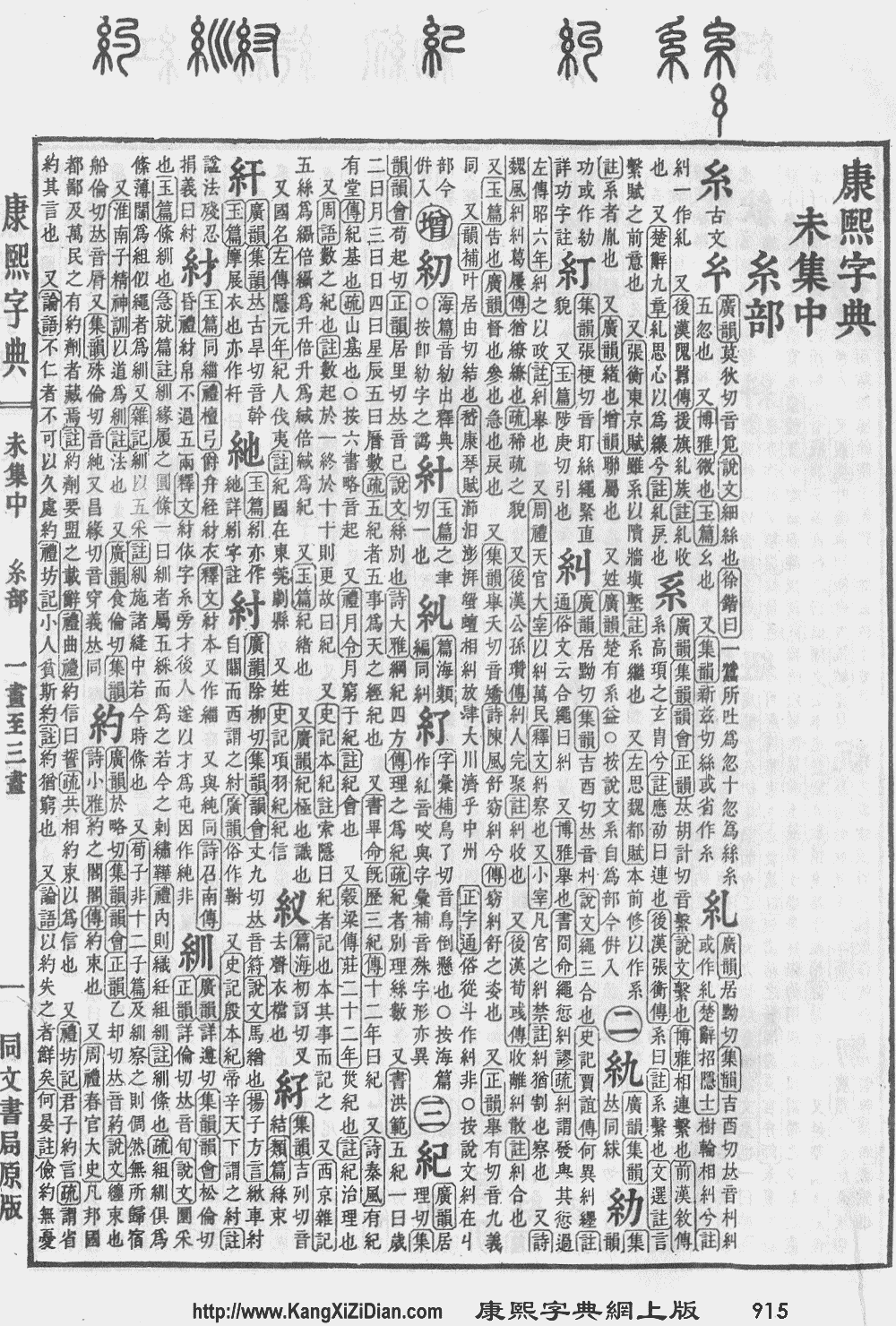
- Kangxi Dictionary: page 915, character 4
- Dai Kanwa Jiten: character 27223
- Dae Jaweon: page 1342, character 3
- Hanyu Da Zidian (first edition): volume 5, page 3361, character 2
- Unihan data for U+7CFB
Chinese
Glyph origin
| Historical forms of the character 系 | |||
|---|---|---|---|
| Shang | Western Zhou | Shuowen Jiezi (compiled in Han) | Liushutong (compiled in Ming) |
| Oracle bone script | Bronze inscriptions | Small seal script | Transcribed ancient scripts |
 |
 |
 |
 |
Ideogrammic compound (會意/会意) : abbreviated 手 + 糸. Also used as simplified forms:
Pronunciation 1
Definitions
系
- department; faculty
- 中文系 ― zhōngwén xì ― Chinese language faculty
- system
- to belong to; to be part of; to fall under; to be categorised as; to be classified as
Synonyms
- (to belong to):
Compounds
- 一系列 (yīxìliè)
- 世系 (shìxì)
- 二疊系/二叠系
- 作業系統/作业系统 (zuòyè xìtǒng)
- 侏羅系/侏罗系
- 供電系統/供电系统
- 光學系統/光学系统
- 免疫系統/免疫系统 (miǎnyì xìtǒng)
- 分時系統/分时系统
- 分泌系統/分泌系统
- 印度法系
- 印歐語系/印欧语系 (Yìn-Ōu yǔxì)
- 呼吸系統/呼吸系统 (hūxī xìtǒng)
- 哲學系/哲学系
- 圖資系統/图资系统
- 大陸法系/大陆法系 (dàlùfǎxì)
- 太陽系/太阳系 (Tàiyángxì)
- 姓系
- 嫡系 (díxì)
- 學系/学系 (xuéxì)
- 家系 (jiāxì)
- 寒武系
- 專家系統/专家系统
- 導引系統/导引系统
- 山系 (shānxì)
- 工業體系/工业体系
- 廣播系統/广播系统
- 後醫系/后医系
- 循環系統/循环系统 (xúnhuán xìtǒng)
- 恆星系/恒星系 (héngxīngxì)
- 捷運系統/捷运系统
- 撥號系統/拨号系统
- 文化體系/文化体系
- 旁系 (pángxì)
- 旁系血親/旁系血亲
- 星系 (xīngxì)
- 晶系 (jīngxì)
- 本科系
- 根系
- 橢圓星系/椭圆星系 (tuǒyuán xīngxì)
- 正方晶系
- 母系 (mǔxì)
- 母系制度
- 水系 (shuǐxì)
- 河外星系
- 法系 (fǎxì)
- 泰系各族
- 派系 (pàixì)
- 消化系統/消化系统 (xiāohuà xìtǒng)
- 淋巴系統/淋巴系统 (línbā xìtǒng)
- 漢藏語系/汉藏语系 (Hàn-Zàng yǔxì)
- 父系 (fùxì)
- 父系制度
- 物流系統/物流系统
- 生態系/生态系 (shēngtàixì)
- 男系
- 白堊系/白垩系
- 直系 (zhíxì)
- 直系親屬/直系亲属 (zhíxì qīnshǔ)
- 社會體系/社会体系
- 神系
- 神經系統/神经系统 (shénjīng xìtǒng)
- 視訊系統/视讯系统
- 科系 (kēxì)
- 系刊
- 系列 (xìliè)
- 系列劇/系列剧 (xìlièjù)
- 系列化 (xìlièhuà)
- 系列片 (xìlièpiàn)
- 系孫/系孙
- 系念 (xìniàn)
- 系族 (xìzú)
- 系璧
- 系統/系统 (xìtǒng)
- 系統分析/系统分析
- 系統化/系统化 (xìtǒnghuà)
- 系統圖/系统图
- 系統工程/系统工程 (xìtǒng gōngchéng)
- 系統理論/系统理论
- 系統設計/系统设计
- 系統軟體/系统软体
- 系詞/系词 (xìcí)
- 系譜/系谱 (xìpǔ)
- 系譜樹/系谱树
- 網狀系統/网状系统
- 群系
- 職系/职系
- 色系
- 親系/亲系
- 語系/语系 (yǔxì)
- 譜系/谱系 (pǔxì)
- 軸根系/轴根系
- 輪系/轮系
- 轉系/转系
- 通信系統/通信系统
- 配水系統/配水系统
- 銀河系/银河系 (Yínhéxì)
- 開放系統/开放系统 (kāifàng xìtǒng)
- 關系/关系
- 防火系統/防火系统
- 音系 (yīnxì)
- 體系/体系 (tǐxì)
Pronunciation 2
Etymology 2
| For pronunciation and definitions of 系 – see 繫 (“to tie, to fasten, to button up; to connect; to link; etc.”). (This character is the simplified form of 繫). |
Notes:
|
Etymology 3
| For pronunciation and definitions of 系 – see 係 (“to relate; to bear on; to tie; to bind; etc.”). (This character is the simplified form of 係). |
Notes:
|
Japanese
Compounds
Suffix
系 • (-kei)
References
Vietnamese
Chữ Hán
- This term needs a translation to English. Please help out and add a translation, then remove the text
{{rfdef}}.
References
This article is issued from Wiktionary. The text is licensed under Creative Commons - Attribution - Sharealike. Additional terms may apply for the media files.