紬
| ||||||||
Translingual
Han character
紬 (Kangxi radical 120, 糸+5, 11 strokes, cangjie input 女火中田 (VFLW), four-corner 25960, composition ⿰糹由)
References
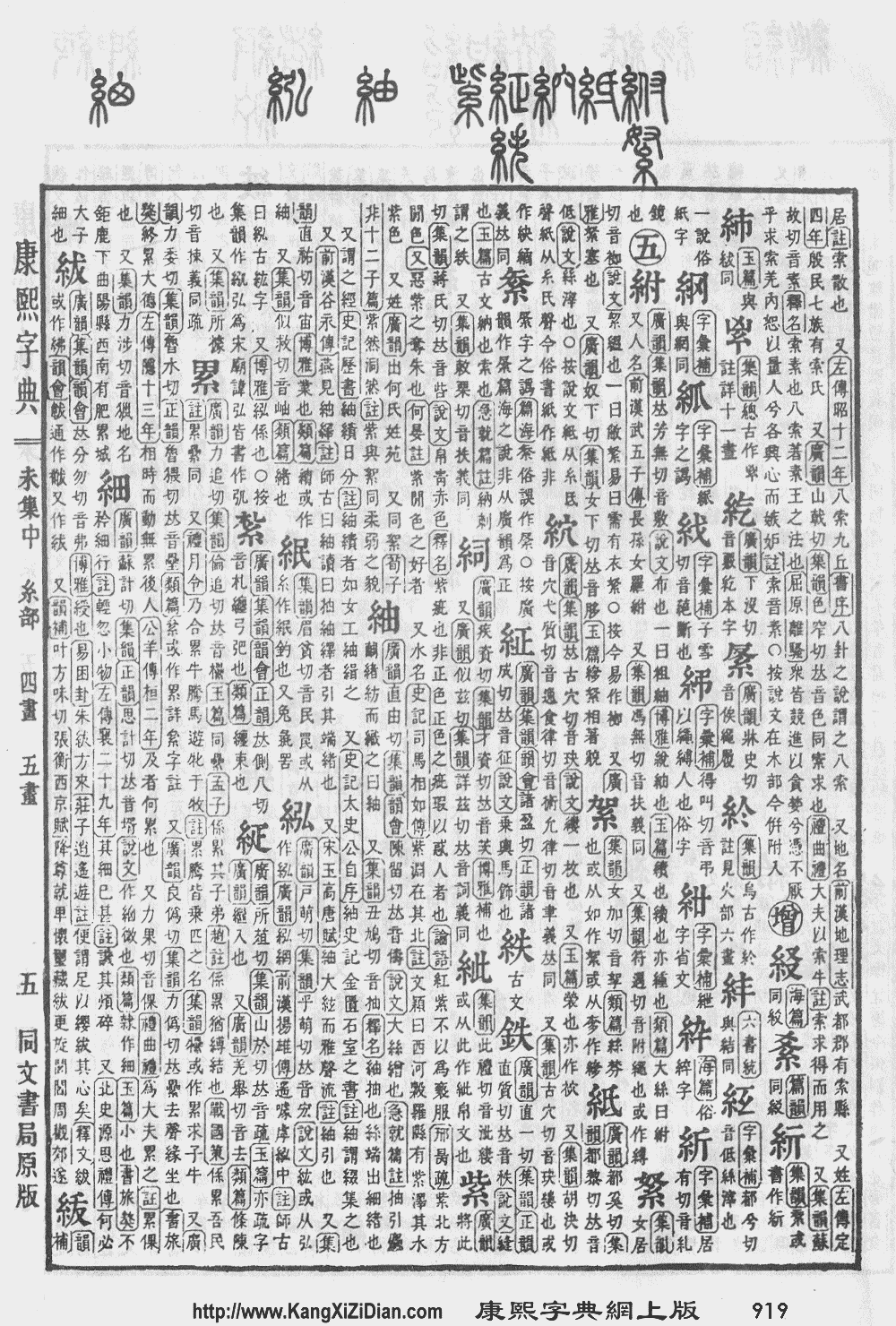
- Kangxi Dictionary: page 919, character 30
- Dai Kanwa Jiten: character 27338
- Dae Jaweon: page 1351, character 1
- Hanyu Da Zidian (first edition): volume 5, page 3381, character 2
- Unihan data for U+7D2C
Chinese
| trad. | 紬 | |
|---|---|---|
| simp. | 绸* | |
| alternative forms | 䌧 𦀳 | |
Glyph origin
Characters in the same phonetic series (由) (Zhengzhang, 2003)
| Old Chinese | |
|---|---|
| 袖 | *ljɯwɢs |
| 岫 | *ljɯwɢs |
| 牰 | *ljɯwɢs, *lɯwɢs |
| 抽 | *l̥ʰɯw |
| 妯 | *l̥ʰɯw, *l'ɯwɢ |
| 紬 | *l'ɯw |
| 怞 | *l'ɯw |
| 鮋 | *l'ɯw, *ɦljɯw, *lɯw |
| 菗 | *rlɯw |
| 宙 | *l'ɯwɢs |
| 胄 | *l'ɯwɢs |
| 冑 | *l'ɯwɢs |
| 伷 | *l'ɯwɢs |
| 駎 | *l'ɯwɢs |
| 油 | *lɯw, *lɯwɢs |
| 由 | *lɯw |
| 蚰 | *lɯw |
| 秞 | *lɯw |
| 邮 | *lɯw |
| 釉 | *lɯwɢs |
| 柚 | *lɯwɢs, *l'ɯwɢ |
| 鼬 | *lɯwɢs |
| 苖 | *l'ɯːwɢ, *l̥ʰɯwɢ |
| 笛 | *l'ɯːwɢ |
| 迪 | *l'ɯːwɢ |
| 頔 | *l'ɯːwɢ |
| 軸 | *l'ɯwɢ |
| 舳 | *l'ɯwɢ |
Phono-semantic compound (形聲/形声, OC *l'ɯw) : semantic 糸 (“silk”) + phonetic 由 (OC *lɯw).
Pronunciation
Pronunciation
Pronunciation
Compounds
- 紬次/绸次
- 紬繹/绸绎
- 綿紬/绵绸
- 縐紬/绉绸
- 遵紬/遵绸
References
- Dictionary of Chinese Character Variants (教育部異體字字典), B03349
- “紬”, in 漢語多功能字庫 (Multi-function Chinese Character Database), 香港中文大學 (the Chinese University of Hong Kong), 2014–
Japanese
Readings
Etymology 1
| Kanji in this term |
|---|
| 紬 |
| つむぎ Jinmeiyō |
| kun’yomi |
The 連用形 (ren'yōkei, “stem or continuative form”) of verb 紡ぐ (tsumugu, “to spin”).[1][2]
Derived terms
Derived terms
- 上田紬 (Ueda-tsumugi)
- 置賜紬 (Oitama-tsumugi)
- 大島紬 (Ōshima-tsumugi)
- 玉紬 (tamatsumugi)
- 紬織り (tsumugiori)
- 紬縞 (tsumugijima)
- 手紬 (tetsumugi)
- 南部紬 (Nanbu-tsumugi)
- 奉書紬 (hōsho tsumugi)
- 紡績紬 (bōseki tsumugi)
Etymology 2
| Kanji in this term |
|---|
| 紬 |
| ちゅう Jinmeiyō |
| kan’on |
/tiu/ → /t͡sʲiu/ → /t͡ɕuː/
From Middle Chinese 紬 (MC drjuw).
Affix
- This term needs a translation to English. Please help out and add a translation, then remove the text
{{rfdef}}.
Derived terms
- 紬紡糸 (chūbōshi)
- 絹紬, 繭紬 (kenchū)
References
- Shōgaku Tosho (1988) 国語大辞典(新装版) [Unabridged Dictionary of Japanese (Revised Edition)] (in Japanese), Tōkyō: Shogakukan, →ISBN
- Matsumura, Akira, editor (2006), 大辞林 [Daijirin] (in Japanese), Third edition, Tōkyō: Sanseidō, →ISBN
Korean
Hanja
紬 • (ju) (hangeul 주, revised ju, McCune–Reischauer chu, Yale cwu)
- This term needs a translation to English. Please help out and add a translation, then remove the text
{{rfdef}}.
Vietnamese
This article is issued from Wiktionary. The text is licensed under Creative Commons - Attribution - Sharealike. Additional terms may apply for the media files.