柚
| ||||||||
Translingual
Han character
柚 (Kangxi radical 75, 木+5, 9 strokes, cangjie input 木中田 (DLW), four-corner 45960, composition ⿰木由)
References
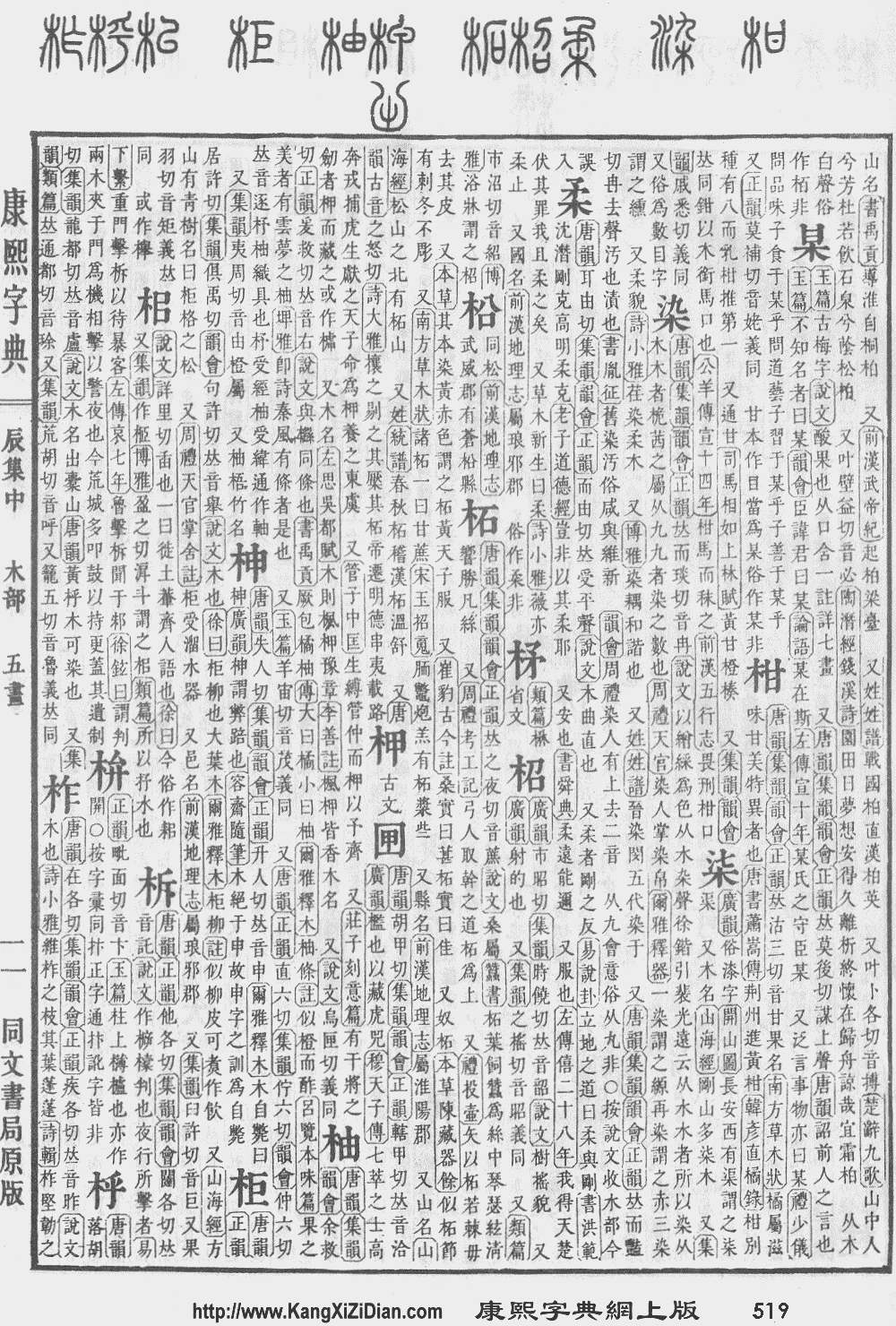
- Kangxi Dictionary: page 519, character 12
- Dai Kanwa Jiten: character 14629
- Dae Jaweon: page 907, character 12
- Hanyu Da Zidian (first edition): volume 2, page 1182, character 5
- Unihan data for U+67DA
Chinese
| simp. and trad. |
柚 | |
|---|---|---|
Glyph origin
Characters in the same phonetic series (由) (Zhengzhang, 2003)
| Old Chinese | |
|---|---|
| 袖 | *ljɯwɢs |
| 岫 | *ljɯwɢs |
| 牰 | *ljɯwɢs, *lɯwɢs |
| 抽 | *l̥ʰɯw |
| 妯 | *l̥ʰɯw, *l'ɯwɢ |
| 紬 | *l'ɯw |
| 怞 | *l'ɯw |
| 鮋 | *l'ɯw, *ɦljɯw, *lɯw |
| 菗 | *rlɯw |
| 宙 | *l'ɯwɢs |
| 胄 | *l'ɯwɢs |
| 冑 | *l'ɯwɢs |
| 伷 | *l'ɯwɢs |
| 駎 | *l'ɯwɢs |
| 油 | *lɯw, *lɯwɢs |
| 由 | *lɯw |
| 蚰 | *lɯw |
| 秞 | *lɯw |
| 邮 | *lɯw |
| 釉 | *lɯwɢs |
| 柚 | *lɯwɢs, *l'ɯwɢ |
| 鼬 | *lɯwɢs |
| 苖 | *l'ɯːwɢ, *l̥ʰɯwɢ |
| 笛 | *l'ɯːwɢ |
| 迪 | *l'ɯːwɢ |
| 頔 | *l'ɯːwɢ |
| 軸 | *l'ɯwɢ |
| 舳 | *l'ɯwɢ |
Phono-semantic compound (形聲/形声, OC *lɯwɢs, *l'ɯwɢ) : semantic 木 (“tree; wood”) + phonetic 由 (OC *lɯw).
Pronunciation
Synonyms
Dialectal synonyms of 柚子 (“pomelo”) [map]
Pronunciation
Compounds
- 柚木
- 柚梧
Pronunciation
Compounds
- 杼柚
Japanese
Readings
Etymology 1
| Kanji in this term |
|---|
| 柚 |
| ゆ Jinmeiyō |
| on’yomi |
From Middle Chinese 柚 (MC yuwH). The goon pronunciation, so likely an earlier borrowing.
Found in the Wamyō Ruijushō:[1]
- 柚 爾雅集注云柚(音由又以臰反)一名樤(音條和名由)...
where 由 is the man'yōgana form of ゆ.
Pronunciation
- IPA(key): [jɯ̟ᵝ]
Derived terms
- 柚餅子 (yubeshi)
- 柚味噌 (yumiso)
Etymology 2
| Kanji in this term |
|---|
| 柚 |
| ゆう Jinmeiyō |
| on’yomi |
/iu/ → /juː/
Probably from Middle Chinese 柚 (MC yuwH). The kan'on pronunciation, so likely a later borrowing. (Can this(+) etymology be sourced?)
Found in the Wakan Sansai Zue.[1]
Pronunciation
- IPA(key): [jɯ̟ᵝː]
Etymology 3
| Kanji in this term |
|---|
| 柚 |
| ゆず Jinmeiyō |
| kun’yomi |
Probably a borrowing from Mandarin 柚子 (yòuzi). (Can this(+) etymology be sourced?)
Usage notes
- As with many terms that name organisms, this term is often spelled in katakana, especially in biological contexts (where katakana is customary).
Derived terms
- 柚茶 (yuzucha)
- 柚坊 (yuzubō, “swallowtail butterfly larva”, pest of citrus plants)
- 柚味噌 (yuzumiso)
Etymology 4
Other various nanori readings.
Proper noun
柚 • (Yui)
- a female given name
柚 • (Yuzaki)
- a surname
柚 • (Yuzusaki)
- a surname
柚 • (Yuni)
- a female given name
References
- Matsumura, Akira, editor (2006), 大辞林 [Daijirin] (in Japanese), Third edition, Tōkyō: Sanseidō, →ISBN
Korean
Vietnamese
This article is issued from Wiktionary. The text is licensed under Creative Commons - Attribution - Sharealike. Additional terms may apply for the media files.