肚
| ||||||||
Translingual
| Stroke order | |||
|---|---|---|---|
 | |||
Han character
肚 (Kangxi radical 130, 肉+3, 7 strokes, cangjie input 月土 (BG), four-corner 74210, composition ⿰月土(GJK) or ⿰⺼土(HT))
References
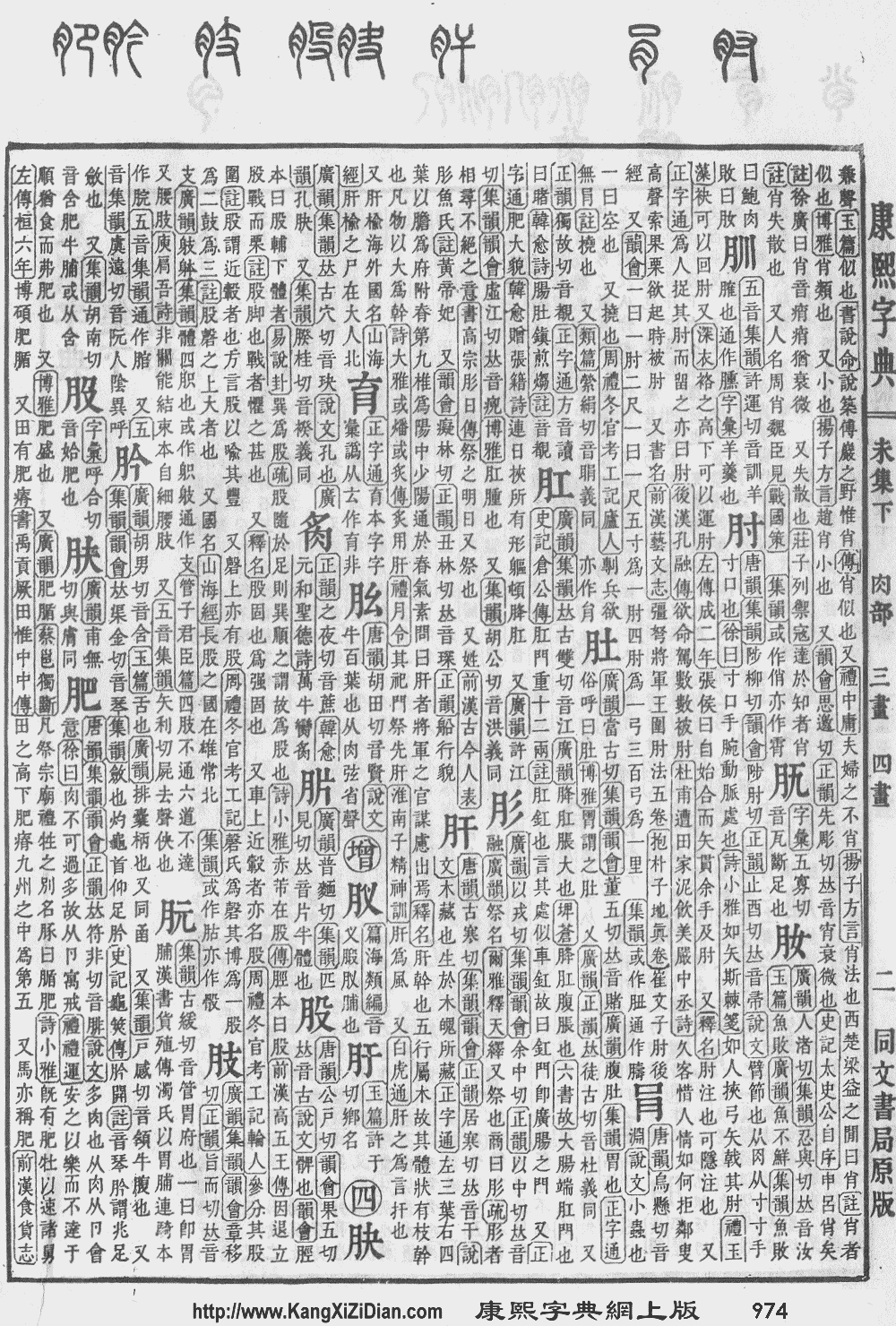
- Kangxi Dictionary: page 974, character 6
- Dai Kanwa Jiten: character 29270
- Dae Jaweon: page 1425, character 28
- Hanyu Da Zidian (first edition): volume 3, page 2044, character 8
- Unihan data for U+809A
Chinese
| trad. | 肚 | |
|---|---|---|
| simp. # | 肚 | |
Glyph origin
Phono-semantic compound (形聲/形声, OC *ʔl'aːʔ, *l'aːʔ) : semantic ⺼ + phonetic 土 (OC *l̥ʰaːʔ, *l'aːʔ).
Etymology
A post-classical word. Compare Proto-Sino-Tibetan *l-tjwa (“mouth; beak; food; stomach”), whence Tibetan ལྟོ་བ (lto ba, “stomach; belly”) (STEDT). Compare also Proto-Tai *dwuːŋꟲ (“belly”) (whence Thai ท้อง (tɔ́ɔng)) and Proto-Kam-Sui *luŋ² (“stomach”), as Middle Chinese shangsheng corresponds to foreign -ŋ in some words (Schuessler, 2007).
Some dialects have different pronunciations for the two senses, "abdomen; belly (of a human)" and "stomach (of an animal)", derived from two different readings in Middle Chinese that differed in the voicing of the initial consonant.
- In Mandarin, the pronunciation for the former sense derives from the 徒古切 reading in Middle Chinese (i.e. the reading with voiced initial /d/) and the pronunciation for the latter sense derives from the 當古切 (i.e. the reading with voiceless initial /t/) reading.
- In Min Nan, the pronunciation for the former sense derives from the 當古切 reading and the pronunciation for latter sense derives from the 徒古切 reading.
- Cantonese uses the same pronunciation for both senses, derived from the 徒古切 reading.
- Hakka also uses the same pronunciation for both senses, but it is instead derived from the 當古切 reading.
Pronunciation 1
Definitions
肚
- belly; abdomen; bowels
- 肚子 ― dùzǐ ― abdomen; belly
- bulge; protrusion
- (Southern Min, Eastern Min) tripe; animal stomach (as food)
- heart; mind
Synonyms
Compounds
- 一肚子 (yīdùzi)
- 一肚皮
- 下肚 (xiàdù)
- 儉腸凹肚/俭肠凹肚 (khiām-tn̂g-neh-tō͘) (Min Nan)
- 兜肚兒/兜肚儿
- 割肚牽腸/割肚牵肠
- 大肚 (dàdù)
- 大肚子 (dàdùzi)
- 大肚溪
- 大肚漢/大肚汉
- 大肚魚/大肚鱼
- 害肚子
- 小肚子兒/小肚子儿
- 小肚雞腸/小肚鸡肠 (xiǎodùjīcháng)
- 帶肚子/带肚子
- 心知肚明 (xīnzhīdùmíng)
- 懸腸掛肚/悬肠挂肚
- 抱肚
- 拉肚子 (lā dùzi)
- 指頭肚兒/指头肚儿
- 挺胸凸肚
- 挺胸疊肚/挺胸叠肚
- 掛肚牽心/挂肚牵心
- 掛肚牽腸/挂肚牵肠
- 摳心挖肚/抠心挖肚
- 撐腸拄肚/撑肠拄肚
- 攪肚蛆腸/搅肚蛆肠
- 曲心矯肚/曲心矫肚
- 有肚皮
- 有肚腸/有肚肠
- 沒肚子/没肚子
- 沒腸肚/没肠肚
- 滾肚/滚肚
- 滿肚子火/满肚子火 (mǎndùzihuǒ)
- 滿肚牢騷/满肚牢骚
- 滿肚皮/满肚皮
- 滾肚索/滚肚索
- 瀉肚/泻肚 (xièdù)
- 牽肚掛腸/牵肚挂肠
- 牽腸割肚/牵肠割肚
- 牽腸掛肚/牵肠挂肚
- 直肚直腸/直肚直肠
- 直腸直肚/直肠直肚 (zhíchángzhídù)
- 眼饞肚飽/眼馋肚饱
- 空肚兒/空肚儿
- 肚兒/肚儿 (dǔr)
- 肚兜 (dùdōu)
- 肚包
- 肚囊兒/肚囊儿
- 肚子疼 (dùzi téng)
- 肚子痛 (dùzi tòng)
- 肚皮 (dùpí)
- 肚皮裡/肚皮里
- 肚䏙 (tou5 dam1) (Cantonese)
- 肚胿仔 (tō͘-koai-á) (Min Nan)
- 肚腩 (dùnǎn)
- 肚腸/肚肠
- 肚臍/肚脐 (dùqí)
- 肚臍眼/肚脐眼 (dùqíyǎn)
- 肚裡/肚里 (dùlǐ)
- 肚裡一輪/肚里一轮
- 肚裡尋思/肚里寻思
- 肚裡明白/肚里明白
- 肚裡躊躇/肚里踌躇
- 肚裡雷鳴/肚里雷鸣
- 肚轉腸鳴/肚转肠鸣
- 肚量 (dùliàng)
- 肚飢/肚饥
- 腸肚/肠肚 (chángdù)
- 腹肚 (fùdù)
- 腿肚子 (tuǐdùzi)
- 袜肚
- 裹肚
- 跑肚 (pǎodù)
- 醫肚皮/医肚皮
- 鬧肚子/闹肚子 (nào dùzi)
- 魚肚白/鱼肚白 (yúdùbái)
- 鼠肚雞腸/鼠肚鸡肠
Pronunciation 2
Definitions
肚
- (obsolete or Southern Min) belly; abdomen
- 腹肚 [Hokkien] ― pak-tó͘ [Pe̍h-ōe-jī] ― abdomen; belly
- tripe; animal stomach (as food)
- 牛肚 ― niúdǔ ― tripe (cow stomach)
- (Southern Min) bulge; protrusion
- 跤後肚/跤后肚 [Hokkien] ― kha-āu-tó͘ [Pe̍h-ōe-jī] ― calf of the leg
References
- “肚”, in 漢語多功能字庫 (Multi-function Chinese Character Database), 香港中文大學 (the Chinese University of Hong Kong), 2014–
Japanese
Compounds
- 肚脱 (zudatsu)
Korean
Hanja
肚 • (du) (hangeul 두, revised du, McCune–Reischauer tu, Yale twu)
- This term needs a translation to English. Please help out and add a translation, then remove the text
{{rfdef}}.