傳
| ||||||||
Translingual
| Traditional | 傳 |
|---|---|
| Shinjitai | 伝 |
| Simplified | 传 |
Han character
傳 (Kangxi radical 9, 人+11, 13 strokes, cangjie input 人十戈戈 (OJII), four-corner 25243, composition ⿰亻專)
Derived characters
- 𡀯, 𡈬
References
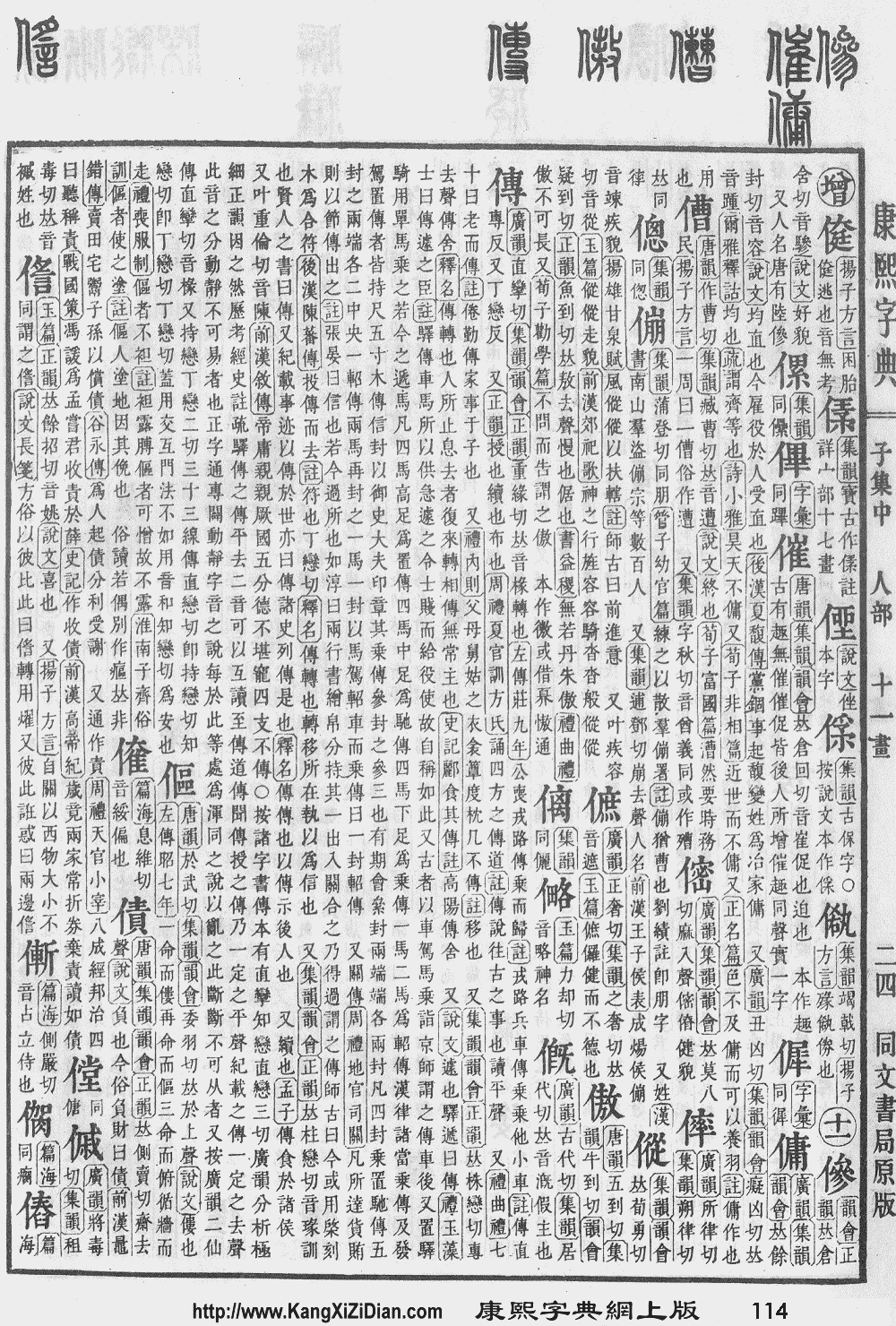
- Kangxi Dictionary: page 114, character 23
- Dai Kanwa Jiten: character 1019
- Dae Jaweon: page 243, character 2
- Hanyu Da Zidian (first edition): volume 1, page 208, character 9
- Unihan data for U+50B3
Chinese
| trad. | 傳 | |
|---|---|---|
| simp. | 传 | |
| alternative forms | 𫝊 𠇇 | |
Glyph origin
| Historical forms of the character 傳 | ||||||||||||||||||||||
|---|---|---|---|---|---|---|---|---|---|---|---|---|---|---|---|---|---|---|---|---|---|---|
| Shang | Western Zhou | Warring States | Shuowen Jiezi (compiled in Han) | Liushutong (compiled in Ming) | Libian (compiled in Qing) | |||||||||||||||||
| Oracle bone script | Bronze inscriptions | Bronze inscriptions | Chu slip and silk script | Qin slip script | Small seal script | Transcribed ancient scripts | Clerical script | |||||||||||||||
 |
 |
 |
 |
 |
 |
 |
 | |||||||||||||||
|||||||
|
References: Mostly from Richard Sears' Chinese Etymology site (authorisation),
| ||||||||||||||||||||||


Characters in the same phonetic series (專) (Zhengzhang, 2003)
Phono-semantic compound (形聲/形声, OC *tons, *don, *dons) : semantic 人 (“man”) + phonetic 專 (OC *tjon).
Etymology 1
Related to 轉 (OC *tonʔ, *tons, “to turn around; to transfer”); see there for more.
Pronunciation 1
Definitions
傳
- to transfer; to deliver; to transmit; to pass on
- to teach; to impart
- to pass down; to hand down
- to abdicate; to resign sovereign authority
- to express; to convey
- to summon; to call
- to spread; to circulate; to disseminate
- (physics) to conduct (electricity or heat)
- (Hokkien) to pass on to the next generation; to transmit to the offspring
- (Mainland China Hokkien) to summon with a subpoena
- (Mainland China Hokkien) to give birth; to procreate; to have children
- (Quanzhou and Xiamen Hokkien) to prepare; to get ready; to make ready
- (Quanzhou and Xiamen Hokkien) to set up a trap to make a fool of someone
- (Quanzhou Hokkien) to give
- (Quanzhou Hokkien) to allow; to let; to permit
- (Quanzhou Hokkien) by
Synonyms
- (to prepare):
Dialectal synonyms of 給 (“to give”) [map]
Dialectal synonyms of 被 (“by”) [map]
Compounds
- 一級傳播/一级传播
- 一脈相傳/一脉相传
- 不傳/不传
- 不傳之祕/不传之秘
- 世傳/世传 (shìchuán)
- 二手傳播/二手传播
- 代代相傳/代代相传 (dàidàixiāngchuán)
- 以心傳心/以心传心
- 以訛傳訛/以讹传讹 (yǐ'échuán'é)
- 傳世/传世 (chuánshì)
- 傳人/传人 (chuánrén)
- 傳令/传令 (chuánlìng)
- 傳代/传代 (chuándài)
- 傳令兵/传令兵
- 傳位/传位 (chuánwèi)
- 傳信/传信 (chuánxìn)
- 傳信牌/传信牌
- 傳出/传出 (chuánchū)
- 傳動/传动 (chuándòng)
- 傳動帶/传动带
- 傳動比/传动比
- 傳呼/传呼 (chuánhū)
- 傳呼機/传呼机 (chuánhūjī)
- 傳單/传单 (chuándān)
- 傳喚/传唤 (chuánhuàn)
- 傳國璽/传国玺 (chuánguóxǐ)
- 傳報/传报
- 傳奇/传奇 (chuánqí)
- 傳奇故事/传奇故事
- 傳媒/传媒 (chuánméi)
- 傳宗接代/传宗接代 (chuánzōngjiēdài)
- 傳宣/传宣
- 傳家/传家 (chuánjiā)
- 傳家之寶/传家之宝
- 傳家寶/传家宝 (chuánjiābǎo)
- 傳寫/传写
- 傳導/传导 (chuándǎo)
- 傳布/传布 (chuánbù)
- 傳心/传心
- 傳情/传情 (chuánqíng)
- 傳戒/传戒
- 傳承/传承 (chuánchéng)
- 傳抄/传抄 (chuánchāo)
- 傳授/传授 (chuánshòu)
- 傳揚/传扬 (chuányáng)
- 傳播/传播 (chuánbō)
- 傳播功能/传播功能 (chuánbō gōngnéng)
- 傳播媒體/传播媒体
- 傳播學/传播学 (chuánbōxué)
- 傳播界/传播界
- 傳播者/传播者
- 傳播衛星/传播卫星
- 傳教/传教
- 傳教士/传教士 (chuánjiàoshì)
- 傳旨/传旨 (chuánzhǐ)
- 傳書鴿/传书鸽
- 傳板/传板
- 傳杯弄盞/传杯弄盏
- 傳杯換盞/传杯换盏
- 傳杯送盞/传杯送盏
- 傳柑/传柑
- 傳染/传染 (chuánrǎn)
- 傳染來源/传染来源
- 傳染力/传染力 (chuánrǎnlì)
- 傳染原/传染原
- 傳染病/传染病 (chuánrǎnbìng)
- 傳染途徑/传染途径
- 傳桶/传桶
- 傳檄/传檄 (chuánxí)
- 傳檄而定/传檄而定
- 傳法/传法
- 傳流/传流
- 傳熱/传热
- 傳燈/传灯
- 傳燈錄/传灯录
- 傳疑/传疑 (chuányí)
- 傳發/传发
- 傳看/传看 (chuánkàn)
- 傳真/传真 (chuánzhēn)
- 傳真存轉/传真存转
- 傳真機/传真机 (chuánzhēnjī)
- 傳真電報/传真电报
- 傳示/传示
- 傳神/传神 (chuánshén)
- 傳神秘要/传神秘要
- 傳神阿堵/传神阿堵
- 傳票/传票 (chuánpiào)
- 傳種/传种 (chuánzhǒng)
- 傳答/传答
- 傳箭/传箭
- 傳粉/传粉 (chuánfěn)
- 傳紅/传红
- 傳紅線/传红线
- 傳統/传统 (chuántǒng)
- 傳統主義/传统主义 (chuántǒng zhǔyì)
- 傳統戰爭/传统战争
- 傳統文化/传统文化
- 傳統社會/传统社会
- 傳統邏輯/传统逻辑
- 傳經/传经
- 傳習/传习 (chuánxí)
- 傳習錄/传习录
- 傳聞/传闻 (chuánwén)
- 傳聞異辭/传闻异辞
- 傳聲器/传声器 (chuánshēngqì)
- 傳聲筒/传声筒 (chuánshēngtǒng)
- 傳臚/传胪
- 傳衣缽/传衣钵
- 傳見/传见
- 傳觀/传观
- 傳言/传言 (chuányán)
- 傳訊/传讯 (chuánxùn)
- 傳話/传话 (chuánhuà)
- 傳說/传说 (chuánshuō)
- 傳誦/传诵 (chuánsòng)
- 傳語/传语 (chuányǔ)
- 傳諷/传讽
- 傳諭/传谕
- 傳譯員/传译员 (chuányìyuán)
- 傳譽古今/传誉古今
- 傳賢/传贤
- 傳輸/传输 (chuánshū)
- 傳述/传述
- 傳送/传送 (chuánsòng)
- 傳送帶/传送带 (chuánsòngdài)
- 傳達/传达 (chuándá)
- 傳道/传道 (chuándào)
- 傳達室/传达室 (chuándáshì)
- 傳遞/传递 (chuándì)
- 傳重/传重
- 傳鈔/传钞
- 傳銷/传销 (chuánxiāo)
- 傳閱/传阅 (chuányuè)
- 傳音快字/传音快字
- 傳頌/传颂 (chuánsòng)
- 傳鼓/传鼓
- 光電傳導/光电传导
- 公眾傳播/公众传播
- 千古傳誦/千古传诵
- 千古流傳/千古流传
- 反宣傳/反宣传
- 口傳/口传 (kǒuchuán)
- 口傳家書/口传家书
- 口傳心授/口传心授 (kǒuchuánxīnshòu)
- 口授心傳/口授心传
- 口語傳播/口语传播
- 名不虛傳/名不虚传 (míngbùxūchuán)
- 名傳不朽/名传不朽
- 名傳天下/名传天下
- 名傳遐邇/名传遐迩
- 同步傳輸/同步传输
- 哄傳/哄传
- 哄傳一時/哄传一时
- 單傳/单传 (dānchuán)
- 圖文傳播/图文传播
- 塵埃傳染/尘埃传染
- 夜漏將傳/夜漏将传
- 大傳統/大传统
- 大眾傳播/大众传播 (dàzhòng chuánbō)
- 太古傳宗/太古传宗
- 太空傳播/太空传播
- 失傳/失传 (shīchuán)
- 妙處不傳/妙处不传
- 嫡傳/嫡传
- 嫡傳弟子/嫡传弟子
- 宣傳/宣传 (xuānchuán)
- 宣傳品/宣传品 (xuānchuánpǐn)
- 宣傳單/宣传单
- 宣傳彈/宣传弹
- 宣傳畫/宣传画 (xuānchuánhuà)
- 宣傳車/宣传车 (xuānchuánchē)
- 宣傳週/宣传周
- 家傳學/家传学
- 家傳戶誦/家传户诵
- 廣傳/广传 (guǎngchuán)
- 弄盞傳杯/弄盏传杯
- 心傳/心传
- 接觸傳染/接触传染
- 教外別傳/教外别传
- 文字傳播/文字传播
- 柳毅傳書/柳毅传书
- 永傳不朽/永传不朽
- 流傳/流传 (liúchuán)
- 流傳於世/流传于世
- 清蹕傳道/清跸传道
- 留傳/留传 (liúchuán)
- 異聞傳說/异闻传说
- 異花傳粉/异花传粉
- 皮帶傳動/皮带传动
- 盛傳/盛传 (shèngchuán)
- 相傳/相传 (xiāngchuán)
- 眉目傳情/眉目传情 (méimù chuánqíng)
- 眉眼傳情/眉眼传情
- 真傳/真传 (zhēnchuán)
- 祖傳/祖传 (zǔchuán)
- 視聽傳播/视听传播
- 福傳語言/福传语言
- 空氣傳染/空气传染 (kōngqì chuánrǎn)
- 空谷傳聲/空谷传声
- 空谷傳響/空谷传响
- 絕傳/绝传
- 網路傳真/网路传真
- 繆種流傳/缪种流传
- 耕讀傳家/耕读传家
- 臚傳/胪传
- 自花傳粉/自花传粉
- 薪傳/薪传 (xīnchuán)
- 薪火相傳/薪火相传 (xīnhuǒxiāngchuán)
- 薪盡火傳/薪尽火传 (xīnjìnhuǒchuán)
- 藏傳佛教/藏传佛教 (Zàngchuán Fójiào)
- 衣缽相傳/衣钵相传
- 衣缽真傳/衣钵真传
- 言傳/言传 (yánchuán)
- 言傳身教/言传身教 (yánchuánshēnjiào)
- 訛傳/讹传 (échuán)
- 話不虛傳/话不虚传
- 詩禮傳家/诗礼传家
- 誤傳/误传 (wùchuán)
- 謠傳/谣传 (yáochuán)
- 謠諑紛傳/谣诼纷传
- 謬種流傳/谬种流传
- 資料傳輸/资料传输
- 走斝傳觴/走斝传觞
- 輾轉相傳/辗转相传
- 遺傳/遗传 (yíchuán)
- 遺傳學/遗传学 (yíchuánxué)
- 遺傳工程/遗传工程 (yíchuán gōngchéng)
- 遺傳病/遗传病 (yíchuánbìng)
- 郵傳/邮传
- 鄉野傳奇/乡野传奇
- 銘傳大學/铭传大学
- 隔代遺傳/隔代遗传 (gédài yíchuán)
- 隱性傳染/隐性传染
- 雁足傳書/雁足传书
- 電傳/电传 (diànchuán)
- 電傳會議/电传会议
- 電傳視訊/电传视讯
- 電話傳真/电话传真
- 青史傳名/青史传名 (qīngshǐchuánmíng)
- 非人不傳/非人不传
- 頻傳/频传 (pínchuán)
- 風傳/风传 (fēngchuán)
- 飛書傳羽/飞书传羽
- 飛沫傳染/飞沫传染
- 飛眼傳情/飞眼传情
- 飛鴿傳書/飞鸽传书
- 驛傳/驿传
- 魔音傳腦/魔音传脑
- 鴻雁傳書/鸿雁传书 (hóngyànchuánshū)
- 黃耳傳書/黄耳传书
Pronunciation 2
Definitions
傳
- (historical) relay station for transmitting documents
- (historical) stagecoach; post-chaise
- (historical, literature) a category of historical literary works
- historical narrative; record; chronicle; historical documents
- 傳曰:「一人有慶,兆民賴之。」此之謂也。 [Classical Chinese, trad.]
- From: Xunzi, c. 3rd century BCE
- Zhuàn yuē: “Yīrén yǒu qìng, zhào mín lài zhī.” Cǐ zhī wèi yě. [Pinyin]
- In the histories (i.e., the Book of Documents) it is written: "I, the One, enjoy felicity; the people will look to me as their sure dependence," which refers to this.
传曰:「一人有庆,兆民赖之。」此之谓也。 [Classical Chinese, simp.]
- commentary; annotation
- 《易》大傳:「天下一致而百慮,同歸而殊塗。」 [Classical Chinese, trad.]
- From: The Records of the Grand Historian, by Sima Qian, c. 91 BCE
- “Yì” dàzhuàn: “Tiānxià yīzhì ér bǎilǜ, tóngguī ér shūtú.” [Pinyin]
- The Grand Commentary to the Yi (i.e., the Xi Ci) has it, that "All under heaven, the one answer is found by myriad contemplations, the one destiny is reached by diverse routes."
《易》大传:「天下一致而百虑,同归而殊涂。」 [Classical Chinese, simp.]
- paracanonical work (any work that complements a canon or a canonical body of texts but not considered canonical by itself, often including the above)
- 名不見經傳/名不见经传 ― míngbùjiànjīngzhuàn ― to be a nobody (literally, "the name does not appear in canons or para-canons")
- 傳曰:「雩而雨者,何也?曰:無何也,猶不雩而雨也。」 [Classical Chinese, trad.]
- From: c. 2nd century BCE, Han Shi Wai Zhuan (《韓詩外傳》)
- Zhuàn yuē: “Yú ér yǔ zhě, hé yě? Yuē: wúhé yě, yóu bùyú ér yǔ yě.” [Pinyin]
- Beside the canons (i.e. in Xunzi), the following is written: "How is it that rain comes after a sacrifice of rain-dance? Answer: There is no 'how'. It is the same as any occurrence of rain without the rain-dance."
传曰:「雩而雨者,何也?曰:无何也,犹不雩而雨也。」 [Classical Chinese, simp.]- 太史公曰:傳曰:「其身正,不令而行;其身不正,雖令不從,」其李將軍之謂也? [Classical Chinese, trad.]
- From: The Records of the Grand Historian, by Sima Qian, c. 91 BCE
- Tàishǐgōng yuē: zhuàn yuē: “Qí shēn zhèng, bù lìng ér xíng; qí shēn bùzhèng, suī lìng bù cóng,” qí Lǐ jiāngjūn zhī wèi yě? [Pinyin]
- The Annalist wrote: In the para-canons (i.e. the Analects, itself not considered canonical at the time) it is written: "When one's own personal conduct is correct, his government is effective without the issuing of orders. If not correct, he may issue orders, but they will not be followed." Is this not a proper description of General Li?
太史公曰:传曰:「其身正,不令而行;其身不正,虽令不从,」其李将军之谓也? [Classical Chinese, simp.]
- historical narrative; record; chronicle; historical documents
- (literature) biography; life story
- (historical, literature) novel or story written in the historical style
- to write a biography
Compounds
- 三傳/三传
- 不見經傳/不见经传 (bùjiàn-jīngzhuàn)
- 乘傳/乘传
- 二傳/二传
- 傳乘/传乘
- 傳舍/传舍 (zhuànshè)
- 傳記/传记 (zhuànjì)
- 傳記文學/传记文学
- 傳贊/传赞
- 傳踏/传踏
- 傳車/传车 (zhuànchē)
- 傳驛/传驿
- 內傳/内传
- 公羊傳/公羊传 (Gōngyángzhuàn)
- 列傳/列传 (lièzhuàn)
- 列女傳/列女传
- 別傳/别传 (biézhuàn)
- 印人傳/印人传
- 合傳/合传
- 外傳/外传
- 家傳/家传
- 封神傳/封神传 (Fēngshénzhuàn)
- 小傳/小传 (xiǎozhuàn)
- 尚書大傳/尚书大传
- 崑崙奴傳/昆仑奴传
- 左傳/左传 (Zuǒzhuàn)
- 平妖傳/平妖传
- 彖傳/彖传
- 恭本正傳/恭本正传
- 敘傳/叙传
- 易傳/易传
- 春秋三傳/春秋三传 (Chūnqiū Sānzhuàn)
- 春秋三傳/春秋三传 (Chūnqiū Sānzhuàn)
- 書傳/书传
- 書歸正傳/书归正传
- 李娃傳/李娃传
- 柳毅傳/柳毅传
- 柳氏傳/柳氏传
- 樹碑立傳/树碑立传
- 正傳/正传 (zhèngzhuàn)
- 步飛煙傳/步飞烟传
- 水滸傳/水浒传 (Shuǐhǔzhuàn)
- 濟公傳/济公传
- 白猿傳/白猿传
- 白蛇傳/白蛇传 (Báishézhuàn)
- 百將傳/百将传
- 穀梁傳/谷梁传 (Gǔliángzhuàn)
- 穆天子傳/穆天子传
- 紀傳體/纪传体
- 紅線傳/红线传
- 經傳/经传 (jīngzhuàn)
- 義妖傳/义妖传
- 聖經賢傳/圣经贤传
- 自傳/自传 (zìzhuàn)
- 虯髯客傳/虬髯客传
- 言歸正傳/言归正传 (yánguīzhèngzhuàn)
- 評傳/评传 (píngzhuàn)
- 象傳/象传
- 貳臣傳/贰臣传
- 長恨傳/长恨传
- 霍小玉傳/霍小玉传
- 韓詩外傳/韩诗外传
- 飛煙傳/飞烟传
- 飛燕外傳/飞燕外传
- 飛跎傳/飞跎传
- 馳傳/驰传
- 高僧傳/高僧传
- 鶯鶯傳/莺莺传
Descendants
Others:
Etymology 2
| For pronunciation and definitions of 傳 – see 傅 (“teacher; instructor; to assist; etc.”). (This character is a variant form of 傅). |
References
- “傳”, in 漢語多功能字庫 (Multi-function Chinese Character Database), 香港中文大學 (the Chinese University of Hong Kong), 2014–
- Dictionary of Chinese Character Variants (教育部異體字字典), A00228
- Dictionary of Chinese Character Variants (教育部異體字字典), A00219-007
Korean
Vietnamese
Han character
傳: Hán Việt readings: truyền[1][2][3][4][5][6][7], truyện[1][2][3][4][5][6][7][8], truyến[3][6]
傳: Nôm readings: chuyền[5][7][8], chuyện[1][2][5][8], chuyến[9], chiện[7]
References
- Génibrel (1898).
- Bonet (1899).
- Thiều Chửu (1942).
- Nguyễn (1974).
- Vũ (1998).
- Trần (1999).
- Nguyễn et al. (2009).
- Hồ (1976).
- Trần (2004).
Verb
傳 • (truyền)
This article is issued from Wiktionary. The text is licensed under Creative Commons - Attribution - Sharealike. Additional terms may apply for the media files.