胞
See also: 脬
| ||||||||
Translingual
Han character
胞 (Kangxi radical 130, 肉+5, 9 strokes, cangjie input 月心口山 (BPRU), four-corner 77212, composition ⿰月包)
Derived characters
- 𠷤, 褜
References
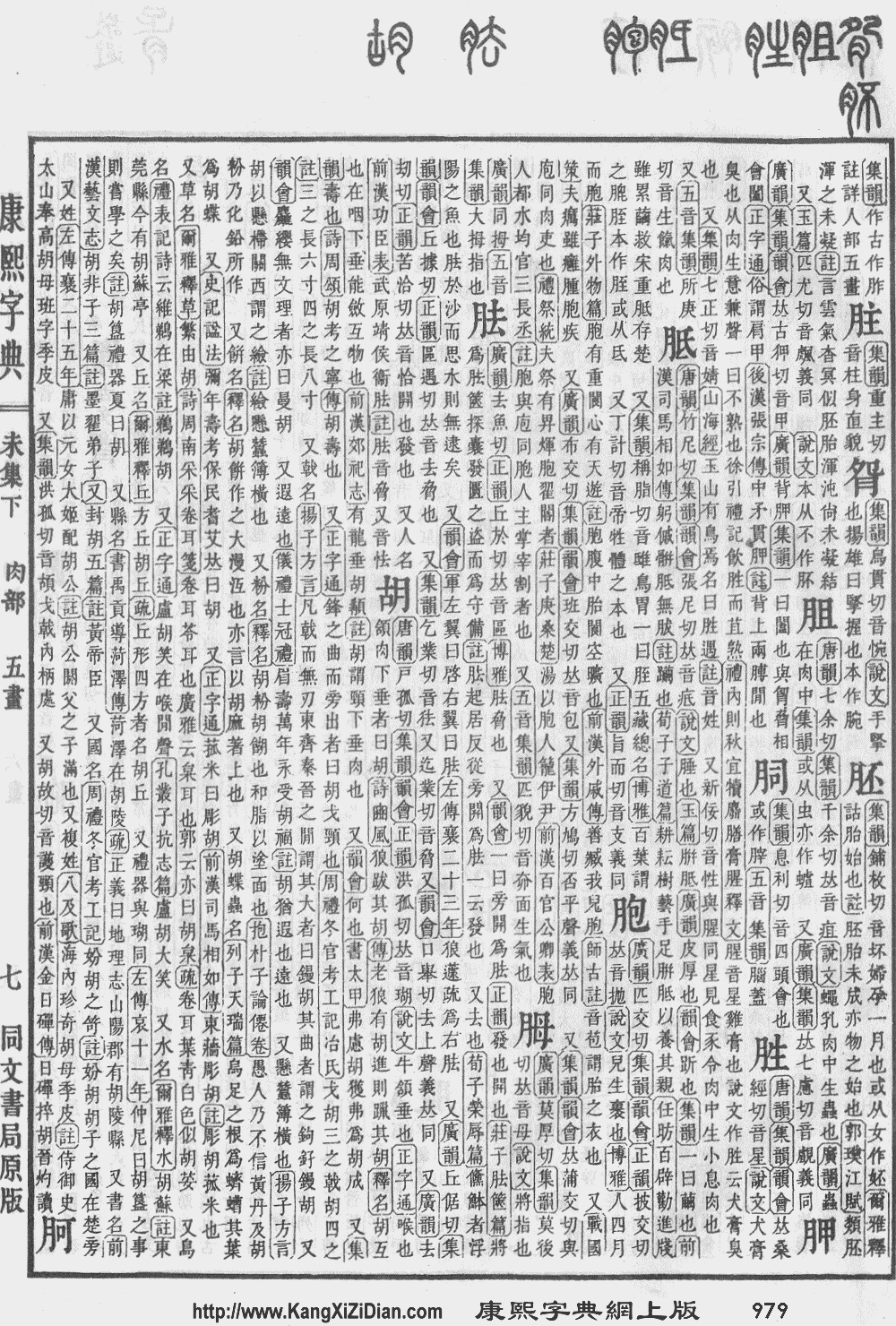
- Kangxi Dictionary: page 979, character 9
- Dai Kanwa Jiten: character 29396
- Dae Jaweon: page 1430, character 25
- Hanyu Da Zidian (first edition): volume 3, page 2062, character 7
- Unihan data for U+80DE
Chinese
| trad. | 胞 | |
|---|---|---|
| simp. # | 胞 | |
Glyph origin
| Historical forms of the character 胞 |
|---|
| Shuowen Jiezi (compiled in Han) |
| Small seal script |
 |
Characters in the same phonetic series (勹) (Zhengzhang, 2003)
| Old Chinese | |
|---|---|
| 袍 | *buː |
| 袌 | *buː, *buːs |
| 軳 | *buː |
| 抱 | *buːʔ |
| 勽 | *buːs, *mɯnʔ |
| 菢 | *buːs |
| 勹 | *pruː |
| 包 | *pruː |
| 胞 | *pruː, *pʰruː |
| 苞 | *pruː |
| 枹 | *pruː, *bu, *bu |
| 飽 | *pruːʔ |
| 泡 | *pʰruː, *m̥ʰruːs, *bruː |
| 炮 | *pʰruːs, *bruː |
| 皰 | *pʰruːs, *bruːs |
| 疱 | *pʰruːs, *bruːs |
| 跑 | *bruː, *bruːɡ |
| 咆 | *bruː |
| 庖 | *bruː |
| 匏 | *bruː |
| 刨 | *bruː |
| 狍 | *bruː |
| 炰 | *bruː |
| 鉋 | *bruː, *bruːs |
| 瓟 | *bruː, *bruːɡ |
| 颮 | *bruː, *pʰruːɡ |
| 鞄 | *bruː, *bruːʔ, *bruːs, *pʰruːɡ |
| 鮑 | *bruːʔ |
| 骲 | *bruːʔ, *bruːs, *bruːɡ, *pʰoːɡ |
| 玸 | *bu |
| 雹 | *bruːɡ |
| 窇 | *bruːɡ |
Etymology 1
From Proto-Sino-Tibetan *r/m-bu ~ pru (“nest; womb; placenta”). Cognate with Tibetan ཕྲུ་མ (phru ma, “womb”).
Pronunciation
Definitions
胞
- afterbirth; placenta
- † womb
- born of the same parents
- (figuratively) born of the same ancestors; fellow countrypeople; compatriot
- Short for 細胞/细胞 (xìbāo, “cell”).
Compounds
- 保衛細胞/保卫细胞
- 僑胞/侨胞 (qiáobāo)
- 刺囊細胞/刺囊细胞
- 動物細胞/动物细胞
- 卵細胞/卵细胞
- 同胞 (tóngbāo)
- 同胞兄弟 (tóngbāo xiōngdì)
- 同胞共乳
- 同胞雙生/同胞双生
- 吞噬細胞/吞噬细胞 (tūnshì xìbāo)
- 多胞胎 (duōbāotāi)
- 大陸同胞/大陆同胞
- 子細胞/子细胞 (zǐxìbāo)
- 小胞子囊
- 山地同胞 (shāndì tóngbāo)
- 山地山胞
- 山胞 (shānbāo)
- 平地山胞
- 性細胞/性细胞
- 息胞
- 民胞物與/民胞物与 (mínbāowùyǔ)
- 氣胞/气胞
- 液胞 (yèbāo)
- 漿細胞/浆细胞 (jiāngxìbāo)
- 災胞/灾胞
- 盲胞
- 破骨細胞/破骨细胞 (pògǔxìbāo)
- 神經細胞/神经细胞 (shénjīng xìbāo)
- 精細胞/精细胞 (jīngxìbāo)
- 細胞/细胞 (xìbāo)
- 細胞分裂/细胞分裂 (xìbāo fēnliè)
- 細胞壁/细胞壁 (xìbāobì)
- 細胞學/细胞学 (xìbāoxué)
- 細胞核/细胞核 (xìbāohé)
- 細胞膜/细胞膜 (xìbāomó)
- 細胞色素/细胞色素 (xìbāo sèsù)
- 細胞質/细胞质 (xìbāozhì)
- 細胞週期/细胞周期 (xìbāo zhōuqī)
- 細胞銀行/细胞银行
- 纖維細胞/纤维细胞 (xiānwéixìbāo)
- 聾胞/聋胞
- 胞兄 (bāoxiōng)
- 胞兄弟 (bāoxiōngdì)
- 胞囊孢子
- 胞妹 (bāomèi)
- 胞姊
- 胞姊妹
- 胞子 (bāozǐ)
- 胞子世代
- 胞子器
- 胞子囊群
- 胞子蟲/胞子虫
- 胞子體/胞子体
- 胞弟 (bāodì)
- 胞胎
- 胎胞
- 胞與/胞与 (bāoyǔ)
- 胞與為懷/胞与为怀
- 胞芽
- 胞芽杯
- 胞衣 (bāoyī)
- 胞間層/胞间层
- 胞間連絲/胞间连丝 (bāojiānliánsī)
- 腺細胞/腺细胞
- 腦細胞/脑细胞 (nǎoxìbāo)
- 臺胞/台胞 (táibāo)
- 臺胞證/台胞证 (táibāozhèng)
- 色質細胞/色质细胞
- 蒙胞
- 衣胞 (yībāo)
- 雙胞胎/双胞胎 (shuāngbāotāi)
- 難胞/难胞
- 雷雨胞
- 骨細胞/骨细胞 (gǔxìbāo)
Pronunciation
Definitions
胞
Pronunciation
Pronunciation
References
- “胞”, in 漢語多功能字庫 (Multi-function Chinese Character Database), 香港中文大學 (the Chinese University of Hong Kong), 2014–
Japanese
| Shinjitai | 胞 | |
| Kyūjitai [1] |
胞󠄁 胞+ 󠄁?(Adobe-Japan1) |
 |
| 胞󠄃 胞+ 󠄃?(Hanyo-Denshi) (Moji_Joho) | ||
| The displayed kanji may be different from the image due to your environment. See here for details. | ||
Kanji
胞
- brethren
- bulla
- cells
- cysts
- vase(esp as one used to store alcohol)
- vesicle
Readings
References
- “胞”, in 漢字ぺディア (Kanjipedia) (in Japanese), 日本漢字能力検定協会, 2015–2024
Korean
Etymology
From Middle Chinese 胞 (MC phaew).
| Historical readings |
|---|
|
Pronunciation
- (SK Standard/Seoul) IPA(key): [pʰo̞]
- Phonetic hangul: [포]
Vietnamese
This article is issued from Wiktionary. The text is licensed under Creative Commons - Attribution - Sharealike. Additional terms may apply for the media files.