交
| ||||||||
Translingual
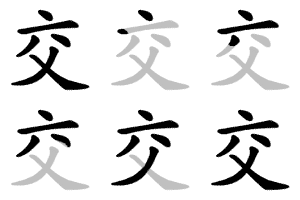
| Stroke order | |||
|---|---|---|---|
 | |||
Han character
交 (Kangxi radical 8, 亠+4, 6 strokes, cangjie input 卜金大 (YCK), four-corner 00408, composition ⿱亠父 or ⿱六乂)
Derived characters
References
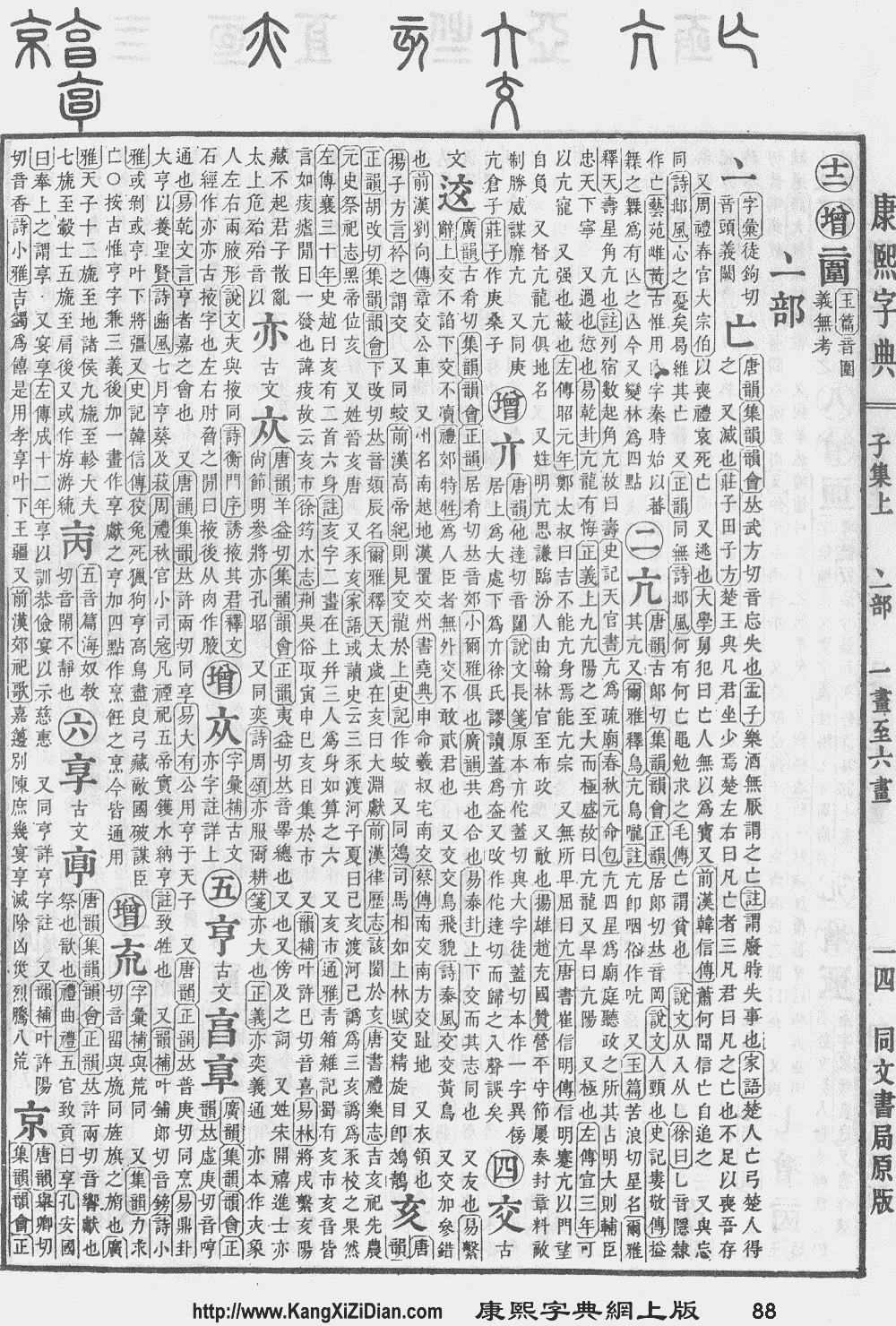
- Kangxi Dictionary: page 88, character 6
- Dai Kanwa Jiten: character 291
- Dae Jaweon: page 185, character 10
- Hanyu Da Zidian (first edition): volume 1, page 282, character 1
- Unihan data for U+4EA4
Chinese
| simp. and trad. |
交 | |
|---|---|---|
| alternative forms | 胶 | |
Glyph origin
| Historical forms of the character 交 | ||||||||||||||||||||||
|---|---|---|---|---|---|---|---|---|---|---|---|---|---|---|---|---|---|---|---|---|---|---|
| Western Zhou | Shuowen Jiezi (compiled in Han) | Liushutong (compiled in Ming) | ||||||||||||||||||||
| Bronze inscriptions | Small seal script | Transcribed ancient scripts | ||||||||||||||||||||
 |
 |
 | ||||||||||||||||||||
||
|
References: Mostly from Richard Sears' Chinese Etymology site (authorisation),
| ||||||||||||||||||||||


Characters in the same phonetic series (交) (Zhengzhang, 2003)
| Old Chinese | |
|---|---|
| 烄 | *keːws, *kreːwʔ |
| 礮 | *pʰreːws |
| 交 | *kreːw |
| 郊 | *kreːw |
| 茭 | *kreːw, *kreːwʔ, *ɡreːwʔ |
| 蛟 | *kreːw |
| 鮫 | *kreːw |
| 鵁 | *kreːw |
| 咬 | *kreːw, *ŋɡreːwʔ, *qreːw |
| 鉸 | *kreːw, *kreːwʔ, *kreːws |
| 佼 | *kreːw, *kreːwʔ, *ɡreːwʔ |
| 詨 | *kreːw, *qʰreːws, *ɡreːws |
| 絞 | *kreːwʔ |
| 狡 | *kreːwʔ |
| 姣 | *kreːwʔ, *ɡreːw |
| 筊 | *kreːwʔ, *ɡreːw |
| 校 | *kreːws, *ɡreːws |
| 珓 | *kreːws |
| 跤 | *kʰreːw |
| 頝 | *kʰreːw |
| 骹 | *kʰraːw |
| 齩 | *ŋɡreːwʔ |
| 洨 | *ɡreːw |
| 胶 | *ɡreːw |
| 效 | *ɡreːws |
| 効 | *ɡreːws |
| 傚 | *ɡreːws |
| 皎 | *keːwʔ |
| 恔 | *keːwʔ |
| 晈 | *keːwʔ |
| 窔 | *qeːws |
| 駮 | *pqreːwɢ |
Pictogram (象形) – a human with crossed legs.
Etymology 1
From Proto-Sino-Tibetan *rjaw (“mix”); cognate with Burmese ရော (rau:, “to mix”), Jingpho yau (“be mixed”), kəjau (“to mix, intermix”), compare Chepang [script needed] (ljawh-ʔo, “mixed”) and Proto-Mienic *klaau3 (Schuessler, 2007).
Pronunciation
Definitions
交
- to intersect; to cross
- to reach (a certain time)
- time or place where two things meet
- to hand over; to turn in; to submit
- to make (friends)
- friendship; relationship
- to have sexual intercourse; to mate
- mutually; reciprocally
- 上下交征利而國危矣。 [Classical Chinese, trad.]
- From: Mencius, c. 4th century BCE, translated based on James Legge's version
- Shàng xià jiāo zhēng lì ér guó wēi yǐ. [Pinyin]
- Superiors and inferiors will try to snatch this profit the one from the other, and the kingdom will be endangered.
上下交征利而国危矣。 [Classical Chinese, simp.]
- simultaneously; at the same time
- 16th tetragram of the Taixuanjing; "contact" (𝌕)
- (obsolete) Alternative form of 跤
- 剛到廂房中角門首,不防黑影裡拋出一條凳子來,把來旺兒絆了一交。 [Written Vernacular Chinese, trad.]
- From: The Plum in the Golden Vase, circa 1610 CE
- Gāng dào xiāngfáng zhōng jiǎomén shǒu, bùfáng hēiyǐng lǐ pāo chū yī tiáo dèngzǐ lái, bǎ Lái Wàng'ér bàn le yī jiāo. [Pinyin]
- (please add an English translation of this usage example)
刚到厢房中角门首,不防黑影里抛出一条凳子来,把来旺儿绊了一交。 [Written Vernacular Chinese, simp.]
- (Hokkien, dated) Used to refer to a private wholesale trading company
- alt. forms: 郊 (jiāo)
Compounds
- 一交
- 一人之交
- 一言定交
- 一言訂交/一言订交
- 一面之交 (yīmiànzhījiāo)
- 上下交困
- 下交
- 三陽交泰/三阳交泰
- 不交一言
- 不可開交/不可开交 (bùkěkāijiāo)
- 不定交
- 不得開交/不得开交
- 不開交/不开交
- 世交 (shìjiāo)
- 世代交替
- 乒乓外交 (pīngpāng wàijiāo)
- 乳水交融
- 亂交/乱交 (luànjiāo)
- 交互作用
- 交代 (jiāodài)
- 交付 (jiāofù)
- 交作
- 交保 (jiāobǎo)
- 交光飛刃/交光飞刃
- 交兵 (jiāobīng)
- 交出 (jiāochū)
- 交分
- 交割 (jiāogē)
- 交加 (jiāojiā)
- 交匝
- 交午
- 交卸
- 交卷 (jiāojuàn)
- 交厚 (jiāohòu)
- 交叉 (jiāochā)
- 交叉口 (jiāochākǒu)
- 交叉感染 (jiāochā gǎnrǎn)
- 交叉線/交叉线
- 交叉點/交叉点 (jiāochādiǎn)
- 交友 (jiāoyǒu)
- 交口 (jiāokǒu)
- 交口接耳
- 交口稱譽/交口称誉
- 交口稱贊/交口称赞
- 交合 (jiāohé)
- 交嘴
- 交回
- 交困 (jiāokùn)
- 交契
- 交好 (jiāohǎo)
- 交媾 (jiāogòu)
- 交子
- 交尾 (jiāowěi)
- 交岔路口
- 交工 (jiāogōng)
- 交差 (jiāochāi)
- 交帳/交帐 (jiāozhàng)
- 交年
- 交床
- 交引
- 交往 (jiāowǎng)
- 交待 (jiāodài)
- 交心 (jiāoxīn)
- 交怨
- 交情 (jiāoqíng)
- 交惡/交恶 (jiāowù)
- 交感 (jiāogǎn)
- 交感神經/交感神经 (jiāogǎn shénjīng)
- 交態/交态
- 交懍恂/交懔恂 (ka-lún-sún) (Min Nan)
- 交戰/交战 (jiāozhàn)
- 交戰國/交战国 (jiāozhànguó)
- 交戰團體/交战团体
- 交手 (jiāoshǒu)
- 交拜
- 交持
- 交接 (jiāojiē)
- 交換/交换 (jiāohuàn)
- 交換機/交换机 (jiāohuànjī)
- 交換碼/交换码
- 交換經濟/交换经济
- 交易 (jiāoyì)
- 交易單位/交易单位
- 交易所 (jiāoyìsuǒ)
- 交易稅/交易税
- 交映
- 交替 (jiāotì)
- 交會/交会 (jiāohuì)
- 交朋結義/交朋结义
- 交杯
- 交杯盞/交杯盏
- 交杯酒 (jiāobēijiǔ)
- 交梨火棗/交梨火枣
- 交棒 (jiāobàng)
- 交椅 (jiāoyǐ)
- 交橫/交横
- 交歡/交欢 (jiāohuān)
- 交泰
- 交流 (jiāoliú)
- 交派
- 交流區/交流区
- 交流道 (jiāoliú dào)
- 交流電/交流电 (jiāoliúdiàn)
- 交涉 (jiāoshè)
- 交淺言深/交浅言深
- 交火 (jiāohuǒ)
- 交煎
- 交爭/交争
- 交班 (jiāobān)
- 交界 (jiāojiè)
- 交疏
- 交發/交发
- 交白卷 (jiāo báijuàn)
- 交盤/交盘
- 交相
- 交相輝映/交相辉映
- 交睫
- 交禮/交礼
- 交租 (jiāozū)
- 交積/交积
- 交節氣/交节气
- 交結/交结
- 交綏/交绥
- 交織/交织 (jiāozhī)
- 交織線/交织线
- 交群
- 交耳
- 交臂
- 交臂失之 (jiāobìshīzhī)
- 交臂屈膝
- 交與/交与
- 交融 (jiāoróng)
- 交衢
- 交衽
- 交角
- 交託/交托 (jiāotuō)
- 交語/交语
- 交誼/交谊 (jiāoyì)
- 交談/交谈 (jiāotán)
- 交誼舞/交谊舞 (jiāoyìwǔ)
- 交謁/交谒
- 交謫/交谪
- 交警 (jiāojǐng)
- 交貨/交货 (jiāohuò)
- 交質/交质
- 交趾 (Jiāozhǐ)
- 交趾燒/交趾烧
- 交趾陶
- 交輝/交辉 (jiāohuī)
- 交辦/交办
- 交迫
- 交通 (jiāotōng)
- 交通事故 (jiāotōng shìgù)
- 交通壅塞
- 交通大學/交通大学
- 交通安全
- 交通密度
- 交通島/交通岛 (jiāotōngdǎo)
- 交通工具 (jiāotōng gōngjù)
- 交通工程 (jiāotōng gōngchéng)
- 交通建設/交通建设
- 交通指揮/交通指挥
- 交通標誌/交通标志 (jiāotōng biāozhì)
- 交通法庭
- 交通流量
- 交通癱瘓/交通瘫痪
- 交通管制
- 交通線/交通线 (jiāotōngxiàn)
- 交通號誌/交通号志
- 交通規則/交通规则 (jiāotōng guīzé)
- 交通車/交通车
- 交通部
- 交通量
- 交運/交运
- 交遊/交游 (jiāoyóu)
- 交道 (jiāodào)
- 交還/交还 (jiāohuán)
- 交配 (jiāopèi)
- 交配色
- 交鋒/交锋 (jiāofēng)
- 交錯/交错 (jiāocuò)
- 交錯觥籌/交错觥筹
- 交門親眷/交门亲眷
- 交關/交关 (jiāoguān)
- 交際/交际 (jiāojì)
- 交際舞/交际舞 (jiāojìwǔ)
- 交際花/交际花 (jiāojìhuā)
- 交際電報/交际电报
- 交集 (jiāojí)
- 交面
- 交響/交响 (jiāoxiǎng)
- 交響曲/交响曲 (jiāoxiǎngqǔ)
- 交響樂/交响乐 (jiāoxiǎngyuè)
- 交響樂團/交响乐团 (jiāoxiǎngyuètuán)
- 交響詩/交响诗 (jiāoxiǎngshī)
- 交領/交领
- 交頸/交颈
- 交頭接耳/交头接耳 (jiāotóujiē'ěr)
- 交馳/交驰
- 交鬨/交哄
- 交點/交点 (jiāodiǎn)
- 人獸交/人兽交 (rénshòujiāo)
- 伐交
- 便交
- 信用交易
- 借交報仇/借交报仇
- 個人外交/个人外交
- 傾蓋定交/倾盖定交
- 內外交困/内外交困 (nèiwàijiāokùn)
- 內外交迫/内外交迫
- 內線交易/内线交易 (nèixiàn jiāoyì)
- 全額交割/全额交割
- 八拜之交 (bābàizhījiāo)
- 八拜交
- 公平交易
- 公開外交/公开外交
- 兵交
- 兵交馬踏/兵交马踏
- 再世交
- 分封交換/分封交换
- 刎頸之交/刎颈之交 (wěnjǐngzhījiāo)
- 刎頸交/刎颈交
- 刎頸至交/刎颈至交
- 初交
- 勒交
- 勢交/势交
- 勢利之交/势利之交
- 十月之交
- 半面之交
- 厚交
- 口頭之交/口头之交
- 口頭交/口头交
- 吃交
- 呈交 (chéngjiāo)
- 君子之交
- 喝交杯
- 善與人交/善与人交
- 國交/国交 (guójiāo)
- 國民外交/国民外交
- 坐交椅
- 場外交易/场外交易
- 外交 (wàijiāo)
- 外交團/外交团 (wàijiāotuán)
- 外交官 (wàijiāoguān)
- 外交庇護/外交庇护
- 外交照會/外交照会
- 外交特權/外交特权 (wàijiāo tèquán)
- 外交詞令/外交词令
- 外交辭令/外交辞令
- 外交部 (wàijiāobù)
- 外交郵袋/外交邮袋 (wàijiāo yóudài)
- 外交關係/外交关系 (wàijiāo guānxì)
- 多空交戰/多空交战
- 夠交情/够交情
- 天人交戰/天人交战
- 天地交泰
- 太師交椅/太师交椅
- 失之交臂 (shīzhījiāobì)
- 失諸交臂/失诸交臂
- 套交情 (tào jiāoqíng)
- 定交
- 官能交錯/官能交错
- 實物交易/实物交易
- 履舄交錯/履舄交错 (lǚxì jiāocuò)
- 巨棒外交
- 布衣之交
- 布衣交
- 市道交
- 平交
- 平交道
- 廣交/广交
- 建交 (jiànjiāo)
- 強權外交/强权外交
- 復交/复交
- 心力交瘁 (xīnlìjiāocuì)
- 心照神交
- 心腹之交 (xīnfù zhī jiāo)
- 忘年之交 (wàngniánzhījiāo)
- 忘年交 (wàngniánjiāo)
- 忘形之交
- 忘形交
- 性交 (xìngjiāo)
- 性命之交
- 性命交關/性命交关 (xìngmìngjiāoguān)
- 息交
- 息交絕游/息交绝游
- 患難之交/患难之交 (huànnànzhījiāo)
- 悲喜交切
- 悲喜交加
- 悲喜交并
- 悲喜交至
- 悲喜交集 (bēixǐ-jiāojí)
- 情景交融
- 愛恨交織/爱恨交织
- 感愧並交/感愧并交
- 感愧交集
- 憂喜交集/忧喜交集 (yōuxǐ jiāojí)
- 成交 (chéngjiāo)
- 成交總值/成交总值
- 成交量 (chéngjiāoliàng)
- 打交
- 打交道 (dǎ jiāodào)
- 折節下交/折节下交
- 拉交情
- 持祿養交/持禄养交
- 拳腳交加/拳脚交加
- 接交
- 掰交情
- 接耳交頭/接耳交头
- 提交 (tíjiāo)
- 援交 (yuánjiāo)
- 援助交際/援助交际 (yuánzhù jiāojì)
- 摜交/掼交
- 摔交 (shuāijiāo)
- 撥交/拨交
- 撲交打滾/扑交打滚
- 擇交/择交
- 擇交而友/择交而友
- 故交 (gùjiāo)
- 文化交流 (wénhuà jiāoliú)
- 文字交
- 新交 (xīnjiāo)
- 新舊交替/新旧交替
- 斷交/断交 (duànjiāo)
- 旁推交通
- 日月交食
- 昵交
- 星月交輝/星月交辉 (xīng yuè jiāohuī)
- 有性雜交/有性杂交
- 朋交
- 東交民巷/东交民巷
- 松篁交翠
- 杵臼交
- 杯觥交錯/杯觥交错 (bēigōngjiāocuò)
- 款交
- 死生之交
- 水乳交融 (shuǐrǔjiāoróng)
- 水火無交/水火无交
- 水米無交/水米无交
- 沒個開交/没个开交
- 沒開交/没开交
- 沒開交處/没开交处
- 泰交
- 泛泛之交 (fànfànzhījiāo)
- 涕泗交下
- 涕泗交流
- 涕泗交頤/涕泗交颐
- 涕淚交下/涕泪交下
- 涕淚交加/涕泪交加
- 涕淚交垂/涕泪交垂
- 涕淚交流/涕泪交流
- 涕淚交集/涕泪交集
- 涕淚交零/涕泪交零
- 淚下交頤/泪下交颐
- 淺交/浅交
- 淡交
- 深交 (shēnjiāo)
- 濫交/滥交 (lànjiāo)
- 爭交/争交 (zhēngjiāo)
- 爾汝之交/尔汝之交
- 物物交換/物物交换
- 犬牙交錯/犬牙交错 (quǎnyájiāocuò)
- 生死之交
- 百感交集 (bǎigǎnjiāojí)
- 百端交集
- 目不交睫
- 相交 (xiāngjiāo)
- 眼不交睫
- 眾口交攻/众口交攻
- 眾口交薦/众口交荐
- 眾口交譽/众口交誉
- 知交 (zhījiāo)
- 石交
- 碩交/硕交
- 社交 (shèjiāo)
- 社交舞
- 神交 (shénjiāo)
- 祕密交易/秘密交易
- 祕密外交/秘密外交
- 票據交換/票据交换
- 禍亂交興/祸乱交兴
- 私交 (sījiāo)
- 移交 (yíjiāo)
- 種間雜交/种间杂交
- 空中交易
- 穿梭外交
- 立交
- 立券交易
- 立體交叉/立体交叉
- 等價交換/等价交换 (děngjià jiāohuàn)
- 管鮑之交/管鲍之交 (guǎnbàozhījiāo)
- 納交/纳交 (nàjiāo)
- 素交
- 絕交/绝交 (juéjiāo)
- 結交/结交 (jiéjiāo)
- 結交延譽/结交延誉
- 經濟絕交/经济绝交
- 網路援交/网路援交
- 線上交友/线上交友
- 線上交易/线上交易
- 締交/缔交 (dìjiāo)
- 縱橫交貫/纵横交贯
- 縱橫交錯/纵横交错
- 總角之交/总角之交
- 繳交/缴交 (jiǎojiāo)
- 羊陸之交/羊陆之交
- 羽檄交馳/羽檄交驰
- 老世交
- 老交情
- 老實巴交/老实巴交 (lǎoshibājiāo)
- 老相交
- 耳鬢交接/耳鬓交接
- 脫俗之交/脱俗之交
- 至交 (zhìjiāo)
- 至交契友
- 舊交/旧交 (jiùjiāo)
- 舊識新交/旧识新交
- 莫逆之交 (mònìzhījiāo)
- 莫逆交
- 萍水相交
- 蘭交/兰交
- 親交/亲交 (qīnjiāo)
- 觥籌交舉/觥筹交举 (gōngchóujiāojǔ)
- 觥籌交錯/觥筹交错 (gōngchóujiāocuò)
- 訂交/订交 (dìngjiāo)
- 託交/托交
- 討交情/讨交情
- 講交情/讲交情
- 證交稅/证交税
- 豕交獸畜/豕交兽畜
- 貧病交攻/贫病交攻
- 貧病交迫/贫病交迫
- 貧賤之交/贫贱之交
- 貧賤交/贫贱交
- 賣交/卖交
- 跌交 (diējiāo)
- 身心交病
- 身心交瘁
- 軌道交點/轨道交点
- 轉交/转交 (zhuǎnjiāo)
- 轉帳交易/转帐交易
- 送交 (sòngjiāo)
- 違約交割/违约交割
- 道義交/道义交
- 遞交/递交 (dìjiāo)
- 遠交近攻/远交近攻 (yuǎnjiāojìngōng)
- 邦交 (bāngjiāo)
- 金圓外交/金圆外交
- 金石交
- 金石至交
- 金蘭之交/金兰之交 (jīnlánzhījiāo)
- 開交/开交 (kāijiāo)
- 降交點/降交点
- 陰陽交錯/阴阳交错
- 雜交/杂交 (zájiāo)
- 零股交易
- 雷雨交加
- 雷電交加/雷电交加 (léidiànjiāojiā)
- 露水交道
- 面交 (miànjiāo)
- 風雨交加/风雨交加 (fēngyǔjiāojiā)
- 飢凍交切/饥冻交切
- 飢寒交切/饥寒交切
- 飢寒交迫/饥寒交迫 (jīhánjiāopò)
- 飢渴交攻/饥渴交攻
- 飢渴交迫/饥渴交迫
- 餘額交割/余额交割
- 驚喜交加/惊喜交加
- 鳳友鸞交/凤友鸾交
- 點頭之交/点头之交 (diǎntóuzhījiāo)
- 齧臂之交/啮臂之交
Etymology 2
| For pronunciation and definitions of 交 – see 跤 (“tumble; fall; leg; foot; lower limb; etc.”). (This character is the second-round simplified form of 跤). |
Notes:
|
Pronunciation
Definitions
交
- (Xiamen, Quanzhou and Philippine Hokkien) and
- (Xiamen, Quanzhou and Philippine Hokkien) with; accompanying
Synonyms
Dialectal synonyms of 和 (“and”) [map]
Japanese
Readings
Compounds
Compounds
- 入交 (irimajiri)
- 援交 (enkō)
- 外交 (gaikō)
- 交交 (kōkō), 交々 (kōkō)
- 国交 (kokkō)
- 交交 (komogomo), 交々 (komogomo)
- 混交 (konkō)
- 社交 (shakō)
- 修交 (shūkō)
- 手交 (shukō)
- 深交 (shinkō)
- 親交 (shinkō)
- 情交 (jōkō)
- 性交 (seikō)
- 絶交 (zekkō)
- 団交 (dankō)
- 断交 (dankō)
- 直交 (chokkō)
- 通交 (tsūkō)
- 肉交 (nikukō): sexual intercourse
- 復交 (fukkō)
- 友交 (yūkō)
- 乱交 (rankō)
- 旧交 (kyūkō)
- 斜交 (shakō)
- 交易 (kōeki)
- 交角 (kōkaku)
- 交感 (kōkan)
- 交換 (kōkan)
- 交歓 (kōkan), 交驩 (kōkan)
- 交誼 (kōgi)
- 交響 (kōkyō)
- 交互 (kōgo)
- 交合 (kōgō)
- 交差 (kōsa), 交叉 (kōsa)
- 交際 (kōsai)
- 交錯 (kōsaku)
- 交渉 (kōshō)
- 交情 (kōjō)
- 交譲 (kōjō)
- 交織 (kōshoku)
- 交信 (kōshin)
- 交声曲 (kōseikyoku): cantata
- 交接 (kōsetsu)
- 交戦 (kōsen)
- 交替 (kōtai), 交代 (kōtai)
- 交通 (kōtsū)
- 交点 (kōten)
- 交読 (kōdoku)
- 交配 (kōhai)
- 交番 (kōban)
- 交尾 (kōbi)
- 交付 (kōfu)
- 交附 (kōfu)
- 交友 (kōyū)
- 交遊 (kōyū), 交游 (kōyū)
- 交絡 (kōraku)
- 交流 (kōryū)
- 交霊 (kōrei)
- 交媾 (kōkō): sexual intercourse
- 交詢 (kōjun)
Definitions
| Kanji in this term |
|---|
| 交 |
| こもごも Grade: 2 |
| kun’yomi |
| For pronunciation and definitions of 交 – see the following entry. | ||
| ||
| (This term, 交, is an alternative spelling of the above term.) |
Vietnamese
This article is issued from Wiktionary. The text is licensed under Creative Commons - Attribution - Sharealike. Additional terms may apply for the media files.