萎

See also: 荽
萎 U+840E, 萎
CJK UNIFIED IDEOGRAPH-840E
← 萍
[U+840D]
CJK Unified Ideographs 萏 →
[U+840F]

Translingual

Han character

萎 (Kangxi radical 140, 艸+8, 12 strokes in traditional Chinese and Korean, 11 strokes in mainland China and Japanese, cangjie input 廿竹木女 (THDV), four-corner 44404, composition ⿱艹委)

Derived characters

  • 𠾭, 𮟋

References

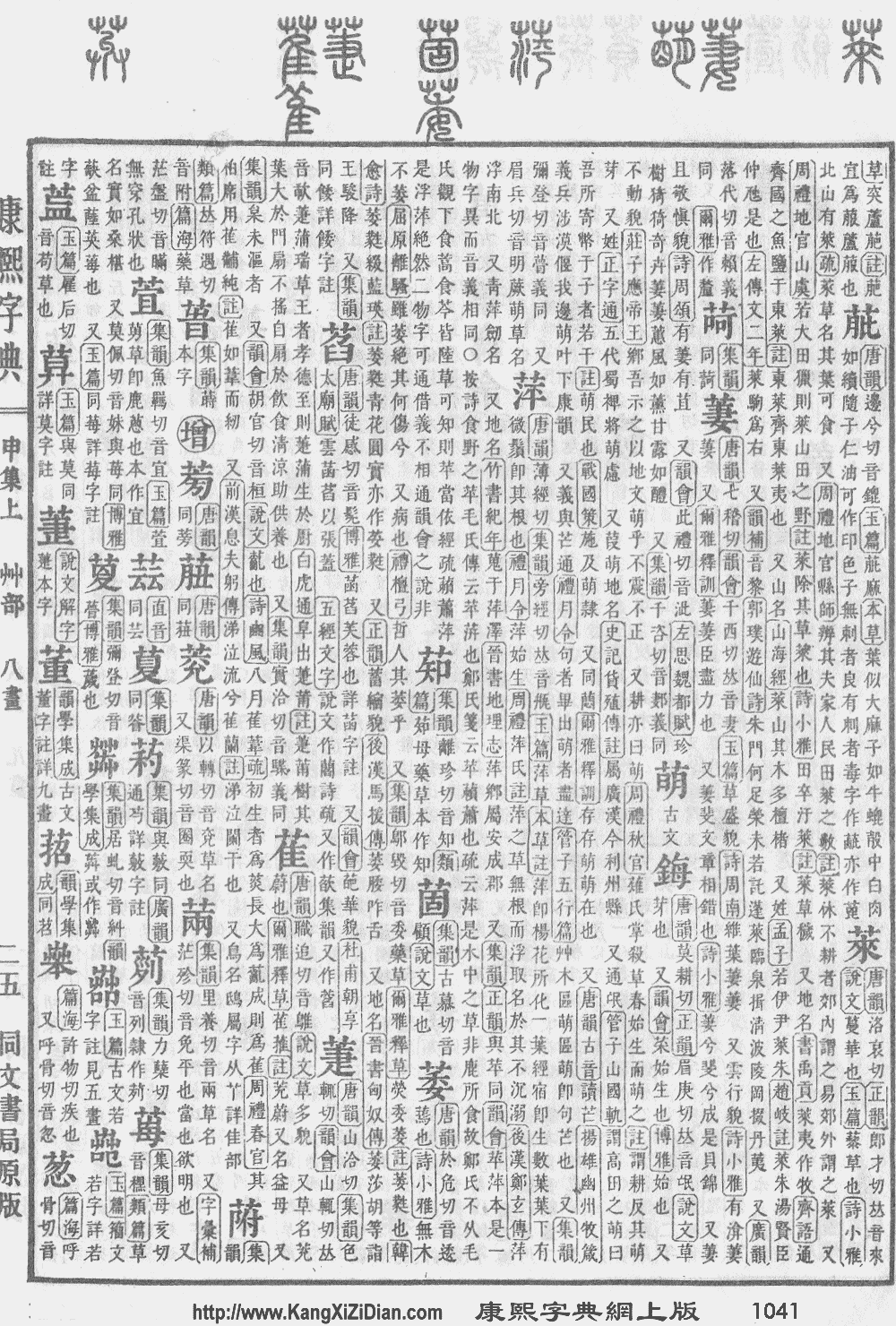
  • Kangxi Dictionary: page 1041, character 10
  • Dai Kanwa Jiten: character 31269
  • Dae Jaweon: page 1500, character 4
  • Hanyu Da Zidian (first edition): volume 5, page 3235, character 5
  • Unihan data for U+840E

Chinese

Glyph origin

Etymology 1

trad. 萎
simp. # 萎
2nd round simp. 委

From Proto-Sino-Tibetan *hwaːj (“to wither; to fade”) (STEDT; Schuessler, 2007).

Pronunciation


Note: wěi - only used in 萎蕤 in Taiwan.

Rime
Character 萎
Reading # 1/2
Initial (聲) 影 (34)
Final (韻) 支 (14)
Tone (調) Level (Ø)
Openness (開合) Closed
Division (等) III
Fanqie 於爲切
Baxter 'jwe
Reconstructions
Zhengzhang
Shangfang
/ʔˠiuᴇ/
Pan
Wuyun
/ʔʷᵚiɛ/
Shao
Rongfen
/ʔiuɛ/
Edwin
Pulleyblank
/ʔjwiə̆/
Li
Rong
/ʔjue/
Wang
Li
/ǐwe/
Bernard
Karlgren
/ʔwie̯/
Expected
Mandarin
Reflex
wēi
Expected
Cantonese
Reflex
wai1
Zhengzhang system (2003)
Character 萎
Reading # 1/2
No. 12896
Phonetic
component
委
Rime
group
歌
Rime
subdivision
3
Corresponding
MC rime
逶
Old
Chinese
/*qrol/
Notes 說文作歹委

Definitions

萎

  1. to wither; to wilt
  2. to decline; to weaken

Compounds

Etymology 2

trad. 萎
simp. # 萎

Pronunciation


Rime
Character 萎
Reading # 2/2
Initial (聲) 影 (34)
Final (韻) 支 (14)
Tone (調) Departing (H)
Openness (開合) Closed
Division (等) III
Fanqie 於僞切
Baxter 'jweH
Reconstructions
Zhengzhang
Shangfang
/ʔˠiuᴇH/
Pan
Wuyun
/ʔʷᵚiɛH/
Shao
Rongfen
/ʔiuɛH/
Edwin
Pulleyblank
/ʔjwiə̆H/
Li
Rong
/ʔjueH/
Wang
Li
/ǐweH/
Bernard
Karlgren
/ʔwie̯H/
Expected
Mandarin
Reflex
wèi
Expected
Cantonese
Reflex
wai3
Zhengzhang system (2003)
Character 萎
Reading # 2/2
No. 12907
Phonetic
component
委
Rime
group
歌
Rime
subdivision
3
Corresponding
MC rime
餧
Old
Chinese
/*qrols/
Notes 後作餧今作喂

Definitions

萎

  1. (literary) to feed (oxen, horses, etc.)

Etymology 3

trad. 萎
simp. # 萎
alternative forms 虧/亏
唩
踒

Pronunciation


Definitions

萎

  1. (Zhangzhou and Taiwanese Hokkien, Teochew) to wear; to erode

Japanese

Kanji

萎

(common “Jōyō” kanji)

Readings

Etymology 1

Kanji in this term
萎
い
Grade: S
on’yomi

/wi/ → /i/

From Middle Chinese 萎 (MC 'jwe).

Affix

萎(い) • (i) ←ゐ (wi)?

  1. wither; droop
Derived terms

Etymology 2

(Can this(+) etymology be sourced?)

Kanji in this term
萎
しおり
Grade: S
kun’yomi
For pronunciation and definitions of 萎 – see the following entry: しおり

(The following entry is uncreated: しおり.)

Korean

Hanja

萎 • (wi) (hangeul 위, revised wi, McCune–Reischauer wi, Yale wi)

  1. to wither; to wilt

Vietnamese

Han character

萎: Hán Nôm readings: nuy, ùy/uỳ

  1. This term needs a translation to English. Please help out and add a translation, then remove the text {{rfdef}}.

References

This article is issued from Wiktionary. The text is licensed under Creative Commons - Attribution - Sharealike. Additional terms may apply for the media files.