痿
| ||||||||
Translingual
Han character
痿 (Kangxi radical 104, 疒+8, 13 strokes, cangjie input 大竹木女 (KHDV), four-corner 00144, composition ⿸疒委)
References
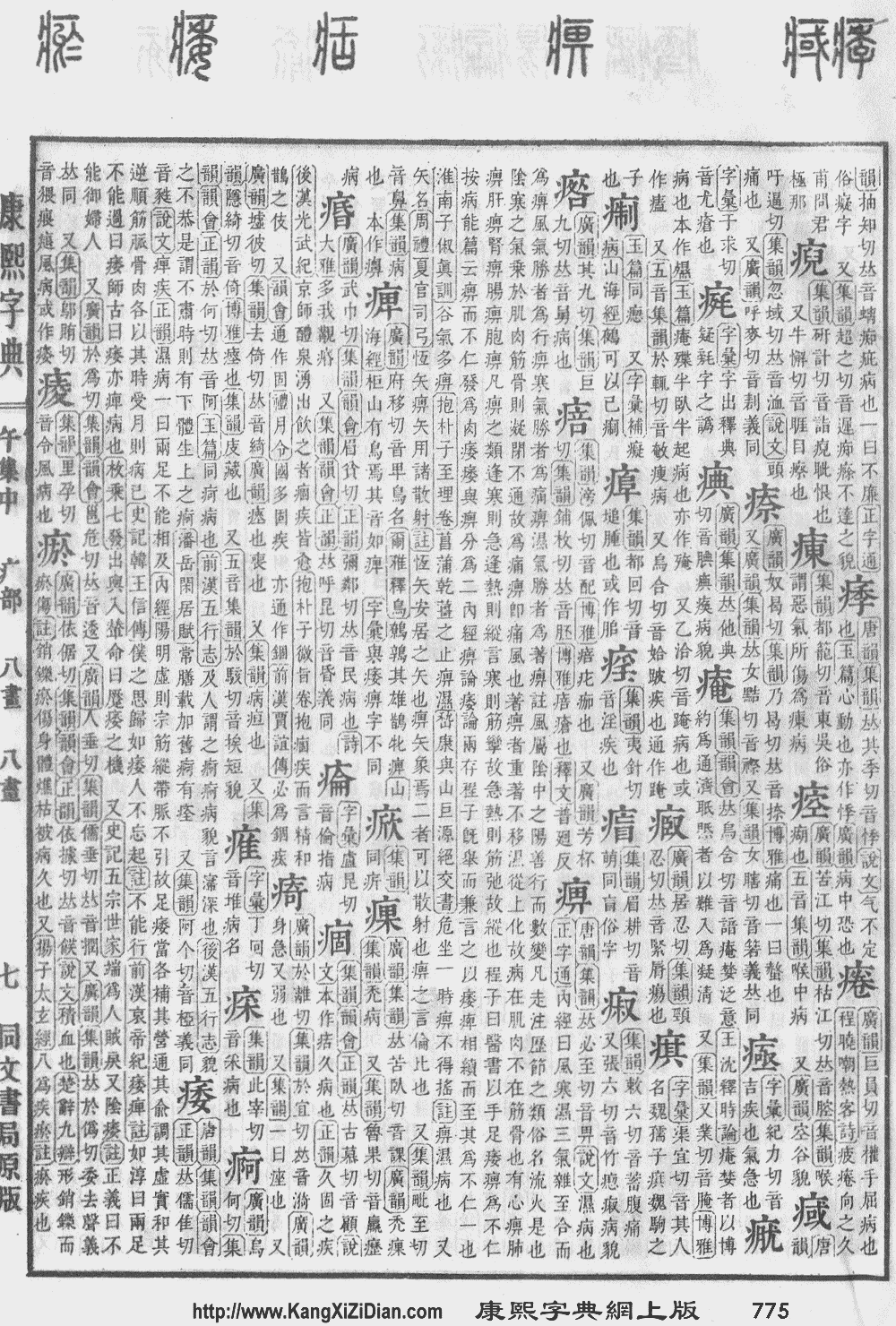
- Kangxi Dictionary: page 775, character 33
- Dai Kanwa Jiten: character 22290
- Dae Jaweon: page 1186, character 17
- Hanyu Da Zidian (first edition): volume 4, page 2681, character 4
- Unihan data for U+75FF
Chinese
| trad. | 痿 | |
|---|---|---|
| simp. # | 痿 | |
| 2nd round simp. | 委 | |
Glyph origin
Pronunciation
Compounds
- 痿不忘起
- 痿痹
- 痿蹶
- 痿陽/痿阳
- 蹶痿
References
- “痿”, in 漢語多功能字庫 (Multi-function Chinese Character Database), 香港中文大學 (the Chinese University of Hong Kong), 2014–
Japanese
Kanji
痿
- This term needs a translation to English. Please help out and add a translation, then remove the text
{{rfdef}}.
Readings
- Go-on: ぬい (nui)←ぬゐ (nwi, historical)
- Kan-on: ずい (zui)←ずゐ (zwi, historical)
- Kan’yō-on: い (i)←ゐ (wi, historical)
- Kun: なえる (naeru, 痿える)
Korean
Hanja
痿 • (wi) (hangeul 위, revised wi, McCune–Reischauer wi, Yale wi)
- This term needs a translation to English. Please help out and add a translation, then remove the text
{{rfdef}}.
This article is issued from Wiktionary. The text is licensed under Creative Commons - Attribution - Sharealike. Additional terms may apply for the media files.