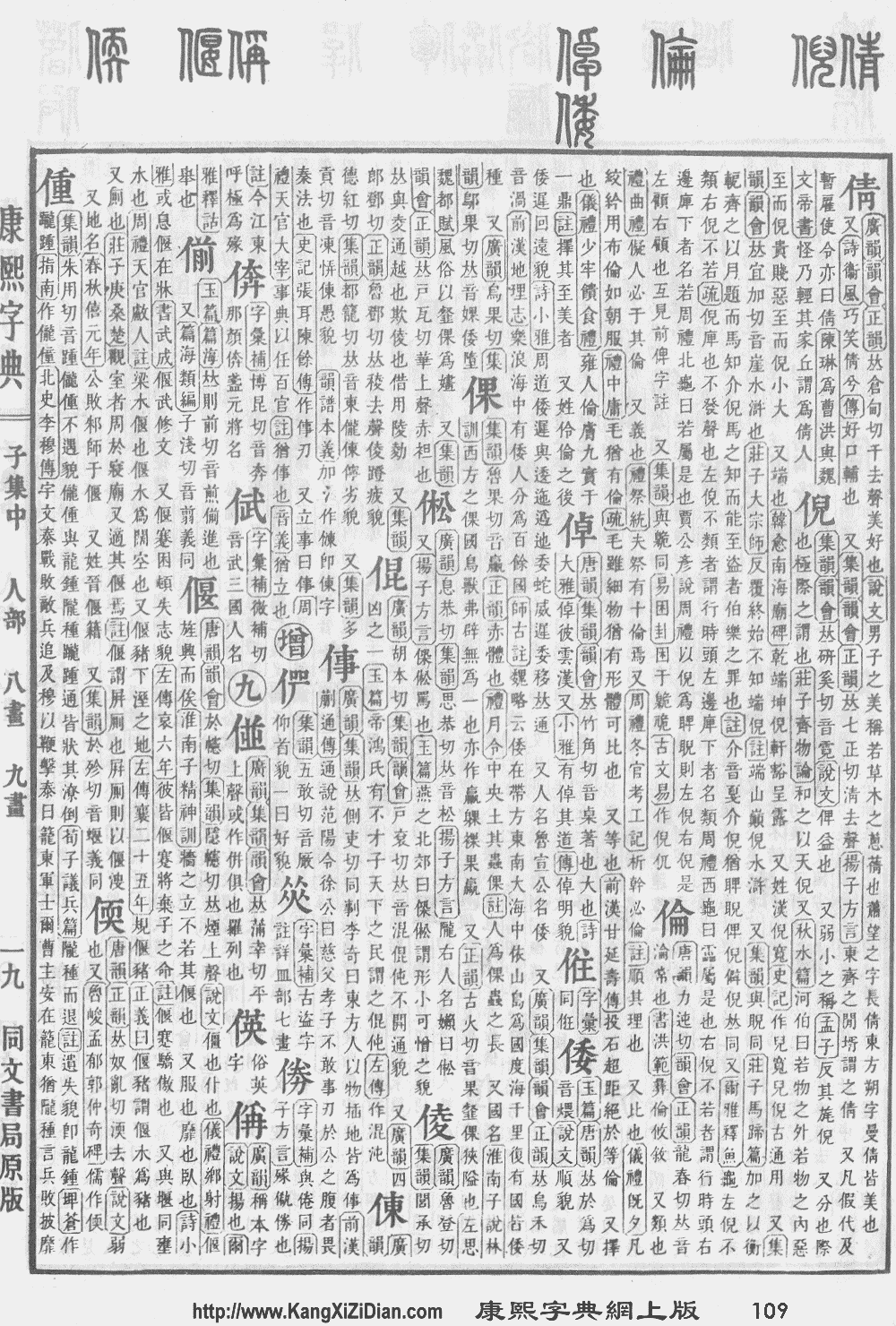
倭

倭 U+502D, 倭
CJK UNIFIED IDEOGRAPH-502D
← 倬
[U+502C]
CJK Unified Ideographs 倮 →
[U+502E]

Translingual

Han character

倭 (Kangxi radical 9, 人+8, 10 strokes, cangjie input 人竹木女 (OHDV), four-corner 22244, composition ⿰亻委)

Derived characters

References

Chinese

trad. 倭
simp. # 倭

Glyph origin

Historical forms of the character 倭


References:

Mostly from Richard Sears' Chinese Etymology site (authorisation),
which in turn draws data from various collections of ancient forms of Chinese characters, including:

  • Shuowen Jiezi (small seal),
  • Jinwen Bian (bronze inscriptions),
  • Liushutong (Liushutong characters) and
  • Yinxu Jiaguwen Bian (oracle bone script).

Etymology 1

(This etymology is missing or incomplete. Please add to it, or discuss it at the Etymology scriptorium.)

Pronunciation


Rime
Character 倭
Reading # 2/3
Initial (聲) 影 (34)
Final (韻) 戈 (95)
Tone (調) Level (Ø)
Openness (開合) Closed
Division (等) I
Fanqie 烏禾切
Baxter 'wa
Reconstructions
Zhengzhang
Shangfang
/ʔuɑ/
Pan
Wuyun
/ʔuɑ/
Shao
Rongfen
/ʔuɑ/
Edwin
Pulleyblank
/ʔwa/
Li
Rong
/ʔuɑ/
Wang
Li
/uɑ/
Bernard
Karlgren
/ʔuɑ/
Expected
Mandarin
Reflex
wō
Expected
Cantonese
Reflex
wo1
Zhengzhang system (2003)
Character 倭
Reading # 1/3
No. 12888
Phonetic
component
委
Rime
group
歌
Rime
subdivision
3
Corresponding
MC rime
倭
Old
Chinese
/*qoːl/
Notes 見漢書

Definitions

倭

  1. (historical, now derogatory) Japan; Yamato
  2. (in some animal names) dwarf; pygmy
    倭蛙  ―  wōwā  ―  Nanorana pleskei
    倭河馬/倭河马  ―  wōhémǎ  ―  pygmy hippopotamus
    倭黑猩猩  ―  wōhēixīngxīng  ―  bonobo; pygmy chimpanzee
Synonyms
  • (Japan):

Compounds

See also

Pronunciation


Rime
Character 倭
Reading # 1/3
Initial (聲) 影 (34)
Final (韻) 支 (14)
Tone (調) Level (Ø)
Openness (開合) Closed
Division (等) III
Fanqie 於爲切
Baxter 'jwe
Reconstructions
Zhengzhang
Shangfang
/ʔˠiuᴇ/
Pan
Wuyun
/ʔʷᵚiɛ/
Shao
Rongfen
/ʔiuɛ/
Edwin
Pulleyblank
/ʔjwiə̆/
Li
Rong
/ʔjue/
Wang
Li
/ǐwe/
Bernard
Karlgren
/ʔwie̯/
Expected
Mandarin
Reflex
wēi
Expected
Cantonese
Reflex
wai1
Zhengzhang system (2003)
Character 倭
Reading # 3/3
No. 12902
Phonetic
component
委
Rime
group
歌
Rime
subdivision
3
Corresponding
MC rime
逶
Old
Chinese
/*qrol/

Definitions

倭

  1. Used in 倭遲/倭迟, alternative form of 逶迤 (wēiyí, “winding; meandering”)

Pronunciation


Rime
Character 倭
Reading # 3/3
Initial (聲) 影 (34)
Final (韻) 戈 (95)
Tone (調) Rising (X)
Openness (開合) Closed
Division (等) I
Fanqie 烏果切
Baxter 'waX
Reconstructions
Zhengzhang
Shangfang
/ʔuɑX/
Pan
Wuyun
/ʔuɑX/
Shao
Rongfen
/ʔuɑX/
Edwin
Pulleyblank
/ʔwaX/
Li
Rong
/ʔuɑX/
Wang
Li
/uɑX/
Bernard
Karlgren
/ʔuɑX/
Expected
Mandarin
Reflex
wǒ
Expected
Cantonese
Reflex
wo2
Zhengzhang system (2003)
Character 倭
Reading # 2/3
No. 12891
Phonetic
component
委
Rime
group
歌
Rime
subdivision
3
Corresponding
MC rime
婐
Old
Chinese
/*qoːlʔ/

Definitions

倭

  1. Only used in 倭墮髻/倭堕髻 (wǒduòjì, “a hairstyle for women that was popular during the Han Dynasty in which the hair was gathered up in a lopsided bun”).

Compounds

Japanese

Kanji

倭

(“Jinmeiyō” kanji used for names)

  1. Yamato
  2. the country of Japan

Readings

Etymology 1

Kanji in this term
倭
やまと
Jinmeiyō
kun’yomi
For pronunciation and definitions of 倭 – see the following entry.
【大和やまと】
[proper noun] a town in the Shikinoshimo district in the Yamato Province of Japan, generally equivalent to modern Tenri area
[proper noun] A city in Kanagawa Prefecture
[proper noun] one of the old provinces that made up Japan, generally equivalent to modern Nara prefecture
[proper noun] the country of Japan
Alternative spelling
和
(This term, 倭, is an alternative spelling of the above term.)

Etymology 2

Kanji in this term
倭
わ
Jinmeiyō
on’yomi

From Middle Chinese 倭 (MC 'wa).

Pronunciation

Proper noun

倭(わ) • (Wa) 

  1. ancient Japan

References

  1. Yamada, Tadao et al., editors (2011), 新明解国語辞典 [Shin Meikai Kokugo Jiten] (in Japanese), Seventh edition, Tōkyō: Sanseidō, →ISBN

Korean

Etymology 1

From a corrupted or unorthodox reading. The original reading is 와 (wa) based on Middle Chinese 倭 (MC 'wa).

Historical readings

Pronunciation

Hanja

Wikisource 倭 (eumhun 왜나라 왜 (waenara wae))

  1. Hanja form? of 왜 (“ancient Japan, Yamato”).

Compounds

Etymology 2

From Middle Chinese 倭 (MC 'jwe).

Historical readings

Hanja

倭 (eumhun 유순할 위 (yusunhal wi))

  1. (literary Chinese) Hanja form? of 위 (“docile, obedient”).

References

  • 국제퇴계학회 대구경북지부 (國際退溪學會 大邱慶北支部) (2007). Digital Hanja Dictionary, 전자사전/電子字典.

Vietnamese

Han character

倭: Hán Nôm readings: uy, oải, nụy/nuỵ, oa

  1. This term needs a translation to English. Please help out and add a translation, then remove the text {{rfdef}}.
This article is issued from Wiktionary. The text is licensed under Creative Commons - Attribution - Sharealike. Additional terms may apply for the media files.