衛
| ||||||||
Translingual
Han character
衛 (Kangxi radical 144, 行+9 in Chinese, 行+10 in Japanese, 15 strokes in Chinese, 16 strokes in Japanese, cangjie input 竹人木手弓 (HODQN), four-corner 21221 or 21506, composition ⿴行韋 or ⿲彳韋亍)
References
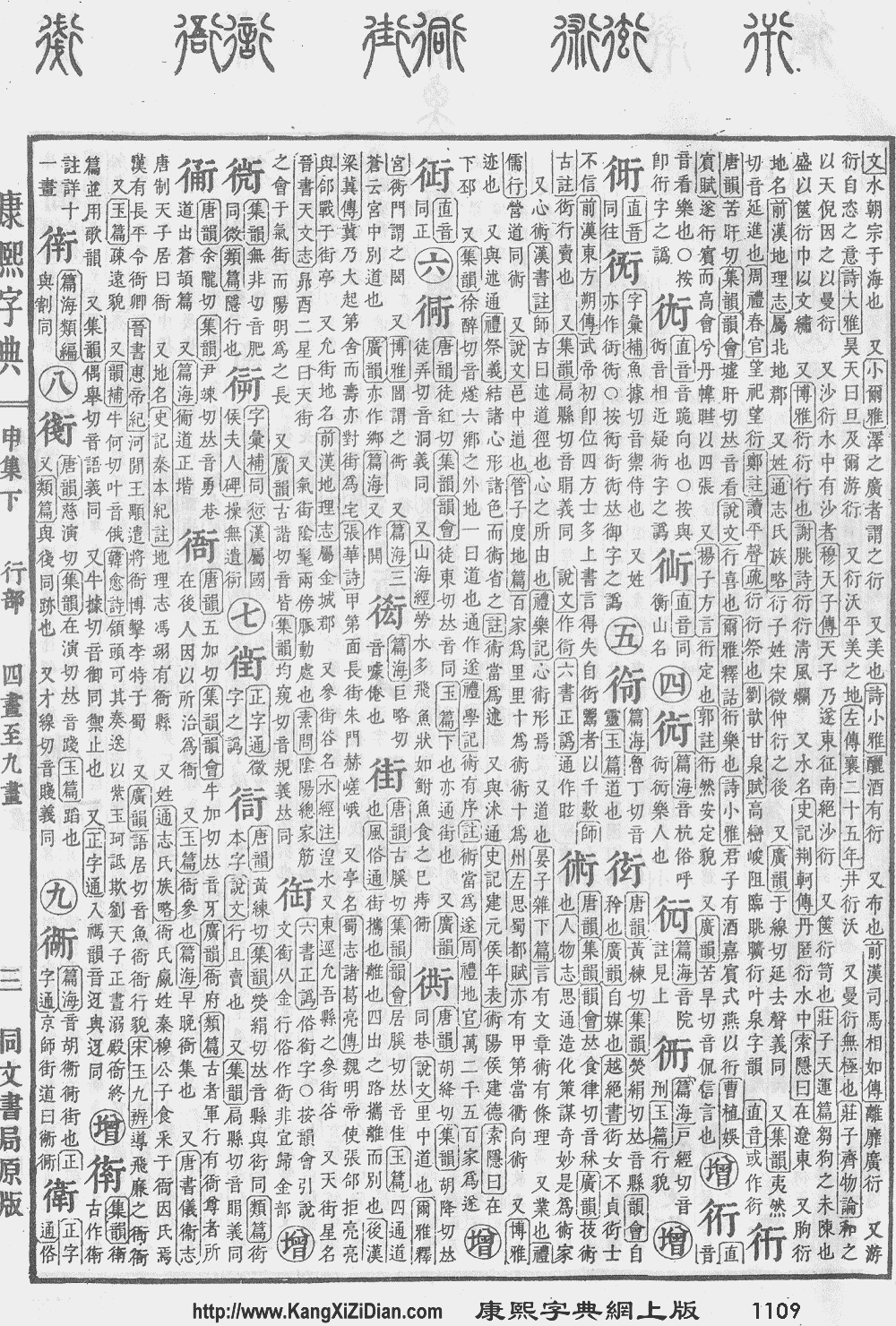
- Kangxi Dictionary: page 1109, character 29
- Dai Kanwa Jiten: character 34073
- Dae Jaweon: page 1574, character 11
- Hanyu Da Zidian (first edition): volume 2, page 845, character 4
- Unihan data for U+885B
Chinese
| trad. | 衛/衞 | |
|---|---|---|
| simp. | 卫 | |
| alternative forms | 䘙 𠀄 | |
Glyph origin
| Historical forms of the character 衛 | |||
|---|---|---|---|
| Shang | Western Zhou | Shuowen Jiezi (compiled in Han) | Liushutong (compiled in Ming) |
| Oracle bone script | Bronze inscriptions | Small seal script | Transcribed ancient scripts |
 |
 |
 |
 |
Phono-semantic compound (形聲/形声, OC *ɢʷads) : semantic 行 + phonetic 韋 (OC *ɢʷɯl).
Pronunciation
Definitions
衛
- to guard; to protect; to defend
- security guard
- (~國) the State of Wey during the Zhou dynasty, located in modern-day northeastern Henan province
- Short for 衛生/卫生 (wèishēng, “hygiene; health”).
- Short for 衛生間/卫生间 (wèishēngjiān, “toilet; bathroom”).
- (astronomy) satellite (in satellite names)
- a surname
- 衛立煌/卫立煌 ― Wèi Lìhuáng ― Wei Lihuang (Chinese general who served the Nationalist government)
Compounds
- 中衛/中卫 (zhōngwèi)
- 亞衛一號/亚卫一号
- 人造衛星/人造卫星 (rénzào wèixīng, “man-made satellite”)
- 仗衛/仗卫
- 侍衛/侍卫 (shìwèi)
- 保家衛國/保家卫国 (bǎojiāwèiguó)
- 保衛/保卫 (bǎowèi, “to defend”) ( to safeguard)
- 保衛細胞/保卫细胞
- 個人衛生/个人卫生 (gèrén wèishēng, “personal hygiene”)
- 偵察衛星/侦察卫星
- 傳播衛星/传播卫星
- 公共衛生/公共卫生 (gōnggòng wèishēng)
- 公眾衛生/公众卫生
- 冥衛一/冥卫一 (Míngwèi yī)
- 前衛/前卫 (qiánwèi)
- 前進防衛/前进防卫
- 口腔衛生/口腔卫生 (kǒuqiāng wèishēng, “oral hygiene”)
- 同步衛星/同步卫星 (tóngbù wèixīng)
- 呵衛/呵卫
- 周衛/周卫
- 四分衛/四分卫 (sìfēnwèi)
- 土衛一/土卫一 (Tǔwèi yī)
- 土衛七/土卫七 (Tǔwèiqī)
- 土衛三/土卫三 (Tǔwèisān)
- 土衛二/土卫二 (Tǔwèi'èr)
- 土衛五/土卫五 (Tǔwèiwǔ)
- 土衛八/土卫八 (Tǔwèibā)
- 土衛六/土卫六 (Tǔwèiliù)
- 土衛四/土卫四 (Tǔwèisì)
- 大衛/大卫 (Dàwèi, “David”)
- 大衛王/大卫王
- 威海衛/威海卫 (Wēihǎiwèi)
- 守衛/守卫 (shǒuwèi, “a guard”) ( to guard)
- 官官相衛/官官相卫 (guānguānxiāngwèi)
- 宿衛/宿卫
- 富比陶衛/富比陶卫
- 導航衛星/导航卫星
- 工廠衛生/工厂卫生
- 廠衛/厂卫
- 引虎自衛/引虎自卫
- 後衛/后卫 (hòuwèi)
- 心理衛生/心理卫生 (xīnlǐ wèishēng)
- 戍衛/戍卫 (shùwèi)
- 扞衛/扞卫
- 拱衛/拱卫 (gǒngwèi)
- 捍衛/捍卫 (hànwèi, “to defend”)
- 攝衛/摄卫 (shèwèi)
- 放虎自衛/放虎自卫
- 木衛一/木卫一 (Mùwèiyī)
- 木衛三/木卫三 (Mùwèisān)
- 木衛二/木卫二 (Mùwèi'èr)
- 木衛四/木卫四 (Mùwèisì)
- 武衛/武卫
- 氣象衛星/气象卫星 (qìxiàng wèixīng, “weather satellite”)
- 海事衛星/海事卫星
- 海衛一/海卫一 (Hǎiwèiyī)
- 測量衛星/测量卫星
- 火衛一/火卫一 (Huǒwèiyī)
- 火衛二/火卫二 (Huǒwèi'èr)
- 營衛/营卫
- 環境衛生/环境卫生
- 環衛/环卫 (huánwèi)
- 直播衛星/直播卫星
- 知覺防衛/知觉防卫
- 禁衛/禁卫
- 禁衛軍/禁卫军
- 站衛兵/站卫兵
- 精衛/精卫 (jīngwèi)
- 精衛填海/精卫填海 (jīngwèitiánhǎi)
- 紅衛/红卫 (Hóngwèi)
- 紅衛兵/红卫兵 (hóngwèibīng)
- 綦衛/綦卫
- 翊衛/翊卫
- 自我防衛機制/自我防卫机制 (zìwǒ fángwèi jīzhì)
- 自衛/自卫 (zìwèi, “self-defence”) ( to defend oneself)
- 自衛隊/自卫队 (zìwèiduì, “self-defence forces”)
- 衛仗/卫仗
- 衛兵/卫兵 (wèibīng, “guard, watcher”)
- 衛冕/卫冕 (wèimiǎn)
- 衛協/卫协 (wèixié)
- 衛國/卫国 (wèiguó)
- 衛報/卫报
- 衛士/卫士 (wèishì)
- 衛尉/卫尉
- 衛店/卫店 (Wèidiàn)
- 衛從/卫从
- 衛戍/卫戍 (wèishù)
- 衛所/卫所
- 衛斯理宗/卫斯理宗 (Wèisīlǐ Zōng)
- 衛星/卫星 (wèixīng)
- 衛星國家/卫星国家 (wèixīng guójiā)
- 衛星導航/卫星导航
- 衛星日蝕/卫星日蚀
- 衛星轉播/卫星转播
- 衛星通信/卫星通信 (wèixīng tōngxìn)
- 衛星都市/卫星都市 (wèixīng dūshì)
- 衛星門診/卫星门诊
- 衛星雲圖/卫星云图
- 衛星電視/卫星电视 (wèixīng diànshì)
- 衛星食/卫星食
- 衛河/卫河
- 衛浴設備/卫浴设备
- 衛理宗/卫理宗 (wèilǐzōng)
- 衛生/卫生 (wèishēng, “hygiene”) ( hygienic)
- 衛生丸/卫生丸 (wèishēngwán)
- 衛生套/卫生套 (wèishēngtào)
- 衛生局/卫生局
- 衛生工程/卫生工程
- 衛生巾/卫生巾 (wèishēngjīn, “sanitary napkin”)
- 衛生所/卫生所
- 衛生掩埋/卫生掩埋
- 衛生棉條/卫生棉条 (wèishēng miántiáo)
- 衛生球/卫生球 (wèishēngqiú)
- 衛生紙/卫生纸 (wèishēngzhǐ)
- 衛生衣/卫生衣 (wèishēngyī)
- 衛生設備/卫生设备 (wèishēng shèbèi)
- 衛生間/卫生间 (wèishēngjiān)
- 衛矛/卫矛
- 衛視/卫视 (wèishì)
- 衛護/卫护 (wèihù)
- 衛道/卫道 (wèidào)
- 衛道之士/卫道之士 (wèidàozhīshì)
- 衛隊/卫队 (wèiduì)
- 衛靈公/卫灵公
- 警衛/警卫 (jǐngwèi)
- 護衛/护卫 (hùwèi)
- 護衛艦/护卫舰 (hùwèijiàn)
- 赤衛軍/赤卫军
- 迦毗羅衛/迦毗罗卫 (Jiāpíluówèi)
- 通信衛星/通信卫星
- 通訊衛星/通讯卫星 (tōngxùn wèixīng)
- 過當防衛/过当防卫
- 鄭衛之女/郑卫之女
- 鄭衛之曲/郑卫之曲
- 鄭衛之聲/郑卫之声
- 鄭衛之音/郑卫之音 (zhèngwèizhīyīn)
- 鄭衛桑間/郑卫桑间
- 錦衣衛/锦衣卫 (Jǐnyīwèi)
- 門衛/门卫 (ménwèi)
- 防衛/防卫 (fángwèi)
- 防衛作用/防卫作用
- 防衛方式/防卫方式
- 防衛權/防卫权
- 防衛過當/防卫过当
- 陛衛/陛卫
- 飛衛/飞卫
- 食品衛生/食品卫生
- 餐衛/餐卫
- 首尾相衛/首尾相卫
- 駐衛警察/驻卫警察
- 驍衛/骁卫
- 魯衛之政/鲁卫之政
Japanese
| 衛 | |
| 衞 |
Readings
Etymology 1
| Kanji in this term |
|---|
| 衛 |
| えい Grade: 5 |
| kan’on |
| Alternative spelling |
|---|
| 衞 (kyūjitai) |
From Middle Chinese 衛 (MC hjwejH).
The kan'on pronunciation, so likely a later borrowing.
Pronunciation
- IPA(key): [e̞ː]
Etymology 2
| Kanji in this term |
|---|
| 衛 |
| え Grade: 5 |
| goon |
| Alternative spelling |
|---|
| 衞 (kyūjitai) |
From Middle Chinese 衛 (MC hjwejH).
The goon pronunciation, so likely the initial borrowing.
Pronunciation
- IPA(key): [e̞]
Korean
Vietnamese
This article is issued from Wiktionary. The text is licensed under Creative Commons - Attribution - Sharealike. Additional terms may apply for the media files.