與
See also: 与
| ||||||||
Translingual
| Japanese | 与 |
|---|---|
| Simplified | 与 |
| Traditional | 與 |
Han character
與 (Kangxi radical 134, 臼+8, 14 strokes, cangjie input 竹難卜金 (HXYC), four-corner 77801, composition ⿶⿳𦥑一八⿹⿺㇉一丨(GHJKV) or ⿶⿳𦥑一八⿹⿺㇉一丿(T))
Derived characters
Related characters
- 与 (Japanese shinjitai and simplified Chinese)
Descendants
- ヨ (Katakana character derived from Man'yōgana)
References
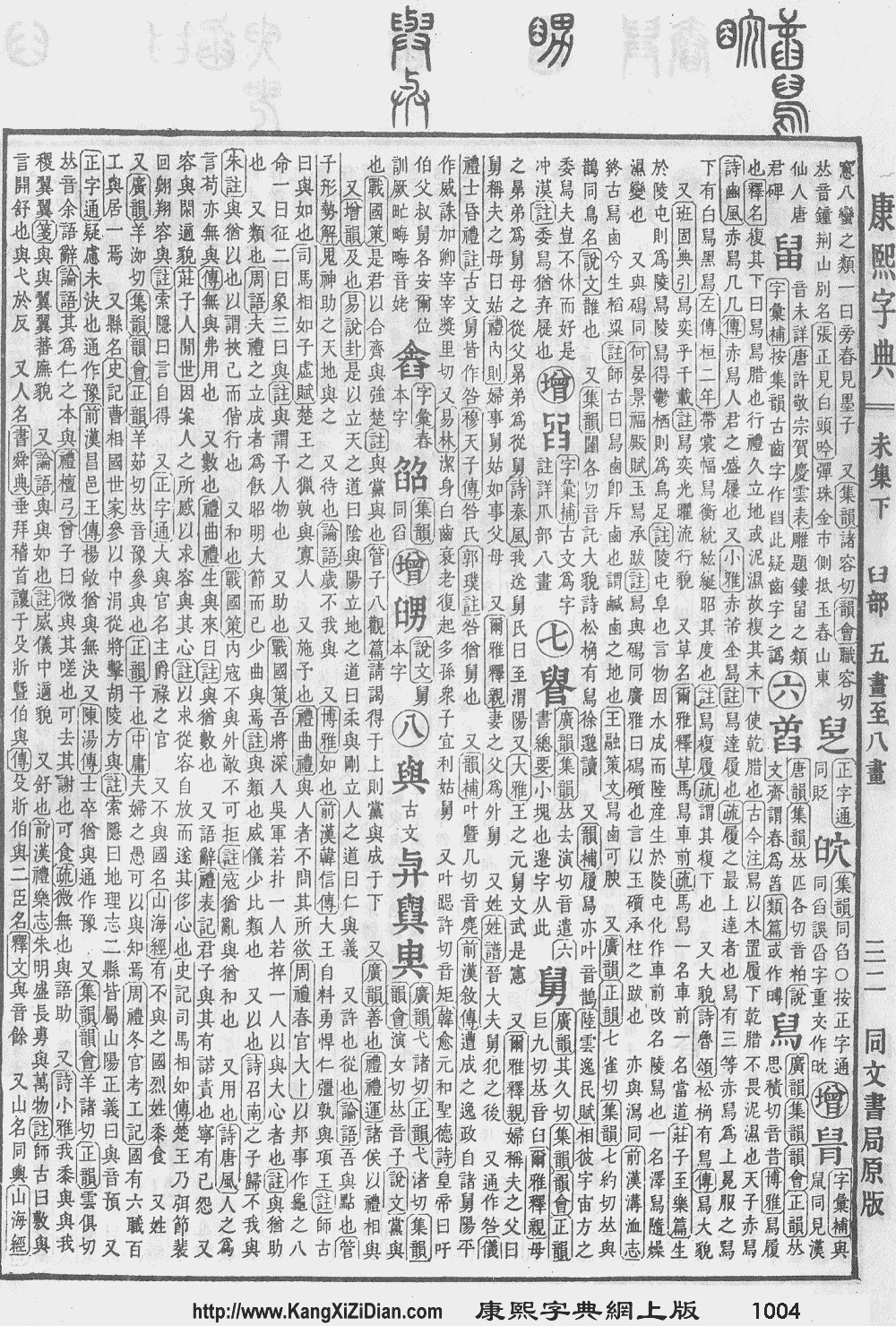
- Kangxi Dictionary: page 1004, character 13
- Dai Kanwa Jiten: character 30212
- Dae Jaweon: page 1460, character 27
- Hanyu Da Zidian (first edition): volume 1, page 251, character 4
- Unihan data for U+8207
Chinese
| trad. | 與 | |
|---|---|---|
| simp. | 与 | |
| alternative forms | ||
Glyph origin
| Historical forms of the character 與 | |||
|---|---|---|---|
| Spring and Autumn | Warring States | Shuowen Jiezi (compiled in Han) | Liushutong (compiled in Ming) |
| Bronze inscriptions | Chu slip and silk script | Small seal script | Transcribed ancient scripts |
 |
 |
 |
 |
Characters in the same phonetic series (舁) (Zhengzhang, 2003)
Phono-semantic compound (形聲/形声, OC *la, *laʔ, *las) : phonetic 舁 (OC *la) + semantic 牙.
Etymology
- "to be with; to associate with"
- Unlikely to be the same word as 舁 (OC *la, “to lift”) (Schuessler, 2007).
- "to give"
- The same word as 予 (OC *laʔ). The word family 舍 (OC *hljaːʔ) is probably derived from this word (Schuessler, 2007). Compare Tibetan གླ (gla, “pay; wage; fare”), Mara Chin [Term?] (hla, “to present; to offer (sacrifice); to give”), Jingpho [script needed] (ja³³, “to give”).
Pronunciation 1
Definitions
與
- to give; to offer
- † to agree; to allow; to permit
- † to help; to support
- † to get close to
- † to follow
- † to befriend; to get along with; to associate with
- † to fight
- † to deal with; to cope
- † to compare
- † to wait
- 歲不我與/岁不我与 ― suìbùwǒyǔ ― time and tide wait for no man
- † to choose; to elect
- † clique
- † allied country
- with
- for
- † (passive) by
- used to introduce the recipient of an action
- and (used to connect two nouns)
- (logic) AND; conjunction
- † rather than
- Same as 舉/举 (jǔ)
- a surname
Synonyms
Dialectal synonyms of 和 (“and”) [map]
See also
- 而 (ér, “and”),used to connect two clauses or adjectives
Compounds
- 不中相與/不中相与
- 不與/不与
- 不與不取/不与不取
- 事與願違/事与愿违 (shìyǔyuànwéi)
- 交與/交与
- 付與/付与 (fùyǔ)
- 休戚與共/休戚与共 (xiūqīyǔgòng)
- 儲與/储与
- 分金多與/分金多与
- 卵與石鬥/卵与石斗
- 善與人交/善与人交
- 患難與共/患难与共 (huànnànyǔgòng)
- 捐忿與瑕/捐忿与瑕
- 授與/授与 (shòuyǔ)
- 揣與/揣与 (chuāiyǔ)
- 施與/施与 (shīyǔ)
- 易與/易与
- 時不我與/时不我与 (shíbùwǒyǔ)
- 欲取固與/欲取固与
- 歲不我與/岁不我与 (suìbùwǒyǔ)
- 殺生與奪/杀生与夺
- 民胞物與/民胞物与 (mínbāowùyǔ)
- 漫與/漫与
- 無與倫比/无与伦比 (wúyǔlúnbǐ)
- 無與為比/无与为比
- 生死與共/生死与共
- 生死與奪/生死与夺
- 生殺與奪/生杀与夺 (shēngshāyǔduó)
- 目窕心與/目窕心与
- 相與/相与 (xiāngyǔ)
- 相與為命/相与为命
- 禍福與共/祸福与共
- 福與天齊/福与天齐
- 禍與福鄰/祸与福邻
- 紅與黑/红与黑
- 給與/给与 (jǐyǔ)
- 罪與罰/罪与罚
- 羞與噲伍/羞与哙伍
- 羞與為伍/羞与为伍 (xiūyǔwéiwǔ)
- 習與性成/习与性成
- 老人與海/老人与海
- 胞與/胞与 (bāoyǔ)
- 胞與為懷/胞与为怀
- 與世俯仰/与世俯仰
- 與世偃仰/与世偃仰
- 與世沉浮/与世沉浮
- 與世浮沉/与世浮沉
- 與世無爭/与世无争 (yǔshìwúzhēng)
- 與世長辭/与世长辞 (yǔshìchángcí)
- 與世靡爭/与世靡争
- 與人為善/与人为善 (yǔrénwéishàn)
- 與共/与共 (yǔgòng)
- 與其/与其 (yǔqí)
- 與否/与否 (yǔfǒu)
- 與噲為伍/与哙为伍
- 與國/与国 (yǔguó)
- 與國同休/与国同休
- 與子同袍/与子同袍
- 與日俱增/与日俱增 (yǔrìjùzēng)
- 與日俱新/与日俱新
- 與時俱進/与时俱进 (yǔshíjùjìn)
- 與時消息/与时消息
- 與時浮沉/与时浮沉
- 與有榮焉/与有荣焉 (yǔyǒuróngyān)
- 與格/与格 (yǔgé)
- 與民休息/与民休息
- 與民偕樂/与民偕乐
- 與民同憂/与民同忧
- 與民同樂/与民同乐
- 與民更始/与民更始
- 與民爭利/与民争利
- 與決/与决
- 與狐謀皮/与狐谋皮 (yǔhúmóupí)
- 與生俱來/与生俱来 (yǔshēngjùlái)
- 與眾不同/与众不同 (yǔzhòngbùtóng)
- 與虎添翼/与虎添翼
- 與虎謀皮/与虎谋皮 (yǔhǔmóupí)
- 與黨/与党
- 色授魂與/色授魂与
- 莫之與京/莫之与京 (mòzhīyǔjīng)
- 菊花與劍/菊花与剑
- 虛與委蛇/虚与委蛇 (xūyǔwēiyí)
- 褒貶與奪/褒贬与夺
- 豐取刻與/丰取刻与
- 贈與/赠与 (zèngyǔ)
- 過與/过与
- 選賢與能/选贤与能
- 閼與/阏与
- 難與抗衡/难与抗衡
Pronunciation 2
Pronunciation 3
Korean
Alternative forms
Etymology 1
From Middle Chinese 與 (MC yoX, “give; for; and”).
| Historical Readings | ||
|---|---|---|
| Dongguk Jeongun Reading | ||
| Dongguk Jeongun, 1448 | 영〯 (Yale: yě) | |
Pronunciation
- (SK Standard/Seoul) IPA(key): [jɘ(ː)]
- Phonetic hangul: [여(ː)]
- Though still prescribed in Standard Korean, most speakers in both Koreas no longer distinguish vowel length.
Compounds
Etymology 2
From Middle Chinese 與 (MC yoH, “to participate”).
| Historical Readings | ||
|---|---|---|
| Dongguk Jeongun Reading | ||
| Dongguk Jeongun, 1448 | 영〮 (Yale: yé) | |
Pronunciation
- (SK Standard/Seoul) IPA(key): [jɘ(ː)]
- Phonetic hangul: [여(ː)]
- Though still prescribed in Standard Korean, most speakers in both Koreas no longer distinguish vowel length.
Vietnamese
This article is issued from Wiktionary. The text is licensed under Creative Commons - Attribution - Sharealike. Additional terms may apply for the media files.