躬
| ||||||||
Translingual
Han character
躬 (Kangxi radical 158, 身+3, 10 strokes, cangjie input 竹竹弓 (HHN), four-corner 27227, composition ⿰身弓)
References
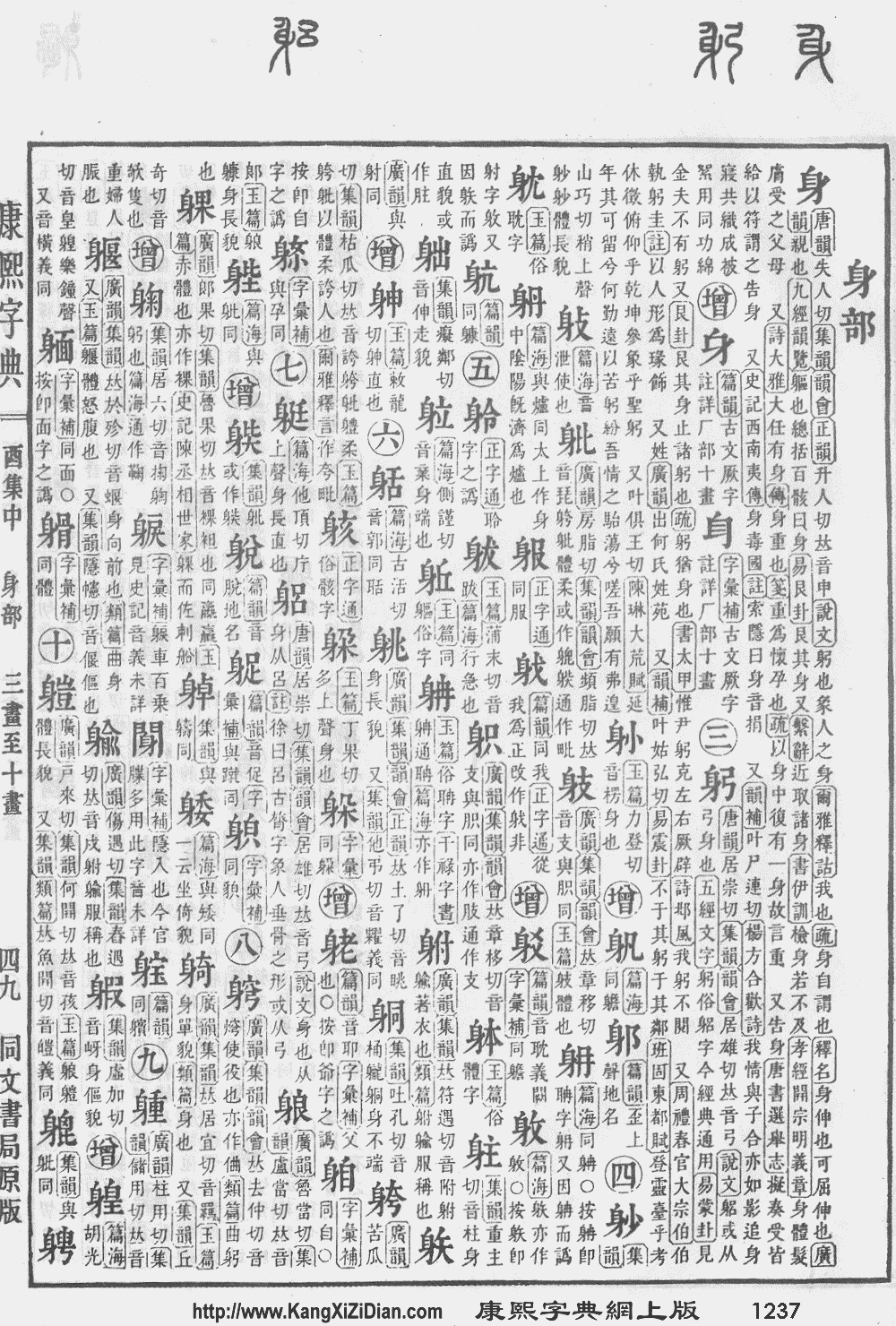
- Kangxi Dictionary: page 1237, character 4
- Dai Kanwa Jiten: character 38038
- Dae Jaweon: page 1710, character 4
- Hanyu Da Zidian (first edition): volume 6, page 3808, character 8
- Unihan data for U+8EAC
Chinese
| trad. | 躬 | |
|---|---|---|
| simp. # | 躬 | |
Glyph origin
Characters in the same phonetic series (躬) (Zhengzhang, 2003)
Phono-semantic compound (形聲/形声, OC *kuŋ) : semantic 身 (“body”) + phonetic 弓 (OC *kʷɯŋ).
Etymology
From Proto-Sino-Tibetan *guŋ (“body, back”). Compare Burmese အကောင် (a.kaung, “body”).
Pronunciation
Definitions
躬
- body
- 鞠躬 ― jūgōng ― to bow (literally, “to bend one’s body”)
- oneself
- in person; personally
- 臣本布衣,躬耕於南陽。 [Classical Chinese, trad.]
- From: 227, 諸葛亮 (Zhūgě Liàng) (Zhuge Liang), 前出師表 (Former Chu Shi Biao)
- Chén běn bùyī, gōng gēng yú Nányáng. [Pinyin]
- I was originally a commoner. I personally farmed in Nanyang.
臣本布衣,躬耕于南阳。 [Classical Chinese, simp.]
- to stoop
Compounds
- 三鞠躬
- 事必躬親/事必躬亲 (shìbìgōngqīn)
- 倒笏躬身
- 匪躬
- 匪躬之操
- 匪躬之節/匪躬之节
- 卑躬屈節/卑躬屈节 (bēigōng-qūjié)
- 卑躬屈膝 (bēigōng-qūxī)
- 反躬 (fǎngōng)
- 反躬自問/反躬自问 (fǎngōngzìwèn)
- 反躬自省 (fǎngōngzìxǐng)
- 反躬自責/反躬自责
- 引咎責躬/引咎责躬
- 打躬 (dǎgōng)
- 打躬作揖
- 控背躬身
- 撫躬自問/抚躬自问 (fǔgōngzìwèn)
- 政躬
- 政躬康泰
- 整躬率物
- 斂躬/敛躬
- 曲躬躬
- 朕躬 (zhèngōng)
- 末躬
- 治躬
- 盡瘁鞠躬/尽瘁鞠躬
- 直躬
- 直躬之信
- 福躬
- 節儉躬行/节俭躬行
- 聖躬/圣躬 (shènggōng)
- 背躬
- 責躬省過/责躬省过
- 躬先士卒
- 躬先表率
- 躬圭
- 躬往
- 躬擐甲冑
- 躬桑
- 躬稼
- 躬耕 (gōnggēng)
- 躬耕樂道/躬耕乐道
- 躬自 (gōngzì)
- 躬自菲薄
- 躬行
- 躬行實踐/躬行实践
- 躬行節儉/躬行节俭
- 躬親/躬亲 (gōngqīn)
- 躬詣/躬诣
- 躬蹈矢石
- 躬身
- 躬逢其盛
- 躬逢目擊/躬逢目击
- 躬體力行/躬体力行
- 返躬內省/返躬内省
- 鞠躬 (jūgōng)
- 鞠躬盡瘁/鞠躬尽瘁 (jūgōngjìncuì)
- 飭躬/饬躬
Japanese
Korean
Hanja
躬 • (gung) (hangeul 궁, revised gung, McCune–Reischauer kung, Yale kwung)
- body
- personally, in person
Vietnamese
This article is issued from Wiktionary. The text is licensed under Creative Commons - Attribution - Sharealike. Additional terms may apply for the media files.