知
| ||||||||
Translingual
| Stroke order | |||
|---|---|---|---|
 | |||
| Stroke order | |||
|---|---|---|---|
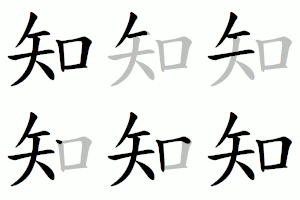 | |||
Han character
知 (Kangxi radical 111, 矢+3, 8 strokes, cangjie input 人大口 (OKR), four-corner 86400, composition ⿰矢口)
Descendants
- ち (Hiragana character derived from Man'yōgana)
References
- Kangxi Dictionary: page 824, character 1
- Dai Kanwa Jiten: character 23935
- Dae Jaweon: page 1235, character 27
- Hanyu Da Zidian (first edition): volume 4, page 2581, character 2
- Unihan data for U+77E5

Chinese
| simp. and trad. |
知 | |
|---|---|---|
| alternative forms | 𥎿 | |
Glyph origin
Originally the same character as 智, used interchangeably. In oracle bone inscriptions, ideogrammic compound (會意/会意) : 大 (“adult”) + 口 (“mouth”) + 子 (“child”) – to transmit knowledge. In the Warring States period, 大 corrupted into 矢 (OC *hliʔ) and became a sound component. In Western Han script the component 子 started being dropped, arriving at the modern form.
Etymology
The two pronunciations are cognate. The word is possibly of Sino-Tibetan origin, compare Mizo hria, hriat (“to know”), Jingpho chye (“to know”), Tibetan རིག (rig, “to know”) (Schuessler, 2007). Cognate with 智 (OC *ʔl'es).
Pronunciation 1
Definitions
知
- to know; to understand; to comprehend
- 知人知面不知心 ― zhī rén zhī miàn bù zhī xīn ― One may know a person for a long time without understanding his true nature
- 我唔知。 [Guangzhou Cantonese] ― ngo5 m4 zi1. [Jyutping] ― I don't know.
- 「亢」之為言也,知進而不知退,知存而不知亡,知得而不知喪。其唯聖人乎!知進退存亡而不失其正者,其唯聖人乎! [Classical Chinese, trad.]
- From: I Ching, 11th – 8th century BCE
- “kàng” zhī wéi yán yě, zhī jìn ér bù zhī tuì, zhī cún ér bù zhī wáng, zhī dé ér bù zhī sàng. Qí wéi shèngrén hū! Zhī jìntuìcúnwáng ér bù shī qí zhèng zhě, qí wéi shèngrén hū! [Pinyin]
- The force of that phrase - 'exceeding the proper limits' - indicates the knowing to advance but not to retire; to maintain but not to let perish to get but not to lose. He only is the sage who knows to advance and to retire, to maintain and to let perish; and that without ever acting incorrectly. Yes, he only is the sage!
「亢」之为言也,知进而不知退,知存而不知亡,知得而不知丧。其唯圣人乎!知进退存亡而不失其正者,其唯圣人乎! [Classical Chinese, simp.]- 子曰:「由!誨女知之乎?知之為知之,不知為不知,是知也。」 [Classical Chinese, trad.]
- From: The Analects of Confucius, c. 475 – 221 BCE, translated based on James Legge's version
- Zǐ yuē: “Yóu! Huì rǔ zhì zhī hū? Zhī zhī wéi zhī zhī, bù zhī wéi bù zhī, shì zhì yě.” [Pinyin]
- The Master said, "You, shall I teach you what knowledge is? When you know a thing, to hold that you know it; and when you do not know a thing, to allow that you do not know it - this is knowledge."
子曰:「由!诲女知之乎?知之为知之,不知为不知,是知也。」 [Classical Chinese, simp.]
- † to cause to know; to tell; to inform
- 通知 ― tōngzhī ― to inform
- † to administer; to take charge of
- † to distinguish
- † to appreciate
- † to be close friends; close friends
- † to perceive
- † to participate in; to have a hand in
- (Hakka, including Changting, Xiaosanjiang, Shicheng) to hear; to listen
- † knowledge
- (~母) (Chinese linguistics) the Middle Chinese initial of 知 (MC trje)
Synonyms
Compounds
- 一望而知 (yīwàng'érzhī)
- 一無所知/一无所知 (yīwúsuǒzhī)
- 一物不知
- 一知半解 (yīzhībànjiě)
- 一葉知秋/一叶知秋 (yīyèzhīqiū)
- 三不知
- 不卜可知
- 不可知 (bùkězhī)
- 不可知論/不可知论 (bùkězhīlùn)
- 不得而知 (bùdé'érzhī)
- 不正知
- 不知 (bùzhī)
- 不知丁董
- 不知下落
- 不知不罪
- 不知不覺/不知不觉 (bùzhī-bùjué)
- 不知世事
- 不知世務/不知世务
- 不知事
- 不知人事
- 不知何故
- 不知凡幾/不知凡几 (bùzhīfánjǐ)
- 不知分限
- 不知利害
- 不知務/不知务
- 不知去向 (bùzhīqùxiàng)
- 不知名
- 不知大體/不知大体
- 不知好歉
- 不知好歹 (bùzhīhǎodǎi)
- 不知就裡/不知就里 (bùzhījiùlǐ)
- 不知忌諱/不知忌讳
- 不知怎的
- 不知恩義/不知恩义
- 不知情
- 不知所云 (bùzhīsuǒyún)
- 不知所以 (bùzhīsuǒyǐ)
- 不知所喻
- 不知所措 (bùzhīsuǒcuò)
- 不知所終/不知所终 (bùzhīsuǒzhōng)
- 不知所言
- 不知死
- 不知死活 (bùzhīsǐhuó)
- 不知深淺/不知深浅
- 不知甘苦
- 不知疼癢/不知疼痒
- 不知痛癢/不知痛痒
- 不知皁白
- 不知羞
- 不知覺/不知觉
- 不知起倒
- 不知趣
- 不知足
- 不知輕重/不知轻重
- 不知通變/不知通变
- 不知進退/不知进退 (bùzhījìntuì)
- 不知道
- 不知頭腦/不知头脑
- 不知顛倒/不知颠倒
- 不知香臭
- 不知高低
- 不自知
- 主知說/主知说
- 也未可知
- 人盡皆知/人尽皆知 (rénjìnjiēzhī)
- 以一知萬/以一知万
- 以微知著
- 你知我見/你知我见
- 倦鳥知返/倦鸟知返
- 偏知
- 先知 (xiānzhī)
- 先知先覺/先知先觉
- 先覺先知/先觉先知
- 內知/内知
- 全知 (quánzhī)
- 共知 (gòngzhī)
- 冷暖自知
- 前知
- 劉知遠/刘知远
- 博古知今
- 參知政事/参知政事
- 受知
- 叨在知己
- 可想而知 (kěxiǎng'érzhī)
- 可知 (kězhī)
- 可知是好
- 可知道
- 同知
- 同見同知/同见同知
- 告知 (gàozhī)
- 告知義務/告知义务
- 問牛知馬/问牛知马
- 問羊知馬/问羊知马
- 善知識/善知识 (shànzhīshí)
- 四知
- 困知勉行
- 固知
- 地下有知
- 報君知/报君知
- 報知/报知 (bàozhī)
- 天涯知己
- 天知地知
- 婦孺皆知/妇孺皆知 (fùrújiēzhī)
- 察知 (cházhī)
- 履霜知冰
- 已知數/已知数
- 年幼無知/年幼无知
- 店都知
- 後知後覺/后知后觉 (hòuzhīhòujué)
- 得知 (dézhī)
- 得福不知
- 心到神知
- 心知肚明 (xīnzhīdùmíng)
- 怎知 (zěnzhī)
- 恬不知怪
- 恬不知恥/恬不知耻 (tiánbùzhīchǐ)
- 恨相知晚
- 悉知
- 惠子知我
- 情知 (qíngzhī)
- 感性知識/感性知识
- 愚昧無知/愚昧无知
- 感知 (gǎnzhī)
- 懵然無知/懵然无知
- 所知 (suǒzhī)
- 打知名度
- 掗相知/挜相知
- 探知 (tànzhī)
- 揣知
- 提頭知尾/提头知尾
- 故知 (gùzhī)
- 數往知來/数往知来
- 新知 (xīnzhī)
- 方知
- 明知 (míngzhī)
- 明知就裡/明知就里 (míngzhījiùlǐ)
- 明知故問/明知故问 (míngzhīgùwèn)
- 明知故犯 (míngzhīgùfàn)
- 易知由單/易知由单
- 明知道
- 有所不知 (yǒusuǒ bùzhī)
- 有知 (yǒuzhī)
- 未卜先知 (wèibǔxiānzhī)
- 未知 (wèizhī)
- 未知元
- 未知可否
- 未知所措
- 未知數/未知数 (wèizhīshù)
- 未知萬一/未知万一
- 格物致知
- 楮知白
- 樂天知命/乐天知命 (lètiānzhīmìng)
- 殊不知 (shūbùzhī)
- 毫無所知/毫无所知
- 求知 (qiúzhī)
- 求知慾/求知欲 (qiúzhīyù)
- 深知 (shēnzhī)
- 深知原委
- 深知灼見/深知灼见
- 渾然不知/浑然不知
- 溫故知新/温故知新 (wēngùzhīxīn)
- 灼見真知/灼见真知
- 焉知 (yānzhī)
- 無所不知/无所不知 (wúsuǒbùzhī)
- 無知/无知 (wúzhī)
- 熟知 (shúzhī)
- 獲知/获知 (huòzhī)
- 生而知之
- 畏天知命
- 略知一二 (lüèzhīyī'èr)
- 略知皮毛
- 痛失知音
- 白首相知
- 的知
- 皆知 (jiēzhī)
- 盡人皆知/尽人皆知 (jìnrénjiēzhī)
- 目不知書/目不知书
- 相知 (xiāngzhī)
- 相知恨晚
- 真知 (zhēnzhī)
- 真知灼見/真知灼见 (zhēnzhīzhuójiàn)
- 眾所周知/众所周知 (zhòngsuǒzhōuzhī)
- 眾所熟知/众所熟知
- 睹微知著 (dǔwēizhīzhù)
- 知不足齋/知不足斋
- 知了 (zhīliǎo)
- 知事 (zhīshì)
- 知事僧
- 知交 (zhījiāo)
- 知人 (zhīrén)
- 知人下士
- 知人之明 (zhīrénzhīmíng)
- 知人善任 (zhīrénshànrèn)
- 知人料事
- 知人論世/知人论世
- 知今博古
- 知位 (chai-ūi)
- 知來藏往/知来藏往
- 知兵
- 知制誥/知制诰 (zhīzhìgào)
- 知友 (zhīyǒu)
- 知古今兒/知古今儿
- 知名 (zhīmíng)
- 知名度 (zhīmíngdù)
- 知名當世/知名当世
- 知命 (zhīmìng)
- 知命之年 (zhīmìngzhīnián)
- 知命安身
- 知命樂天/知命乐天
- 知單/知单
- 知契
- 知安忘危
- 知客
- 知寺
- 知局
- 知己 (zhījǐ)
- 知己知彼 (zhījǐzhībǐ)
- 知己話/知己话
- 知幾其神/知几其神
- 知府 (zhīfǔ)
- 知底 (zhīdǐ)
- 知影 (chai-iáⁿ)
- 知彼知己 (zhībǐzhījǐ)
- 知往鑒今/知往鉴今
- 知微知彰
- 知德
- 知心 (zhīxīn)
- 知心著意
- 知心話/知心话 (zhīxīnhuà)
- 知性 (zhīxìng)
- 知性之旅
- 知恥/知耻
- 知恩不報/知恩不报
- 知恩報恩/知恩报恩
- 知悉 (zhīxī)
- 知情 (zhīqíng)
- 知情底保
- 知情識趣/知情识趣
- 知情達理/知情达理
- 知感不盡/知感不尽
- 知方 (zhīfāng)
- 知易行難/知易行难
- 知時識務/知时识务
- 知曉/知晓 (zhīxiǎo)
- 知更鳥/知更鸟 (zhīgēngniǎo)
- 知書達禮/知书达礼 (zhīshūdálǐ)
- 知會/知会 (zhīhuì)
- 知本
- 知機/知机 (zhījǐ)
- 知機識變/知机识变
- 知止 (zhīzhǐ)
- 知法犯法 (zhīfǎfànfǎ)
- 知津
- 知無不言/知无不言 (zhīwúbùyán)
- 知照
- 知疼著熱/知疼著热
- 知白守黑
- 知禮/知礼
- 知竅/知窍
- 知縣/知县 (zhīxiàn)
- 知羞識廉/知羞识廉
- 知而不言
- 知能
- 知舊/知旧
- 知行合一
- 知覺/知觉 (zhījué)
- 知覺神經/知觉神经
- 知覺防衛/知觉防卫
- 知觀/知观
- 知言 (zhīyán)
- 知識/知识
- 知識分子/知识分子
- 知識工程/知识工程
- 知識產權/知识产权
- 知識經濟/知识经济
- 知識論/知识论
- 知識階級/知识阶级
- 知貢舉/知贡举
- 知趣 (zhīqù)
- 知足 (zhīzú)
- 知足不辱
- 知足常樂/知足常乐 (zhīzúchánglè)
- 知足知止
- 知輕識重/知轻识重
- 知遇 (zhīyù)
- 知道
- 知遇之恩
- 知過必改/知过必改
- 知錯能改/知错能改 (zhīcuònénggǎi)
- 知雄守雌
- 知難而行/知难而行
- 知難而退/知难而退 (zhīnán'értuì)
- 知難行易/知难行易
- 知青 (zhīqīng)
- 知音 (zhīyīn)
- 知音諳呂/知音谙吕
- 知音識趣/知音识趣
- 知風/知风
- 知風草/知风草
- 知高識低/知高识低
- 知魚之樂/知鱼之乐
- 確知/确知
- 示知
- 神人鑒知/神人鉴知
- 神鬼不知
- 視微知著/视微知著
- 穴處知雨/穴处知雨
- 窮神知化/穷神知化
- 紅粉知己/红粉知己
- 素知 (sùzhī)
- 罔知所措
- 聞一知十/闻一知十 (wényīzhīshí)
- 自知 (zìzhī)
- 自知之明 (zìzhīzhīmíng)
- 致知 (zhìzhī)
- 舉世知名/举世知名
- 舉十知九/举十知九
- 舊雨新知/旧雨新知 (jiùyǔxīnzhī)
- 良知 (liángzhī)
- 良知良能
- 草木知威
- 茫然不知
- 莫知所措
- 莫知所為/莫知所为
- 莫知所謂/莫知所谓
- 落葉知秋/落叶知秋
- 葉落知秋/叶落知秋
- 蒙昧無知/蒙昧无知
- 蘧瑗知非
- 蟬不知雪/蝉不知雪
- 行以求知
- 要知
- 見微知著/见微知著 (jiànwēizhīzhù)
- 見微知萌/见微知萌
- 親知/亲知 (qīnzhī)
- 覺知/觉知
- 觀往知來/观往知来
- 觀過知仁/观过知仁
- 誰知/谁知
- 諭知/谕知
- 識禮知書/识礼知书
- 豈知/岂知
- 貧賤之知/贫贱之知
- 踏地知根
- 輕薄無知/轻薄无知
- 辯知閎達/辩知闳达
- 逆知
- 迷而知反
- 迷而知返
- 迷途知反
- 迷途知返 (mítúzhīfǎn)
- 通知 (tōngzhī)
- 通知單/通知单 (tōngzhīdān)
- 通知啟事/通知启事
- 通知書/通知书 (tōngzhīshū)
- 達人知命/达人知命
- 達權知變/达权知变
- 達知/达知
- 道遠知驥/道远知骥
- 道頭知尾/道头知尾
- 遠近知名/远近知名
- 鑒往知來/鉴往知来
- 鑑往知來/鉴往知来
- 靡知所措
- 須知/须知 (xūzhī)
- 預知/预知 (yùzhī)
- 風塵知己/风尘知己
- 食不知味
- 食髓知味
- 飲水知源/饮水知源
- 飭知/饬知
- 體知/体知
- 鮮為人知/鲜为人知 (xiǎnwéirénzhī)
Pronunciation 2
Definitions
知
- † Original form of 智 (zhì, “knowing, wisdom, intelligence”).
- 子曰:「由!誨女知之乎?知之為知之,不知為不知,是知也。」 [Classical Chinese, trad.]
- From: The Analects of Confucius, c. 475 – 221 BCE, translated based on James Legge's version
- Zǐ yuē: “Yóu! Huì rǔ zhì zhī hū? Zhī zhī wéi zhī zhī, bù zhī wéi bù zhī, shì zhì yě.” [Pinyin]
- The Master said, "You, shall I teach you what knowledge is? When you know a thing, to hold that you know it; and when you do not know a thing, to allow that you do not know it - this is knowledge."
子曰:「由!诲女知之乎?知之为知之,不知为不知,是知也。」 [Classical Chinese, simp.]
Compounds
- 上知 (shàngzhì)
- 凡知
- 挈瓶之知
- 材高知深
- 知小謀大/知小谋大
- 知水仁山
- 知盡能索/知尽能索
- 知者不惑
- 知者樂水/知者乐水
- 絕聖棄知/绝圣弃知
- 見仁見知/见仁见知
References
- “知”, in 漢語多功能字庫 (Multi-function Chinese Character Database), 香港中文大學 (the Chinese University of Hong Kong), 2014–
Japanese
Alternative forms
- 智 (non-daiyōji)
Readings
Compounds
Etymology
| Kanji in this term |
|---|
| 知 |
| ち Grade: 2 |
| on’yomi |
| Alternative spelling |
|---|
| 智 |
From Middle Chinese 智 (MC trjeH).
References
- Matsumura, Akira, editor (2006), 大辞林 [Daijirin] (in Japanese), Third edition, Tōkyō: Sanseidō, →ISBN
- NHK Broadcasting Culture Research Institute, editor (1998), NHK日本語発音アクセント辞典 [NHK Japanese Pronunciation Accent Dictionary] (in Japanese), Tōkyō: NHK Publishing, →ISBN
Korean
Etymology
(This etymology is missing or incomplete. Please add to it, or discuss it at the Etymology scriptorium. Particularly: “Middle Korean readings, if any”)
Pronunciation
- (SK Standard/Seoul) IPA(key): [t͡ɕi]
- Phonetic hangul: [지]