勝
See also: 胜
| ||||||||
Translingual
Han character
勝 (Kangxi radical 19, 力+10, 12 strokes, cangjie input 月火手尸 (BFQS), four-corner 79227, composition ⿰月劵)
Related characters
References
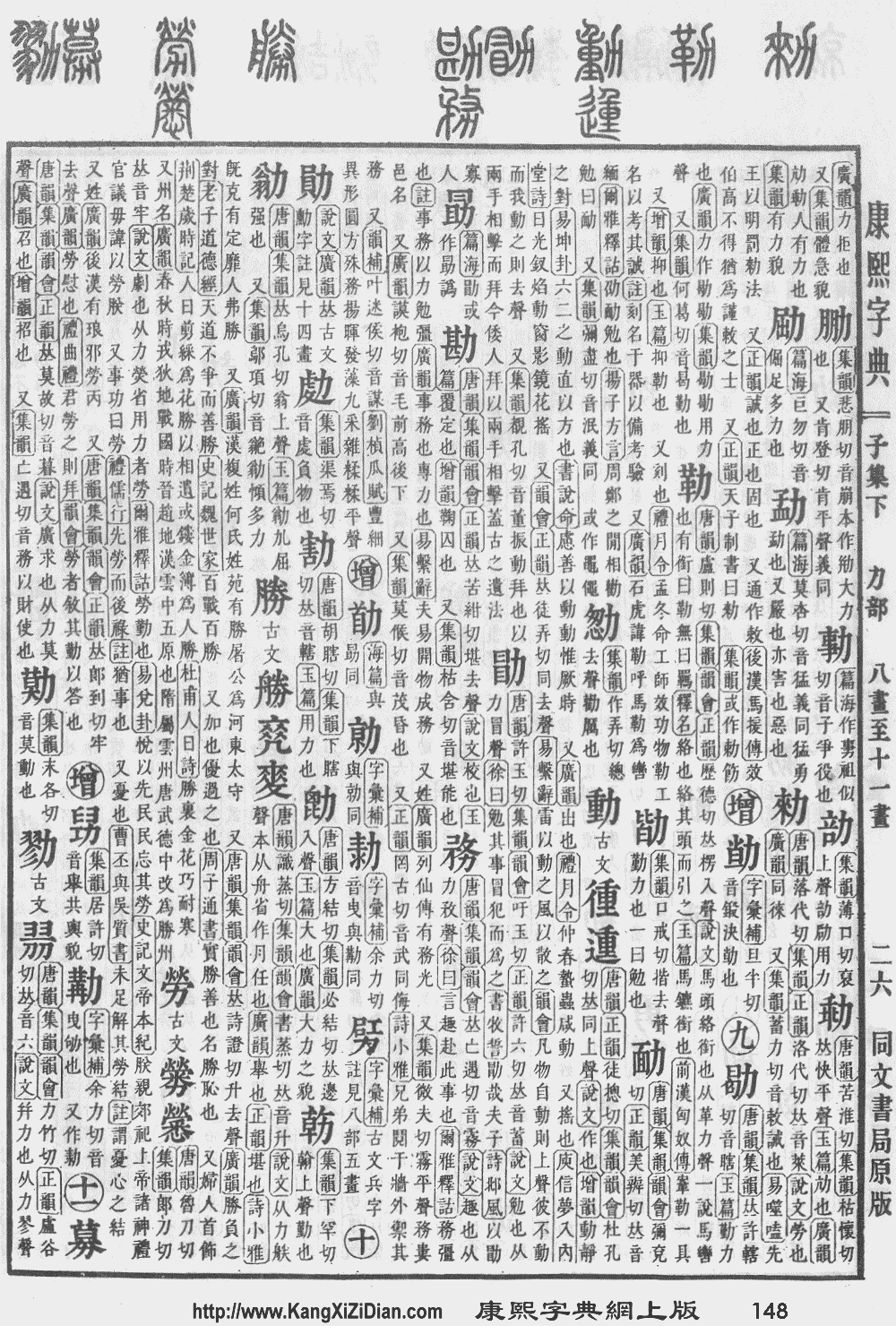
- Kangxi Dictionary: page 148, character 31
- Dai Kanwa Jiten: character 2409
- Dae Jaweon: page 335, character 10
- Hanyu Da Zidian (first edition): volume 3, page 2090, character 13
- Unihan data for U+52DD
Chinese
| trad. | 勝 | |
|---|---|---|
| simp. | 胜* | |
Glyph origin
Characters in the same phonetic series (朕) (Zhengzhang, 2003)
Phono-semantic compound (形聲/形声, OC *hljɯŋ, *hljɯŋs) : phonetic 朕 (OC *l'ɯmʔ) + semantic 力 (“strength”).
Graphically, the character decomposes as 月 + 劵 (which gives rise to the simplified form 胜), though this is not the etymology.
Pronunciation 1
Definitions
勝
- to be able to bear; to be able to withstand
- 我欲乘風歸去,又恐瓊樓玉宇,高處不勝寒。 [Classical Chinese, trad.]
- From: 蘇軾 《水調歌頭》; translation by Hugh Grigg
- Wǒ yù chéng fēng guīqù, yòu kǒng qiónglóuyùyǔ, gāochù bù shēng hán. [Pinyin]
- I wish to ride the wind and return there, yet fear the jade towers; in a high dwelling one cannot bear the cold.
我欲乘风归去,又恐琼楼玉宇,高处不胜寒。 [Classical Chinese, simp.]
- to be equal to; to match
- exhaustively; entirely; completely
- Alternative form of 升 (shēng, “unit of measure for grain volumes”)
- Alternative form of 伸 (shēn, “to stretch”)
Compounds
- 不勝/不胜
- 不勝之態/不胜之态
- 不勝其擾/不胜其扰
- 不勝其煩/不胜其烦 (bùshèngqífán)
- 不勝唏噓/不胜唏嘘
- 不勝感喟/不胜感喟
- 不勝春/不胜春
- 不勝枚舉/不胜枚举 (bùshèngméijǔ)
- 不勝衣/不胜衣
- 不勝負荷/不胜负荷 (bùshèngfùhè)
- 不勝酒力/不胜酒力
- 不可勝原/不可胜原
- 不可勝數/不可胜数 (bùkěshèngshǔ)
- 不可勝書/不可胜书
- 不可勝紀/不可胜纪
- 不可勝言/不可胜言 (bùkěshèngyán)
- 不可勝計/不可胜计 (bùkěshèngjì)
- 不可勝記/不可胜记
- 不能勝數/不能胜数
- 力不勝任/力不胜任
- 力不自勝/力不自胜
- 勝任/胜任 (shèngrèn)
- 勝任愉快/胜任愉快
- 勝衣/胜衣
- 喜不自勝/喜不自胜
- 多不勝數/多不胜数 (duōbùshèngshǔ)
- 如不勝衣/如不胜衣
- 嬌嫋不勝/娇袅不胜
- 弱不勝衣/弱不胜衣
- 悲不自勝/悲不自胜
- 情不自勝/情不自胜
- 指不勝屈/指不胜屈
- 數不勝數/数不胜数 (shǔbùshèngshǔ)
- 樂勝/乐胜 (lèshèng)
- 理不勝辭/理不胜辞
- 美不勝收/美不胜收 (měibùshèngshōu)
- 舉不勝舉/举不胜举 (jǔbúshèngjǔ)
- 防不勝防/防不胜防 (fángbùshèngfáng)
Pronunciation 2
Definitions
勝
- to defeat; to win; to succeed; to be victorious
- victory; success; triumph
- to surpass; to prevail over; to outdo
- to spread; to be popular; to be employed
- to restrain; to check; to subdue; to bring under control
- annihilated; destroyed; fallen (of nation or dynasty)
- to bully; to place oneself over; to coerce; to subjugate
- wonderful; excellent; outstanding
- famed; of superior quality
- scenic spots and historical sites; scenic attraction
- (historical) a kind of splendid jewellery worn by ancient women
- (historical) axle on a loom which holds the warp
Compounds
- 一決勝負/一决胜负 (yījuéshèngfù)
- 不分勝負/不分胜负 (bùfēn shèngfù)
- 不勝/不胜
- 不戰而勝/不战而胜 (bùzhàn'érshèng)
- 乘勝追擊/乘胜追击 (chéngshèngzhuījī)
- 乘勝逐北/乘胜逐北
- 人勝節/人胜节
- 人定勝天/人定胜天 (réndìngshèngtiān)
- 人眾勝天/人众胜天
- 倚多為勝/倚多为胜
- 優勝/优胜 (yōushèng)
- 優勝劣敗/优胜劣败
- 克敵制勝/克敌制胜 (kèdízhìshèng)
- 全勝/全胜 (quánshèng)
- 出奇制勝/出奇制胜 (chūqízhìshèng)
- 制勝/制胜 (zhìshèng)
- 力勝/力胜
- 勝之不武/胜之不武 (shèngzhībùwǔ)
- 勝事/胜事
- 勝仗/胜仗 (shèngzhàng)
- 勝似/胜似 (shèngsì)
- 勝利/胜利 (shènglì)
- 勝利投手/胜利投手
- 勝券在握/胜券在握
- 勝地/胜地 (shèngdì)
- 勝境/胜境 (shèngjìng)
- 勝局/胜局 (shèngjú)
- 勝常/胜常
- 勝景/胜景 (shèngjǐng)
- 勝朝/胜朝
- 勝概/胜概 (shènggài)
- 勝殘去殺/胜残去杀 (shèngcánqùshā)
- 勝流/胜流
- 勝算/胜算 (shèngsuàn)
- 勝訴/胜诉 (shèngsù)
- 勝負/胜负 (shèngfù)
- 勝跡/胜迹 (shèngjì)
- 勝遊/胜游
- 去殺勝殘/去杀胜残
- 反勝/反胜 (fǎnshèng)
- 反敗為勝/反败为胜 (fǎnbàiwéishèng)
- 取勝/取胜 (qǔshèng)
- 名勝/名胜 (míngshèng)
- 名勝古跡/名胜古迹 (míngshèng gǔjì)
- 名勝古蹟/名胜古迹 (míngshèng gǔjì)
- 名山勝境/名山胜境
- 吹氣勝蘭/吹气胜兰
- 和勝/和胜
- 味勝易牙/味胜易牙
- 哀兵必勝/哀兵必胜 (āibīngbìshèng)
- 大勝/大胜 (dàshèng)
- 大獲全勝/大获全胜 (dàhuòquánshèng)
- 好勝/好胜 (hàoshèng)
- 定勝敗/定胜败 (dìng shèngbài)
- 尋幽訪勝/寻幽访胜
- 屢戰屢勝/屡战屡胜 (lǚzhànlǚshèng)
- 席勝/席胜
- 常勝家/常胜家
- 常勝將軍/常胜将军
- 常勝軍/常胜军
- 度假勝地/度假胜地
- 引人入勝/引人入胜 (yǐnrénrùshèng)
- 形勝/形胜 (xíngshèng)
- 得勝/得胜 (déshèng)
- 得勝之兵/得胜之兵
- 得勝之師/得胜之师 (déshèng zhī shī)
- 得勝口/得胜口
- 得勝回朝/得胜回朝
- 得勝頭回/得胜头回
- 得勝頭迴/得胜头回
- 德勝頭迴/德胜头回
- 必勝/必胜 (bìshèng)
- 慰情勝無/慰情胜无
- 戰勝/战胜 (zhànshèng)
- 戰勝國/战胜国 (zhànshèngguó)
- 戰無不勝/战无不胜 (zhànwúbùshèng)
- 打勝/打胜 (dǎshèng)
- 打勝仗/打胜仗
- 抗戰勝利/抗战胜利
- 拍木勝/拍木胜 (phah-bo̍k-sèng) (Min Nan)
- 持勝/持胜
- 探奇訪勝/探奇访胜
- 探尋勝跡/探寻胜迹
- 攬勝/揽胜
- 攬勝圖/揽胜图
- 料敵制勝/料敌制胜
- 方勝/方胜
- 旗開得勝/旗开得胜
- 旛勝/旛胜
- 春勝/春胜
- 更勝一籌/更胜一筹
- 武勝關/武胜关 (Wǔshèngguān)
- 每戰必勝/每战必胜
- 求勝/求胜 (qiúshèng)
- 決勝/决胜 (juéshèng)
- 決勝千里/决胜千里
- 決勝局/决胜局
- 決勝負/决胜负
- 濟勝之具/济胜之具
- 爭勝/争胜 (zhēngshèng)
- 爭勝要強/争胜要强
- 爭強好勝/争强好胜
- 爭強賭勝/争强赌胜
- 爭強顯勝/争强显胜
- 爭強鬥勝/争强斗胜
- 獨擅勝場/独擅胜场
- 獲勝/获胜 (huòshèng)
- 班師得勝/班师得胜
- 略勝一籌/略胜一筹 (lüèshèngyīchóu)
- 百戰百勝/百战百胜 (bǎizhànbǎishèng)
- 矜功負勝/矜功负胜
- 萬事勝意/万事胜意 (wànshìshèngyì)
- 稍勝一籌/稍胜一筹
- 穩操勝券/稳操胜券 (wěncāoshèngquàn)
- 穩操勝算/稳操胜算
- 節節勝利/节节胜利
- 綵勝/彩胜
- 習非勝是/习非胜是
- 聊勝一籌/聊胜一筹
- 聊勝於無/聊胜于无 (liáoshèngyúwú)
- 臨機制勝/临机制胜
- 致勝/致胜
- 花勝/花胜
- 覽勝/览胜
- 觀光勝地/观光胜地
- 誇勝道強/夸胜道强
- 賭勝/赌胜
- 較勝一籌/较胜一筹 (jiàoshèngyīchóu)
- 轉敗為勝/转败为胜
- 運籌決勝/运筹决胜
- 遊覽勝地/游览胜地
- 避暑勝地/避暑胜地
- 邪不勝正/邪不胜正 (xiébùshèngzhèng)
- 陰勝則寒/阴胜则寒
- 險勝/险胜 (xiǎnshèng)
- 雄勝/雄胜
- 高人勝士/高人胜士
- 龔勝不屈/龚胜不屈
Descendants
Japanese
| Shinjitai | 勝 | |
| Kyūjitai [1] |
勝󠄁 勝+ 󠄁?(Adobe-Japan1) |
 |
| 勝󠄃 勝+ 󠄃?(Hanyo-Denshi) (Moji_Joho) | ||
| The displayed kanji may be different from the image due to your environment. See here for details. | ||
Readings
- Go-on: しょう (shō, Jōyō)
- Kan-on: しょう (shō, Jōyō)
- Kun: かつ (katsu, 勝つ, Jōyō); かち (kachi, 勝ち); すぐれる (sugureru, 勝れる); たえる (taeru, 勝える); たう (tau, 勝う); まさる (masaru, 勝る, Jōyō); あげて (agete, 勝げて)
- Nanori: かち (kachi); かつ (katsu); すぐる (suguru); すぐれ (sugure); すぐろ (suguro); とう (tō); のり (nori); まさ (masa); まさる (masaru); ます (masu); よし (yoshi)
Compounds
- 勝気 (kachiki)
- 勝鬨 (kachidoki)
- 勝ちを千里の外に決す (kachi o senri no hoka ni kessu)
- 殘に勝ち殺を去るべし (zan ni kachi satsu o saru beshi)
- 勝引 (kachibiki)
- 勝手 (katte)
- 勝因 (shōin)
- 勝会 (shōkai)
- 勝軍 (shōgun)
- 勝景 (shōkei)
- 勝国 (shōkoku)
- 勝算 (shōsan)
- 勝事 (shōji)
- 勝状 (shōjō)
- 勝迹 (shōseki)
- 勝絶 (shōzetsu)
- 勝戦 (shōsen)
- 勝訴 (shōso)
- 勝地 (shōchi)
- 勝致 (shōchi)
- 勝敗 (shōhai)
- 勝負 (shōbu)
- 勝兵 (shōhei)
- 勝友 (shōyū)
- 勝遊 (shōyū)
- 勝利 (shōri)
- 勝流 (shōryū)
- 勝麗 (shōrei)
- 大勝 (taishō)
- 名勝 (meishō)
- 優勝 (yūshō)
Etymology 1
| Kanji in this term |
|---|
| 勝 |
| しょう Grade: 3 |
| on’yomi |
Etymology 2
| Kanji in this term |
|---|
| 勝 |
| まさ(る) Grade: 3 |
| kun’yomi |
References
- “勝”, in 漢字ぺディア (Kanjipedia) (in Japanese), 日本漢字能力検定協会, 2015–2024
Okinawan
Vietnamese
This article is issued from Wiktionary. The text is licensed under Creative Commons - Attribution - Sharealike. Additional terms may apply for the media files.