轍
| ||||||||
Translingual
Han character
轍 (Kangxi radical 159, 車+11 in traditional Chinese (Taiwan), 車+12 in Chinese (mainland China, Hong Kong), Japanese and Korean, 18 strokes in traditional Chinese (Taiwan), 19 strokes in mainland China and Japanese and Korean, cangjie input 十十卜月大 (JJYBK), four-corner 58040, composition ⿲車育攵)
References
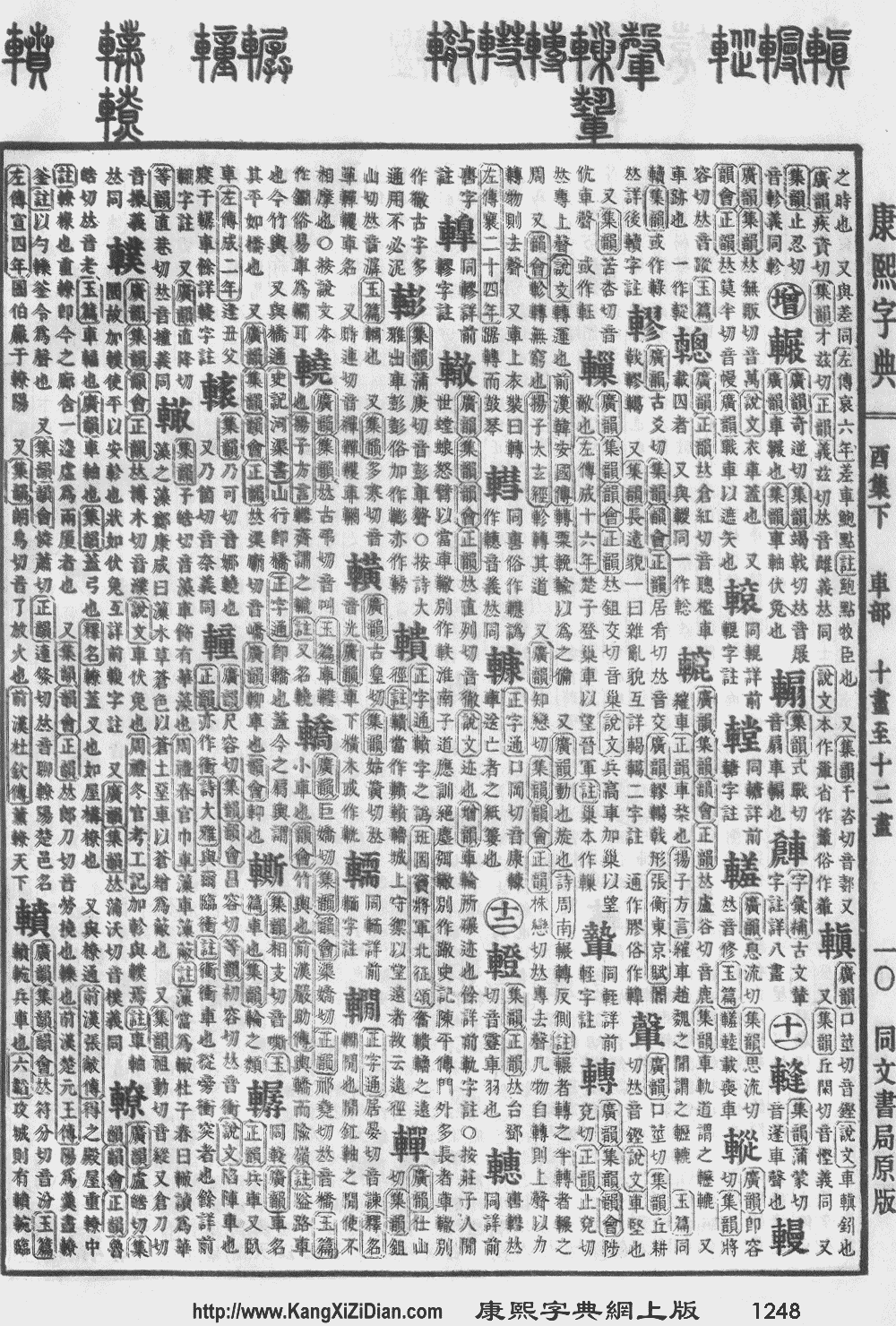
- Kangxi Dictionary: page 1248, character 23
- Dai Kanwa Jiten: character 38524
- Dae Jaweon: page 1727, character 10
- Hanyu Da Zidian (first edition): volume 5, page 3557, character 1
- Unihan data for U+8F4D
Chinese
| trad. | 轍 | |
|---|---|---|
| simp. | 辙 | |
| 2nd round simp. | 𰹹 | |
| alternative forms | 軼/轶 | |
Glyph origin
Phono-semantic compound (形聲/形声, OC *ded) : semantic 車 (“wagon”) + abbreviated phonetic 徹 (OC *tʰed) – wagon tracks.
Pronunciation
Usage notes
Xiandai Hanyu Guifan Cidian (《现代汉语规范词典》) proscribes the use of the pronunciation chè.
Compounds
- 一轍/一辙
- 北轍南轅/北辙南辕
- 十三轍/十三辙
- 千岐萬轍/千岐万辙
- 南轅北轍/南辕北辙 (nányuánběizhé)
- 合轍/合辙 (hézhé)
- 合轍押韻/合辙押韵
- 如出一轍/如出一辙 (rúchūyīzhé)
- 復蹈其轍/复蹈其辙
- 復蹈前轍/复蹈前辙
- 找轍/找辙
- 攀車臥轍/攀车卧辙
- 攀轅臥轍/攀辕卧辙
- 改弦易轍/改弦易辙 (gǎixiányìzhé)
- 改轅易轍/改辕易辙
- 改轍/改辙
- 故轍/故辙
- 易轍/易辙
- 更弦易轍/更弦易辙
- 枯魚涸轍/枯鱼涸辙
- 沒轍/没辙 (méizhé)
- 流口轍/流口辙
- 涸轍之枯/涸辙之枯
- 涸轍之魚/涸辙之鱼
- 涸轍之鮒/涸辙之鲋 (hézhézhīfù)
- 涸轍枯魚/涸辙枯鱼
- 涸轍窮魚/涸辙穷鱼
- 涸轍窮鱗/涸辙穷鳞
- 滾車轍的/滚车辙的
- 濡沫涸轍/濡沫涸辙
- 熟路輕轍/熟路轻辙
- 若出一轍/若出一辙
- 覆車之轍/覆车之辙
- 覆轍/覆辙 (fùzhé)
- 覆轍重蹈/覆辙重蹈
- 跑轍/跑辙
- 車轍/车辙 (chēzhé)
- 車轍馬跡/车辙马迹
- 軌轍/轨辙
- 轉轍/转辙
- 轉轍器/转辙器
- 轍亂旗靡/辙乱旗靡 (zhéluànqímǐ)
- 轍兒/辙儿
- 轍環天下/辙环天下
- 轍跡/辙迹
- 轍鮒/辙鲋
- 轍鮒之急/辙鲋之急
- 重蹈覆轍/重蹈覆辙 (chóngdǎofùzhé)
- 離轍/离辙
Japanese
Readings
- Go-on: でち (dechi)←でち (deti, historical)
- Kan-on: てつ (tetsu)←てつ (tetu, historical)
- Kun: わだち (wadachi, 轍)
Compounds
Etymology 1
| Kanji in this term |
|---|
| 轍 |
| わだち Hyōgaiji |
| kun’yomi |
Compound of 輪 (wa, “wheel”) + 立ち (tachi, “standing”, the 連用形 (ren'yōkei, “continuative or stem form”) of verb 立つ tatsu, “to stand”, here in reference to the shape of the rut left standing after the passage of the wheel).[1][2] The tachi changes to dachi as an instance of rendaku (連濁).
Noun
轍 • (wadachi)
Etymology 2
| Kanji in this term |
|---|
| 轍 |
| てつ Hyōgaiji |
| kan’on |
From Middle Chinese 轍 (MC drjet, “wagon rut, wheel track”). The kan'on reading, so likely a later borrowing. Compare modern Min Nan reading tia̍t.
Noun
轍 • (tetsu)
References
- Shōgaku Tosho (1988) 国語大辞典(新装版) [Unabridged Dictionary of Japanese (Revised Edition)] (in Japanese), Tōkyō: Shogakukan, →ISBN
- Matsumura, Akira, editor (2006), 大辞林 [Daijirin] (in Japanese), Third edition, Tōkyō: Sanseidō, →ISBN
- Yamada, Tadao et al., editors (2011), 新明解国語辞典 [Shin Meikai Kokugo Jiten] (in Japanese), Seventh edition, Tōkyō: Sanseidō, →ISBN
Korean
Hanja
轍 • (cheol) (hangeul 철, revised cheol, McCune–Reischauer ch'ŏl, Yale chel)
- This term needs a translation to English. Please help out and add a translation, then remove the text
{{rfdef}}.