迎
| ||||||||
Translingual
| Stroke order | |||
|---|---|---|---|
 | |||
Han character
迎 (Kangxi radical 162, 辵+4, 8 strokes in traditional Chinese and Korean, 7 strokes in mainland China and Japanese, cangjie input 卜竹女中 (YHVL), four-corner 37302, composition ⿺辶卬)
Derived characters
- 𠶐, 𭪧, 𫤏, 𨓑, 𥈁
References
- Kangxi Dictionary: page 1254, character 3
- Dai Kanwa Jiten: character 38748
- Dae Jaweon: page 1736, character 13
- Hanyu Da Zidian (first edition): volume 6, page 3821, character 9
- Unihan data for U+8FCE
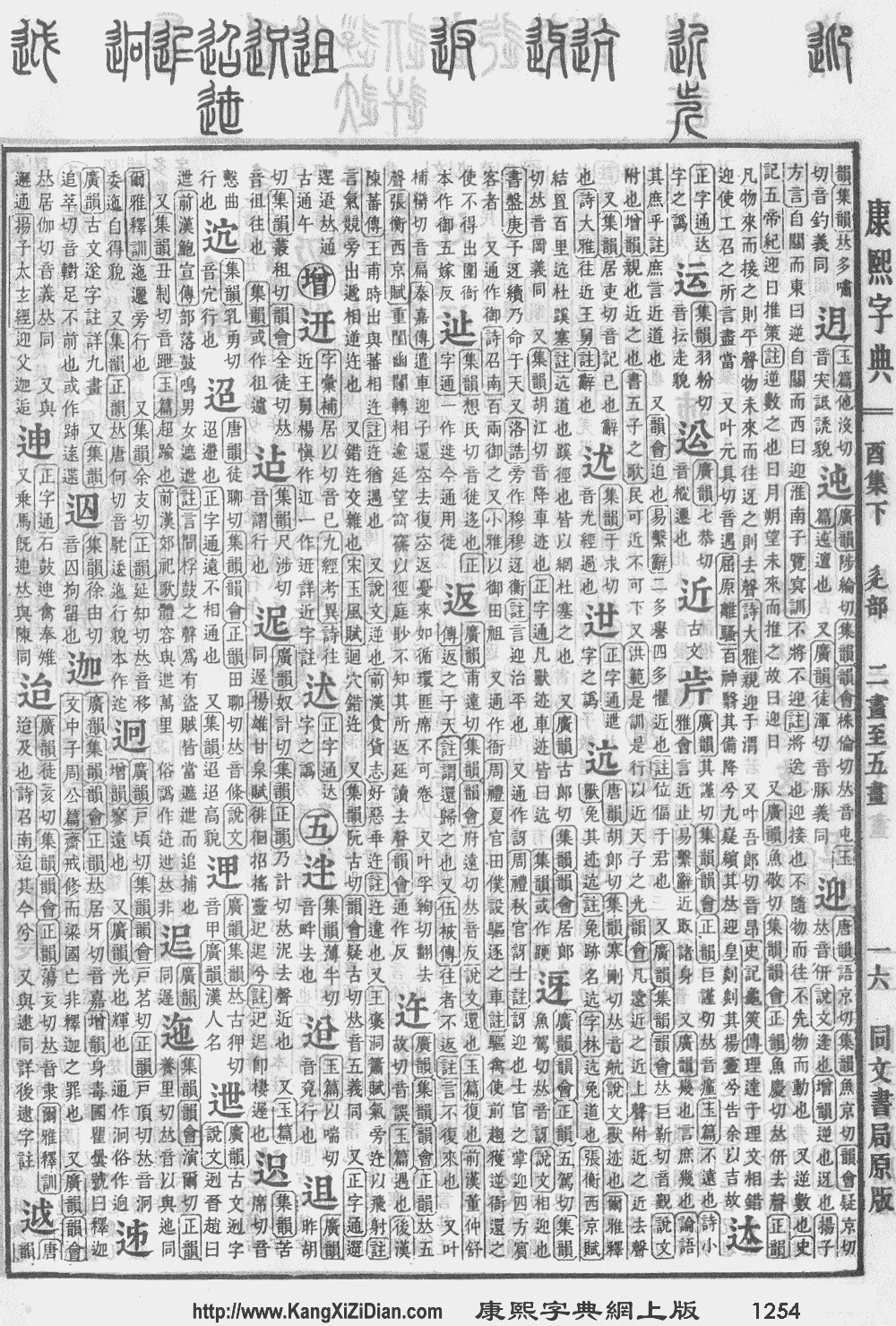
Chinese
Glyph origin
| Historical forms of the character 迎 | |
|---|---|
| Shuowen Jiezi (compiled in Han) | Liushutong (compiled in Ming) |
| Small seal script | Transcribed ancient scripts |
 |
 |
Characters in the same phonetic series (卬) (Zhengzhang, 2003)
Phono-semantic compound (形聲/形声, OC *ŋaŋ, *ŋraŋs) : semantic 辶 + phonetic 卬 (OC *ŋaːŋ, *ŋaŋʔ).
Etymology
From Proto-Sino-Tibetan *ŋra-k/ŋ (“to meet; to encounter”). Cognate with Burmese ငြင်း (ngrang:, “to refuse to obey; to argue”). Within Chinese, it is related to:
Definitions
迎
- to receive; to welcome; to greet; to meet
- to flatter; to ingratiate with
- to face; to go against; to do something in face of ...; to forge ahead
- (obsolete) to predict; to forecast
- (Min) to escort (a god, hero etc.) through the streets; to parade through the streets
- (Eastern Min, of food) to become dry (due to exposure to the wind)
- (Eastern Min, of hair) to stick up; to become erect
- a surname
Synonyms
- (to face):
Compounds
- 倒屣相迎 (dàoxǐxiāngyíng)
- 倒屣而迎
- 倒屣迎之
- 倒屣迎賓/倒屣迎宾
- 倒履相迎
- 出迎 (chūyíng)
- 善氣迎人/善气迎人
- 大迎枕
- 失迎 (shīyíng)
- 夾道歡迎/夹道欢迎
- 奔走逢迎
- 奉迎 (fèngyíng)
- 弔賀迎送/吊贺迎送
- 恭迎 (gōngyíng)
- 承迎
- 承順逢迎/承顺逢迎
- 揣合逢迎
- 擁彗迎門/拥彗迎门
- 曲意逢迎 (qūyìféngyíng)
- 歡迎/欢迎 (huānyíng)
- 水送山迎
- 竭誠歡迎/竭诚欢迎
- 賣俏迎奸
- 迎來送往/迎来送往
- 迎候 (yínghòu)
- 迎刃而解 (yíngrèn'érjiě)
- 迎向
- 迎合 (yínghé)
- 迎妝/迎妆
- 迎姦賣俏/迎奸卖俏
- 迎娶 (yíngqǔ)
- 迎婿日
- 迎年
- 迎意承旨
- 迎戰/迎战 (yíngzhàn)
- 迎手
- 迎接 (yíngjiē)
- 迎擊/迎击 (yíngjī)
- 迎敵/迎敌 (yíngdí)
- 迎新 (yíngxīn)
- 迎新送故
- 迎新送舊/迎新送旧
- 迎日
- 迎日推策
- 迎日推筴/迎日推策
- 迎春 (yíngchūn)
- 迎春花 (yíngchūnhuā)
- 迎會/迎会
- 迎歡買俏/迎欢买俏
- 迎睇
- 迎神 (yíngshén)
- 迎神賽會/迎神赛会 (yíngshén sàihuì)
- 迎紫姑
- 迎親/迎亲 (yíngqīn)
- 迎賓/迎宾 (yíngbīn)
- 迎迓 (yíngyà)
- 迎阿
- 迎難而上/迎难而上 (yíngnán'érshàng)
- 迎靈/迎灵
- 迎面 (yíngmiàn)
- 迎頭/迎头 (yíngtóu)
- 迎頭兒/迎头儿
- 迎頭棒喝/迎头棒喝
- 迎頭痛擊/迎头痛击 (yíngtóutòngjī)
- 迎頭趕上/迎头赶上 (yíngtóu gǎnshàng)
- 迎風/迎风 (yíngfēng)
- 迎風冒雪/迎风冒雪
- 迎風待月/迎风待月
- 迎風搖曳/迎风摇曳
- 迎養/迎养
- 送往迎來/送往迎来
- 送故迎新
- 送舊迎新/送旧迎新
- 逢迎 (féngyíng)
- 逢迎色笑
- 遠迎/远迎
- 郊迎
- 阿諛逢迎/阿谀逢迎
Definitions
迎
- (obsolete) to prepare to greet a guest before their arrival
- 42nd tetragram of the Taixuanjing (𝌯)
Compounds
- 親迎/亲迎
Japanese
| Shinjitai | 迎 | |
| Kyūjitai [1] |
迎󠄁 迎+ 󠄁?(Adobe-Japan1) |
 |
| 迎󠄃 迎+ 󠄃?(Hanyo-Denshi) (Moji_Joho) | ||
| The displayed kanji may be different from the image due to your environment. See here for details. | ||
Proper noun
| Kanji in this term |
|---|
| 迎 |
| むかい Grade: S |
| kun’yomi |
| Kanji in this term |
|---|
| 迎 |
| むかえ Grade: S |
| kun’yomi |
迎 or 迎 • (Mukae or Mukai)
- a surname
References
- “迎”, in 漢字ぺディア (Kanjipedia) (in Japanese), 日本漢字能力検定協会, 2015–2024
Vietnamese
This article is issued from Wiktionary. The text is licensed under Creative Commons - Attribution - Sharealike. Additional terms may apply for the media files.