館
| ||||||||
 | ||||||||
Translingual
Han character
館 (Kangxi radical 184, 食+8, 16 strokes, cangjie input 人戈十口口 (OIJRR), four-corner 83777, composition ⿰飠官)
References
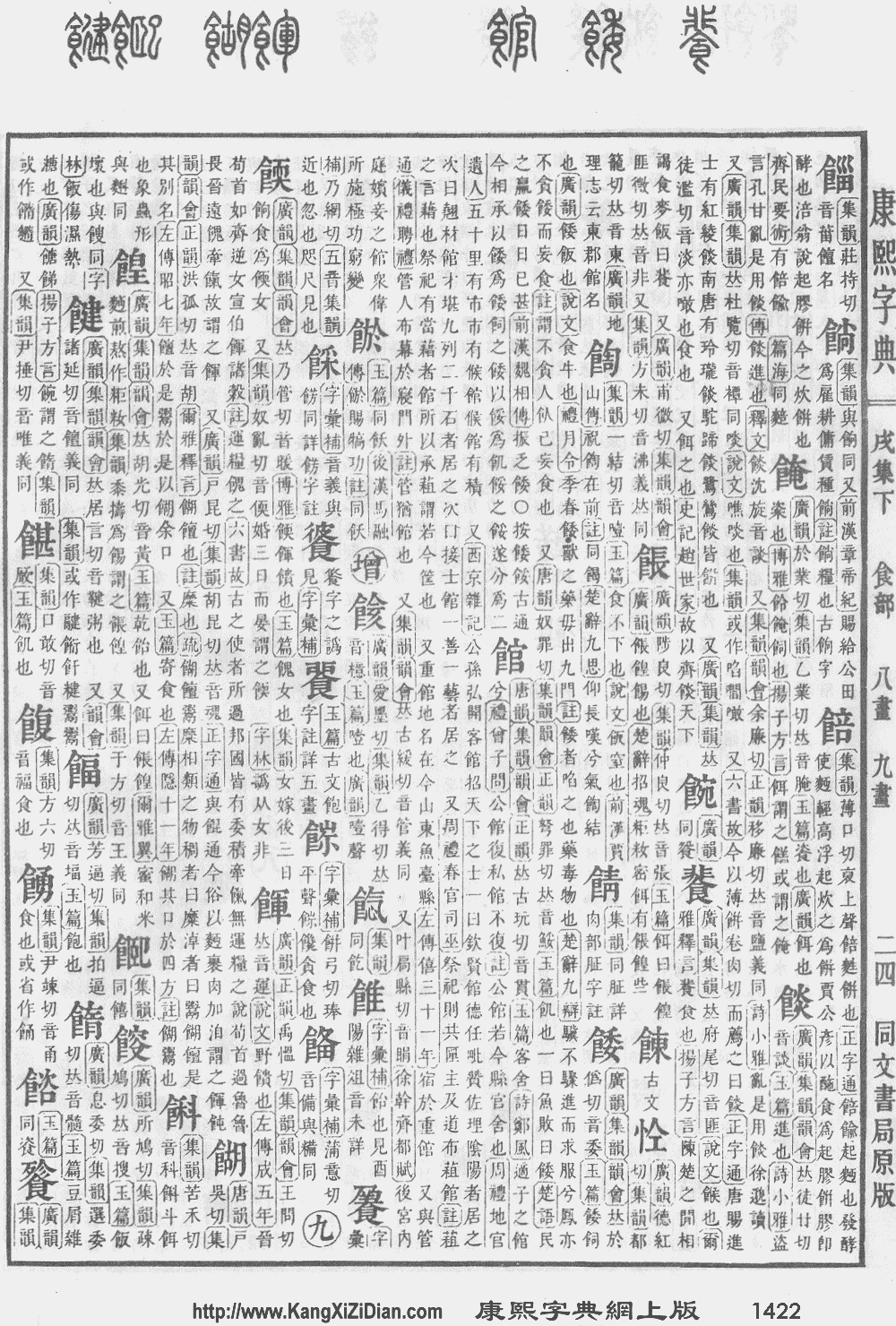
- Kangxi Dictionary: page 1422, character 14
- Dai Kanwa Jiten: character 44237
- Dae Jaweon: page 1947, character 31
- Hanyu Da Zidian (first edition): volume 7, page 4461, character 13
- Unihan data for U+9928
- Unihan data for U+FA2C
Chinese
| trad. | 館 | |
|---|---|---|
| simp. | 馆 | |
| alternative forms | 舘 | |
Glyph origin
| Historical forms of the character 館 | |
|---|---|
| Shuowen Jiezi (compiled in Han) | Liushutong (compiled in Ming) |
| Small seal script | Transcribed ancient scripts |
 |
 |
Phono-semantic compound (形聲/形声, OC *koːnʔ, *koːns) : semantic 飠/饣 + phonetic 官 (OC *koːn).
Pronunciation
Definitions
館
- accommodation
- shop
- mansion
- building or place for cultural activities
- (historical) government office
- 差館/差馆 [Hong Kong Cantonese] ― caai1 gun2 [Jyutping] ― police station
- (historical) traditional Chinese private school where classical literature and Confucianism used to be taught
- (historical) factory (as a foreign trade emporium)
Compounds
- 三館/三馆
- 上館子/上馆子 (shàng guǎnzi)
- 乾館/干馆
- 仙館/仙馆
- 伎館/伎馆
- 作館/作馆
- 來扇館/来扇馆
- 使館/使馆 (shǐguǎn)
- 候館/候馆
- 假館/假馆
- 公使館/公使馆 (gōngshǐguǎn)
- 公館/公馆 (gōngguǎn)
- 函館/函馆 (Hánguǎn)
- 別館/别馆 (biéguǎn)
- 博物館/博物馆 (bówùguǎn)
- 史館/史馆
- 同文館/同文馆
- 吃館子/吃馆子
- 命館/命馆
- 國史館/国史馆
- 國術館/国术馆
- 圖書館/图书馆 (túshūguǎn)
- 圖書館學/图书馆学 (túshūguǎnxué)
- 圖書館週/图书馆周
- 坐館/坐馆 (zuòguǎn)
- 坤書館/坤书馆
- 報館/报馆 (bàoguǎn)
- 外館/外馆
- 大使館/大使馆 (dàshǐguǎn)
- 大公館/大公馆
- 大館/大馆 (Dàguǎn)
- 孤館/孤馆
- 學館/学馆
- 客館/客馆
- 宮館/宫馆
- 小館/小馆
- 就館/就馆
- 崇文館/崇文馆
- 廣方言館/广方言馆
- 弘文館/弘文馆
- 戲館/戏馆
- 捐館/捐馆
- 搭館/搭馆
- 擇日館/择日馆 (zháirìguǎn)
- 教師會館/教师会馆
- 散館/散馆
- 旅館/旅馆 (lǚguǎn)
- 旅館業/旅馆业
- 書館/书馆 (shūguǎn)
- 書館兒/书馆儿
- 會館/会馆 (huìguǎn)
- 棚館/棚馆
- 楚館/楚馆
- 楚館秦樓/楚馆秦楼
- 樂子館/乐子馆
- 歌樓舞館/歌楼舞馆
- 殯儀館/殡仪馆 (bìnyíguǎn)
- 水族館/水族馆 (shuǐzúguǎn)
- 汽車旅館/汽车旅馆 (qìchē lǚguǎn)
- 泡茶館/泡茶馆
- 烽火館/烽火馆
- 照相館/照相馆 (zhàoxiàngguǎn)
- 煙館/烟馆 (yānguǎn)
- 甥館/甥馆
- 甲館/甲馆
- 番攤館/番摊馆
- 番菜館/番菜馆
- 私館/私馆
- 秦樓楚館/秦楼楚馆
- 秦樓謝館/秦楼谢馆
- 秘館/秘馆
- 紀念館/纪念馆 (jìniànguǎn)
- 美術館/美术馆 (měishùguǎn)
- 花煙館/花烟馆
- 茶藝館/茶艺馆
- 茶館/茶馆 (cháguǎn)
- 菜館/菜馆 (càiguǎn)
- 落子館/落子馆
- 蒙館/蒙馆 (méngguǎn)
- 藝術館/艺术馆
- 處館/处馆
- 蠟人館/蜡人馆
- 蠟像館/蜡像馆 (làxiàngguǎn)
- 行館/行馆
- 觀光旅館/观光旅馆
- 譯學館/译学馆
- 賓館/宾馆 (bīnguǎn)
- 辭館/辞馆
- 遲賓之館/迟宾之馆
- 郵館/邮馆 (yóuguǎn)
- 酒館/酒馆 (jiǔguǎn)
- 門館/门馆
- 門館先生/门馆先生
- 閉館/闭馆 (bìguǎn)
- 開館/开馆 (kāiguǎn)
- 領事館/领事馆 (lǐngshìguǎn)
- 風亭月館/风亭月馆
- 飯館/饭馆 (fànguǎn)
- 餐館/餐馆 (cānguǎn)
- 館人/馆人
- 館伴/馆伴
- 館兒/馆儿
- 館員/馆员 (guǎnyuán)
- 館地/馆地
- 館址/馆址
- 館娃宮/馆娃宫
- 館子/馆子 (guǎnzi)
- 館客/馆客
- 館待/馆待
- 館田/馆田
- 館穀/馆谷
- 館職/馆职
- 館舍/馆舍 (guǎnshè)
- 館賓/馆宾
- 館金/馆金
- 館長/馆长 (guǎnzhǎng)
- 館閣/馆阁
- 館閣氣/馆阁气
- 館閣體/馆阁体
- 館際互借/馆际互借
- 館驛/馆驿 (guǎnyì)
- 驛館/驿馆
- 體育館/体育馆 (tǐyùguǎn)
- 魯館/鲁馆
- 麵館/面馆 (miànguǎn)
- 麻將館/麻将馆 (májiàngguǎn)
- 麻雀館/麻雀馆 (máquèguǎn)
Japanese
| Shinjitai | 館 |  |
| Kyūjitai [1][2][3][4] |
館 館or 館+ ︀? |
|
| 館󠄁 館+ 󠄁?(Adobe-Japan1) | ||
| 館󠄃 館+ 󠄃?(Hanyo-Denshi) (Moji_Joho) | ||
| The displayed kanji may be different from the image due to your environment. See here for details. | ||
Readings
Alternative forms
Etymology 1
| Kanji in this term |
|---|
| 館 |
| やかた Grade: 3 |
| kun’yomi |
| Alternative spellings |
|---|
| 舘 屋形 |
Compound of 屋 (ya, “house, hut, structure”) + 形 (kata, “shape, form”).[5][6]
Noun
館 • (yakata)
Synonyms
Etymology 2
| Kanji in this term |
|---|
| 館 |
| たて Grade: 3 |
| kun’yomi |
| Alternative spelling |
|---|
| 舘 |
Likely derived as the 連用形 (ren'yōkei, “continuative or stem form”) tate of verb 建てる (tateru, “to erect a structure”), in turn from the verb 立つ (tatsu, “to stand, to stand up”).[5][6]
The reading tate is most common in eastern Japan, correlating to the tachi reading in western Japan.[5][6]
Noun
館 • (tate)
Etymology 3
| Kanji in this term |
|---|
| 館 |
| たち Grade: 3 |
| kun’yomi |
| Alternative spelling |
|---|
| 舘 |
Likely derived as the 連用形 (ren'yōkei, “continuative or stem form”) tachi of verb 立つ (tatsu, “to stand, to stand up”).[5][6] Alternatively, may be a shift in pronunciation from tate above.
The reading tachi is most common in western Japan, correlating to the tate reading in eastern Japan.[5][6]
Noun
館 • (tachi)
Etymology 4
| Kanji in this term |
|---|
| 館 |
| かん Grade: 3 |
| on’yomi |
| Alternative spelling |
|---|
| 舘 |
/kwan/ → /kan/
From Middle Chinese 館 (MC kwanH, “house; lodge; residence; premises”).
Derived terms
- 館娃 (kan'ai)
- 館員 (kan'in)
- 館宇 (kan'u)
- 館駅 (kan'eki)
- 館外 (kangai)
- 館客 (kankaku)
- 館閣 (kankaku)
- 館監 (kankan)
- 館穀 (kankoku)
- 館師 (kanshi)
- 館舎 (kansha)
- 館主 (kanshu)
- 館職 (kanshoku)
- 館人 (kanjin)
- 館甥 (kansei)
- 館蔵 (kanzō)
- 館代 (kandai)
- 館宅 (kantaku)
- 館長 (kanchō)
- 館第 (kantei)
- 館逓 (kantei)
- 館内 (kannai)
- 館伴 (kanpan)
- 館夫 (kanpu)
- 娃館 (aikan)
- 捐館 (enkan)
- 華館 (kakan)
- 霞館
- 会館 (kaikan)
- 開館 (kaikan)
- 客館 (kakkan)
- 学館 (gakkan)
- 帰館 (kikan)
- 客館 (kyakkan)
- 旧館 (kyūkan)
- 宮館 (kyūkan)
- 玉館
- 吟館
- 迎賓館 (geihinkan)
- 公館 (kōkan)
- 甲館 (kōkan)
- 江館 (kōkan)
- 候館 (kōkan)
- 高館 (kōkan)
- 号館 (gōkan): numbered building
- 菜館 (saikan)
- 散館 (sankan)
- 史館 (shikan)
- 私館 (shikan)
- 使館 (shikan)
- 舎館 (shakan)
- 酒館 (shukan)
- 授館 (jukan)
- 儒館 (jukan)
- 書館 (shokan)
- 商館 (shōkan)
- 新館 (shinkan)
- 翠館 (suikan)
- 仙館 (senkan)
- 台館
- 第館 (daikan)
- 池館 (chikan)
- 直館
- 亭館 (teikan)
- 図書館 (toshokan): a library
- 博物館 (hakubutsukan): a museum
- 秘館 (hikan)
- 美術館 (bijutsukan): an art gallery
- 賓館 (hinkan)
- 府館 (fukan)
- 分館 (bunkan)
- 碧館
- 別館 (bekkan)
- 蓬館
- 本館 (honkan)
- 門館 (monkan)
- 郵館 (yūkan)
- 遊館 (yūkan)
- 立館
- 旅館 (ryokan): a traditional Japanese inn
- 陋館 (rōkan)
- 楼館 (rōkan)
Etymology 5
| Kanji in this term |
|---|
| 館 |
| むろつみ Grade: 3 |
| kun’yomi |
| Alternative spellings |
|---|
| 舘 室積 |
Compound of 室 (muro, “cellar; room”) + 積み (tsumi, “piling up, heaping up, stacking up”, the 連用形 (ren'yōkei, “continuative or stem form”) of verb 積む tsumu, “to pile, heap, or stack up”),[5] possibly in reference to the way that the oldest such buildings may have started out as simple pithouses.
Pronunciation
- IPA(key): [mɯ̟ᵝɾo̞t͡sɨᵝmʲi]
References
- “館”, in 漢字ぺディア (Kanjipedia) (in Japanese), 日本漢字能力検定協会, 2015–2024
- 白川静 (Shirakawa Shizuka) (2014) “館”, in 字通 (Jitsū) (in Japanese), popular edition, Tōkyō: Heibonsha, →ISBN
- Haga, Gōtarō (1914) 漢和大辞書 [The Great Kanji-Japanese Dictionary] (in Japanese), Fourth edition, Tōkyō: Kōbunsha, , page 2341 (paper), page 1222 (digital)
- Shōundō Henshūjo, editor (1927), 新漢和辞典 [The New Kanji-Japanese Dictionary] (in Japanese), Ōsaka: Shōundō, , page 1379 (paper), page 702 (digital)
- Shōgaku Tosho (1988) 国語大辞典(新装版) [Unabridged Dictionary of Japanese (Revised Edition)] (in Japanese), Tōkyō: Shogakukan, →ISBN
- Matsumura, Akira, editor (2006), 大辞林 [Daijirin] (in Japanese), Third edition, Tōkyō: Sanseidō, →ISBN
- Yamada, Tadao et al., editors (2011), 新明解国語辞典 [Shin Meikai Kokugo Jiten] (in Japanese), Seventh edition, Tōkyō: Sanseidō, →ISBN
Vietnamese
Han character
References
- Trần (1999).