的
| ||||||||
Translingual
| Stroke order | |||
|---|---|---|---|
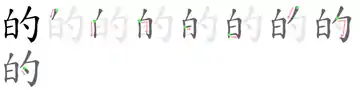 | |||
| Stroke order | |||
|---|---|---|---|
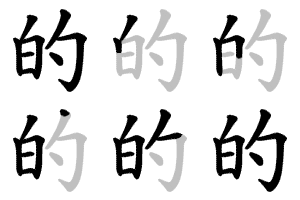 | |||
Han character
的 (Kangxi radical 106, 白+3, 8 strokes, cangjie input 竹日心戈 (HAPI), four-corner 27620, composition ⿰白勺)
References
- Kangxi Dictionary: page 786, character 7
- Dai Kanwa Jiten: character 22692
- Dae Jaweon: page 1201, character 9
- Hanyu Da Zidian (first edition): volume 4, page 2644, character 16
- Unihan data for U+7684

Chinese
Glyph origin
| Historical forms of the character 的 | |
|---|---|
| Shuowen Jiezi (compiled in Han) | Liushutong (compiled in Ming) |
| Small seal script | Transcribed ancient scripts |
 |
 |
| Old Chinese | |
|---|---|
| 豹 | *preːwɢs |
| 趵 | *preːwɢs, *preːwɢ |
| 尥 | *breːw, *b·reːwɢs |
| 箹 | *ʔreːwɢs, *ʔreːwɢ |
| 杓 | *plew, *pʰlew, *bljewɢ, *pleːwɢ |
| 約 | *ʔlewɢs, *ʔlewɢ |
| 扚 | *pleːwʔ, *pleːwɢ |
| 釣 | *pleːwɢs |
| 瘹 | *teːwɢs |
| 芍 | *ɡleːwʔ, *spʰlewɢ, *pl'ewɢ, *bljewɢ, *pleːwɢ |
| 酌 | *pljewɢ |
| 灼 | *pljewɢ |
| 勺 | *pljewɢ, *bljewɢ |
| 彴 | *pljewɢ |
| 犳 | *pljewɢ |
| 妁 | *pljewɢ, *bljewɢ |
| 汋 | *bljewɢ, *sbreːwɢ |
| 仢 | *bljewɢ |
| 葯 | *qlewɢ, *qreːwɢ |
| 礿 | *lewɢ |
| 肑 | *preːwɢ, *pleːwɢ |
| 瓝 | *breːwɢ |
| 的 | *pleːwɢ |
| 靮 | *pleːwɢ |
| 馰 | *pleːwɢ |
| 玓 | *pleːwɢ |
| 魡 | *pleːwɢ |
Phono-semantic compound (形聲/形声, OC *pleːwɢ) : semantic 白 (“white”) + phonetic 勺 (OC *pljewɢ, *bljewɢ).
The original form was 旳 with the meaning of “bright”, hence the initial 日 semantic. See Etymology 1 below.
Etymology 1
| simp. and trad. |
的 | |
|---|---|---|
| alternative forms | ||
“Bright”. Compare 灼.
The sense of “mark in a target” may be secondary. Alternatively, it may be an independent root on its own. Compare Tibetan རྟགས (rtags, “mark, sign”).
Pronunciation
Definitions
的
- bright; clear; distinct
- alt. forms: 旳 ancient
- white; white-coloured
- white forehead of horses; white-foreheaded horse
- centre of target for archery
- alt. forms: 㢩 (dì)
- aim; standard; criterion
- target; objective
- 目的 ― mùdì ― purpose, aim, goal
- (historical) red dot worn on the centre of the forehead by women; bindi
- alt. forms: 旳 ancient
- Alternative form of 菂 (dì, “lotus seed”)
- true; real (Can we add an example for this sense?)
- really; truly; certainly
Compounds
- 一言中的
- 一語中的/一语中的 (yīyǔzhòngdì)
- 一語破的/一语破的 (yīyǔpòdì)
- 不的
- 中的 (zhòngdì)
- 堋的
- 忽的
- 懸的過高/悬的过高
- 有的放矢 (yǒudìfàngshǐ)
- 標的/标的 (biāodì)
- 標的物/标的物
- 準的/准的
- 漫無目的/漫无目的
- 無的放矢/无的放矢 (wúdìfàngshǐ)
- 的一確二/的一确二
- 的些
- 的信
- 的實/的实
- 的是
- 的歷/的历
- 的決/的决
- 的溜撲碌/的溜扑碌
- 的溜溜
- 的溜骨碌
- 的然
- 的留的立
- 的當/的当 (dídàng)
- 的的
- 的皪/的𰤕 (dìlì)
- 的盧/的卢
- 的知
- 的確/的确 (díquè)
- 的篤戲/的笃戏
- 的耗
- 的見/的见
- 目的 (mùdì)
- 目的地 (mùdìdì)
- 目的物 (mùdìwù)
- 眾矢之的/众矢之的 (zhòngshǐzhīdì)
- 破的
- 端的 (duāndì)
- 質的/质的 (zhìdì)
- 轟的/轰的
- 驀的/蓦的
- 鵠的/鹄的
Etymology 2
| simp. and trad. |
的 | |
|---|---|---|
| alternative forms | ||
First attested in the Tang Dynasty as 底. This glyph was borrowed later to represent de, the possessive marker in Northern Chinese, superseding the earlier 底 as a way to write this word.
There are three main competing proposals for its etymology:
- Derived from the lenition of the literary genitive marker 之 (OC *tjɯ) (Demiéville, 1950; Wang, 1958; Mei, 1988), which is still preserved in many phrases, and in the written form to some extent, especially in Taiwan.
- Derived from the lenition of 者 (OC *tjaːʔ, “nominalizer > medieval possessive”) (Lü, 1943; Yuan et al., 1996; Yang, R., 2016). Note that 的 is also a nominalizer like 者 in Classical Chinese.
- Derived from the lenition of Middle Chinese demonstrative 底 (MC tejX) (Shi, 2015, 2023).
If from either of the first two etymons, possibly cognate with the demonstrative 這/这 (zhè).
Possibly cognate with the particle sense of 地, which is homophonic but now has its specialised usage.
In contemporary times it is also used to represent unrelated equivalent particles in other Chinese varieties. Examples include Min Nan ê (个, 亓, 兮 or ㄟ, possibly derived from 其[1]), Eastern Min gì (其), Wu geq (個) and Cantonese ge3 (嘅 < 個).
Pronunciation
Definitions
的 (chiefly Mandarin, Jin, Xiang)
- Used after an attribute. Indicates that the previous word has possession of the next one. It functions like ’s in English (or like the word “of” but with the position of possessor and possessee switched). ’s; of
- Used to link a noun, an adjective or a phrase to a noun to describe it. that; who
- 紅色的氣球/红色的气球 ― hóngsè de qìqiú ― a red balloon
- 鐵的紀律/铁的纪律 ― tiě de jìlǜ ― iron discipline
- 去北京的火車/去北京的火车 ― qù Běijīng de huǒchē ― The train that goes to Beijing
- 昨天來的人/昨天来的人 ― zuótiān lái de rén ― The people who came yesterday
- 的話/的话 ― dehuà ― particle put at the end of a conditional clause
- alt. forms: 底 obsolete
- Used to form a noun phrase or nominal expression.
- Used after a verb or between a verb and its object to stress an element of the sentence. It can be used with 是 (shì) to surround the stressed element.
- Used at the end of a declarative sentence for emphasis.
- Used to express the idea of “of that kind”.
- (informal) Used to express multiplication or addition. and, by
Usage notes
- (possession particle): 的 is usually omitted when referring to a close relationship (family, close friends) or to an institutional or organizational relationship (school, work).
- (particle linking a noun and an adjective): 的 is omitted if it is used with a single-syllable adjective.
- It must be used when the adjective has more than one syllable or if the adjective is qualified by an adverb.
- 的 is also omitted when the association is frequent
- When necessary, the character 的 is referred to as 白勺的 (bái sháo de) to differentiate it from the homophones 得 (雙人得/双人得 (shuāng rén dé)) and 地 (土也地 (tǔ yě dì)). In addition, these three particles should not to be confused with the others. Compare these three phrases:
- In Mandarin slang usage, 的 can be pronounced as di, and substituted by the character 滴 (dī) in writing:
Synonyms
Compounds
- 下死的
- 下的
- 不到的
- 不拉屎的
- 不是玩的
- 不是頑的/不是顽的
- 不由的
- 不知怎的
- 不道的
- 么二三的
- 乍猛的
- 乖乖兒的/乖乖儿的
- 乖乖的
- 九吊六的
- 乾乾兒的/干干儿的
- 他媽的/他妈的 (tāmāde)
- 他家的事
- 你家的
- 似的 (shìde)
- 來回的話/来回的话
- 來的/来的 (láide)
- 保家的
- 俺家的
- 倒水的
- 倒頭的/倒头的
- 偏不的
- 偷偷的
- 做公的
- 做的個/做的个
- 兀的 (wùde)
- 兀的不
- 兜的
- 內掌櫃的/内掌柜的
- 出的
- 到不的
- 動秤兒的/动秤儿的
- 包頭的/包头的
- 匾匾的
- 可兀的
- 可可的
- 吃人兒的/吃人儿的
- 各有各的
- 哪兒的話/哪儿的话
- 唱的
- 噗的一聲/噗的一声
- 囚攮的
- 地下的
- 報盤兒的/报盘儿的
- 夠瞧的/够瞧的
- 大擋手的/大挡手的
- 天殺的/天杀的
- 女招的
- 好樣兒的/好样儿的 (hǎoyàngrde)
- 委的
- 娘的
- 家的
- 家裡的/家里的 (jiālǐde)
- 小的 (xiǎode)
- 就就的
- 屋裡的/屋里的 (wūlǐde)
- 巴巴兒的/巴巴儿的
- 帶條的/带条的
- 平不答的
- 幹的停當/干的停当
- 忙不迭的
- 怪不的
- 怪俊的
- 怎的
- 怪膩的/怪腻的
- 怎麼搞的/怎么搞的
- 恁的
- 悄悄的
- 懶懶的/懒懒的
- 我的天 (wǒ de tiān)
- 手長的/手长的
- 打下手的
- 打旗兒的/打旗儿的
- 打眼的
- 扒糞的/扒粪的
- 打談的/打谈的
- 打錢兒的/打钱儿的
- 打鐵的/打铁的 (dǎtiěde)
- 打雜的/打杂的
- 打頭的/打头的
- 扛叉的
- 扛肩兒的/扛肩儿的
- 把梢的
- 拍花的
- 挨刀的
- 掌勺兒的/掌勺儿的
- 掌案的
- 掌灶的
- 搖鈴兒的/摇铃儿的
- 撈毛的/捞毛的
- 撲的/扑的
- 撐的慌/撑的慌
- 收小的
- 放囊的
- 散散的
- 旁的
- 是的 (shìde)
- 有你的 (yǒu nǐ de)
- 有機的/有机的
- 有的 (yǒude)
- 有的是 (yǒudeshì)
- 有的沒的/有的没的 (yǒudeméide)
- 有鬼似的
- 朗格的
- 木頭似的/木头似的
- 札的
- 格老子的
- 桿兒上的/杆儿上的
- 毛毛的
- 水淥淥的/水渌渌的
- 沒命似的/没命似的
- 沒天日的/没天日的
- 沒天理的/没天理的
- 沒得說的/没得说的
- 沒忽的/没忽的
- 沒揣的/没揣的
- 沒斷的/没断的
- 沒時運的/没时运的
- 沒有的話/没有的话
- 沒有說的/没有说的
- 沒的/没的
- 沒的功夫/没的功夫
- 沒的家/没的家
- 沒眼的/没眼的
- 沒短的/没短的
- 沒足厭的/没足厌的
- 沒造化的/没造化的
- 活似真的
- 溜的
- 溜門子的/溜门子的
- 滾車轍的/滚车辙的
- 澀剌剌的/涩剌剌的
- 灶上的
- 燥不搭的
- 爛爛兒的/烂烂儿的
- 犯的上
- 狠狠的
- 猛的
- 猴子似的
- 獃獃的
- 玩不得的
- 玩陰的/玩阴的 (wán yīnde)
- 甚的
- 當家的/当家的 (dāngjiāde)
- 當差的/当差的
- 當直的/当直的
- 痛痛的
- 登登登的 (dēngdēngdēngde)
- 皮皮的
- 看座兒的/看座儿的
- 省油的燈/省油的灯 (shěngyóu de dēng)
- 看香頭的/看香头的
- 真格的
- 真的
- 瞧香的
- 磕過頭的/磕过头的
- 磣的慌/碜的慌
- 突突的
- 穿袍兒的/穿袍儿的
- 箭也似的
- 緊溜兒的/紧溜儿的
- 老的少的
- 聽事的/听事的
- 肏你媽的屄/肏你妈的屄
- 肯分的
- 膩的慌/腻的慌
- 花的花
- 茅廁的磚/茅厕的砖
- 落不的
- 蠶兒似的/蚕儿似的
- 西風的話/西风的话
- 要不的
- 要飯的/要饭的 (yàofànde)
- 親愛的/亲爱的 (qīn'ài de)
- 訕不搭的/讪不搭的
- 說真格的/说真格的
- 說話的/说话的
- 賣腰的/卖腰的
- 賣膏藥的/卖膏药的
- 赤緊的/赤紧的
- 走堂的
- 走報的/走报的
- 越越的
- 趕腳的/赶脚的
- 趕車的/赶车的
- 跑堂兒的/跑堂儿的
- 這的/这的 (zhède)
- 這的是/这的是
- 過路的/过路的
- 遠遠的/远远的
- 重重的
- 鋪的/铺的
- 門上的/门上的
- 降降的
- 陪床的
- 靜靜的/静静的
- 領家的/领家的
- 顛不剌的/颠不剌的
- 顧不的/顾不的
- 風快的刀/风快的刀
- 飛也似的/飞也似的
- 鬧的慌/闹的慌
- 鼓鼓的
Etymology 3
Phonetic syllable used to transcribe certain syllables in foreign loanwords.
Pronunciation
Definitions
的
References
- Douglas, Carstairs (1873) “dê”, in Chinese-English Dictionary of the Vernacular or Spoken Language of Amoy, [With 1923 Supplement after the Appendix by Thomas Barclay, Shanghai: Commercial Press, Ltd.] edition (overall work in Hokkien and English), London: Trübner & Co., page 99; New Edition (With Chinese Character Glosses) edition, London: Presbyterian Church of England, 1899, page 99
Further reading
- “的”, in 漢語多功能字庫 (Multi-function Chinese Character Database), 香港中文大學 (the Chinese University of Hong Kong), 2014–
- “Entry #4386”, in 臺灣閩南語常用詞辭典 [Dictionary of Frequently-Used Taiwan Minnan] (overall work in Mandarin and Hokkien), Ministry of Education, R.O.C., 2023.
Japanese
Readings
Etymology 1
| Kanji in this term |
|---|
| 的 |
| てき Grade: 4 |
| on’yomi |
Repurposed from the target meaning, probably from Ming- and Qing-era Mandarin use of this character as a possessive or adjectivizing particle,[1] or even earlier in the Song and Yuan eras.[2][3] Probably also influenced in the Meiji period by the English adjective ending -tic (as in spastic, plastic, or characteristic), ultimately deriving from Ancient Greek -τικός (-tikós), used to form adjectives from verbs.[1][2][4][3][5]
Pronunciation
- IPA(key): [te̞kʲi]
Suffix
的 • (-teki) -na (adnominal 的な (-teki na), adverbial 的に (-teki ni))
Etymology 2
| Kanji in this term |
|---|
| 的 |
| てき Grade: 4 |
| on’yomi |
From Middle Chinese 的 (tek, literally “mark in a target”, also meaning “bright”).
Derived terms
- 的確 (tekikaku): accurate, apt, exact
- 的言 (tekigen): bon mot, the right word or turn of phrase for the occasion
- 的殺 (tekisatsu): in 九星 (kyūsei, an astrology system from ancient China, literally “nine stars”), the opposite direction from the favored direction for one's age
- 的実 (tekijitsu): certain, definite, actual, real
- 的証 (tekishō): accurate evidence
- 的切 (tekisetsu): fitting, appropriate
- 的然 (tekizen): clear, distinct
- 的中 (tekichū): a hit; to be on target
- 的屋 (tekiya), 的野 (tekiya): a hawker, a peddler of cheap and gaudy wares
- 的例 (tekirei): an appropriate or fitting example
- 的皪 (tekireki): vividly and brightly shining
- 金的 (kinteki): targeting the testicles
- 射的 (shateki): target practice
Alternative forms
Pronoun
的 • (teki)
- (archaic, chiefly Kansai, somewhat derogatory) he, she, it, that one
- (archaic, chiefly Kansai, somewhat derogatory) you
Alternative forms
Etymology 3
| Kanji in this term |
|---|
| 的 |
| まと Grade: 4 |
| kun’yomi |
From Old Japanese. Possibly originally a compound of 目 (ma, “eye”) + 所 (to, “place”). Appears to be cognate with homophone 円 (mato, “round”, adjective, obsolete in modern Japanese).[1]
Noun
的 • (mato)
Etymology 4
| Kanji in this term |
|---|
| 的 |
| いくは Grade: 4 |
| kun’yomi |
From Old Japanese.
- May be derived from rare archaic verb いくう (ikuu, “to shoot [an arrow] at something”, archaic spelling いくふ).[1]
- The ha element would presumably derive from the verb ending ふ (fu), which has a 未然形 (mizenkei, “incomplete form”) of ha. However, this is unlikely, as verb forms ending in -fu underwent the regular f- and h- > w- shift, which would result in a reading of *ikuwa rather than the correct ikuha.
- The above phonetic discrepancy suggests that ikuha may instead be a compound of iku + ha. The iku element probably derives from root component いく (iku) meaning “shooting [arrows]”, as found in いくう (ikuu) and also in 戦 (ikusa, “a battle”, original meaning “the shooting of arrows”).[1] The iku element might be related to verb 射る (iru, “to shoot an arrow”), or obsolete verb 生く (iku, “to live; to make something live, to make something go”), likely cognate with 行く (iku, “to go”).
- The ha element is uncertain. It might be 端 (ha, “the edge or end of something”), from the sense “the end [of the arrow's flight]”.
Pronunciation
- IPA(key): [ikɯ̟ᵝha̠]
Etymology 5
| Kanji in this term |
|---|
| 的 |
| ゆくは Grade: 4 |
| kun’yomi |
From Old Japanese. Alteration of ikuha above. Compare the iku <> yuku alteration in the verb 行く (iku, yuku, “to go”).
Pronunciation
- IPA(key): [jɯ̟ᵝkɯ̟ᵝha̠]
References
- Shōgaku Tosho (1988) 国語大辞典(新装版) [Unabridged Dictionary of Japanese (Revised Edition)] (in Japanese), Tōkyō: Shogakukan, →ISBN
- Matsumura, Akira, editor (2006), 大辞林 [Daijirin] (in Japanese), Third edition, Tōkyō: Sanseidō, →ISBN
- Kindaichi, Kyōsuke et al., editors (1997), 新明解国語辞典 [Shin Meikai Kokugo Jiten] (in Japanese), Fifth edition, Tōkyō: Sanseidō, →ISBN
- Matsumura, Akira (1995) 大辞泉 [Daijisen] (in Japanese), First edition, Tōkyō: Shogakukan, →ISBN
- Masuda, Wataru (2000) Joshua A. Fogel, transl., Japan and China: Mutual Representations in the Modern Era, Routledge, →ISBN