丕
See also: 조
| ||||||||
Translingual
| Stroke order | |||
 | |||
Han character
丕 (Kangxi radical 1, 一+4, 5 strokes, cangjie input 一火一 (MFM), four-corner 10109, composition ⿱不一)
Derived characters
Further reading
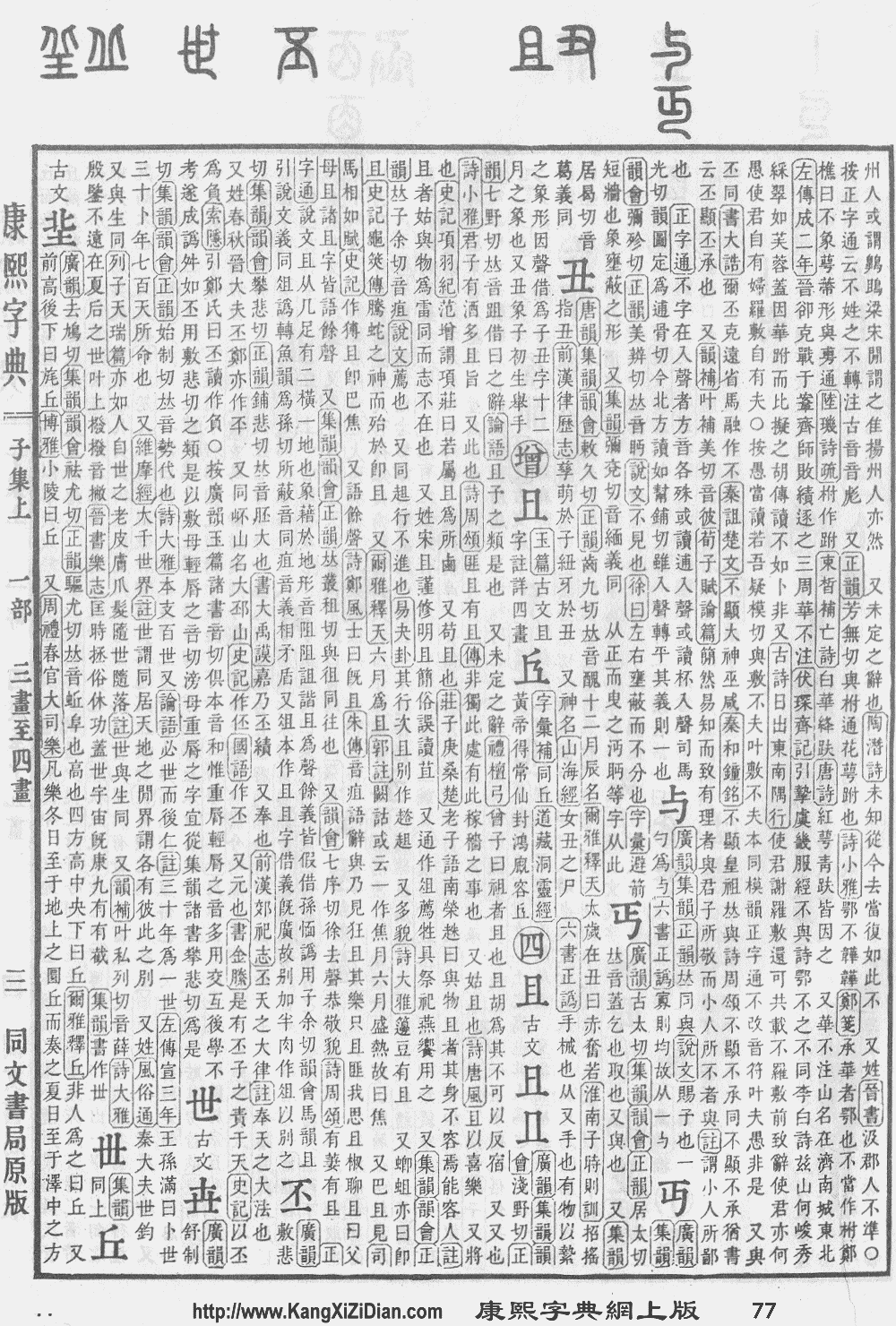
- Kangxi Dictionary: page 77, character 10
- Dai Kanwa Jiten: character 30
- Dae Jaweon: page 155, character 1
- Hanyu Da Zidian (first edition): volume 1, page 15, character 1
- Unihan data for U+4E15
Chinese
| trad. | 丕 | |
|---|---|---|
| simp. # | 丕 | |
| alternative forms | 㔻 㶨 𠦓 ⿱不于 | |
Glyph origin
| Historical forms of the character 丕 | ||||||
|---|---|---|---|---|---|---|
| ||||||
|
References: Mostly from Richard Sears' Chinese Etymology site (authorisation),
|


Characters in the same phonetic series (不) (Zhengzhang, 2003)
| Old Chinese | |
|---|---|
| 肧 | *pʰlɯː, *pʰɯ, *pʰlɯː |
| 俖 | *pʰɯːʔ |
| 娝 | *prɯʔ |
| 痞 | *prɯʔ, *brɯʔ, *pɯʔ |
| 丕 | *pʰrɯ |
| 伾 | *pʰrɯ |
| 秠 | *pʰrɯ, *pʰrɯʔ, *pʰɯ, *pʰɯʔ |
| 駓 | *pʰrɯ |
| 怌 | *pʰrɯ |
| 豾 | *pʰrɯ |
| 髬 | *pʰrɯ |
| 魾 | *pʰrɯ, *brɯ |
| 鉟 | *pʰrɯ, *brɯ |
| 嚭 | *pʰrɯʔ |
| 邳 | *brɯ |
| 岯 | *brɯ |
| 否 | *brɯʔ, *pɯʔ |
| 抔 | *bɯ, *pʰlɯː |
| 不 | *pɯ, *pɯʔ, *pɯ' |
| 紑 | *pɯ, *pʰɯ, *pʰɯʔ |
| 鴀 | *pɯ, *pɯʔ |
| 衃 | *pʰɯ, *pʰlɯː |
| 罘 | *bɯ |
| 芣 | *bɯ |
| 杯 | *plɯː |
| 盃 | *plɯː |
| 桮 | *pɯː |
| 坯 | *pʰɯː |
| 胚 | *pʰɯː |
Phono-semantic compound (形聲/形声, OC *pʰrɯ) : phonetic 不 (OC *pɯ, *pɯʔ, *pɯ') + semantic 一
Pronunciation 1
Pronunciation 2
Japanese
Korean
Compounds
Compounds
- 비자 (丕子, bija)
Vietnamese
Han character
丕: Hán Việt readings: phi (
丕: Nôm readings: vầy[1][2][3][6][4][5][7], vậy[1][2][3][4][5][7], phỉ[1][2][3][6], bậy[3][6][5], phơi[1], chăng[3], chẳng[3], phi[6]
References
- Nguyễn (2014).
- Nguyễn et al. (2009).
- Trần (2004).
- Bonet (1899).
- Génibrel (1898).
- Hồ (1976).
- Taberd & Pigneau de Béhaine (1838).
This article is issued from Wiktionary. The text is licensed under Creative Commons - Attribution - Sharealike. Additional terms may apply for the media files.