奧
See also: 奥
| ||||||||
Translingual
| Japanese | 奥 |
|---|---|
| Simplified | 奥 |
| Traditional | 奧 |
Han character
奧 (Kangxi radical 37, 大+10, 13 strokes, cangjie input 竹月大 (HBK), four-corner 27430, composition ⿱⿵⿱丿冂釆大)
Further reading
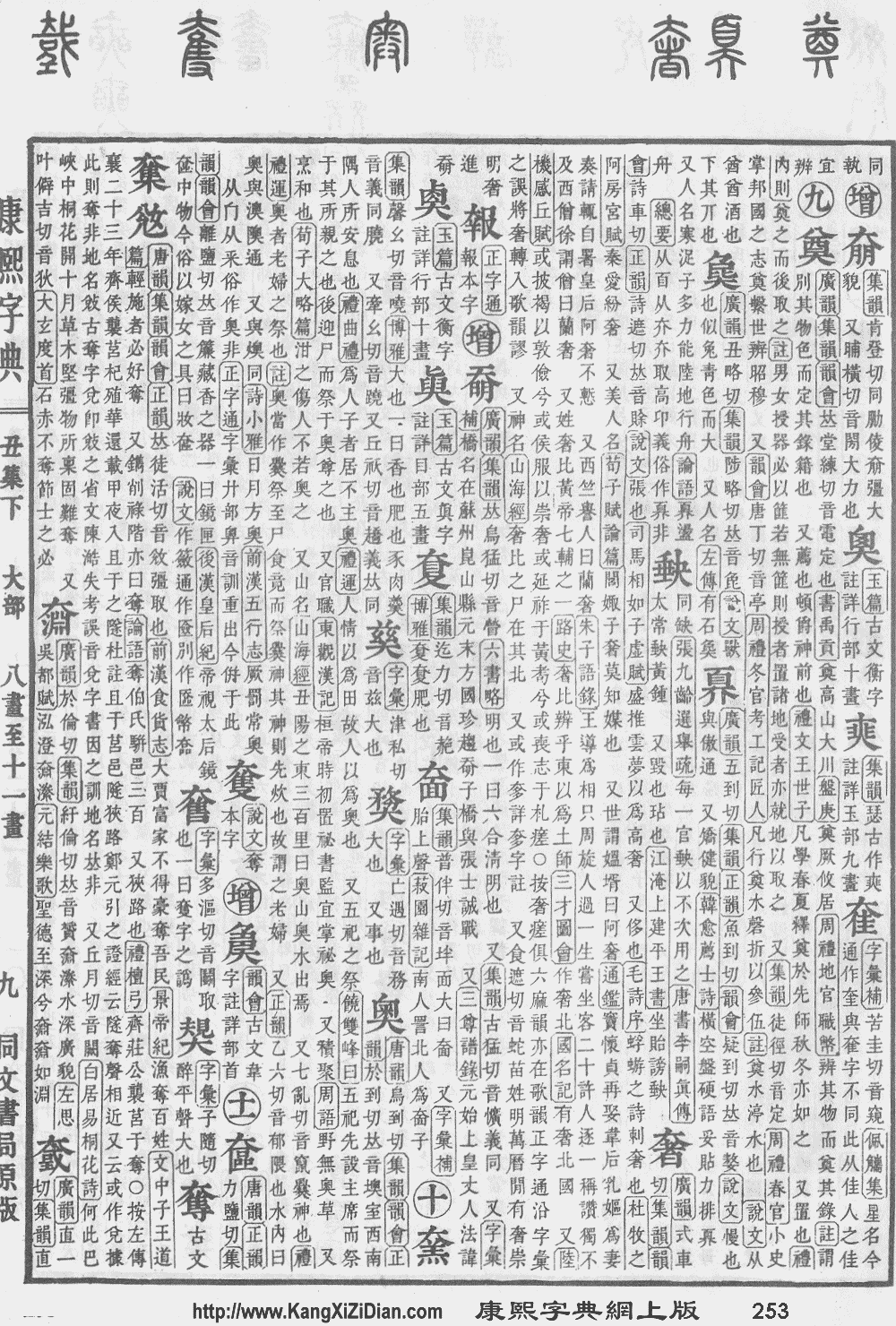
- Kangxi Dictionary: page 253, character 19
- Dai Kanwa Jiten: character 5985
- Dae Jaweon: page 515, character 14
- Hanyu Da Zidian (first edition): not present, would follow volume 1, page 547, character 3
- Unihan data for U+5967
Chinese
| trad. | 奧 | |
|---|---|---|
| simp. | 奥 | |
| 2nd round simp. | 𫤭 | |
Glyph origin
Characters in the same phonetic series (奧) (Zhengzhang, 2003)
Shuowen interprets it as a Phono-semantic compound (形聲/形声, OC *quːɡs) : semantic 宀 (“roof”) + phonetic 𢍏 (), but is not widely accepted.
Pronunciation
Definitions
奧
- † southwest corner of a room
- 奧窔之間,簟席之上,斂然聖王之文章具焉,佛然平世之俗起焉。 [Classical Chinese, trad.]
- From: Xunzi, c. 3rd century BCE
- Ào yào zhī jiān, diàn xí zhī shàng, liǎn rán shèng wáng zhī wén zhāng jù yān, fó rán píng shì zhī sú qǐ yān. [Pinyin]
- ...then by merely facing toward the south wall of his room and sitting upon his mat, the full array of forms and outward signs of the sage king would gather about him, and because of him the customs of a tranquil age would develop abundantly. (translation by John Knoblock)
奥窔之间,簟席之上,敛然圣王之文章具焉,佛然平世之俗起焉。 [Classical Chinese, simp.]
- † depths of a room
- † secluded; deep and hidden away
- † profound; esoteric; obscure
- Short for 奧林匹克/奥林匹克 (àolínpǐkè, “Olympics”).
- Short for 奧地利/奥地利 (Àodìlì, “Austria”).
- 中奧合作符合兩國和兩國人民共同利益。 [MSC, trad.]
- From: 2018, Joint Statement on the Establishment of Friendly Strategic Partnership between the People's Republic of China and the Republic of Austria
- Zhōng Ào hézuò fúhé liǎng guó hé liǎng guó rénmín gòngtóng lìyì. [Pinyin]
- The Sino-Austrian cooperation is in the interest of the both countries and their people.
中奥合作符合两国和两国人民共同利益。 [MSC, simp.]
Compounds
- 一窺堂奧/一窥堂奥
- 典奧/典奥
- 冥奧/冥奥
- 博奧/博奥
- 古奧/古奥
- 國際奧會/国际奥会
- 堂奧/堂奥
- 壼奧/壸奥
- 奇奧/奇奥
- 奧主/奥主
- 奧依亞依拉克/奥依亚依拉克 (Àoyīyà Yīlākè)
- 奧依托格拉克/奥依托格拉克 (Àoyītuō Gélākè)
- 奧克蘭/奥克兰 (Àokèlán)
- 奧勒岡州/奥勒冈州
- 奧匈帝國/奥匈帝国 (Ào-Xiōng Dìguó)
- 奧區/奥区
- 奧博/奥博 (àobó)
- 奧古斯都/奥古斯都 (Àogǔsīdū)
- 奧地利/奥地利 (Àodìlì)
- 奧妙/奥妙 (àomiào)
- 奧得河/奥得河 (Àodé Hé)
- 奧德賽/奥德赛 (Àodésài)
- 奧援/奥援 (àoyuán)
- 奧斯陸/奥斯陆 (Àosīlù)
- 奧旨/奥旨 (àozhǐ)
- 奧會/奥会 (Àohuì)
- 奧會模式/奥会模式
- 奧林匹克/奥林匹克 (àolínpǐkè)
- 奧林比亞/奥林比亚
- 奧爾良/奥尔良 (Ào'ěrliáng)
- 奧特貝希/奥特贝希 (Àotèbèixī)
- 奧略/奥略
- 奧登塞/奥登塞
- 奧祕/奥秘 (àomì)
- 奧窔/奥窔 (àoyào)
- 奧維爾/奥维尔
- 奧義/奥义 (àoyì)
- 奧草/奥草
- 奧衍/奥衍
- 奧賽羅/奥赛罗
- 奧賾/奥赜
- 奧跡/奥迹 (àojì)
- 奧運/奥运 (Àoyùn)
- 奧運會/奥运会 (Àoyùnhuì)
- 奧遠/奥远
- 奧陶紀/奥陶纪 (Àotáo Jì)
- 奧龍/奥龙
- 媚奧/媚奥
- 希力奧斯/希力奥斯
- 弘奧/弘奥
- 愛奧尼亞/爱奥尼亚
- 戴奧辛/戴奥辛 (dài'àoxīn)
- 探奧索隱/探奥索隐
- 新奧爾良/新奥尔良 (Xīn-Ào'ěrliáng)
- 普奧同盟/普奥同盟
- 普奧戰爭/普奥战争
- 樞奧/枢奥
- 深入堂奧/深入堂奥
- 深奧/深奥 (shēn'ào)
- 淇奧/淇奥
- 潭奧/潭奥
- 玄奧/玄奥
- 研精覃奧/研精覃奥
- 穾奧/穾奥
- 精奧/精奥
- 貝奧武夫/贝奥武夫 (Bèi'àowǔfū)
- 閫奧/阃奥
Pronunciation
Compounds
- 奧渫/奥渫
Korean
Etymology 1
From Middle Chinese 奧 (MC 'awH).
Compounds
Etymology 2
From Middle Chinese 奧 / 燠 (MC 'juwk).
Hanja
Tày
Vietnamese
Han character
奧: Hán Việt readings: áo
奧: Nôm readings: áo
- This term needs a translation to English. Please help out and add a translation, then remove the text
{{rfdef}}.
References
This article is issued from Wiktionary. The text is licensed under Creative Commons - Attribution - Sharealike. Additional terms may apply for the media files.