佑
| ||||||||
Translingual
| Stroke order | |||
 | |||
Han character
佑 (Kangxi radical 9, 人+5, 7 strokes, cangjie input 人大口 (OKR) or 難人大口 (XOKR), four-corner 24260, composition ⿰亻右)
Derived characters
- 㐛, 𫈈, 𫳌, 𭹐
References
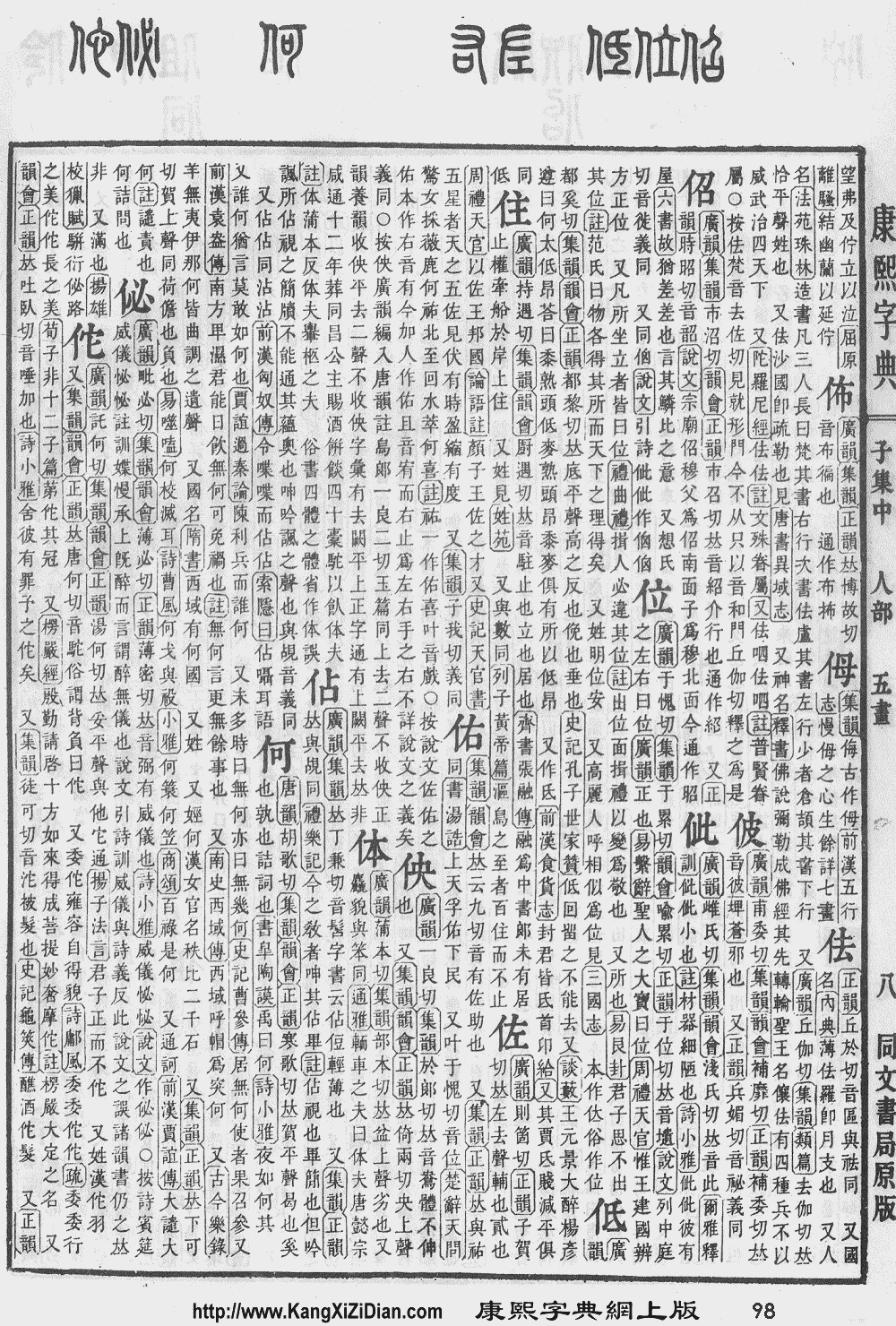
- Kangxi Dictionary: page 98, character 11
- Dai Kanwa Jiten: character 507
- Dae Jaweon: page 208, character 1
- Hanyu Da Zidian (first edition): volume 1, page 131, character 2
- Unihan data for U+4F51
Chinese
| simp. and trad. |
佑 | |
|---|---|---|
| alternative forms | 右 祐 | |
Glyph origin
Phono-semantic compound (形聲/形声, OC *ɢʷɯs) : semantic 亻 + phonetic 右 (OC *ɢʷɯʔ, *ɢʷɯs).
Etymology
Exoactive derivation of 右 (OC *ɢʷɯʔ, *ɢʷɯs, “right”).
“Right” and “left” are metaphors for “to assist” via the following semantic development: “left or right” > “to be on the left or right of a person” > “to assist, to help, to protect”.
Compare the derivation of 佐 (OC *ʔsaːls, “to assist; to help”) from 左 (OC *ʔsaːlʔ, *ʔsaːls, “left”).
Pronunciation
Definitions
佑
Compounds
References
- “佑”, in 漢語多功能字庫 (Multi-function Chinese Character Database), 香港中文大學 (the Chinese University of Hong Kong), 2014–
Japanese
Korean
Etymology
(This etymology is missing or incomplete. Please add to it, or discuss it at the Etymology scriptorium. Particularly: “Middle Korean readings, if any”)
Pronunciation
- (SK Standard/Seoul) IPA(key): [u]
- Phonetic hangul: [우]
Hanja
Wikisource 佑 • (u) (hangeul 우, revised u, McCune–Reischauer u)
- This term needs a translation to English. Please help out and add a translation, then remove the text
{{rfdef}}.