賄
See also: 贿
| ||||||||
Translingual
| Stroke order | |||
|---|---|---|---|
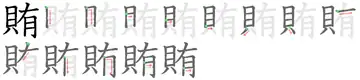 | |||
| Stroke order (Japan) | |||
|---|---|---|---|
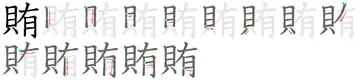 | |||
Han character
賄 (Kangxi radical 154, 貝+6, 13 strokes, cangjie input 月金大月 (BCKB), four-corner 64827, composition ⿰貝有)
References
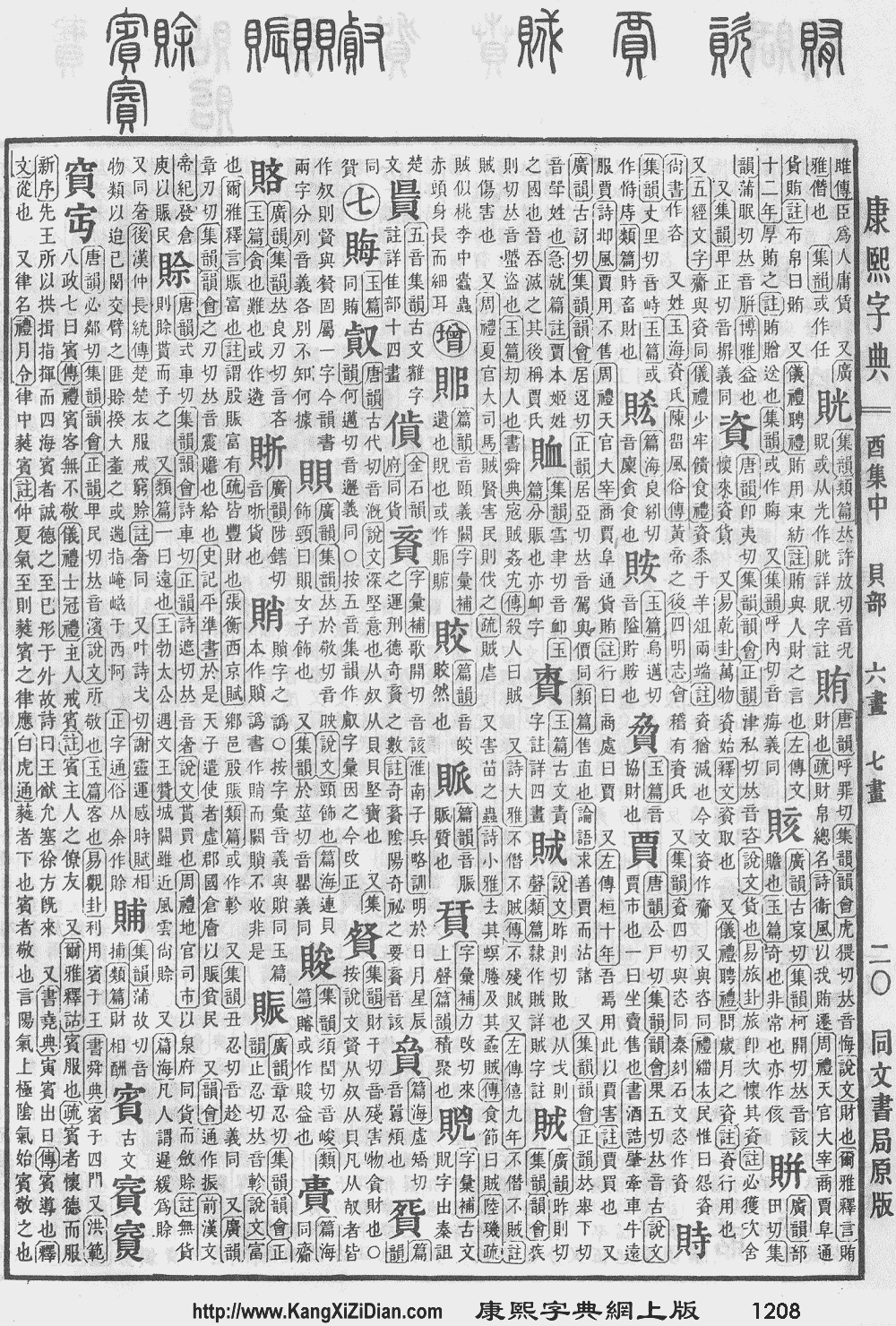
- Kangxi Dictionary: page 1208, character 2
- Dai Kanwa Jiten: character 36745
- Dae Jaweon: page 1671, character 14
- Hanyu Da Zidian (first edition): volume 6, page 3638, character 3
- Unihan data for U+8CC4
Chinese
| trad. | 賄 | |
|---|---|---|
| simp. | 贿 | |
Glyph origin
Characters in the same phonetic series (又) (Zhengzhang, 2003)
Phono-semantic compound (形聲/形声, OC *qʰʷɯːʔ) : semantic 貝 (“cowry; money”) + phonetic 有 (OC *ɢʷɯʔ).
Etymology
(This etymology is missing or incomplete. Please add to it, or discuss it at the Etymology scriptorium.)
Pronunciation
Definitions
賄
Compounds
- 冒賄/冒贿
- 受賄/受贿 (shòuhuì)
- 器賄/器贿
- 孥賄/孥贿
- 寶賄/宝贿
- 居賄/居贿
- 徵賄/征贿
- 招權納賄/招权纳贿
- 攬權納賄/揽权纳贿
- 收賄/收贿
- 政以賄成/政以贿成
- 方賄/方贿
- 珍賄/珍贿
- 私賄/私贿
- 積賄/积贿
- 索賄/索贿 (suǒhuì)
- 納賄/纳贿
- 臧賄/臧贿
- 苞苴賄賂/苞苴贿赂
- 行賄/行贿 (xínghuì)
- 財賄/财贿
- 貪財好賄/贪财好贿
- 貪賄/贪贿
- 責賄/责贿
- 貨賄/货贿
- 貨賄公行/货贿公行
- 貪賄無藝/贪贿无艺
- 貲賄/赀贿
- 買賄/买贿
- 賄串/贿串
- 賄交/贿交
- 賄免/贿免
- 賄和/贿和
- 賄單/贿单
- 賄囑/贿嘱
- 賄幣/贿币
- 賄庇/贿庇
- 賄政/贿政
- 賄款/贿款
- 賄求/贿求
- 賄漏/贿漏
- 賄營/贿营
- 賄縱/贿纵
- 賄脫/贿脱
- 賄託/贿托
- 賄謝/贿谢
- 賄財/贿财
- 賄貨/贿货
- 賄貨公行/贿货公行
- 賄買/贿买
- 資賄/资贿
- 賂賄/赂贿
- 賄賂/贿赂 (huìlù)
- 賄賂公行/贿赂公行
- 賄賂并行/贿赂并行
- 賄賕/贿赇
- 賄賣/贿卖
- 賄贈/贿赠
- 賄通/贿通
- 賄遺/贿遗
- 賄選/贿选 (huìxuǎn)
- 賄門/贿门
- 賄雇
- 賕賄/赇贿
- 贈賄/赠贿
- 贓賄/赃贿
- 贓賄狼籍/赃贿狼籍
- 贓賄狼藉/赃贿狼借
- 通賄/通贿
- 遷賄/迁贿
- 重賄/重贿
- 黷賄/黩贿
References
- “賄”, in 漢語多功能字庫 (Multi-function Chinese Character Database), 香港中文大學 (the Chinese University of Hong Kong), 2014–
Japanese
Korean
Etymology
From Middle Chinese 賄 (MC xwojX). Recorded as Middle Korean 회〯 (hwǒy) (Yale: hwoy) in Hunmong Jahoe (訓蒙字會 / 훈몽자회), 1527.
Vietnamese
This article is issued from Wiktionary. The text is licensed under Creative Commons - Attribution - Sharealike. Additional terms may apply for the media files.