妨
| ||||||||
Translingual
| Stroke order | |||
|---|---|---|---|
 | |||
Han character
妨 (Kangxi radical 38, 女+4, 7 strokes, cangjie input 女卜竹尸 (VYHS), four-corner 40427, composition ⿰女方)
Derived characters
- 𬜹
References
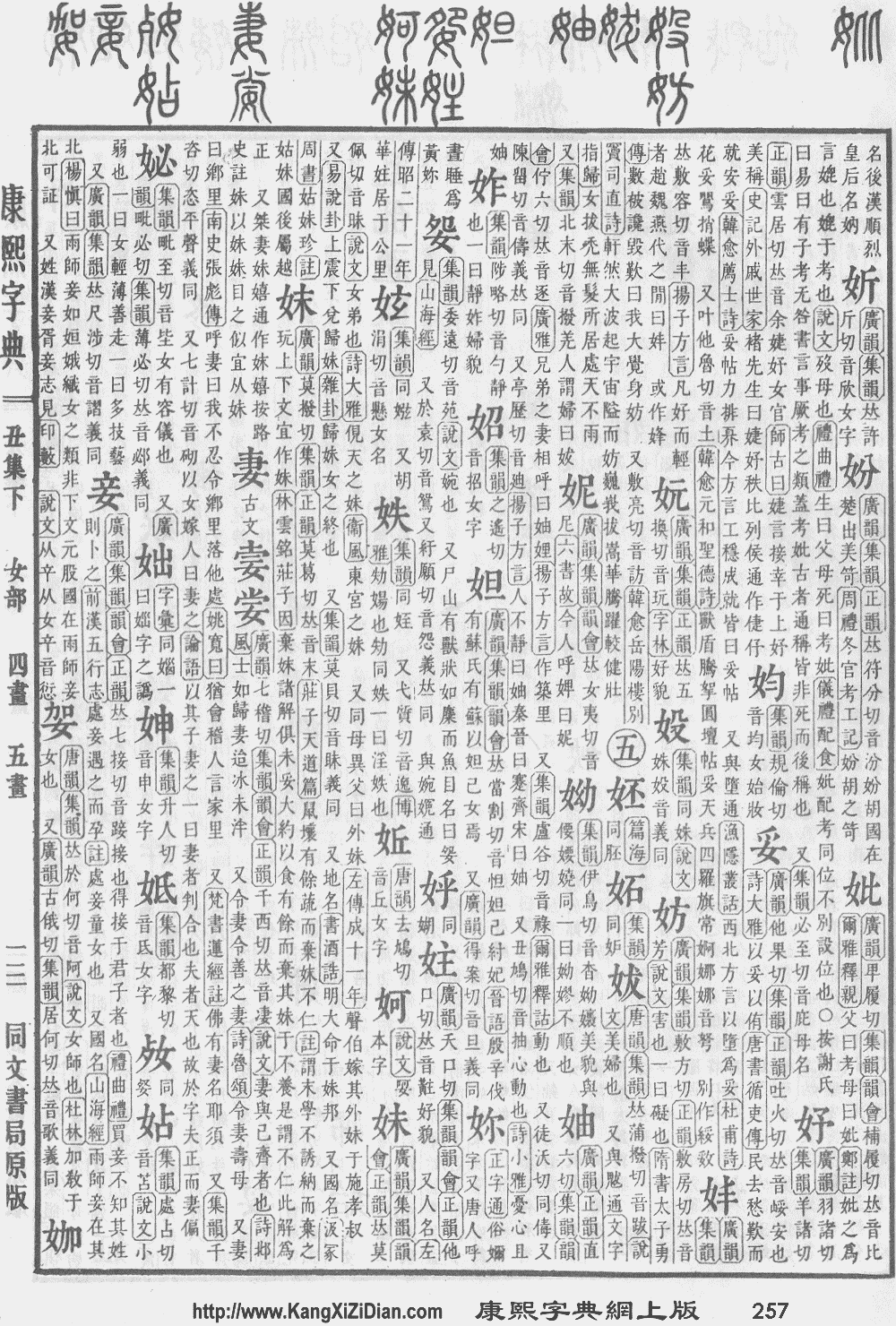
- Kangxi Dictionary: page 257, character 10
- Dai Kanwa Jiten: character 6111
- Dae Jaweon: page 522, character 4
- Hanyu Da Zidian (first edition): volume 2, page 1033, character 4
- Unihan data for U+59A8
Chinese
| trad. | 妨 | |
|---|---|---|
| simp. # | 妨 | |
| alternative forms | 㤃 | |
Glyph origin
Characters in the same phonetic series (方) (Zhengzhang, 2003)
| Old Chinese | |
|---|---|
| 縍 | *paːŋ |
| 榜 | *paːŋʔ, *praːŋs, *braːŋ |
| 蒡 | *paːŋʔ, *braːŋ |
| 牓 | *paːŋʔ |
| 螃 | *paːŋʔ, *paːŋs, *baːŋ |
| 搒 | *paːŋs, *braːŋ |
| 舫 | *paːŋs, *paŋs |
| 謗 | *paːŋs |
| 雱 | *pʰaːŋ |
| 磅 | *pʰaːŋ, *pʰraːŋ |
| 霶 | *pʰaːŋ |
| 滂 | *pʰaːŋ |
| 鎊 | *pʰaːŋ |
| 髈 | *pʰaːŋʔ, *baːŋ |
| 彷 | *baːŋ, *pʰaŋʔ |
| 趽 | *baːŋ, *paŋ, *paŋs |
| 房 | *baːŋ, *baŋ |
| 篣 | *baːŋ, *braːŋ |
| 騯 | *baːŋ, *praːŋ, *braːŋ |
| 傍 | *baːŋ, *baːŋs |
| 膀 | *baːŋ |
| 旁 | *baːŋ |
| 徬 | *baːŋs |
| 閍 | *praːŋ |
| 祊 | *praːŋ |
| 嗙 | *praːŋ |
| 方 | *paŋ, *baŋ |
| 汸 | *paŋ |
| 坊 | *paŋ, *baŋ |
| 邡 | *paŋ, *pʰaŋs |
| 枋 | *paŋ |
| 鈁 | *paŋ |
| 蚄 | *paŋ |
| 肪 | *paŋ, *baŋ |
| 鴋 | *paŋ, *baŋ |
| 牥 | *paŋ |
| 昉 | *paŋʔ |
| 瓬 | *paŋʔ |
| 放 | *paŋʔ, *paŋs |
| 倣 | *paŋʔ |
| 芳 | *pʰaŋ |
| 淓 | *pʰaŋ |
| 妨 | *pʰaŋ, *pʰaŋs |
| 紡 | *pʰaŋʔ |
| 仿 | *pʰaŋʔ |
| 髣 | *pʰaŋʔ |
| 鶭 | *pʰaŋʔ |
| 訪 | *pʰaŋs |
| 防 | *baŋ, *baŋs |
| 魴 | *baŋ |
Phono-semantic compound (形聲/形声, OC *pʰaŋ, *pʰaŋs) : semantic 女 + phonetic 方 (OC *paŋ, *baŋ). 方 also once bore the now-obsolete meaning of "take up" (space), which can explain the meaning of this character as being "to obstruct someone from approaching a woman".
Pronunciation
Definitions
妨
Japanese
Readings
- Go-on: ほう (hō)←はう (fau, historical)
- Kan-on: ほう (hō)←はう (fau, historical)
- Kan’yō-on: ぼう (bō, Jōyō)←ばう (bau, historical)
- Kun: さまたげる (samatageru, 妨げる, Jōyō)
Korean
Vietnamese
Han character
妨: Hán Nôm readings: phòng, phương
- This term needs a translation to English. Please help out and add a translation, then remove the text
{{rfdef}}.
References
This article is issued from Wiktionary. The text is licensed under Creative Commons - Attribution - Sharealike. Additional terms may apply for the media files.