岏
| ||||||||
Translingual
Han character
岏 (Kangxi radical 46, 山+4, 7 strokes, cangjie input 山一一山 (UMMU), four-corner 21711, composition ⿰山元)
References
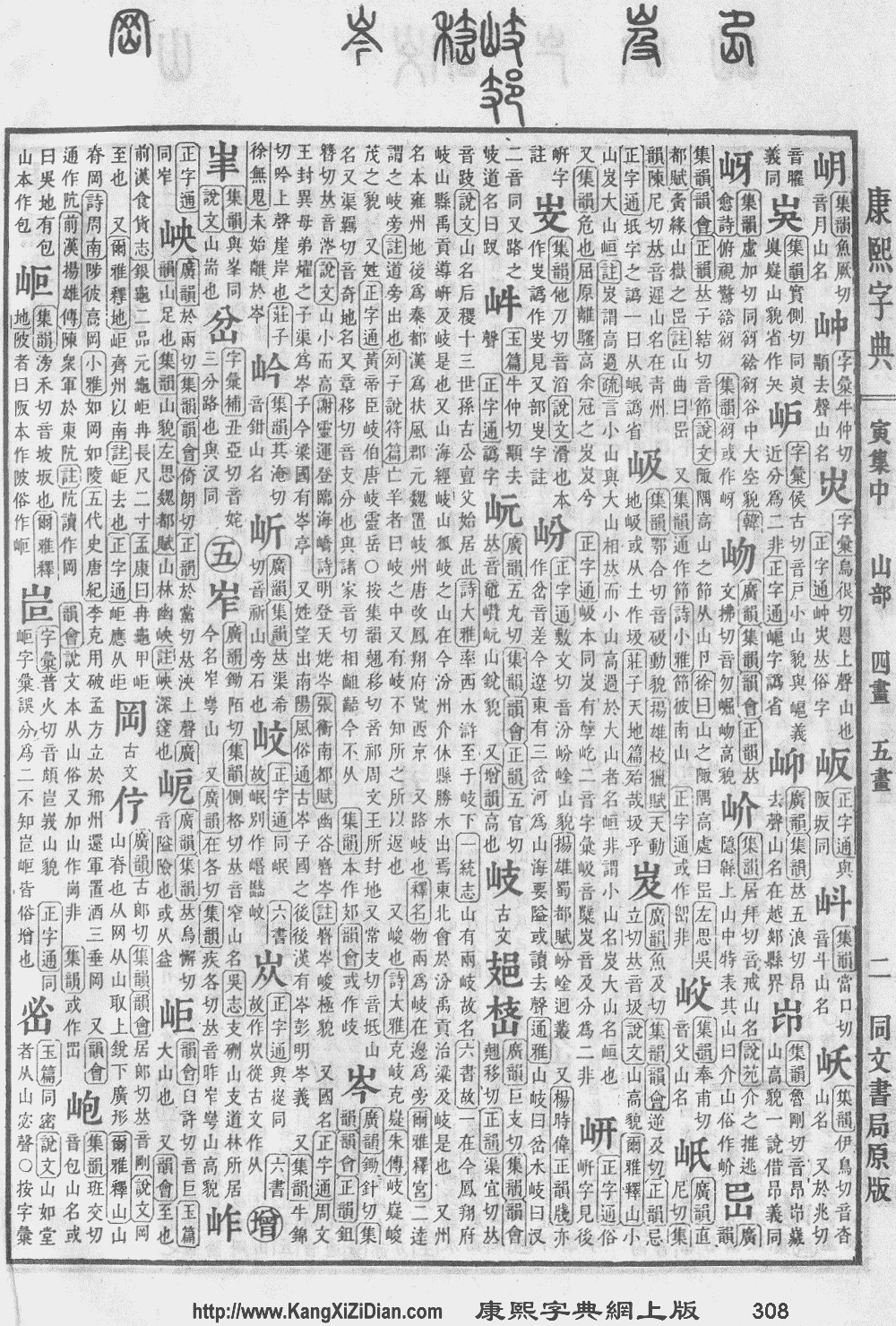
- Kangxi Dictionary: page 308, character 23
- Dai Kanwa Jiten: character 7935
- Dae Jaweon: page 608, character 4
- Hanyu Da Zidian (first edition): volume 1, page 762, character 9
- Unihan data for U+5C8F
- International Encoded Han Character and Variants Database
Chinese
| trad. | 岏 | |
|---|---|---|
| simp. # | 岏 | |
Glyph origin
Characters in the same phonetic series (元) (Zhengzhang, 2003)
| Old Chinese | |
|---|---|
| 冠 | *kŋoːn, *kŋoːns |
| 莞 | *kŋoːn, *ɦŋoːn, *ɦŋroːnʔ |
| 脘 | *ŋkoːnʔ |
| 筦 | *ŋkoːnʔ |
| 梡 | *ŋ̊ʰoːnʔ, *ɦŋoːn, *ɦŋoːnʔ |
| 岏 | *ŋoːn |
| 刓 | *ŋoːn |
| 园 | *ŋoːn |
| 忨 | *ŋoːn, *ŋoːns |
| 蚖 | *ŋoːn, *ŋon |
| 黿 | *ŋoːn, *ŋon |
| 抏 | *ŋoːn |
| 玩 | *ŋoːns |
| 貦 | *ŋoːns |
| 翫 | *ŋoːns |
| 妧 | *ŋoːns |
| 完 | *ɦŋoːn |
| 捖 | *ɦŋoːn |
| 垸 | *ɦŋoːn, *ɦŋoːns |
| 綄 | *ɦŋoːn, *ɦŋoːnʔ |
| 院 | *ɦŋoːn, *ɦŋons |
| 皖 | *ɦŋoːnʔ, *ɦŋroːnʔ |
| 晥 | *ɦŋoːnʔ |
| 浣 | *ɦŋoːnʔ |
| 頑 | *ŋroːn, *ŋroːn |
| 睆 | *ɦŋroːnʔ |
| 鯇 | *ɦŋroːnʔ |
| 元 | *ŋon |
| 沅 | *ŋon |
| 芫 | *ŋon |
| 杬 | *ŋon |
| 邧 | *ŋon, *ŋonʔ |
| 阮 | *ŋon, *ŋonʔ |
| 俒 | *ɦŋuːn, *ɦŋuːns |
Pronunciation
Definitions
岏
- Used in compounds.
Compounds
- 巉岏
- 巑岏/𰏁岏
Japanese
Kanji
岏
- This term needs a translation to English. Please help out and add a translation, then remove the text
{{rfdef}}.
Readings
- Go-on: がん (gan)←ぐわん (gwan, historical)
- Kan-on: がん (gan)←ぐわん (gwan, historical)
- Kun: けわしい (kewashii, 岏しい)←けはしい (kefasii, 岏しい, historical); たかい (takai, 岏い)
Compounds
- 巑岏 (sangan)
Korean
Hanja
岏 • (wan) (hangeul 완, revised wan, McCune–Reischauer wan)
- This term needs a translation to English. Please help out and add a translation, then remove the text
{{rfdef}}.
This article is issued from Wiktionary. The text is licensed under Creative Commons - Attribution - Sharealike. Additional terms may apply for the media files.