頑
See also: 顽
| ||||||||
Translingual
| Stroke order | |||
|---|---|---|---|
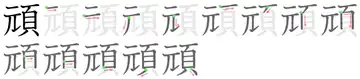 | |||
Han character
頑 (Kangxi radical 181, 頁+4, 13 strokes, cangjie input 一山一月金 (MUMBC), four-corner 11286, composition ⿰元頁)
Derived characters
- 㹕, 𤻆
References
- Kangxi Dictionary: page 1401, character 4
- Dai Kanwa Jiten: character 43374
- Dae Jaweon: page 1917, character 11
- Hanyu Da Zidian (first edition): volume 7, page 4359, character 8
- Unihan data for U+9811

Chinese
| trad. | 頑 | |
|---|---|---|
| simp. | 顽 | |
Glyph origin
Characters in the same phonetic series (元) (Zhengzhang, 2003)
| Old Chinese | |
|---|---|
| 冠 | *kŋoːn, *kŋoːns |
| 莞 | *kŋoːn, *ɦŋoːn, *ɦŋroːnʔ |
| 脘 | *ŋkoːnʔ |
| 筦 | *ŋkoːnʔ |
| 梡 | *ŋ̊ʰoːnʔ, *ɦŋoːn, *ɦŋoːnʔ |
| 岏 | *ŋoːn |
| 刓 | *ŋoːn |
| 园 | *ŋoːn |
| 忨 | *ŋoːn, *ŋoːns |
| 蚖 | *ŋoːn, *ŋon |
| 黿 | *ŋoːn, *ŋon |
| 抏 | *ŋoːn |
| 玩 | *ŋoːns |
| 貦 | *ŋoːns |
| 翫 | *ŋoːns |
| 妧 | *ŋoːns |
| 完 | *ɦŋoːn |
| 捖 | *ɦŋoːn |
| 垸 | *ɦŋoːn, *ɦŋoːns |
| 綄 | *ɦŋoːn, *ɦŋoːnʔ |
| 院 | *ɦŋoːn, *ɦŋons |
| 皖 | *ɦŋoːnʔ, *ɦŋroːnʔ |
| 晥 | *ɦŋoːnʔ |
| 浣 | *ɦŋoːnʔ |
| 頑 | *ŋroːn, *ŋroːn |
| 睆 | *ɦŋroːnʔ |
| 鯇 | *ɦŋroːnʔ |
| 元 | *ŋon |
| 沅 | *ŋon |
| 芫 | *ŋon |
| 杬 | *ŋon |
| 邧 | *ŋon, *ŋonʔ |
| 阮 | *ŋon, *ŋonʔ |
| 俒 | *ɦŋuːn, *ɦŋuːns |
Phono-semantic compound (形聲/形声, OC *ŋroːn, *ŋroːn) : phonetic 元 (OC *ŋon, “head”) + semantic 頁 (“head”).
As 元 came to be used to mean “original”, rather than “head”, this character was formed from the original meaning of 元 (“head”) + the semantic element 頁/页 to affirm the “head” meaning, but with the modification in meaning to “an intransigent head”; the head of a heady person.
Pronunciation
Definitions
頑
- obstinate; stubborn; recalcitrant
- stupid; ignorant
- 頑昧/顽昧 ― wánmèi ― ignorant; benighted
- naughty; mischievous
Compounds
- 不是頑的/不是顽的
- 冥頑/冥顽 (míngwán)
- 冥頑不靈/冥顽不灵 (míngwánbùlíng)
- 刁頑/刁顽 (diāowán)
- 哀感頑豔/哀感顽艳
- 大頑/大顽
- 奸頑
- 小頑/小顽
- 廉頑立懦/廉顽立懦
- 性潑凶頑/性泼凶顽
- 愚頑/愚顽 (yúwán)
- 憨頑/憨顽
- 振警愚頑/振警愚顽
- 撒頑/撒顽
- 殷頑
- 淘氣憨頑/淘气憨顽
- 痴頑/痴顽
- 老頑固/老顽固 (lǎowángù)
- 老頑童/老顽童
- 荒功好頑/荒功好顽
- 蔽賢寵頑/蔽贤宠顽
- 負嵎頑抗/负嵎顽抗 (fùyúwánkàng)
- 負隅頑抗/负隅顽抗 (fùyúwánkàng)
- 貪頑/贪顽
- 賴肉頑皮/赖肉顽皮
- 賴骨頑皮/赖骨顽皮
- 頑健/顽健
- 頑劣/顽劣 (wánliè)
- 頑固/顽固 (wángù)
- 頑廉懦立/顽廉懦立
- 頑強/顽强 (wánqiáng)
- 頑強不屈/顽强不屈
- 頑意兒/顽意儿
- 頑抗/顽抗 (wánkàng)
- 頑敵/顽敌 (wándí)
- 頑梗/顽梗 (wángěng)
- 頑民/顽民
- 頑涎/顽涎
- 頑症/顽症 (wánzhèng)
- 頑疾/顽疾 (wánjí)
- 頑癬/顽癣 (wánxuǎn)
- 頑皮/顽皮 (wánpí)
- 頑皮賴骨/顽皮赖骨
- 頑石/顽石 (wánshí)
- 頑石點頭/顽石点头
- 頑童/顽童 (wántóng)
- 頑笑/顽笑
- 頑耍/顽耍 (wánshuǎ)
- 頑蒙/顽蒙
- 頑話/顽话
- 頑軀/顽躯
- 頑逆/顽逆
- 頑鈍/顽钝 (wándùn)
- 頑鹵/顽卤
Japanese
Readings
Compounds
Korean
Hanja
頑 • (wan) (hangeul 완, revised wan, McCune–Reischauer wan, Yale wan)
- This term needs a translation to English. Please help out and add a translation, then remove the text
{{rfdef}}.
Vietnamese
This article is issued from Wiktionary. The text is licensed under Creative Commons - Attribution - Sharealike. Additional terms may apply for the media files.