戮
| ||||||||
| ||||||||
Translingual
Han character
戮 (Kangxi radical 62, 戈+11, 15 strokes, cangjie input 尸竹戈 (SHI) or 難尸竹戈 (XSHI), four-corner 13250, composition ⿰翏戈)
Derived characters
- 𪇯
References
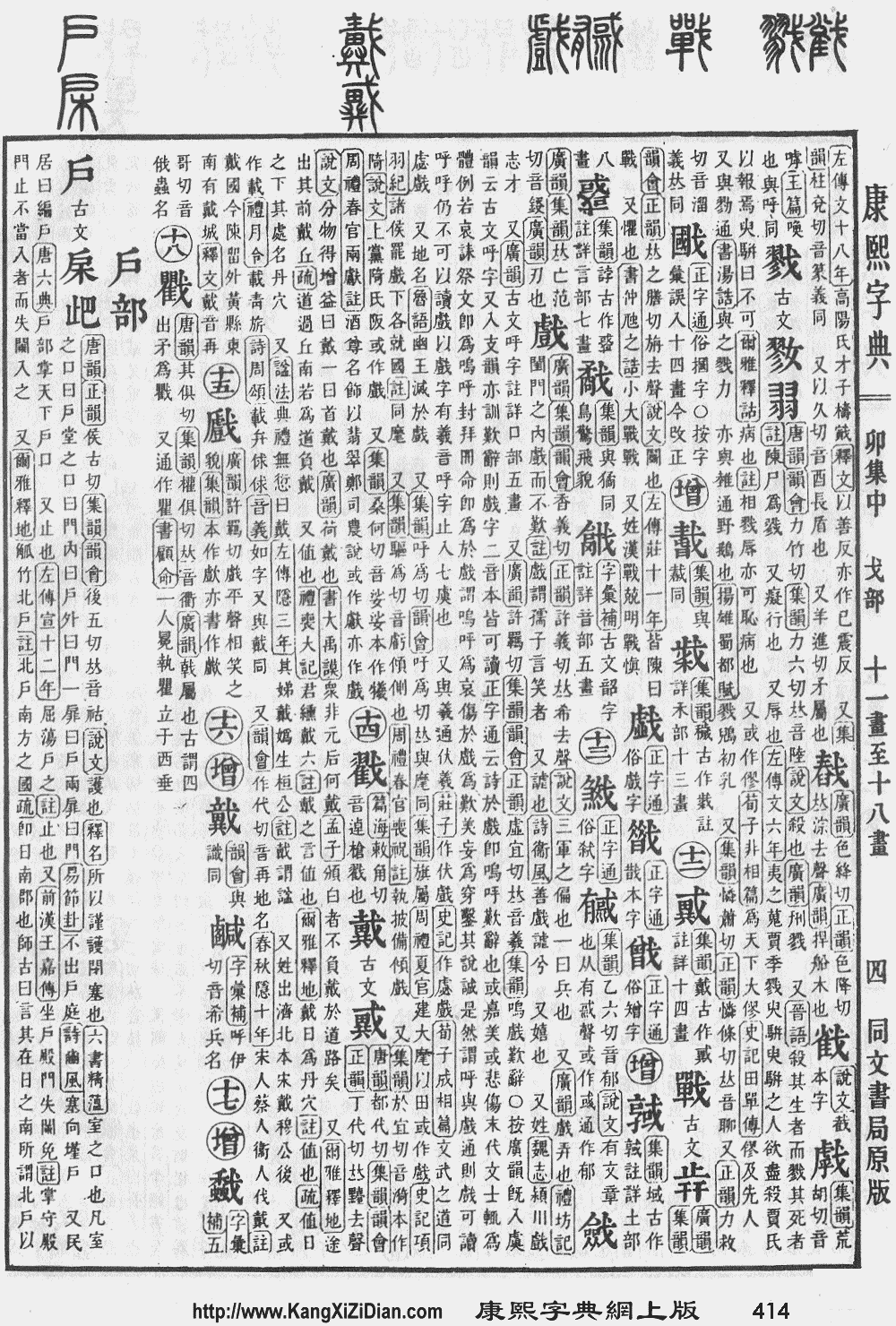
- Kangxi Dictionary: page 414, character 4
- Dai Kanwa Jiten: character 11655
- Dae Jaweon: page 757, character 6
- Hanyu Da Zidian (first edition): volume 2, page 1412, character 5
- Unihan data for U+622E
- Unihan data for U+F9D2
Chinese
Glyph origin
Characters in the same phonetic series (翏) (Zhengzhang, 2003)
| Old Chinese | |
|---|---|
| 醪 | *ruːw |
| 嫪 | *ruːw, *rɯːws |
| 嘐 | *ɡ·ruːw, *krɯːw, *qʰrɯːw |
| 賿 | *rrɯːw, *rrɯːwʔ |
| 顟 | *rrɯːw |
| 膠 | *krɯːw, *krɯːws, *kʰrɯːw |
| 轇 | *krɯːw |
| 摎 | *krɯːw, *rɯw |
| 髎 | *riw, *rɯːw |
| 熮 | *riws, *rɯːw, *rɯwʔ |
| 廖 | *rɯːw, *rɯːws, *rɯws |
| 憀 | *rɯːw, *rɯw |
| 豂 | *rɯːw |
| 漻 | *rɯːw |
| 翏 | *ɡ·rɯːw, *ɡ·rɯws |
| 寥 | *rɯːw, *rɯːwɢ |
| 蓼 | *rɯːwʔ, *rɯwɢ |
| 鄝 | *rɯːwʔ |
| 鷚 | *mɡlɯw, *rɯwɢs, *mɡrɯw, *ɡrɯw |
| 繆 | *mlɯw, *mɡrɯw, *mrɯws, *mlɯwɢ |
| 勠 | *rɯw, *rɯwɢs, *rɯwɢ |
| 疁 | *rɯw |
| 飂 | *rɯw, *rɯws |
| 鏐 | *rɯw, *rɯw |
| 僇 | *rɯwɢs, *rɯwɢ |
| 瘳 | *r̥ʰɯw |
| 璆 | *ɡlɯw, *ɡrɯw |
| 謬 | *mrɯws |
| 蟉 | *ɡ·rɯw, *ɡrɯw, *ɡrɯwʔ |
| 樛 | *krɯw |
| 磟 | *ruːwɢ, *rɯwɢ |
| 戮 | *rɯwɢ |
| 剹 | *rɯwɢ |
| 穋 | *rɯwɢ |
Phono-semantic compound (形聲/形声, OC *rɯwɢ) : phonetic 翏 (OC *ɡ·rɯːw, *ɡ·rɯws) + semantic 戈 (“dagger axe”).
Etymology 1
| trad. | 戮 | |
|---|---|---|
| simp. # | 戮 | |
| alternative forms | 勠 (of forces) to join 剹/戮 勎 | |
From Proto-Sino-Tibetan, perhaps related to 劉 (OC *m·ru, “slaughter”). Compare also Mru ruk (“shame”) (Schuessler, 2007).
Pronunciation
Definitions
戮
- to kill; to massacre
- to humiliate; to disgrace
- to behead a corpse (as posthumous punishment)
- 三姦同罪,請殺其生者而戮其死者。 [Classical Chinese, trad.]
- From: Guoyu, circa 4th century BCE
- Sān jiān tóngzuì, qǐng shā qí shēng zhě ér lù qí sǐ zhě. [Pinyin]
- The three wicked ones are guilty of the same crime; I request that the living among them be executed, and the dead among them be exhumed and beheaded.
三奸同罪,请杀其生者而戮其死者。 [Classical Chinese, simp.]
- to join forces; to cooperate
Compounds
Pronunciation
Japanese
Readings
- Go-on: ろく (roku)←ろく (roku, historical); る (ru)←る (ru, historical)
- Kan-on: りく (riku)←りく (riku, historical); りょう (ryō)←れう (reu, historical); りゅう (ryū)←りう (riu, historical)
- Kun: ころす (korosu)←ころす (korosu, historical)
References
- “戮” in: 諸橋轍次 (Morohashi Tetsuji), chief ed. 大漢和辞典 (Dai Kan-Wa Jiten, “Comprehensive Chinese–Japanese Dictionary”). 13 vols. 1955–1960. Revised and enlarged ed. 1984–1986. Tokyo: Taishukan.
Korean
Vietnamese
This article is issued from Wiktionary. The text is licensed under Creative Commons - Attribution - Sharealike. Additional terms may apply for the media files.