楔

楔 U+6954, 楔
CJK UNIFIED IDEOGRAPH-6954
← 楓
[U+6953]
CJK Unified Ideographs 楕 →
[U+6955]

Translingual

Han character

楔 (Kangxi radical 75, 木+9, 13 strokes, cangjie input 木手竹大 (DQHK), four-corner 47934, composition ⿰木契)

  1. wedge
  2. gatepost
  3. foreword

References

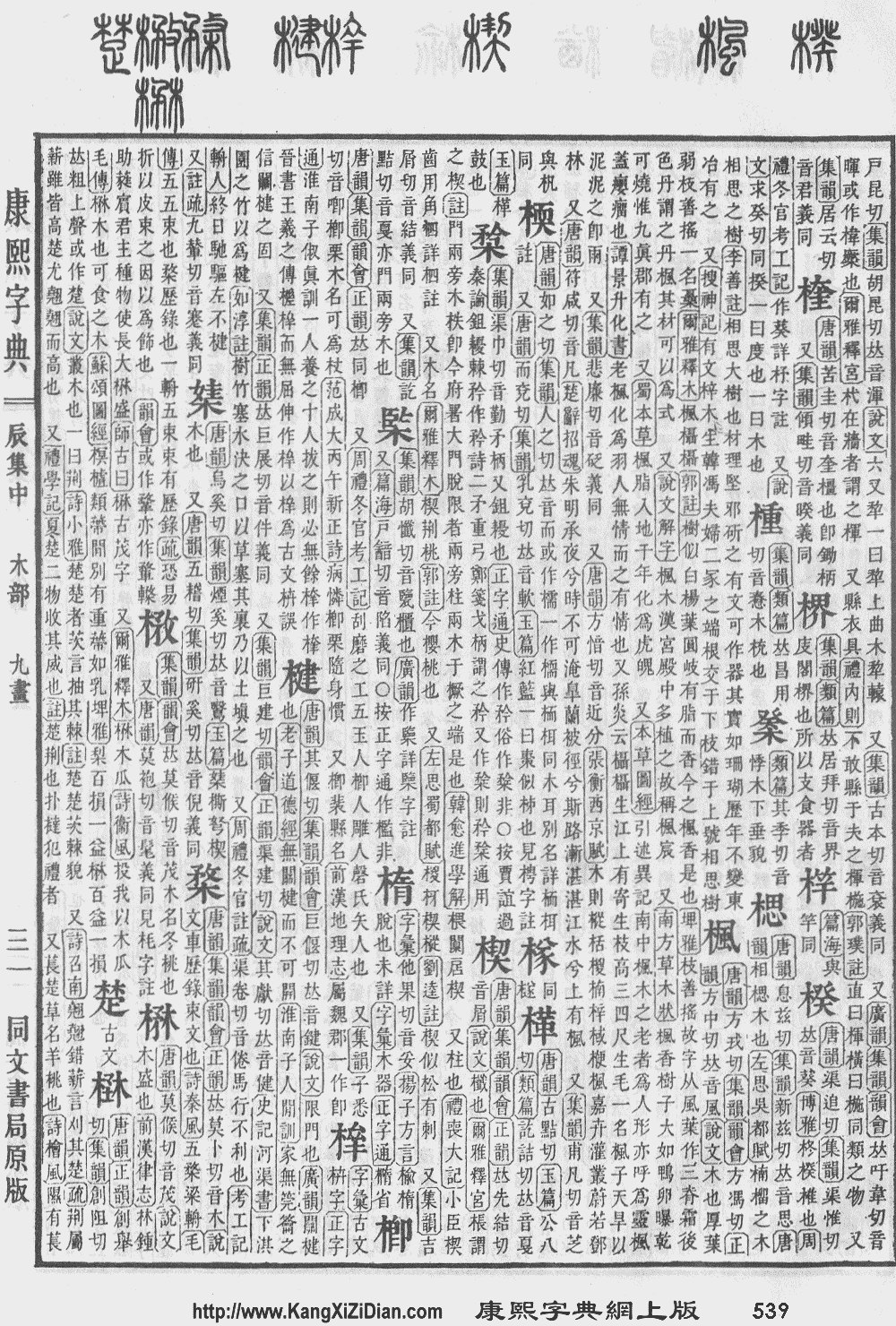
  • Kangxi Dictionary: page 539, character 13
  • Dai Kanwa Jiten: character 15131
  • Dae Jaweon: page 926, character 25
  • Hanyu Da Zidian (first edition): volume 2, page 1242, character 7
  • Unihan data for U+6954

Chinese

trad. 楔
simp. # 楔

Glyph origin

Pronunciation


Note:
  • siat - literary;
  • soeh/seh - vernacular (“to wedge; to stuff in; wedge; to bribe”).

    Rime
    Character 楔 楔
    Reading # 1/2 2/2
    Initial (聲) 見 (28) 心 (16)
    Final (韻) 鎋 (75) 屑 (87)
    Tone (調) Checked (Ø) Checked (Ø)
    Openness (開合) Open Open
    Division (等) II IV
    Fanqie 古黠切 先結切
    Baxter keat set
    Reconstructions
    Zhengzhang
    Shangfang
    /kˠɛt̚/ /set̚/
    Pan
    Wuyun
    /kᵚæt̚/ /set̚/
    Shao
    Rongfen
    /kæt̚/ /sɛt̚/
    Edwin
    Pulleyblank
    /kəɨt̚/ /sɛt̚/
    Li
    Rong
    /kɛt̚/ /set̚/
    Wang
    Li
    /kæt̚/ /siet̚/
    Bernard
    Karlgren
    /kat̚/ /siet̚/
    Expected
    Mandarin
    Reflex
    jia xie
    Expected
    Cantonese
    Reflex
    gaat3 sit3
    Baxter–Sagart system 1.1 (2014)
    Character 楔
    Reading # 1/1
    Modern
    Beijing
    (Pinyin)
    xiē
    Middle
    Chinese
    ‹ set ›
    Old
    Chinese
    /*s.qˁet/
    English wedge put in teeth of corpse

    Notes for Old Chinese notations in the Baxter–Sagart system:

    * Parentheses "()" indicate uncertain presence;
    * Square brackets "[]" indicate uncertain identity, e.g. *[t] as coda may in fact be *-t or *-p;
    * Angle brackets "<>" indicate infix;
    * Hyphen "-" indicates morpheme boundary;

    * Period "." indicates syllable boundary.
    Zhengzhang system (2003)
    Character 楔 楔
    Reading # 1/2 2/2
    No. 6498 6504
    Phonetic
    component
    丯 丯
    Rime
    group
    月 月
    Rime
    subdivision
    2 2
    Corresponding
    MC rime
    戛 屑
    Old
    Chinese
    /*kreːd/ /*sqʰeːd/

    Definitions

    楔

    1. wedge; peg
    2. (dialectal) to drive; to wedge (a wedge, nail, etc.)
    3. (Hokkien) to stuff in; to plug in; to fill in
    4. (Quanzhou and Xiamen Hokkien) wedge; peg; stopper
    5. (Mainland China Hokkien, figurative) to bribe
    Synonyms

    Compounds

    Pronunciation

    Definitions

    楔

    1. (Cantonese) Alternative form of 𤗈 (sip3)

    Japanese

    Kanji

    楔

    (uncommon “Hyōgai” kanji)

    Readings

    Pronunciation

    Kanji in this term
    楔
    くさび
    Hyōgaiji
    kun’yomi
    • (Tokyo) くさび [kùsábí] (Heiban – [0])
    • IPA(key): [kɯ̟̊ᵝsa̠bʲi]

    Noun

    楔(くさび) • (kusabi) 

    1. a wedge (simple machine)

    Korean

    Hanja

    楔 (eum 설 (seol))

    1. This term needs a translation to English. Please help out and add a translation, then remove the text {{rfdef}}.

    Vietnamese

    Han character

    楔: Hán Nôm readings: khế

    1. This term needs a translation to English. Please help out and add a translation, then remove the text {{rfdef}}.

    References

    This article is issued from Wiktionary. The text is licensed under Creative Commons - Attribution - Sharealike. Additional terms may apply for the media files.