給
| ||||||||
Translingual
Han character
給 (Kangxi radical 120, 糸+6, 12 strokes, cangjie input 女火人一口 (VFOMR), four-corner 28961, composition ⿰糹合)
Derived characters
- 𠎨, 𢵰
Related characters
References
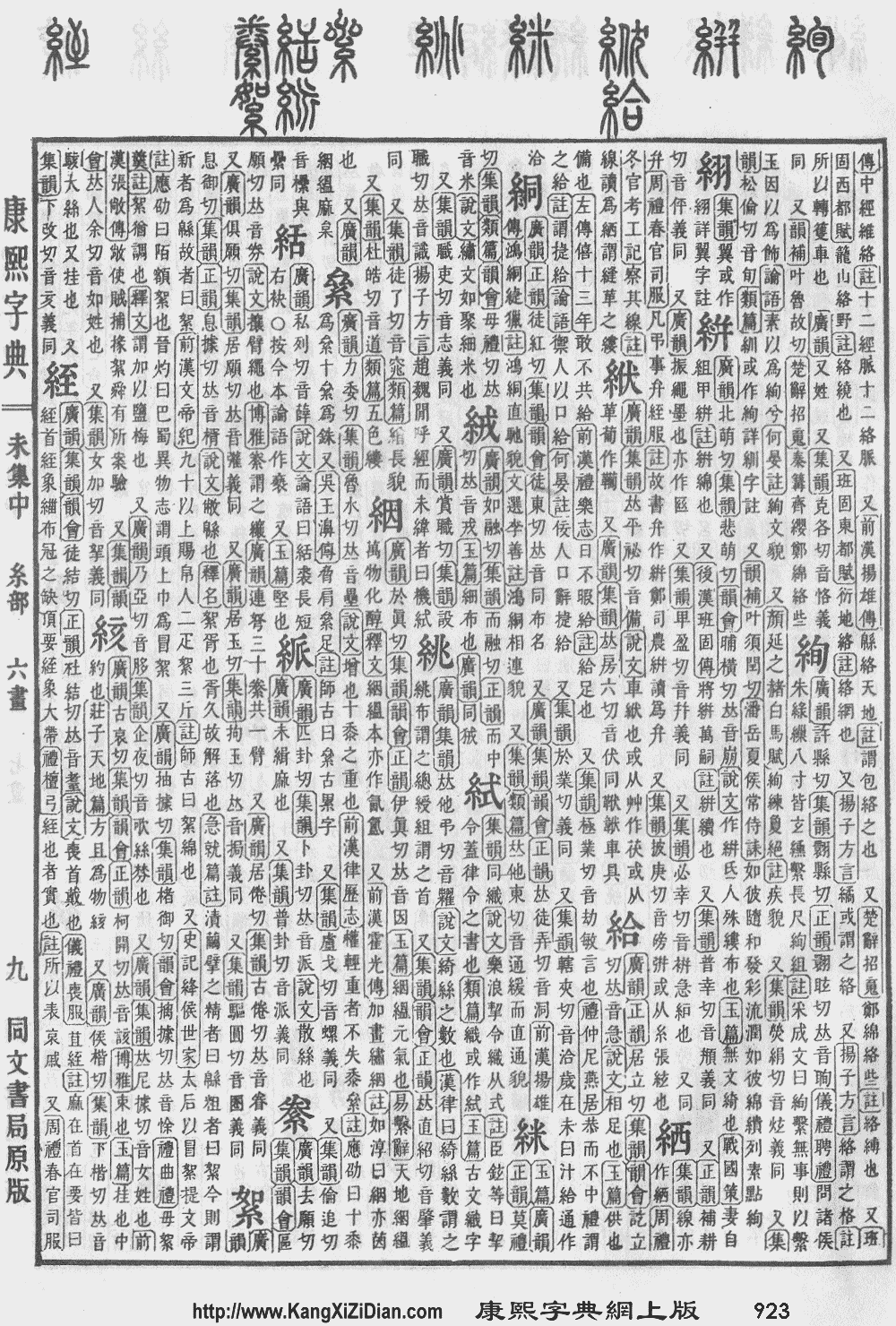
- Kangxi Dictionary: page 923, character 6
- Dai Kanwa Jiten: character 27432
- Dae Jaweon: page 1357, character 18
- Hanyu Da Zidian (first edition): volume 5, page 3394, character 11
- Unihan data for U+7D66
Chinese
Glyph origin
| Historical forms of the character 給 | |
|---|---|
| Shuowen Jiezi (compiled in Han) | Liushutong (compiled in Ming) |
| Small seal script | Transcribed ancient scripts |
 |
 |
| Old Chinese | |
|---|---|
| 龕 | *kʰuːm |
| 媕 | *quːm, *qromʔ, *qɯːm, *qramʔ, *qɯːb |
| 頜 | *ɡuːmʔ, *kuːb |
| 答 | *tkuːb |
| 畣 | *tkuːb |
| 荅 | *tkuːb |
| 嗒 | *tuːb, *tʰoːb |
| 褡 | *tuːb, *toːb |
| 撘 | *tuːb |
| 搭 | *tuːb, *tʰoːb |
| 榙 | *tkuːb, *ɡuːb |
| 佮 | *tkʰuːb, *kuːb, *quːb, *quːb |
| 蛤 | *kuːb |
| 鴿 | *kuːb |
| 合 | *kuːb, *ɡuːb |
| 郃 | *kuːb, *ɡuːb |
| 匌 | *kuːb, *kʰuːb |
| 鉿 | *kuːb |
| 閤 | *kuːb |
| 鞈 | *kuːb, *kruːb |
| 韐 | *kuːb, *kruːb |
| 鮯 | *kuːb |
| 哈 | *ŋɡuːb |
| 姶 | *quːb, *quːb |
| 欱 | *qʰuːb, *qʰruːb |
| 盒 | *ɡuːb |
| 耠 | *ɡuːb |
| 詥 | *ɡuːb |
| 塔 | *tʰuːb |
| 鞳 | *tʰoːb |
| 劄 | *rtuːb |
| 跲 | *kruːb, *kob, *ɡob |
| 袷 | *kruːb, *ŋkob |
| 餄 | *kruːb |
| 恰 | *kʰruːb |
| 帢 | *kʰruːb |
| 洽 | *ɡruːb |
| 祫 | *ɡruːb |
| 珨 | *ɡruːb |
| 烚 | *ɡruːb |
| 歙 | *qʰjob, *qʰrub |
| 湁 | *tkʰub |
| 拾 | *ɡjub |
| 給 | *krub |
| 翕 | *qʰrub |
| 噏 | *qʰrub |
| 潝 | *qʰrub |
| 熻 | *qʰrub |
| 嬆 | *qʰrub |
| 翖 | *qʰrub |
| 闟 | *qʰrub |
Phono-semantic compound (形聲/形声, OC *krub) : semantic 糸 + phonetic 合 (OC *kuːb, *ɡuːb).
Etymology 1
| trad. | 給 | |
|---|---|---|
| simp. | 给 | |
Starostin reconstructs Proto-Sino-Tibetan *qǝ̆p (“to give; to supply”), comparing it to Burmese အပ် (ap, “to commit; to deliver; to hand over”), Jingpho ap (“to hand over”), Lepcha ᰀᰤᰬᰱ (kjep, “to add to; to multiply”), ᰃᰤᰱ (gjap, “many”).
In Mandarin, Jin and Xiang, pronunciations 1 and 2 are generally thought of as colloquial and literary readings respectively, from the same Middle Chinese etymon (Zhengzhang, 2002; Liu, 2021; among others). Pronunciation 2, the literary reading, is a regular reflex from Middle Chinese. However, since pronunciation 1 is highly irregular, others have proposed alternative etymologies for it:
Pronunciation 1
Definitions
給
- to give
- for; for the benefit of
- to; with (following verbs to indicate the handing over or passing of something)
- to (introduce recipient of an action)
- by (marker of passive voice)
- Used in the form of 給我 in imperative sentences for emphasis.
- Used before a verb for emphasis of affectedness.
- (dialectal Mandarin, Jin) and
Synonyms
Pronunciation 2
Definitions
給
Compounds
- 不給/不给 (bùjǐ)
- 不能自給/不能自给
- 人給家足/人给家足
- 仰給/仰给
- 仰給於人/仰给于人
- 供給/供给 (gōngjǐ)
- 保險給付/保险给付
- 俸給/俸给
- 傭給/佣给
- 公共給水/公共给水
- 利口捷給/利口捷给
- 加給/加给
- 取給/取给 (qǔjǐ)
- 口才辨給/口才辨给
- 口給/口给
- 口齒便給/口齿便给
- 周給/周给
- 女給/女给
- 家給/家给
- 家給人足/家给人足
- 家給戶贍/家给户赡
- 家給民足/家给民足
- 恩給制/恩给制
- 慧給/慧给
- 戶給人足/户给人足
- 捷給/捷给
- 敏給/敏给
- 日不暇給/日不暇给
- 日給/日给
- 月給/月给 (yuèjǐ)
- 有給職/有给职
- 死亡給付/死亡给付
- 無給職/无给职
- 現金給付/现金给付
- 目不暇給/目不暇给 (mùbùxiájǐ)
- 目不給視/目不给视
- 給予/给予
- 給事中/给事中
- 給付/给付
- 給使/给使
- 給假/给假
- 給散/给散
- 給水/给水 (jǐshuǐ)
- 給與/给与 (jǐyǔ)
- 給足/给足
- 給養/给养 (jǐyǎng)
- 自給/自给 (zìjǐ)
- 自給自足/自给自足 (zìjǐzìzú)
- 薪給/薪给 (xīnjǐ)
- 虛給/虚给
- 補給/补给 (bǔjǐ)
- 補給品/补给品
- 補給線/补给线
- 補給證/补给证
- 請給/请给
- 賑給/赈给
- 辨給/辨给
- 辭給/辞给
- 辯給/辩给
- 配給/配给 (pèijǐ)
- 配給制度/配给制度
- 配給品/配给品
- 配給票/配给票
- 醫療給付/医疗给付
- 饔飧不給/饔飧不给
- 齊給/齐给
Pronunciation
Japanese
Kanji
- This term needs a translation to English. Please help out and add a translation, then remove the text
{{rfdef}}.
Readings
- Go-on: こう (kō)←こふ (kofu, historical)
- Kan-on: きゅう (kyū, Jōyō)←きふ (kifu, historical)
- On: きょう (kyō)←けふ (kefu, historical)
- Kun: たまう (tamau, 給う)←たまふ (tamafu, 給ふ, historical); たまえ (tamae, 給え)←たまへ (tamafe, 給へ, historical); たもう (tamou, 給う)←たまふ (tamafu, 給ふ, historical)
- Nanori: きい (kī)
Korean
Vietnamese
Chữ Hán
給: Hán Nôm readings: cấp, góp, cắp, cóp, cướp
- This term needs a translation to English. Please help out and add a translation, then remove the text
{{rfdef}}.